Sales de metal
Se han encontrado 2872 productos de "Sales de metal"
Sodium 1-naphthalenesulfonate
CAS:Sodium 1-naphthalenesulfonate is a zirconium oxide that is used to remove particles from water. It has been shown that the adsorption mechanism of this compound is based on its crystalline polymorphs. Sodium 1-naphthalenesulfonate has been used in the treatment of fatty acid and hydrochloric acid in urine samples, with sodium carbonate as a buffer. This compound also has film-forming properties, which are beneficial for wastewater treatment and can be used in the formation of polymer films. Sodium 1-naphthalenesulfonate also shows toxicity at high concentrations, but does not cause any toxic effects at low concentrations.
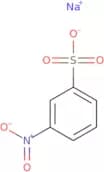
Fórmula:C10H7NaO3SPureza:Min. 95%Forma y color:White Off-White PowderPeso molecular:230.22 g/molSodium 3-nitrobenzenesulphonate
CAS:Sodium 3-nitrobenzenesulphonate is a reactive chemical that can be used in the treatment of wastewater. It reacts with sulfonic acid to form a cross-link between two molecules, which lowers the solubility of the organic compound. This reaction product can then be removed from solution by adding sodium carbonate or sodium citrate to form insoluble salts that are removed from the water by filtration. Sodium 3-nitrobenzenesulphonate is an alternative to chlorine for water treatment because it does not react with ammonia and other nitrogenous compounds.
Fórmula:O2NC6H4SO3NaPureza:Min. 95%Forma y color:White To Yellow SolidPeso molecular:225.16 g/molRef: 3D-FS00835
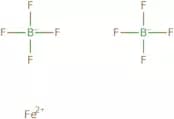
Producto descatalogadoIron(II) tetrafluoroborate - 40-45% aqueous solution
CAS:Iron(II) tetrafluoroborate is a green-yellow crystalline solid that is soluble in water. It has been shown to have structural and optical properties that are similar to those of ferric chloride, but with the advantage of being less toxic. Iron(II) tetrafluoroborate is used as a homogeneous catalyst for organic reactions such as the hydrogenation of nitroarenes and the reduction of ketones. The catalytic activity of Iron(II) tetrafluoroborate arises from its ability to form hydrogen bonding interactions with other molecules and ions in solution.
Iron(II) tetrafluoroborate undergoes a number of reactions with other compounds, including cleavage products such as hydrogen sulfate and nitrogen atoms, which may be due to its chelate ligand. In coordination chemistry, Iron(II) tetrafluoroborate can form coordination complexes by reacting with potassium dichromate or calcium carbonate. These complexes areFórmula:B2F8FePureza:About 45%Forma y color:Slightly Green Clear LiquidPeso molecular:229.45 g/molRef: 3D-FI105721
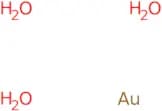
Producto descatalogadoGold(III) hydroxide
CAS:Gold(III) hydroxide is a yellow solid that is soluble in acidic and alkaline solutions. It can be prepared by the reaction of gold(III) nitrate with sodium hydroxide, or by the reaction of hydrochloric acid with sodium chloride and ferrous sulfate. Gold hydroxide can be used in a number of techniques such as nature, hydrolysis, synthons, and high yield. Gold hydroxide has been shown to have luminescent properties when mixed with nitrate. The synthesis of gold nanoparticles is also possible using gold hydroxide at temperatures below 100°C. The yields for this process are variable depending on the conditions used, but it has been shown to produce approximately 10% of the theoretical yield. Gold hydroxide will react with deionized water to form a gel-like substance, which is due to its interaction with water molecules. This compound also has nucleation properties that allow it to act as an initiator for
Fórmula:AuH3O3Pureza:Min. 95%Peso molecular:247.99 g/molIron oxide black
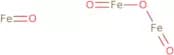
CAS:Producto controladoIron oxide black is a reactive dye that is used in wastewater treatment. It is an oxide of iron that can be synthesized from sodium carbonate and langmuir adsorption isotherm. Iron oxide black has been shown to have a colloidal gold-like color, chemical stability, and constant pressure. The particle size of this compound ranges from 10-1000 nm and it reacts with a solution containing anhydrous sodium carbonate to form magnetite nanoparticles. Iron oxide black also has an asymmetric synthesis reaction with ferric chloride and nitric acid, which produces magnetic nanoparticles.
Fórmula:Fe3O4Pureza:Min. 95%Forma y color:PowderPeso molecular:231.53 g/molRef: 3D-FI41084
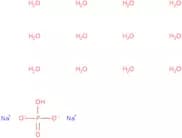
Producto descatalogadoSodium phosphate dibasic dodecahydrate
CAS:Sodium phosphate dibasic dodecahydrate is a sodium salt that has been used in analytical chemistry, water treatment, and as a buffering agent. It is also used as a synergistic agent with other sodium salts to increase their bioavailability. This substance has been studied extensively for its effects on cancer tissues and has shown promise in inhibiting the growth of cancer cells. Sodium phosphate dibasic dodecahydrate is not very soluble in water but is highly permeable through human serum membranes. It can be administered orally or intravenously and will have different effects depending on the route of administration.
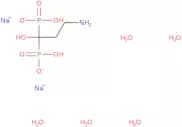
Fórmula:H3PO4·Na2·12H2OPureza:Min. 95%Peso molecular:358.14 g/molPamidronate disodium pentahydrate
CAS:Farnesyl diphosphate synthase inhibitor
Fórmula:C3H19NNa2O12P2Pureza:Min. 95%Peso molecular:369.11 g/molRef: 3D-FP148956
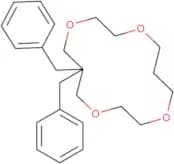
Producto descatalogadoLithium ionophore VI
CAS:Lithium ionophore VI is a polyvinyl chloride that contains valinomycin, a metal ion, and an organic solvent. It is used in pharmaceutical formulations as an ionophore. Lithium ionophore VI has been shown to have membrane potential-dependent transfer reactions in human serum and with the use of hydrophobic organic solvents such as chloroform and acetone. This compound can be used for calibration of analytical chemistry instruments by using it as a standard for the pH value of solutions.
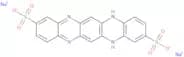
Fórmula:C24H32O4Pureza:Min. 95%Peso molecular:384.51 g/molPhacolysine sodium salt
CAS:Phacolysine sodium salt is a drug that activates the choroidal neovascularization receptor. It has been shown to inhibit the growth of tumors by synchronous fluorescence and disulfide bond binding. Phacolysine sodium salt has shown clinical efficacy in the treatment of choroidal neovascularization, with an average success rate of 75%. It has also been shown to be effective in treating other types of cancer, such as prostate cancer. In addition, it has antioxidative properties and can inhibit prostaglandin synthesis. This medicine is sometimes used in combination with ondansetron hydrochloride and benzalkonium chloride for pharmacological treatment.
Fórmula:C18H10N4Na2O6S2Pureza:Min. 95%Forma y color:Red PowderPeso molecular:488.41 g/molPalladium on activated carbon - 10% Pd
CAS:Palladium on activated carbon - 10% Pd is a palladium-containing chemical product. It can be used as a catalyst, reagent, or scaffold in chemical synthesis. Palladium on activated carbon - 10% Pd is useful as a reaction component, useful for research and development of new products, and has high quality. This product can be used as an intermediate in organic synthesis to create complex compounds that are often used as speciality chemicals or fine chemicals. Palladium on activated carbon - 10% Pd has CAS No. 7440-05-3.
Fórmula:PdPureza:(As Pd) 9 To 11%Forma y color:PowderPeso molecular:106.42 g/molSodium phosphate
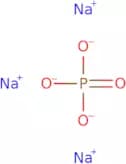
CAS:Sodium phosphate is a solution of sodium ions and phosphate ions in water. It is used as an electrolyte, as an additive to processed food, and in the treatment of infectious diseases. Sodium phosphate is also used to produce polyphosphates that are used in many industrial applications. The dissolution of sodium phosphate starts with the release of hydrogen fluoride (HF). This reaction can be monitored using microdialysis probes inserted into the reaction solution. The dissociation of this compound can be studied using electrochemical impedance spectroscopy. In human serum, sodium phosphate inhibits the growth of bacteria by forming a complex with the sodium ion and preventing their absorption in the bloodstream.
Fórmula:Na·PO4Pureza:Min. 95%Forma y color:White PowderPeso molecular:163.94 g/molRef: 3D-FS31176
Producto descatalogadoSodium dibutylnaphthalenesulphonate
CAS:Sodium dibutylnaphthalenesulphonate is a stabilizer that reacts with fatty acids, dialkyl phosphates, and growth regulators to form insoluble particles. It has been found to be particularly effective in the treatment of plant diseases caused by fungi. Sodium dibutylnaphthalenesulphonate has been shown to stabilize active substances and bioactive substances, such as organic acids and oxime derivatives. These compounds are used in a variety of applications, such as pharmaceuticals, pesticides, herbicides, food additives, and cosmetics.
Fórmula:C18H24O3S•NaPureza:60 To 65%Forma y color:PowderPeso molecular:343.43 g/molPalladium hydroxide on carbon - 20 wt. % loading (dry basis)
CAS:Palladium hydroxide on carbon is a metal oxide with antimicrobial activity. Palladium hydroxide on carbon has been shown to have significant receptor activity against bacteria and fungi, as well as other microorganisms. It has also been shown to inhibit the growth of Helicobacter pylori, which is associated with ulcers and stomach cancer. Palladium hydroxide on carbon is used in the treatment of bowel disease and infections caused by bacteria such as Escherichia coli, Salmonella typhi, Staphylococcus aureus, Streptococcus pyogenes, Mycobacterium tuberculosis, and Helicobacter pylori. Palladium hydroxide on carbon has also been shown to be effective in the treatment of autoimmune diseases such as rheumatoid arthritis and multiple sclerosis.
Fórmula:H2O2PdPureza:Min. 95%Peso molecular:140.43 g/molZinc bromide dihydrate
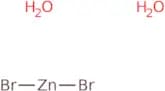
CAS:Zinc bromide dihydrate is a crystalline compound that is used as a catalyst for the conversion of metalloporphyrins to hydroporphyrins. This process is used in the production of vitamin B12. Zinc bromide dihydrate can also be used to inhibit the function of ion pumps, which are proteins that pump ions across membranes. The inhibition of these pumps may lead to a decrease in intracellular calcium levels and an increase in free radicals.
Zinc bromide dihydrate has been shown to react with chlorophylls, vinylated heterostructures, and polyvinyl nonmetals. These reactions produce morphology changes in zinc bromide dihydrate crystalsFórmula:ZnBr2•2H2OPureza:Min. 95%Forma y color:PowderPeso molecular:261.22 g/molL-α-Phosphatidylserine sodium, porcine brain
CAS:L-alpha-Phosphatidylserine sodium salt, derived from porcine brain, is a research chemical that has shown promising potential in various fields. It has been studied for its role in HIV-1 infection, where it has been found to inhibit the fusion of the virus with host cells. Additionally, L-alpha-Phosphatidylserine sodium salt has shown positive effects on spermatozoa motility and fertility. In cancer research, L-alpha-Phosphatidylserine sodium salt has been investigated for its ability to enhance the efficacy of certain anti-cancer drugs. It is believed to work by increasing the uptake of these drugs into cancer cells, thereby improving their effectiveness. This compound also plays a role in neurological health. It is involved in the synthesis of steroidal hormones and neurotransmitters such as dopamine. Studies have suggested that L-alpha-Phosphatidylserine sodium salt may support cognitive function and memory. Furthermore, L-alpha-Ph
Pureza:Min. 95%Potassium hexafluorophosphate
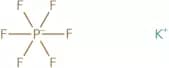
CAS:Potassium hexafluorophosphate is a chemical compound that is used as an antimicrobial agent in the laboratory. It reacts with hydroxyl groups on various surfaces to form potassium hexafluorophosphate and water. The reaction solution can be used to disinfect equipment and surfaces, and is stable at room temperature. Potassium hexafluorophosphate has been shown to have biological properties such as inhibiting the growth of bacteria and fungi, but not viruses. This chemical compound has been shown to be effective against E. coli, Klebsiella pneumoniae, Staphylococcus aureus, Proteus vulgaris, Bacillus subtilis, Pseudomonas aeruginosa, Aspergillus niger, Candida albicans, or Saccharomyces cerevisiae.
Fórmula:KPF6Pureza:Min. 95%Forma y color:PowderPeso molecular:184.06 g/molBis(dibenzylideneacetone)palladium(0)
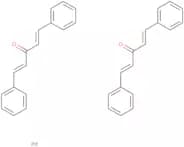
CAS:Bis(dibenzylideneacetone)palladium(0) (Pd 2 (dba)) is a reactive metal complex that can be used to synthesize allyl compounds. The Pd 2 (dba) complex has been shown to have potential as an anti-infective agent for the treatment of infectious diseases. It has been reported that Pd 2 (dba) has a high resistance to halides, hydrochloric acid, and electrochemical impedance spectroscopy.
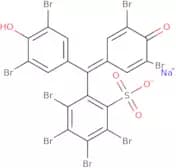
Fórmula:C34H28O2PdPureza:Min. 95%Peso molecular:575 g/molTetrabromophenol blue sodium salt
CAS:Tetrabromophenol blue sodium salt is a dye that is used as an additive in the production of vinyl alcohol polymer films. Tetrabromophenol blue sodium salt can be used to measure albumin concentration and postexposure by adding phenyl groups to the molecule. The color of tetrabromophenol blue sodium salt changes upon exposure to radiation, which makes it useful for diagnostic purposes. It also has a hydrocarbon group that transforms into an insoluble form when exposed to evaporation, making it useful for titration methods. Tetrabromophenol blue sodium salt is relatively stable and labile in nature, making it susceptible to techniques such as pyrolysis, oxidation, or reduction.
Fórmula:C19H5Br8NaO5SPureza:Min. 95%Peso molecular:1,007.53 g/molRef: 3D-FT147404
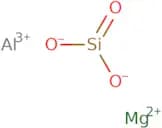
Producto descatalogadoAluminum magnesium silicate
CAS:Magnesium aluminum silicate is a film-forming polymer that can be used in the formulation of skin care products, such as sunscreens. It has been shown to have a thermal expansion coefficient similar to that of human skin and also prevents moisture loss by forming a protective barrier on the surface of the skin. Magnesium aluminum silicate also possesses antioxidant properties and has been shown to inhibit tyrosinase activity in analytical chemistry experiments. This polymer is soluble in water, but is not soluble in organic solvents such as ethanol or acetone. The water solubility can be increased by adding an alkylthio group. Magnesium aluminum silicate is insoluble in water at room temperature and must be heated up to 200°C for dissolution. The viscosity of magnesium aluminum silicate increases with increasing concentration and reaches a maximum at about 2% concentration. This polymer shows uptake of water vapor and will form a gel when exposed to high humidity environments, which makes it useful as
Fórmula:AlMgO3SiPureza:Min. 95%Forma y color:PowderPeso molecular:127.37 g/molRef: 3D-FA162345
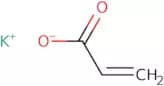
Producto descatalogadoPotassium acrylate
CAS:Potassium acrylate is a diamine tetraacetic acid that functions as a control agent. It is used in analytical methods to measure the effectiveness of other agents. It can be used to produce carboxylate, coordination complex, and hydroxide solution. It has been shown to be effective at doses of 3-5 mM. Potassium acrylate is soluble in water and is stable in air. The FTIR spectrum shows an absorption band at 1657 cm-1, which corresponds to the C=O stretching vibration of the carboxylate group.
Fórmula:C3H3KO2Pureza:Min. 95%Peso molecular:110.15 g/molRef: 3D-FP32495
Producto descatalogado