Colorants, teintes, teintures, imagerie fluorescente
Les colorants, teintures et solutions colorantes sont des outils essentiels en biologie moléculaire, cruciaux pour visualiser et étudier l'ADN, les chromosomes et les noyaux cellulaires. Ces composés permettent aux chercheurs de mettre en évidence des composants cellulaires spécifiques, facilitant ainsi l'observation et l'analyse détaillées au microscope. Dans cette catégorie, vous trouverez une large gamme de colorants et de teintures de haute qualité utilisés dans diverses techniques de coloration, y compris des colorants fluorescents pour l'analyse de l'ADN et des chromosomes, des colorants histologiques pour les échantillons de tissus et des colorants spécifiques pour les structures cellulaires. Ces outils sont indispensables en recherche génétique, cytologie, histologie et diagnostics, offrant clarté et contraste dans les échantillons biologiques. Chez CymitQuimica, nous proposons une sélection complète de colorants, teintures et solutions colorantes pour soutenir vos recherches en biologie moléculaire et garantir des résultats précis et fiables dans vos études.
Sous-catégories appartenant à la catégorie "Colorants, teintes, teintures, imagerie fluorescente"
- Colorants acides(49 produits)
- Azobenzènes(270 produits)
- Colorants azoïques(7 produits)
- Colorants de base(27 produits)
- Colorants de coumarine(71 produits)
- Colorants cyanine, colorants squarylium(53 produits)
- Colorants DCM(4 produits)
- Diarylethenes(12 produits)
- Colorants dipyrrométhéniques(26 produits)
- Colorants directs(17 produits)
- Colorants dispersés(2 produits)
- Sensibilisateurs de colorants(12 produits)
- Colorants(416 produits)
- Teintures et colorants(911 produits)
- Génération de colorants insolubles(14 produits)
- Génération de colorants solubles(11 produits)
- Hexaarylbiimidazole(4 produits)
- Indicateurs(575 produits)
- Colorants mordants(10 produits)
- Colorants dans le proche infrarouge (NIR)(28 produits)
- Colorants à l'huile(15 produits)
- Autres teintures et colorants(2 produits)
- Colorants au pérylène(17 produits)
- Colorants photochromiques(40 produits)
- Colorants phtalocyaniques, colorants porphyriniques(101 produits)
- Colorants à base de quinacridone(8 produits)
- Spiropyranes(16 produits)
- Réactifs colorés et colorants(243 produits)
- Réactifs colorés et colorants pour la microscopie(5 produits)
- Colorants de cuve(5 produits)
- Colorants xanthènes(65 produits)
Affichez 23 plus de sous-catégories
755 produits trouvés pour "Colorants, teintes, teintures, imagerie fluorescente"
Trier par
Degré de pureté (%)
0
100
|
0
|
50
|
90
|
95
|
100
Solvent violet 9, technical grade dye contents
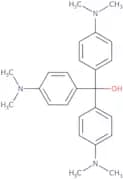
CAS :<p>Solvent Violet 9 is a dye that has antimicrobial activity. It is used in diagnostic tests for infectious diseases and eye disorders. Solvent Violet 9 has shown to inhibit the growth of bacteria, fungi, and protozoa. This dye binds to fatty acids found on the surface of corneal endothelial cells and prevents bacterial attachment. Diazonium salt is used to synthesize this dye, which can be hydrolyzed by hydrochloric acid to form hydrogen bond with benzalkonium chloride. The absorption enhancer enhances the color of this dye when it is applied to clothing or other materials. The binding constants for this dye have been measured using an experimental technique called spectrophotometry. This dye also has anti-inflammatory properties due to its ability to bind with antimicrobial peptides and inhibit prostaglandin synthesis in inflammatory diseases such as rhizoma gastrodiae.</p>Formule :C25H31N3ODegré de pureté :(%) Min. 80%Masse moléculaire :389.53 g/molAcid Red 154
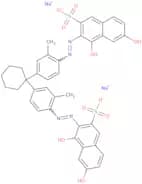
CAS :<p>Acid Red 154 is a pigment that is soluble in organic solvents and has an acidic nature. It is a reddish-brown liquid with a particle diameter of 10-20 nm. This product is used as a dye, and it has been shown to have low toxicity. Acid Red 154 contains hydrogen peroxide, which is the active substance responsible for its color change. The dyestuff can be used in printing inks or as an additive to coatings and plastics.</p>Degré de pureté :Min. 95%Acridine orange base
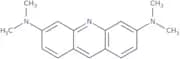
CAS :<p>Acridine orange is a fluorescent dye that can pass through the cell membrane and bind to the cytoplasmic structures of cells. It can be used as a probe for determining the presence of cell nuclei, mitochondria, and other organelles. Acridine orange is also used in experiments to determine mitochondrial membrane potential. In this type of experiment, acridine orange is added to cells and its uptake into mitochondria is observed. The dye changes color from orange to green when it binds with the mitochondria because it emits green fluorescence at higher excitation wavelengths than red fluorescence. Acridine orange has been shown to increase fatty acid synthesis by binding with fatty acid synthase, which is an enzyme involved in fatty acid biosynthesis. Acridine orange also increases ATP levels by inhibiting oxidative phosphorylation in mitochondria.</p>Formule :C17H19N3Couleur et forme :Orange PowderMasse moléculaire :265.35 g/molPigment Blue 10
CAS :<p>Pigment Blue 10 is a cationic dye that belongs to the class of quaternary ammonium compounds. It is often used in textile and leather processing as a cross-linking agent and as an auxiliary agent for pigmenting. Pigment Blue 10 has good light resistance, high solubility in organic solvents, and low toxicity. It is also used in radiation curing processes, such as epoxy resin, acrylate resin, polyester resin, and silicone rubber. Pigment Blue 10 can be used with salt compounds or aliphatic hydrocarbons to form a film on surfaces or objects. It has been shown to have biodegradable properties when mixed with other substances.</p>Degré de pureté :Min. 95%Bromocresol green, sodium salt
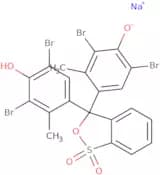
CAS :<p>Bromocresol green is a dye that is used in biological assays to measure the kinetics of fluorescence. It is a type of tryptophan-releasing compound that releases a yellowish-green light when it absorbs light at wavelengths between 350 and 450 nm. Bromocresol green has been quantified by measuring the intensity of the fluorescence emission as a function of time. This can be done visually or using an instrument called a fluorometer, which detects changes in light intensity over time. Bromocresol green can be used to detect the presence of amino acid residues in proteins through protonation reactions with their tryptophan residues and subsequent quenching with acetonitrile. The bromocresol green dye is also used in lithographic printing, where it serves as an acceptor for electrons from an arene (aromatic hydrocarbon). This process generates energy for lithography and also provides contrast between regions with different electron densities.</p>Formule :C21H14Br4O5SNaCouleur et forme :PowderMasse moléculaire :721 g/molDirect Black 22
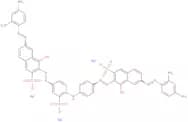
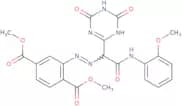
CAS :<p>Direct Black 22 is a carbon-based nanomaterial that can be used for wastewater treatment. This material is photoelectrochemical and has been shown to have the ability to mineralize organic matter and other pollutants in wastewater. Direct Black 22 is biodegradable, which means it will break down into carbon dioxide and water. Direct Black 22 also has an affinity for estrogen and hydrogen peroxide, which makes it a good candidate for removing these substances from wastewater. Direct Black 22 has been shown to be efficient in treatments of high salinity wastewaters.</p>Formule :C44H32N13Na3O11S3Couleur et forme :Brown PowderMasse moléculaire :1,083.97 g/molC.I.Disperse Orange 32
CAS :<p>Please enquire for more information about C.I.Disperse Orange 32 including the price, delivery time and more detailed product information at the technical inquiry form on this page</p>Degré de pureté :Min. 95%Brilliant blue FCF
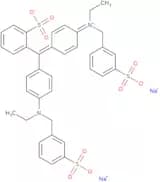
CAS :<p>Brilliant blue FCF is a water-soluble dye that has been used for many purposes, including as a food coloring and in wastewater treatment. It is an intensely blue powder that is soluble in water and reactive to acids. The toxicity of this substance has been extensively studied, with long-term studies showing no significant negative effects on the liver or other organs. In addition, it does not cause any toxic effects when tested on human serum. The adsorption of brilliant blue FCF onto activated carbon or silica gel beads has been shown to be reversible and time-dependent. This dye can also be quantified using an analytical method involving surface methodology coupled with electrochemical impedance spectroscopy.</p>Formule :C37H34N2Na2O9S3Couleur et forme :PowderMasse moléculaire :792.85 g/molPhenol red sodium salt
CAS :<p>Phenol red is a pH indicator that finds broad applications from chemistry to microbiology. Colour varies from yellow at pH<6.8 (lmax 443nm) through to light red/pink at 6.8<pH<8.2 (lmax 570 nm) to vivid purple/red at pH>8.2. It is widely used in cell culture to monitor pH and for colorimetric titration. For example, phenol red can be used to quantify Br- content in sea or fresh water. It is added to VTM as pH indicator, at the concentration of 10mg/ml, maintaining a pink colour at neutral pH.</p>Formule :C19H13NaO5SCouleur et forme :Slightly Brown Red PowderMasse moléculaire :376.36 g/molPigment yellow 155
CAS :<p>Pigment yellow 155 is a polycarboxylic acid. It has a hydroxyl group and a polymerization initiator that can polymerize monomers to form polymers. Pigment yellow 155 is soluble in organic solvents, such as alcohols and ketones. It also has functional groups, which are groups of atoms on a molecule that can react with other substances. Pigment yellow 155 is used in the production of paints, plastics, rubber, textiles, and paper. The pigment’s color varies depending on its particle size. Pigment yellow 155 is typically used for coloring objects for use in electrophotography because it produces high-quality images when exposed to light or laser radiation.</p>Formule :C34H32N6O12Masse moléculaire :716.65 g/molSolvent Red 149
CAS :<p>Solvent Red 149 is an organic solvent that is used in the development of photographic emulsions. It has a low average particle diameter, high thermal expansion, and low volatility. Solvent Red 149 has been used as a sensor for environmental pollution. This compound has been shown to inhibit polymerization reactions by acting as an inhibitor of an essential step in the process. The hydroxyl group on the molecule can be used for authenticating purposes because it reacts with sulfuric acid to form a red dye.</p>Formule :C23H22N2O2Degré de pureté :Min. 95%Couleur et forme :PowderMasse moléculaire :358.43 g/molAcid red 128
CAS :<p>Acid Red 128 is a red dye that is used as a food colorant and as a pharmaceutical drug. Acid Red 128 is used in the diagnosis of bacterial strains, viruses, and human proteins. It has been shown to have antiviral activity against influenza virus and HIV. The hydroxyl group on the molecule reacts with the amino group of an amino acid or protein to form an ester bond, which links two molecules together. This reaction product is called a cross-link. Acid Red 128 can also be used as a growth factor by increasing cellular protein synthesis.</p>Degré de pureté :Min. 95%C.I.Basic Yellow 25
CAS :<p>C.I. Basic Yellow 25 is a methoxylated, basic dye that belongs to the class of cationic surfactants. It is used as a cross-linking agent in coatings, adhesives, and inks. The chromophore of this compound is hydroxyl group, which reacts with chloride to form an ion pair with a constant charge ratio of 2:1, which can be stabilized by the cross-linking reaction. This compound is reactive and is able to crosslink with other molecules containing carbonyl groups. C.I. Basic Yellow 25 can also act as a polymerization inhibitor for polyvinyl chloride (PVC) resin and has been shown to be effective in preventing the formation of chlorinated dioxins during PVC production</p>Degré de pureté :Min. 95%Weak Acid Yellow 3G
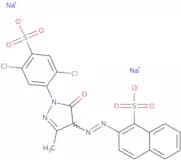
CAS :<p>Weak Acid Yellow 3G is a benzyl ester of an aliphatic polyhydric alcohol. It is a clear, amber liquid with a pH of 6.5-7.5 and can be used in the production of microspheres and monomers for organic solvent extraction and surface treatment. When diluted with water, it has an alkaline reaction system. This product is soluble in aliphatic hydrocarbons, alcohols and ethers, but insoluble in water and most other common solvents. Weak Acid Yellow 3G can be used as a surfactant and surface active agent to simplify reactions systems by removing the need for additional reagents or solvents.</p>Formule :C39H26Cl4N8Na2O8S2Degré de pureté :Min. 95%Masse moléculaire :986.6 g/molPigment Red 58:2
CAS :<p>Please enquire for more information about Pigment Red 58:2 including the price, delivery time and more detailed product information at the technical inquiry form on this page</p>Degré de pureté :Min. 95%Pigment yellow 182
CAS :<p>Pigment Yellow 182 is a heat-resistant organic pigment that is used as the yellow in some traffic paints. It can be polymerized by an initiator, such as eugenol, and has a molecular weight of 191. Pigment Yellow 182 has a particle diameter of 2.5 nm and is insoluble in water. Pigment Yellow 182 absorbs light with wavelengths between 580 and 640 nm and therefore appears bright yellow to the human eye.</p>Degré de pureté :Min. 95%Fuchsin, for flagella staining, certified
CAS :<p>Please enquire for more information about Fuchsin, for flagella staining, certified including the price, delivery time and more detailed product information at the technical inquiry form on this page</p>Formule :C20H20ClN3Degré de pureté :Min. 95%Couleur et forme :PowderMasse moléculaire :337.8 g/molC.I.Acid Yellow 19
CAS :<p>Please enquire for more information about C.I.Acid Yellow 19 including the price, delivery time and more detailed product information at the technical inquiry form on this page</p>Degré de pureté :Min. 95%C.I.Direct green 28
CAS :<p>C.I.Direct green 28 is a site-specific fluorescent dye that binds to guanine nucleotide-binding proteins, which are involved in the regulation of heart function and signal pathways. The α subunit of these proteins has been shown to bind C.I.Direct green 28, with a hydroxyl group on the amino terminus and an ubiquitin ligase at the carboxyl terminus. This binding inhibits polymerase chain reaction (PCR) amplification by interfering with the ubiquitin proteasome pathway, which results in decreased light emission and hematopoietic cell production. This activity is hypothesized to be due to the inhibition of ATPase activity by C.I.Direct green 28, which leads to decreased phosphorylation of E1A-activating enzyme and increased phosphorylation of E2F-repressing enzyme, preventing DNA replication through transcriptional activation of erythroid transcription factors and halting progression through G1/S phase</p>Degré de pureté :Min. 95%C.I.Vat green 17
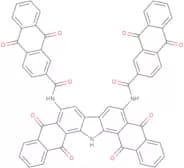
CAS :<p>Please enquire for more information about C.I.Vat green 17 including the price, delivery time and more detailed product information at the technical inquiry form on this page</p>Degré de pureté :Min. 95%