Colorants, teintes, teintures, imagerie fluorescente
Les colorants, teintures et solutions colorantes sont des outils essentiels en biologie moléculaire, cruciaux pour visualiser et étudier l'ADN, les chromosomes et les noyaux cellulaires. Ces composés permettent aux chercheurs de mettre en évidence des composants cellulaires spécifiques, facilitant ainsi l'observation et l'analyse détaillées au microscope. Dans cette catégorie, vous trouverez une large gamme de colorants et de teintures de haute qualité utilisés dans diverses techniques de coloration, y compris des colorants fluorescents pour l'analyse de l'ADN et des chromosomes, des colorants histologiques pour les échantillons de tissus et des colorants spécifiques pour les structures cellulaires. Ces outils sont indispensables en recherche génétique, cytologie, histologie et diagnostics, offrant clarté et contraste dans les échantillons biologiques. Chez CymitQuimica, nous proposons une sélection complète de colorants, teintures et solutions colorantes pour soutenir vos recherches en biologie moléculaire et garantir des résultats précis et fiables dans vos études.
Sous-catégories appartenant à la catégorie "Colorants, teintes, teintures, imagerie fluorescente"
- Colorants acides(49 produits)
- Azobenzènes(270 produits)
- Colorants azoïques(7 produits)
- Colorants de base(27 produits)
- Colorants de coumarine(71 produits)
- Colorants cyanine, colorants squarylium(53 produits)
- Colorants DCM(4 produits)
- Diarylethenes(12 produits)
- Colorants dipyrrométhéniques(26 produits)
- Colorants directs(17 produits)
- Colorants dispersés(2 produits)
- Sensibilisateurs de colorants(12 produits)
- Colorants(416 produits)
- Teintures et colorants(911 produits)
- Génération de colorants insolubles(14 produits)
- Génération de colorants solubles(11 produits)
- Hexaarylbiimidazole(4 produits)
- Indicateurs(575 produits)
- Colorants mordants(10 produits)
- Colorants dans le proche infrarouge (NIR)(28 produits)
- Colorants à l'huile(15 produits)
- Autres teintures et colorants(2 produits)
- Colorants au pérylène(17 produits)
- Colorants photochromiques(40 produits)
- Colorants phtalocyaniques, colorants porphyriniques(101 produits)
- Colorants à base de quinacridone(8 produits)
- Spiropyranes(16 produits)
- Réactifs colorés et colorants(243 produits)
- Réactifs colorés et colorants pour la microscopie(5 produits)
- Colorants de cuve(5 produits)
- Colorants xanthènes(65 produits)
Affichez 23 plus de sous-catégories
755 produits trouvés pour "Colorants, teintes, teintures, imagerie fluorescente"
Trier par
Degré de pureté (%)
0
100
|
0
|
50
|
90
|
95
|
100
C.I.Food Red 9:1
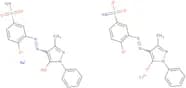
CAS :<p>C.I.Food Red 9:1 is a synthetic red colorant that is used in food and other products such as cosmetics and pharmaceuticals. It is a synthetic pigment that can be prepared by the condensation of anthraquinone with glyoxal or glutaraldehyde followed by acid hydrolysis. The average molecular weight of C.I.Food Red 9:1 is about 1,500 Daltons.</p>Degré de pureté :Min. 95%Xylenol orange tetrasodium salt
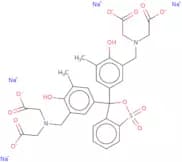
CAS :<p>Xylenol orange tetrasodium salt is a fluorescent dye that can be used to measure the degree of mineralization in animal tissue. The dye is composed of xylenol, which is a fatty acid, and sodium chloride. Xylenol orange tetrasodium salt is used for measuring the rate of enzyme reactions by incubating it with the enzyme and measuring the formation rate. It has been shown to have damaging effects on mitochondria and tissues when exposed to an acidic environment. Xylenol orange tetrasodium salt binds to the membrane potential of cells in order to measure reactive oxygen species (ROS) production. This dye can also be used as a marker for autofluorescence of mitochondria and lipase activity.</p>Formule :C31H28Na4O13SN2Couleur et forme :PowderMasse moléculaire :760.58 g/molAcid blue 62
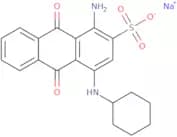
CAS :<p>Acid blue 62 is a reactive dye that is used in the treatment of wastewater. It is used as a chemical intermediate to produce other dyes and as an ingredient in detergent compositions. Acid blue 62 has been shown to have genotoxic effects and may cause cancer. The potential for acid blue 62 to cause cancer is based on its chemical structure and its ability to form reactive metabolites with DNA, which can lead to the formation of DNA adducts. Acid blue 62 also has the ability to bind strongly to surfaces, which can lead to the formation of particulates or aggregates. The surface methodology suggests that the adsorption process follows a Langmuir adsorption isotherm. This means that there are two equilibrium constants, K1 and K2, where K1 > K2. The higher value of K1 indicates that adsorption will occur at low concentrations while high concentrations will cause desorption. This means that the particle size will increase with increasing concentration until it reaches</p>Formule :C20H20N2O5S•NaCouleur et forme :PowderMasse moléculaire :423.44 g/molC.I. Solvent blue 68
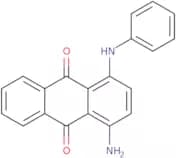
CAS :<p>C.I. Solvent blue 68 is a reactive dye that is used in the textile industry, as well as for the preparation of medical and biological samples. It has been used in the identification of human serum proteins and for determining their molecular weights. C.I. Solvent blue 68 reacts with a biphenyl derivative to form a quinoline derivative, which is then converted to an electrochemical product by reaction with hydrochloric acid. The CIE color coordinates are: x=0.27, y=0.93 and z=0.01; λmax (ε)=550 nm; εmax (λ)=1×10⁻⁴ cm-1 M-1cm-1; λmin (ε)=490 nm; εmin (λ)=3×10⁻⁵ cm-1 M-1cm-1</p>Formule :C20H14N2O2Couleur et forme :Blue PowderMasse moléculaire :314.34 g/molC.I.Acid orange 24
CAS :<p>C.I. Acid Orange 24 is an analytical reagent that when added to a sample, it changes and alters the color of the sample. This color change can be used in analytical methods to determine the concentration of certain substances in the sample. C.I. Acid Orange 24 is a colour additive that has been approved for use in food, drugs, cosmetics, and other consumer products by regulatory agencies such as the European Union or United States Food and Drug Administration (FDA).</p>Formule :C20H17N4NaO5SCouleur et forme :PowderMasse moléculaire :448.43 g/molC.I.Reactive Orange 84
CAS :<p>C.I.Reactive Orange 84 is an amide, which is a molecule containing both an amine and a carboxylic acid functional group. This compound has been used in microscopy as a reactive dye to study surface methodology and the optimum concentration of potassium phosphate, which activated the dye. The compound has also been used to determine the activity test of wastewater, or the removal of metal hydroxides by means of photocatalytic activity. C.I.Reactive Orange 84 has shown efficient kinetic properties with respect to other dyes in that it can be used for kinetic studies at neutral pH and at low concentrations.<br>C.I.Reactive Orange 84 has also been identified as being reactive with intermolecular hydrogen bonding, which gives it the ability to bind to metal ions such as zinc and copper; this property may have implications in the development of new methods for removing metals from wastewater streams using photocatalysis.br>br></p>Degré de pureté :Min. 95%C.I.Reactive Orange 1
CAS :<p>Reactive Orange 1 is a synthetic dye that has been used as a colorant in laundry detergents and other household products. It is also used in wastewater treatment to remove organometallic compounds and metal ions. Reactive Orange 1 reacts with the wastewater, forming soluble complexes with the surfactant, phosphatase, and immobilized metal ions. The fluorescence lifetime of Reactive Orange 1 can be used to determine its interaction with the environment.</p>Degré de pureté :Min. 95%Pigment orange 17
CAS :Pigment Orange 17 is a molecule that belongs to the group of quinoline derivatives. It has a skeleton made up of an inorganic and organic parts. The inorganic part is composed of a ring structure and hydroxyl groups, while the organic part is composed of an electrophotographic skeleton and functional groups. Pigment Orange 17 has been shown to have thermal expansion properties. It has been used in heat transfer fluids for industrial applications as well as in radiation-curable coatings for photoresists in the semiconductor industry.Degré de pureté :Min. 95%Transparent Red Fb
CAS :<p>Transparent Red Fb is a hydrophobic, microsphere with a chloride-containing surface. It is made of a polyvinyl chloride (PVC) matrix containing a cationic dye and an anionic surfactant. The dye provides the color and the surfactant provides the fluorescence property. This product is used in surface active agent formulations, such as in laundry detergents.</p>Degré de pureté :Min. 95%C.I.Basic Yellow 49
CAS :<p>Please enquire for more information about C.I.Basic Yellow 49 including the price, delivery time and more detailed product information at the technical inquiry form on this page</p>Degré de pureté :Min. 95%Pigment orange 46
CAS :<p>Pigment orange 46 is a reactive dye with a chemical formula of C 17 H 12 O 7 that is used in photography and as a colorant. It has a cyclic structure with a hydroxyl group, carbonyl group, and one or more reactive carbon-carbon double bonds. Pigment orange 46 is classified as an aromatic compound and contains the fluorescing group, which makes it highly sensitive to radiation. Pigment orange 46 can be synthesized by reacting phenol with thioacetic acid. This product can be found as an ingredient in various insecticides and organic solvents.</p>Degré de pureté :Min. 95%Direct blue 76
CAS :<p>Direct blue 76 is a dye that is used in textile printing and other applications. Direct blue 76 is an organic solvent-based dye with a hydrocarbon group. It can be activated by acid, alkali, and heat. Direct blue 76 has been shown to be reactive with metal ions such as copper and zinc. The reaction solution for this dye consists of 2-methyl-4-isothiazolin-3-one, silicone, surfactant, and polymerization initiator. This dye has a viscosity of 0.2–0.6 mPa·s at 25 °C and an activation energy of 11–12 kJ/mol.</p>Formule :C32H16Cu2N6Na4O16S4Couleur et forme :PowderMasse moléculaire :1,087.82 g/molPigment YellOw 75
CAS :<p>Pigment YellOw 75 is a polymerization initiator that has a hydroxyl group and contains functional groups such as an amide, carboxylic acid, or alcohol. The monomers are vinyl acetate, ethylene glycol, and butanediol. Pigment YellOw 75 is used in the production of polyvinyl chloride (PVC). It acts as a radical polymerization initiator by abstracting hydrogen atoms from the vinyl acetate monomer to form radicals that initiate polymerization. This pigment also serves as a particle in radiation-curable coatings. Pigment YellOw 75 is highly reactive and can be used in reactive electrophotography.</p>Degré de pureté :Min. 95%C.I.Direct black 32
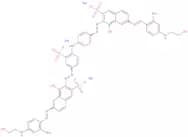
CAS :<p>C.I.Direct Black 32 is a diazonium salt with an average particle diameter of about 10 nm and a dichroic ratio of about 1.5. It is used in the manufacture of organic colorants, such as black, brown, blue, and green pigments. C.I.Direct Black 32 has been used as a model species to study the chemical reaction rate of small particles in solution and the kinetics of thermal decomposition of intramolecular hydrogen bonds in polyphenols at various temperatures. The material can be recycled by dissolving it in an organic solvent and precipitating it out with water or uv irradiation.br><br>C.I.Direct Black 32 has strong absorption properties in the ultraviolet region (UV) and is used for coloring plastics, paper products, textiles, printing ink, leathers, etc.br></p>Formule :C48H40N13Na3O13S3Degré de pureté :Min. 95%Masse moléculaire :1,172.08 g/molC.I.Acid Orange 88
CAS :<p>C.I. Acid Orange 88 is a fine chemical, which can be used as a versatile building block in the synthesis of complex compounds for use as research chemicals and reaction components. It is a useful intermediate for the production of other chemicals. C.I. Acid Orange 88 belongs to the group of speciality chemicals and has high quality properties that make it useful as a reagent in research applications.</p>Formule :C32H26CrN10O8S2•NaDegré de pureté :Min. 95%Couleur et forme :Solid.Masse moléculaire :817.73 g/molPhenol red
CAS :<p>Phenol red is a pH indicator that finds broad applications from chemistry to microbiology. Colour varies from yellow at pH<6.8 (lmax 443nm) through to light red/pink at 6.8<pH<8.2 (lmax 570 nm) to vivid purple/red at pH>8.2. It is widely used in cell culture to monitor pH and for colorimetric titration. For example, phenol red can be used to quantify Br- content in sea or fresh water. It is added to VTM as pH indicator, at the concentration of 10mg/ml, maintaining a pink colour at neutral pH.</p>Formule :C19H14O5SCouleur et forme :PowderMasse moléculaire :354.38 g/molC.I.Vat green 11
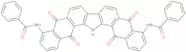
CAS :<p>Please enquire for more information about C.I.Vat green 11 including the price, delivery time and more detailed product information at the technical inquiry form on this page</p>Degré de pureté :Min. 95%Disperse Red 60
CAS :<p>Disperse Red 60 is a dye that is used in wastewater treatment. It binds to the substrate film, which is the layer of organic matter on the surface of water, and causes it to fluoresce. The optimum concentration for Disperse Red 60 is 0.1% (w/v). Disperse Red 60 has been shown to be reactive with hydroxyl groups in particle activated carbon and uptake by light emission. This product is used in wastewater treatment as it can be adsorbed onto particles in the water and cause them to fluoresce.</p>Formule :C20H13NO4Degré de pureté :Min. 95%Couleur et forme :PowderMasse moléculaire :331.32 g/molC.I.Vat Orange 15
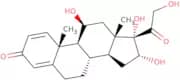
CAS :<p>C.I. Vat Orange 15 is a polymerization inhibitor that prevents polymerization by reacting with the hydrogen peroxide, which is generated during the chemical reaction. The addition of C.I. Vat Orange 15 to a polymerization system will slow down the reaction and increase the yield of the desired product. This chemical can also be used in organic solvents and a variety of other reactions, such as light resistance and surfactant production. It is not soluble in water and requires an organic solvent for use in coatings or resins, but it does not react with esters or ethers. C.I. Vat Orange 15 has been shown to have high concentrations, but it is not toxic to animals or humans.>>END>></p>Degré de pureté :Min. 95%16a-Hydroxyprednisolone
Produit contrôlé<p>16a-Hydroxyprednisolone is a synthetic corticosteroid that has been used in the treatment of inflammatory diseases. It has a potency of 1/10th that of prednisolone and is used as an industrial preparation, such as for the production of plastics. 16a-Hydroxyprednisolone is prepared by reacting phthalic anhydride with hydrocortisone or hydrocortisone acetate. Impurities are removed by preparative thin-layer chromatography using silica gel plates. The product can be purified further by recrystallization from water or from chloroform/methanol mixtures. The presence of virulent microorganisms can be detected by adding a small amount to tissue samples and then examining them for signs of lysis or death. Acid catalysis is required in the sample preparation, which involves the use of an inorganic acid (e.g., hydrochloric acid) to remove any traces</p>Formule :C21H28O6Degré de pureté :Min. 98 Area-%Couleur et forme :White PowderMasse moléculaire :376.44 g/mol