Colorants, teintes, teintures, imagerie fluorescente
Les colorants, teintures et solutions colorantes sont des outils essentiels en biologie moléculaire, cruciaux pour visualiser et étudier l'ADN, les chromosomes et les noyaux cellulaires. Ces composés permettent aux chercheurs de mettre en évidence des composants cellulaires spécifiques, facilitant ainsi l'observation et l'analyse détaillées au microscope. Dans cette catégorie, vous trouverez une large gamme de colorants et de teintures de haute qualité utilisés dans diverses techniques de coloration, y compris des colorants fluorescents pour l'analyse de l'ADN et des chromosomes, des colorants histologiques pour les échantillons de tissus et des colorants spécifiques pour les structures cellulaires. Ces outils sont indispensables en recherche génétique, cytologie, histologie et diagnostics, offrant clarté et contraste dans les échantillons biologiques. Chez CymitQuimica, nous proposons une sélection complète de colorants, teintures et solutions colorantes pour soutenir vos recherches en biologie moléculaire et garantir des résultats précis et fiables dans vos études.
Sous-catégories appartenant à la catégorie "Colorants, teintes, teintures, imagerie fluorescente"
- Colorants acides(49 produits)
- Azobenzènes(270 produits)
- Colorants azoïques(7 produits)
- Colorants de base(27 produits)
- Colorants de coumarine(71 produits)
- Colorants cyanine, colorants squarylium(53 produits)
- Colorants DCM(4 produits)
- Diarylethenes(12 produits)
- Colorants dipyrrométhéniques(26 produits)
- Colorants directs(17 produits)
- Colorants dispersés(2 produits)
- Sensibilisateurs de colorants(12 produits)
- Colorants(416 produits)
- Teintures et colorants(911 produits)
- Génération de colorants insolubles(14 produits)
- Génération de colorants solubles(11 produits)
- Hexaarylbiimidazole(4 produits)
- Indicateurs(575 produits)
- Colorants mordants(10 produits)
- Colorants dans le proche infrarouge (NIR)(28 produits)
- Colorants à l'huile(15 produits)
- Autres teintures et colorants(2 produits)
- Colorants au pérylène(17 produits)
- Colorants photochromiques(40 produits)
- Colorants phtalocyaniques, colorants porphyriniques(101 produits)
- Colorants à base de quinacridone(8 produits)
- Spiropyranes(16 produits)
- Réactifs colorés et colorants(243 produits)
- Réactifs colorés et colorants pour la microscopie(5 produits)
- Colorants de cuve(5 produits)
- Colorants xanthènes(65 produits)
Affichez 23 plus de sous-catégories
755 produits trouvés pour "Colorants, teintes, teintures, imagerie fluorescente"
Trier par
Degré de pureté (%)
0
100
|
0
|
50
|
90
|
95
|
100
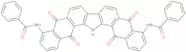
C.I.Vat Orange 15
CAS :<p>C.I. Vat Orange 15 is a polymerization inhibitor that prevents polymerization by reacting with the hydrogen peroxide, which is generated during the chemical reaction. The addition of C.I. Vat Orange 15 to a polymerization system will slow down the reaction and increase the yield of the desired product. This chemical can also be used in organic solvents and a variety of other reactions, such as light resistance and surfactant production. It is not soluble in water and requires an organic solvent for use in coatings or resins, but it does not react with esters or ethers. C.I. Vat Orange 15 has been shown to have high concentrations, but it is not toxic to animals or humans.>>END>></p>Degré de pureté :Min. 95%16a-Hydroxyprednisolone
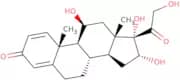
Produit contrôlé<p>16a-Hydroxyprednisolone is a synthetic corticosteroid that has been used in the treatment of inflammatory diseases. It has a potency of 1/10th that of prednisolone and is used as an industrial preparation, such as for the production of plastics. 16a-Hydroxyprednisolone is prepared by reacting phthalic anhydride with hydrocortisone or hydrocortisone acetate. Impurities are removed by preparative thin-layer chromatography using silica gel plates. The product can be purified further by recrystallization from water or from chloroform/methanol mixtures. The presence of virulent microorganisms can be detected by adding a small amount to tissue samples and then examining them for signs of lysis or death. Acid catalysis is required in the sample preparation, which involves the use of an inorganic acid (e.g., hydrochloric acid) to remove any traces</p>Formule :C21H28O6Degré de pureté :Min. 98 Area-%Couleur et forme :White PowderMasse moléculaire :376.44 g/molC.I.Disperse Orange 89
CAS :<p>Please enquire for more information about C.I.Disperse Orange 89 including the price, delivery time and more detailed product information at the technical inquiry form on this page</p>Degré de pureté :Min. 95%Propyl red
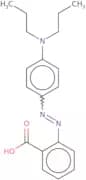
CAS :<p>Propyl red is a diacetate that is used in the diagnosis of infectious diseases. The color of propyl red is due to the presence of an acetate group and its affinity for nucleic acids, which allows it to be used as a stain in blood culture. Propyl red has been shown to have a catalytic effect on the oxidation of hydrogen peroxide and can be used as a chromophore in the detection of radiation. The optical properties of propyl red are dependent on pH, with the maximum absorbance at pH 3.5-4.5 and minimum absorbance at pH 7-8.<br>The molecular weight and protonation state are also important factors for determining optical properties. It has been shown that propyl red can be used to highlight mastitis by visualizing milk fat globules within cells.END>></p>Formule :C19H23N3O2Degré de pureté :Min. 95%Couleur et forme :PowderMasse moléculaire :325.4 g/molC.I.Disperse Blue 87:1
CAS :<p>Please enquire for more information about C.I.Disperse Blue 87:1 including the price, delivery time and more detailed product information at the technical inquiry form on this page</p>Degré de pureté :Min. 95%C.I.Mordant Orange 3
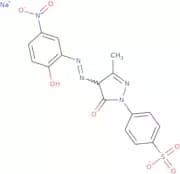
CAS :<p>Please enquire for more information about C.I.Mordant Orange 3 including the price, delivery time and more detailed product information at the technical inquiry form on this page</p>Formule :C16H13N5O7S·NaDegré de pureté :Min. 95%Masse moléculaire :442.36 g/molAcid Orange 33
CAS :<p>Acid Orange 33 is a synthetic diazo dye used as a colorant and a dye intermediate. It is soluble in water and organic solvents, but insoluble in oils. Acid Orange 33 can be used as an ophthalmic or topical agent for the treatment of various skin conditions, such as acne. The mechanism of action of this drug is not yet fully understood, but it is known to cleave collagen at specific sites. Acid Orange 33 may also have anti-inflammatory properties, which are due to its cationic character and ability to bind with amines.<br>The reaction time for Acid Orange 33 varies depending on the type of amine that it binds to, with lower reactivity observed when it binds to more basic amines (e.g., methylamine).</p>Degré de pureté :Min. 95%C.I.Solvent Orange 56
CAS :<p>Please enquire for more information about C.I.Solvent Orange 56 including the price, delivery time and more detailed product information at the technical inquiry form on this page</p>Degré de pureté :Min. 95%Pigment Yellow 110
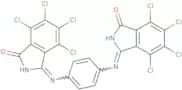
CAS :<p>Pigment Yellow 110 is a colorant that is used in coatings, plastics, and rubber. Pigment Yellow 110 is a derivative of the pigment barium sulfate, which exhibits thermal expansion. Pigment Yellow 110 has an absorption maximum at 590 nm, with a particle size of approximately 8 µm. This product also has reactive functional groups that can cross-link to calcium carbonate and glycol esters.</p>Formule :C22H6Cl8N4O2Couleur et forme :PowderMasse moléculaire :641.93 g/molAlizarin red S
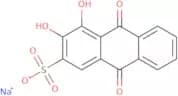
CAS :<p>Alizarin red is used in histology and medicine to stain calcium-containing specimens, e.g. bones and calcifications. Chromogenic substrates for enzymes based on alizarin have been developed and, as an example, alizarin-beta-D-galactoside (Aliz-gal) has been reported for the detection of bacterial beta-galactosidase by researchers at the University of Northumbria and the Freeman Hospital, Newcastle upon Tyne in the UK (James, 2000).</p>Formule :C14H7O7SNaCouleur et forme :PowderMasse moléculaire :342.26 g/molMalachite green oxalate
CAS :<p>Malachite green oxalate is an adsorbent that can be used for wastewater treatment. It has a high affinity for organic molecules, which allows it to remove the substances from water. Malachite green oxalate reacts with the dissolved organic molecules and forms a strong bond with them, which prevents them from being redeposited in the water. The reaction mechanism of malachite green oxalate is based on its ability to adsorb onto the surface of organic molecules and react with them. The Langmuir adsorption isotherm shows that malachite green oxalate has a significant cytotoxicity and toxicological effect on human cells. Malachite green oxalate also binds to p-nitrophenyl phosphate (PNPP) in human serum, which is an enzyme substrate that is involved in many metabolic processes such as glycolysis and gluconeogenesis. The optical sensor was used to measure the redox potential of malachite green</p>Formule :C23H25N2•(C2H2O4)0•C2HO4Degré de pureté :Min. 95%Couleur et forme :PowderMasse moléculaire :927 g/molICG-alkyne
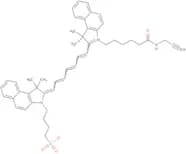
CAS :<p>The non-invasive near-infrared fluorescence imaging dye ICG is used in ophthalmologic angiography to determine cardiac output and liver blood flow and function. The ICG alkyne can be used to label azido functionalised biomolecules eg glycans, lipids and peptides via click chemistry protocols.</p>Formule :C48H53N3O4SDegré de pureté :Min. 95%Couleur et forme :PowderMasse moléculaire :768 g/molC.I.Acid Yellow 158:1
CAS :<p>Please enquire for more information about C.I.Acid Yellow 158:1 including the price, delivery time and more detailed product information at the technical inquiry form on this page</p>Degré de pureté :Min. 95%Acid blue 1
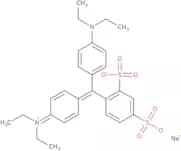
CAS :<p>Acid blue 1 is a reactive dye that reacts with metal hydroxides to form a precipitate. It is used in analytical chemistry as a reagent for the detection of hydroxyl groups, lymphatic vessels, and sodium salts. Acid blue 1 has been shown to have toxic effects on the heart and lungs, but not in all cases. Acid blue 1 has also been shown to be an effective synchronous fluorescence indicator for radiation and light exposure. It is also used as a cationic surfactant in detergent compositions.</p>Formule :C27H31N2NaO6S2Couleur et forme :PowderMasse moléculaire :566.67 g/molC.I.Acid Red 410
CAS :<p>Please enquire for more information about C.I.Acid Red 410 including the price, delivery time and more detailed product information at the technical inquiry form on this page</p>Degré de pureté :Min. 95%C.I.Direct Blue 72
CAS :<p>C.I. Direct Blue 72 is a versatile compound with various applications. It is used in the field of molybdenum crystallization and photocatalytic reactions. Additionally, it has cholinergic properties, which means it can interact with choline receptors in the body. This compound also contains secoisolariciresinol and sphingosine, which are both phytoestrogens known for their potential health benefits.</p>Formule :C36H22N7Na3O10S3Degré de pureté :Min. 95%Masse moléculaire :877.8 g/molPrussian blue insoluble - Technical grade
CAS :Produit contrôlé<p>Prussian blue insoluble is a natural compound that is used as an industrial dye in the textile industry and as an analytical reagent in the chemical industry. It consists of ferric iron, potassium ferrocyanide, and varying amounts of copper. Prussian blue insoluble has been shown to have genotoxic properties, with x-ray diffraction data indicating it can cause DNA damage. The rate constant for the thermal expansion of Prussian blue insoluble has been determined by measuring the change in volume over time. This reaction solution also has michaelis–menten kinetics and glycol esters. Prussian blue insoluble can be used for wastewater treatment due to its ability to bind heavy metals and radioactive isotopes. It has also been observed that this compound can be used for biological sample testing.</p>Formule :C18Fe7N18Degré de pureté :Min. 95%Couleur et forme :PowderMasse moléculaire :859.23 g/mol2-Naphthol violet
CAS :<p>2-Naphthol violet is a versatile building block that can be used as a reagent, intermediate and scaffold in various chemical reactions. It is a high-quality product and is available at competitive prices. 2-Naphthol violet has been shown to be useful in the synthesis of many different compounds, including pharmaceuticals, fine chemicals, dyes and other specialty chemicals. It is also an important building block for organic synthesis due to its ability to form complex structures. 2-Naphthol violet has CAS number 7143-21-7.</p>Formule :C16H9N3Na2O9S2Degré de pureté :Min. 95%Couleur et forme :PowderMasse moléculaire :497.36 g/molReactive Red 195
CAS :<p>Reactive Red 195 is a synthetic dye that reacts with mineralization. It is used in wastewater treatment to remove organic compounds by oxidation and complexation. Reactive Red 195 undergoes a number of reactions, including hydroxylation, hydrolysis, and photo-degradation. Reactive Red 195 has been shown to have photocatalytic activity, which can be increased by the addition of iron oxides or triazine. The rate of these reactions can be determined using surface methodology such as X-ray photoelectron spectroscopy (XPS).</p>Formule :C31H19ClN7Na5O19S6Degré de pureté :Min. 95%Couleur et forme :PowderMasse moléculaire :1,136.32 g/molDihydrofolate reductase
CAS :<p>Dihydrofolate reductase (DHFR, 1.5.1.3) is a NADP+/NADPH-dependent oxidoreductase, that reduces dihydrofolate to tetrahydrofolate in the following reaction: dihydrofolate + NADPH + H+ ⇌ tetrahydrofolate + NADP+One unit of dihydrofolate reductase will convert 1.0 μmole of dihydrofolic acid into tetrahydrofolic acid in 1 minute at pH 7.5, 22°C and presence of NADPH.</p>Degré de pureté :Min. 95%