Colorants, teintes, teintures, imagerie fluorescente
Les colorants, teintures et solutions colorantes sont des outils essentiels en biologie moléculaire, cruciaux pour visualiser et étudier l'ADN, les chromosomes et les noyaux cellulaires. Ces composés permettent aux chercheurs de mettre en évidence des composants cellulaires spécifiques, facilitant ainsi l'observation et l'analyse détaillées au microscope. Dans cette catégorie, vous trouverez une large gamme de colorants et de teintures de haute qualité utilisés dans diverses techniques de coloration, y compris des colorants fluorescents pour l'analyse de l'ADN et des chromosomes, des colorants histologiques pour les échantillons de tissus et des colorants spécifiques pour les structures cellulaires. Ces outils sont indispensables en recherche génétique, cytologie, histologie et diagnostics, offrant clarté et contraste dans les échantillons biologiques. Chez CymitQuimica, nous proposons une sélection complète de colorants, teintures et solutions colorantes pour soutenir vos recherches en biologie moléculaire et garantir des résultats précis et fiables dans vos études.
Sous-catégories appartenant à la catégorie "Colorants, teintes, teintures, imagerie fluorescente"
- Colorants acides(49 produits)
- Azobenzènes(270 produits)
- Colorants azoïques(7 produits)
- Colorants de base(27 produits)
- Colorants de coumarine(71 produits)
- Colorants cyanine, colorants squarylium(53 produits)
- Colorants DCM(4 produits)
- Diarylethenes(12 produits)
- Colorants dipyrrométhéniques(26 produits)
- Colorants directs(17 produits)
- Colorants dispersés(2 produits)
- Sensibilisateurs de colorants(12 produits)
- Colorants(416 produits)
- Teintures et colorants(911 produits)
- Génération de colorants insolubles(14 produits)
- Génération de colorants solubles(11 produits)
- Hexaarylbiimidazole(4 produits)
- Indicateurs(575 produits)
- Colorants mordants(10 produits)
- Colorants dans le proche infrarouge (NIR)(28 produits)
- Colorants à l'huile(15 produits)
- Autres teintures et colorants(2 produits)
- Colorants au pérylène(17 produits)
- Colorants photochromiques(40 produits)
- Colorants phtalocyaniques, colorants porphyriniques(101 produits)
- Colorants à base de quinacridone(8 produits)
- Spiropyranes(16 produits)
- Réactifs colorés et colorants(243 produits)
- Réactifs colorés et colorants pour la microscopie(5 produits)
- Colorants de cuve(5 produits)
- Colorants xanthènes(65 produits)
Affichez 23 plus de sous-catégories
755 produits trouvés pour "Colorants, teintes, teintures, imagerie fluorescente"
Trier par
Degré de pureté (%)
0
100
|
0
|
50
|
90
|
95
|
100
C.I.Direct Yellow 107
CAS :<p>C.I.Direct Yellow 107 is a versatile dye that can be used for various applications. It is commonly used in the textile industry to dye cellulose-based fabrics, providing vibrant and long-lasting colors. This dye is also used as a stain in laboratory settings, particularly in histology and microscopy, where it helps visualize specific structures or cells.</p>Degré de pureté :Min. 95%C.I.Solvent Orange 41
CAS :<p>Please enquire for more information about C.I.Solvent Orange 41 including the price, delivery time and more detailed product information at the technical inquiry form on this page</p>Degré de pureté :Min. 95%C.I.Reactive blue 225
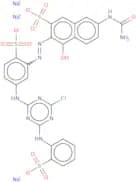
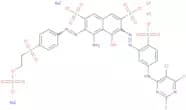
CAS :<p>Please enquire for more information about C.I.Reactive blue 225 including the price, delivery time and more detailed product information at the technical inquiry form on this page</p>Formule :C28H17ClF2Li2N8Na2O16S5Degré de pureté :Min. 95%Masse moléculaire :1,015.12 g/molC.I.Basic Yellow 24
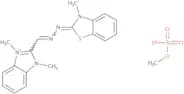
CAS :<p>Please enquire for more information about C.I.Basic Yellow 24 including the price, delivery time and more detailed product information at the technical inquiry form on this page</p>Degré de pureté :Min. 95%Indocyanine green
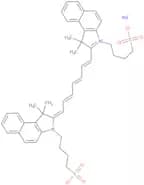
CAS :<p>Indocyanine green is a fluorescent dye with a variety of applications in medical imaging. It has been used to diagnose and evaluate the activity of cancer cells and brain functions. Indocyanine green has also been used as an angiographic agent for diagnosis of solid tumours. In addition, it can be used to evaluate liver function and the blood flow in the brain. The biological properties of indocyanine green have not yet been fully elucidated, but it is known that it binds to hepatocyte-like cells in culture and is found at high levels in human serum. This dye shows fluorescence when bound to DNA or RNA, which indicates its possible use as a molecular probe for detecting carcinoma cells. <br>Indocyanine green is a STT3B inhibitor and has been shown to prevent α-amanitin toxicity in mice (Wang et al, 2023). This means it could be a possible antidote to poisoning by Amanita, such as death cap mushroom Amanita phalloides, which is the cause of over 90% of fatal mushroom poisoning.</p>Formule :C43H47N2O6S2·NaDegré de pureté :(%) Min. 95%Couleur et forme :Green PowderMasse moléculaire :774.96 g/molHydroxy naphthol blue
CAS :<p>羟基萘酚蓝是一种合成偶氮染料,是一种含有官能团RN=N-R的化合物。羟基萘酚蓝三钠盐和二钠盐用作分光光度法测定碱土和镧系元素含量的指示剂,最长为~650 nm(λ麦克斯= 647.6 纳米)。羟基萘酚蓝钠盐的常见用途的一个例子是通过测量钙和镁的浓度来确定水的硬度。在碱性或碱性pH值下,羟基萘酚蓝与金属离子形成粉红色/红色络合物,用EDTA滴定后,羟基萘酚蓝被释放出来,使溶液变成蓝色,指示终点。</p>Formule :C20H11N2O11S3·3NaCouleur et forme :Black Blue PowderMasse moléculaire :620.48 g/molC.I.Direct green 28
CAS :<p>C.I.Direct green 28 is a site-specific fluorescent dye that binds to guanine nucleotide-binding proteins, which are involved in the regulation of heart function and signal pathways. The α subunit of these proteins has been shown to bind C.I.Direct green 28, with a hydroxyl group on the amino terminus and an ubiquitin ligase at the carboxyl terminus. This binding inhibits polymerase chain reaction (PCR) amplification by interfering with the ubiquitin proteasome pathway, which results in decreased light emission and hematopoietic cell production. This activity is hypothesized to be due to the inhibition of ATPase activity by C.I.Direct green 28, which leads to decreased phosphorylation of E1A-activating enzyme and increased phosphorylation of E2F-repressing enzyme, preventing DNA replication through transcriptional activation of erythroid transcription factors and halting progression through G1/S phase</p>Degré de pureté :Min. 95%Disperse yellow 56, technical grade
CAS :<p>Disperse yellow 56 is a high quality, useful intermediate that has been used in research chemicals and speciality chemical production. It is a versatile building block that can be used in the synthesis of complex compounds, and is often used as a reagent or reaction component. Disperse yellow 56 has also been shown to be a useful scaffold for organic synthesis.</p>Formule :C21H15N5O2Degré de pureté :90%Couleur et forme :Red PowderMasse moléculaire :369.38 g/molMethyl green, zinc chloride
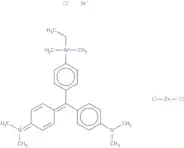
CAS :<p>Methyl green zinc chloride is a reagent that is used as a building block for research chemicals, speciality chemicals, and fine chemicals. It is also an intermediate in the synthesis of many biologically active compounds. Methyl green zinc chloride can be used as a versatile building block in the preparation of complex compounds. It is soluble in water and has CAS number 7114-03-6.</p>Formule :C27H35BrClN3•ZnCl2Degré de pureté :Min. 95%Couleur et forme :PowderMasse moléculaire :653.23 g/molPigment YellOw 5;2-[(2-NitrOphenyl)azO]-3-OxO-N-phenylbutanamide
CAS :<p>Please enquire for more information about Pigment YellOw 5;2-[(2-NitrOphenyl)azO]-3-OxO-N-phenylbutanamide including the price, delivery time and more detailed product information at the technical inquiry form on this page</p>Degré de pureté :Min. 95%Pigment Red 38;Diethyl 4,4'-[(3,3'-dichlOrO[1,1'-biphenyl]-4,4'-diyl)bis(azO)]bis[4,5-dihydrO-5-OxO-1-phenyl-1H-pyrazOle-3-carbOxyla te]
CAS :<p>Pigment Red 38 is a red dye that is used in the production of magnetic particles, cross-linking agents, and fluorescent dyes. Pigment Red 38 has a hydroxyl group at the 4 position and a methyl ethyl group at the 2 position. It can be synthesized from diethyl 4,4'-(3,3'-dichlorobiphenyl)-4,4'-diylbisazolate. Pigment Red 38 is thermoreversible because it can be converted to its anhydrous form when heated or dissolved in water and then reconverted back to its original form when cooled or dried. The pigment was named for its ability to produce light emission when exposed to ultraviolet radiation. Pigment Red 38 has a diameter of 6 nm and reacts with coordination complexes to form particle clusters with diameters ranging from 10-200 nm.</p>Degré de pureté :Min. 95%C.I.Reactive Red 152
CAS :<p>C.I.Reactive Red 152 is a dye that is used to detect the presence of t-DNA in plant tissue and protoplasts. C.I.Reactive Red 152 has been shown to increase the frequency of germination in halophytes, such as Portulacastrum, when used at concentrations between 20 and 50 mg/l, and also has a stimulating effect on seed germination in Portulacastrum, which can be observed by an increased number of root cultures. It is extracted with an organic solvent such as dichloromethane or chloroform, and is then mixed with an equal volume of distilled water before use. The dye should be added to the culture medium just before the explants are placed into it so that it does not interfere with their metabolism. C.I.Reactive Red 152 has been found to amplify the number of rhizogenes when used at a concentration between 10 and 20 mg/l for 5 minutes, but</p>Degré de pureté :Min. 95%C.I.Reactive Orange 2
CAS :<p>Please enquire for more information about C.I.Reactive Orange 2 including the price, delivery time and more detailed product information at the technical inquiry form on this page</p>Degré de pureté :Min. 95%Pigment Red 254
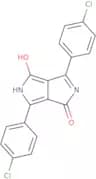
CAS :<p>Pigment Red 254 is a red dyestuff with the chemical formula of C. It is a basic dye that has a hydroxyl group, malonic acid, and diethyl succinate. Pigment Red 254 is usually used in wastewater treatment as it has an affinity for chlorinated organic compounds such as dichlorophenol indophenol, which are commonly found in wastewater. It also absorbs ultraviolet light very well and can be used as a polarizer in liquid chromatography experiments. Pigment Red 254 contains an aromatic hydrocarbon and particle, which makes it useful for organic solutions and liquid chromatography methods.</p>Formule :C18H10Cl2N2O2Degré de pureté :Min. 95%Couleur et forme :PowderMasse moléculaire :357.19 g/molBasic blue 9
CAS :<p>Basic blue 9 is a reactive dye that has been used in wastewater treatment and biological treatment. The adsorption of Basic blue 9 is based on the basicity of the dye, which causes it to have high resistance to degradation by light. It has also been shown to be effective for removal of organic contaminants from water, due to its strong affinity for particle surfaces. Basic blue 9 is an acrylic acid ester with a fatty acid group that can be removed by hydrolysis. The adsorption mechanism of Basic blue 9 is related to kinetic data, which can be obtained through FT-IR spectroscopy.</p>Degré de pureté :Min. 95%C.I.Mordant green 4
CAS :<p>C.I.Mordant green 4 is a dye that is used in the textile industry for dyeing wool and silk. It is an organic compound classified as an azo dye. C.I. Mordant green 4 is used to dye wool, cotton, and other natural fibers in shades of green or blue-green depending on the pH of the solution. The color can also be changed by adding different chemicals such as potassium bichromate or hydrogen peroxide. This product has a particle size of less than 0.1 microns and its color varies depending on the pH of the solution it is added to.br><br>br><br>C.I. Mordant green 4 may be absorbed through skin contact and may cause irritation, dermatitis, allergic reactions, or photosensitivity in some people.br>br><br>Coding: <br>1) Section <br>2) Plant diseases <br>3) Magnetic <br>4) Human immunodeficiency</p>Formule :C10H8NO2·HSO3Degré de pureté :Min. 95%Masse moléculaire :255.25 g/molC.I.Direct Blue 70
CAS :<p>Please enquire for more information about C.I.Direct Blue 70 including the price, delivery time and more detailed product information at the technical inquiry form on this page</p>Degré de pureté :Min. 95%C.I.Vat Yellow 2
CAS :<p>C.I.Vat Yellow 2 is an organic solvent that is used in the formulation of sulfate solutions and additives for various industrial applications. It has been used as a diluent to prepare polycarboxylic acid, which is a reactive compound that can be thermally decomposed to produce polyvinyl pyrrolidone (PVP). C.I.Vat Yellow 2 has shown mitochondrial membrane potential disruption in the presence of light exposure and high concentrations of potassium sulfate.</p>Formule :C28H14N2O2S2Degré de pureté :Min. 95%Couleur et forme :PowderMasse moléculaire :474.56 g/molThiazole orange
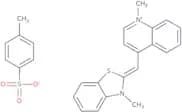
CAS :<p>Thiazole orange is an organic compound that has been used to detect acid in various liquids. It is a stable complex that can be formed with thiazole-5-carboxylic acid and 4,4'-dimethoxybenzhydrol. Thiazole orange changes color from yellow to red at pH values less than 2.0. The detection of the red form of Thiazole orange can be used to identify samples containing low levels of acid. The molecule is also useful for determining the pH of blood samples. This can be done by adding it to a sample and measuring its absorbance at different wavelengths using a spectrophotometer or confocal microscope.</p>Formule :C26H24N2O3S2Couleur et forme :Orange PowderMasse moléculaire :476.61 g/molChicago sky blue 6B
CAS :<p>Chicago sky blue 6B is a water-soluble polymer that is used in the treatment of wastewater. It has been shown to have a high capacity for binding organic compounds, such as benzalkonium chloride, and has been found to be toxic to neuro2a cells. Chicago sky blue 6B can be used as an anti-inflammatory agent due to its ability to inhibit the release of inflammatory mediators such as glutamate.</p>Formule :C34H24N6O16S4•(Na)4Couleur et forme :PowderMasse moléculaire :992.81 g/mol



![Pigment YellOw 5;2-[(2-NitrOphenyl)azO]-3-OxO-N-phenylbutanamide](/_next/image/?url=https%3A%2Fstatic.cymitquimica.com%2Fproducts%2F3D%2Fthumb-webp%2FFP40385.webp&w=3840&q=75)
![Pigment Red 38;Diethyl 4,4'-[(3,3'-dichlOrO[1,1'-biphenyl]-4,4'-diyl)bis(azO)]bis[4,5-dihydrO-5-Ox…](/_next/image/?url=https%3A%2Fstatic.cymitquimica.com%2Fproducts%2F3D%2Fthumb-webp%2FFP43985.webp&w=3840&q=75)