Ligands organométalliques
Sous-catégories appartenant à la catégorie "Ligands organométalliques"
- Ligands de Buchwald(22 produits)
- DPEN(4 produits)
- DPHEN(4 produits)
- JOSIPHOS(4 produits)
- Phosphine(497 produits)
- Porphyrines(75 produits)
2889 produits trouvés pour "Ligands organométalliques"
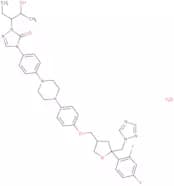
Posaconazole hydrate
CAS :Posaconazole hydrate is an antifungal agent, which is a triazole derivative synthesized for the pharmaceutical industry. It functions by inhibiting the enzyme lanosterol 14α-demethylase, crucial in ergosterol biosynthesis, an essential component of fungal cell membranes. This disruption in ergosterol production leads to increased membrane permeability and ultimately the death of the fungal cells.
Formule :C37H44F2N8O5Degré de pureté :Min. 95%Masse moléculaire :718.8 g/molDO34 analog
CAS :DO34 analog is a biochemical compound, which is synthesized from organic sources to mimic specific biochemical pathways. Its mode of action involves selective modulation or inhibition of enzyme activity, allowing researchers to study various biological processes in vitro and in vivo. The compound is often utilized in fields such as biochemistry, pharmacology, and molecular biology for its ability to influence cellular mechanisms.
Formule :C26H28F3N5O4Degré de pureté :Min. 95%Masse moléculaire :531.5 g/molCCT 241533 hydrochloride
CAS :Potent and specific inhibitor of checkpoint kinase CHK2 with IC50 of 3 nM. CCT 241533 binds to the ATP pocket of CHK2 and shows minimal cross-reactivity against related kinases. CCT 241533 blocked the activity of CHK2 and impaired DNA repair in response to DNA damage in human tumoral cell lines. The compound did not potentiate genotoxicity of several genotoxic compounds but it did potentiate the cytotoxicity of a PARP inhibitor olaparib.
Formule :C23H27FN4O4•HClDegré de pureté :Min. 95%Masse moléculaire :478.94 g/molM 1145
CAS :M 1145 is a monoclonal antibody, which is derived from a highly specific and engineered immunoglobulin source. Its mode of action involves targeting and modulating specific immune cell receptors, disrupting signaling pathways that are critical for the activation and proliferation of these cells. As a result, it can effectively modulate immune responses, making it a promising candidate for therapeutic applications in autoimmune diseases and certain types of cancers.
Formule :C128H205N37O32Degré de pureté :Min. 95%Masse moléculaire :2,774.2 g/molConcanamycin A
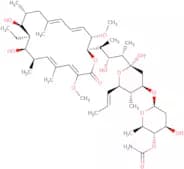
CAS :Inhibitor of vacuolar ATP-ases
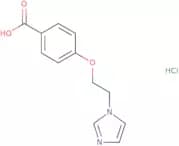
Formule :C46H75NO14Degré de pureté :Min. 95%Couleur et forme :PowderMasse moléculaire :866.09 g/mol4-(2-(1H-Imidazol-1-yl)ethoxy)benzoic acid hydrochloride
CAS :4-(2-(1H-Imidazol-1-yl)ethoxy)benzoic acid hydrochloride is a synthetic chemical compound, which is typically sourced through organic synthesis methods. This compound is characterized by its unique structure featuring an imidazole group linked to a benzoic acid moiety via an ethoxy bridge. The mode of action of this compound predominantly involves interactions at a molecular level with various biological targets, potentially influencing biochemical pathways by mimicking or inhibiting natural biological molecules.
Formule :C12H13ClN2O3Degré de pureté :Min. 95%Masse moléculaire :268.69 g/molcIAP1 ligand 1
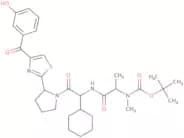
CAS :cIAP1 ligand 1 is a small-molecule inhibitor, which is synthesized through organic chemistry techniques with a focus on targeting protein-protein interactions. It acts by specifically binding to the cellular inhibitor of apoptosis protein 1 (cIAP1), a member of the IAP family known for its role in regulating apoptotic pathways. The ligand's mode of action involves disrupting the interaction between cIAP1 and ubiquitin ligases, leading to the autoubiquitination and subsequent degradation of cIAP1. This destabilization results in the activation of downstream apoptotic signaling cascades, primarily through the extrinsic and intrinsic pathways.
Formule :C31H42N4O6SDegré de pureté :Min. 95%Masse moléculaire :598.8 g/molY1 Receptor antagonist 1
CAS :Y1 Receptor antagonist 1 is a highly specialized pharmaceutical compound, which is derived from synthetic chemical processes, aimed at inhibiting the neuropeptide Y1 receptor. This antagonist operates by selectively blocking the binding of neuropeptide Y (NPY) to the Y1 receptor, a G-protein coupled receptor involved in various physiological processes, including appetite regulation and energy homeostasis.
Formule :C28H33N5O3Degré de pureté :Min. 95%Masse moléculaire :487.6 g/molVercirnon
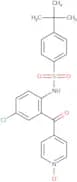
CAS :Vercirnon is a small molecule antagonist, which is derived from synthetic chemical processes with a specific mode of action targeting the CCR9 receptor. This receptor is a chemokine receptor involved in the migration of inflammatory cells to the gastrointestinal tract. By inhibiting the CCR9 receptor, Vercirnon aims to reduce the recruitment of lymphocytes to sites of inflammation, thereby dampening the inflammatory response.
Formule :C22H21ClN2O4SDegré de pureté :Min. 95%Masse moléculaire :444.93 g/molHS56
CAS :HS56 is an advanced biopolymer, which is derived from a proprietary synthesis of renewable sources. With its unique molecular configuration, this product stands out due to its sustainable origin and innovative production method. The mode of action involves its ability to form stable complexes with diverse substrates, which can enhance material properties such as strength, flexibility, and biodegradability.
Formule :C13H8ClN5OSDegré de pureté :Min. 95%Masse moléculaire :317.75 g/molD-Threonic acid lithium salt
CAS :D-Threonic acid lithium salt is a cell signaling molecule that belongs to the class of ligands. It has been used as a research tool in pharmacology and protein interaction studies. D-Threonic acid lithium salt can activate ion channels, which are cellular membrane proteins that allow ions to flow in or out of cells. D-Threonic acid lithium salt also interacts with receptors, which are proteins on the surface of cells that receive chemical signals from outside the cells. Receptors can be either agonists or antagonists. D-Threonic acid lithium salt is a ligand for receptor tyrosine kinase, which is involved in cell growth and differentiation.
Formule :C4H8O5·LiDegré de pureté :Min. 95%MMK 1
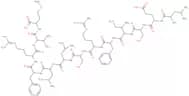
CAS :MMK 1 is a synthetic small molecule compound designed for use in cellular biology, specifically targeting signal transduction pathways. It is derived from innovative biotechnological synthesis, utilizing advanced techniques in organic chemistry to ensure high purity and stability. MMK 1 acts by modulating specific kinases involved in the regulation of cellular processes, affecting pathways critical for cell proliferation and differentiation.
Formule :C75H123N19O18SDegré de pureté :Min. 95%Masse moléculaire :1,611 g/molPocapavir
CAS :Pocapavir is an investigational antiviral compound, which is a small molecule inhibitor derived from synthetic chemical processes. It operates by targeting the viral capsid of picornaviruses, specifically binding to the viral protein 1 (VP1), interfering with the virus's ability to attach and uncoat within host cells. The disruption of these crucial early steps effectively blocks the replication cycle of the virus.
Formule :C21H17Cl3O3Degré de pureté :Min. 95%Masse moléculaire :423.72 g/molRifogal
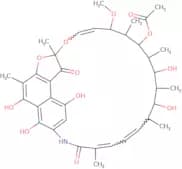
CAS :Rifogal is an antibiotic product, which is derived from a natural compound produced by the bacterium *Amycolatopsis mediterranei*. This compound functions by inhibiting bacterial RNA synthesis through binding to the beta subunit of DNA-dependent RNA polymerase, effectively halting bacterial transcription processes. The specificity of Rifogal for prokaryotic RNA polymerase, as opposed to eukaryotic RNA polymerase, underlies its efficacy as an antimicrobial agent with selective action.
Formule :C37H47NO12Degré de pureté :Min. 95%Masse moléculaire :697.8 g/molTUG-891
CAS :TUG-891 is a selective agonist for the G-protein coupled receptor 120 (GPR120), which is derived from complex organic synthesis processes. Its mode of action involves the targeted activation of GPR120, a receptor deeply involved in the regulation of inflammation and metabolic pathways, particularly in the context of fatty acid signaling. The compound modulates downstream signaling cascades, leading to anti-inflammatory and insulin-sensitizing effects through GPR120 activation.
Formule :C23H21FO3Degré de pureté :Min. 95%Masse moléculaire :364.41 g/molRef: 3D-ZEC51607
Produit arrêtéSCH 336
CAS :SCH 336 is an antibiotic compound derived from a type of fungus. This compound is characterized by its potent ability to disrupt the synthesis of bacterial cell walls. Its mechanism of action involves the inhibition of transpeptidase enzymes, which are essential for forming cross-links in the peptidoglycan layer of bacterial cell walls. This disruption leads to cell lysis and ultimately, the death of the bacterial cell.
Formule :C23H25NO8S3Degré de pureté :Min. 95%Masse moléculaire :539.6 g/molPiribedil
CAS :Agonist of D2 and D3 dopamine receptors; anti-parkinson drug
Formule :C16H18N4O2Degré de pureté :Min. 95%Couleur et forme :PowderMasse moléculaire :298.34 g/molBNC105
CAS :BNC105 is an experimental vascular-disrupting agent, which is a synthetic small molecule with a focus on antitumor activity. BNC105 originates from a careful chemical synthesis process tailored to disrupt the formation of new blood vessels, known as angiogenesis, within tumors. Its primary mode of action involves targeting the tubulin within the endothelial cells that line the blood vessels, leading to rapid disassembly of microtubules. This disruption of the cytoskeleton results in the collapse of the tumor vasculature, effectively cutting off the blood supply to the tumor and thereby causing tumor hypoxia and necrosis.
Formule :C20H20O7Degré de pureté :Min. 95%Masse moléculaire :372.37 g/molKainic Acid
CAS :Kainic Acid is a potent neuroexcitant, which is derived from certain species of red algae such as Digenea simplex. It acts as an agonist of kainate receptors, a subtype of ionotropic glutamate receptors, leading to excitotoxicity through the influx of calcium ions and the overactivation of neuronal circuits. Kainic Acid's ability to induce seizures by mimicking the neurotransmitter glutamate makes it an invaluable tool in neuroscientific research.
Formule :C10H15NO4Degré de pureté :Min. 95%Masse moléculaire :213.23 g/molML324
CAS :ML324 is a selective small-molecule modulator, which is a synthetically derived compound with the capacity to regulate molecular pathways. Specifically, it acts as an inhibitor of autophagy, a cellular degradation process critical for maintaining homeostasis.
Formule :C21H23N3O2Degré de pureté :Min. 95%Masse moléculaire :349.43 g/mol