Ligands organométalliques
Sous-catégories appartenant à la catégorie "Ligands organométalliques"
- Ligands de Buchwald(22 produits)
- DPEN(4 produits)
- DPHEN(4 produits)
- JOSIPHOS(4 produits)
- Phosphine(497 produits)
- Porphyrines(75 produits)
2889 produits trouvés pour "Ligands organométalliques"
MM 11253
CAS :MM 11253 is a sophisticated biotechnological research reagent, which is derived from a combination of recombinant DNA technology and protein engineering techniques. Its mode of action involves specific binding to nucleic acid sequences, thus enabling precise manipulation and analysis of genetic material. By leveraging its specific binding properties, MM 11253 can be used to facilitate various genetic studies, including gene expression analysis, DNA sequencing, and genomic mapping.
Formule :C28H30O2S2Degré de pureté :Min. 95%Masse moléculaire :462.67 g/molIsorauhimbin
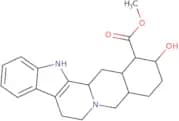
CAS :Isorauhimbin is an indole alkaloid, which is derived from the plant family Apocynaceae. It is primarily sourced from the bark of Rauwolfia plants, where it exists as one of the stereoisomers of yohimbine. The mode of action of Isorauhimbin involves its interaction with adrenergic receptors, specifically acting as an antagonist at the alpha-2 adrenergic receptors. This interaction results in increased release of norepinephrine and enhanced sympathetic nervous system activity.
Formule :C21H26N2O3Degré de pureté :Min. 95%Masse moléculaire :354.4 g/molSyk Inhibitor
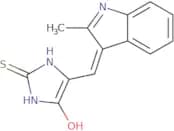
CAS :Syk Inhibitor is a small molecule compound designed to inhibit the activity of spleen tyrosine kinase (Syk), which is derived through advanced chemical synthesis from a variety of organic substrates. With its mode of action as a kinase inhibitor, Syk Inhibitor functions by specifically binding to the ATP-binding site of the Syk enzyme. This binding effectively blocks the phosphorylation processes necessary for signal transduction pathways that are critical in immune cell activation and function.
Formule :C18H15N3O3SDegré de pureté :Min. 95%Masse moléculaire :353.4 g/molGlyt1 inhibitor 1
CAS :Glyt1 inhibitor 1 is a chemical compound that acts as an inhibitor of the GlyT1 transporter, which is a product of synthetic chemistry. This inhibitor binds selectively to the glycine transporter-1 (GlyT1), a key protein responsible for the reuptake of glycine, an important neurotransmitter, in the central nervous system. By inhibiting GlyT1, this compound increases glycine levels in synaptic clefts, which can enhance N-methyl-D-aspartate (NMDA) receptor activity.
Formule :C22H21N5O2Degré de pureté :Min. 95%Masse moléculaire :387.4 g/mol740 Y-P
CAS :740 Y-P is a plant growth regulator, which is a synthetic derivative sourced from alkenyl succinic acid anhydrides. This product acts by modulating plant growth processes through its influence on physiological pathways essential for fruit development and maturation. The mode of action involves the regulation of gibberellin biosynthesis, a key hormone in plant growth, leading to enhanced fruit size, improved coloration, and more uniform ripening.
Formule :C141H222N43O39PS3Degré de pureté :Min. 95%Masse moléculaire :3,270.72 g/molPKG drug G1
CAS :PKG drug G1 is a synthetic small-molecule inhibitor, which is a laboratory-engineered compound designed to interfere with the signaling pathways involved in cell cycle regulation. It is specifically sourced through chemical synthesis, allowing for precise modifications to enhance its stability and efficacy in cellular systems. The mode of action of PKG drug G1 involves selectively targeting and inhibiting certain protein kinases that play a crucial role in the progression of the cell cycle, particularly the G1 phase. By inhibiting these kinases, the drug effectively halts cell division, making it a potential candidate for research in cancer treatment.
Formule :C13H11N3OSDegré de pureté :Min. 95%Masse moléculaire :257.31 g/molNitroxazepine
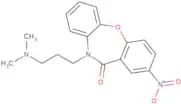
CAS :Nitroxazepine is a tricyclic antidepressant, which is a synthetic compound derived from chemical manipulation of dibenzazepine structures. It functions by inhibiting the reuptake of norepinephrine and, to a lesser extent, serotonin in the central nervous system. This action increases the levels of these neurotransmitters in the synaptic cleft, enhancing mood regulation and alleviating depressive symptoms.
Formule :C18H19N3O4Degré de pureté :Min. 95%Masse moléculaire :341.4 g/molp-((4-((1-Oxotetradecyl)amino)phenyl)methyl)-phosphonic acid
CAS :P-((4-((1-Oxotetradecyl)amino)phenyl)methyl)-phosphonic acid is a synthetic compound, which is a specialized reagent used primarily in chemical research. It is derived from the modification of phosphonic acid with an aryl amide and a long-chain fatty acid substituent on the phenyl group. This structural configuration imparts the compound with unique physicochemical properties that make it suitable for various scientific studies.
Formule :C21H36NO4PDegré de pureté :Min. 95%Masse moléculaire :397.5 g/molPerindopril L-arginine
CAS :Perindopril L-arginine is an angiotensin-converting enzyme (ACE) inhibitor, which is synthetically derived for pharmacological applications. Its mode of action involves the inhibition of the ACE, reducing the conversion of angiotensin I to angiotensin II, a potent vasoconstrictor. Consequently, this results in vasodilation, decreased blood pressure, and reduced cardiac workload. The addition of L-arginine aims to enhance endothelial function due to its role as a precursor to nitric oxide, a vasodilator that further complements the antihypertensive effects.
Formule :C25H46N6O7Degré de pureté :Min. 95%Masse moléculaire :542.7 g/molCD 2314
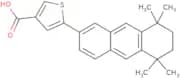
CAS :CD 2314 is an innovative compound used as a neuromodulatory agent, derived from advanced synthetic pathways. This compound acts selectively on specific neural receptors through ligand-receptor interactions, making it a valuable tool for elucidating complex neurological pathways. By modulating synaptic transmission and influencing neurotransmitter release, CD 2314 offers potential insights into the synaptic mechanisms underpinning cognitive processes.
Formule :C23H24O2SDegré de pureté :Min. 95%Masse moléculaire :364.5 g/molPolyethylene glycol 12-hydroxystearate
CAS :Polyethylene glycol 12-hydroxystearate is a non-ionic surfactant derived from the esterification of 12-hydroxystearic acid, typically sourced from castor oil, with polyethylene glycol. This compound exhibits amphiphilic properties, allowing it to reduce surface and interfacial tension between different phases. Its mode of action primarily involves facilitating the formation of stable emulsions by reducing the energy required to disperse one phase uniformly within another.
Formule :C20H40O4Degré de pureté :Min. 95%Masse moléculaire :344.5 g/molAT-007
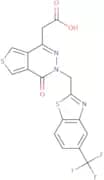
CAS :AT-007 is an investigational pharmaceutical compound, which is a small molecule inhibitor derived from advanced synthetic chemistry processes. It functions through the inhibition of aldose reductase, a key enzyme involved in the polyol pathway. By impeding this enzyme, AT-007 effectively reduces the accumulation of harmful sugar alcohols in cells, which otherwise contribute to cellular damage and the pathophysiology of certain metabolic disorders.
Formule :C17H10F3N3O3S2Degré de pureté :Min. 95%Masse moléculaire :425.4 g/molTenidap
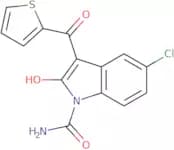
CAS :Tenidap is a synthetic anti-inflammatory drug, which is derived from the chemical modification of nonsteroidal anti-inflammatory drugs (NSAIDs). It functions as both a cyclooxygenase (COX) inhibitor and a modulator of cytokine production. This dual mode of action allows Tenidap to simultaneously reduce the synthesis of prostaglandins by inhibiting COX enzymes and suppress the production of pro-inflammatory cytokines like interleukin-1 and tumor necrosis factor. This makes it unique compared to traditional NSAIDs.
Formule :C14H9ClN2O3SDegré de pureté :Min. 95%Masse moléculaire :320.75 g/molNs-3-008 hydrochloride
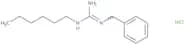
CAS :Ns-3-008 hydrochloride is a synthetic research compound, which is derived from laboratory-based chemical synthesis. It acts primarily as an inhibitor of specific biological targets, potentially interfering with cellular signaling pathways. The mode of action of Ns-3-008 hydrochloride often involves binding to and inhibiting key enzymes or receptors that play critical roles in disease-related processes.
Formule :C14H24ClN3Degré de pureté :Min. 95%Masse moléculaire :269.81 g/molPhe-Lys(Fmoc)-PAB
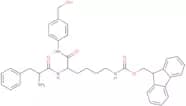
CAS :Phe-Lys(Fmoc)-PAB is a chemical compound that belongs to the category of peptide-based prodrugs, which is derived from synthetic sources with a focus on targeted delivery. This compound consists of phenylalanine and lysine residues, where the lysine is modified with a fluorenylmethyloxycarbonyl (Fmoc) protecting group and a p-aminobenzyl (PAB) linker. The mode of action involves utilizing the stable peptide bond and the cleavable PAB linker to deliver active agents in a controlled fashion, usually by enzyme-mediated cleavage at the target site.
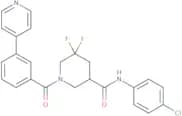
Formule :C37H40N4O5Degré de pureté :Min. 95%Masse moléculaire :620.74 g/molN-(4-Chlorophenyl)-5,5-difluoro-1-(3-(pyridin-4-yl)benzoyl)piperidine-3-carboxamide
CAS :N-(4-Chlorophenyl)-5,5-difluoro-1-(3-(pyridin-4-yl)benzoyl)piperidine-3-carboxamide is an advanced fluorinated piperidine derivative often used in biochemical research and drug development. This compound is synthesized through intricate organic chemistry techniques that typically involve multi-step processes designed to achieve precise structural functionalities. Its mode of action is based on interacting with target receptors or enzymes in biological systems, possibly altering their activity in a highly selective manner.Formule :C24H20ClF2N3O2Degré de pureté :Min. 95%Masse moléculaire :455.9 g/molFGTI-2734
CAS :Please enquire for more information about FGTI-2734 including the price, delivery time and more detailed product information at the technical inquiry form on this page
Formule :C26H31FN6O2SDegré de pureté :Min. 95%Masse moléculaire :510.6 g/molIsatoribine monohydrate
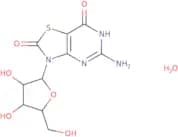
CAS :Isatoribine monohydrate is a synthetic nucleoside analog, which is a derivative of the naturally occurring compound prodrug. It is sourced from the chemical modification of inosine, an endogenous compound in the body involved in purine metabolism. The mode of action of Isatoribine monohydrate involves the activation of the toll-like receptor 7 (TLR7) pathway, which is integral to the innate immune response. This activation results in the production of type I interferons and other cytokines that bolster antiviral defense mechanisms.
Formule :C10H14N4O7SDegré de pureté :Min. 95%Masse moléculaire :334.31 g/molPPDA
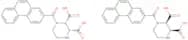
CAS :PPDA is a synthetic chemical compound, which is an aromatic amine derived from aniline through a series of chemical reactions involving nitration and reduction. Its mode of action involves acting as an intermediate or precursor in a variety of organic synthesis processes, playing a pivotal role in the formation of complex organic structures. PPDA's electrophilic properties make it an essential component in producing dyes, polymers, and pharmaceuticals by facilitating specific chemical transformations. Additionally, it demonstrates high reactivity in coupling reactions due to its amine group, enhancing its utility in the synthesis of polymers and advanced materials.
Formule :C21H18N2O5Degré de pureté :Min. 95%Masse moléculaire :378.38 g/molMA242
CAS :MA242 is a targeted therapeutic agent, which is derived from advanced biochemical research. It operates through precise interaction with specific cellular targets, altering biochemical pathways that are essential for disease progression. This mode of action distinguishes MA242 as an innovative option within its class of therapeutics, allowing for enhanced efficacy while minimizing off-target effects.
Formule :C26H21ClF3N3O5SDegré de pureté :Min. 95%Masse moléculaire :580 g/mol