Ligands organométalliques
Sous-catégories appartenant à la catégorie "Ligands organométalliques"
- Ligands de Buchwald(22 produits)
- DPEN(4 produits)
- DPHEN(4 produits)
- JOSIPHOS(4 produits)
- Phosphine(497 produits)
- Porphyrines(75 produits)
2889 produits trouvés pour "Ligands organométalliques"
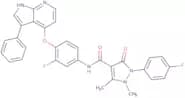
NPS-1034
CAS :Please enquire for more information about NPS-1034 including the price, delivery time and more detailed product information at the technical inquiry form on this page
Formule :C31H23F2N5O3Degré de pureté :Min. 95%Masse moléculaire :551.54 g/molDihydrexidine
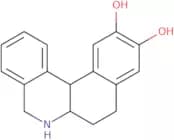
CAS :Dihydrexidine is a selective dopamine receptor agonist, which is synthesized in a laboratory setting. It primarily acts on D1-like dopamine receptors, facilitating an increase in dopaminergic signaling pathways. This increased signaling is achieved through binding and activating specific receptor subtypes that influence numerous neural pathways.
Formule :C17H17NO2Degré de pureté :Min. 95%Masse moléculaire :267.32 g/molAcetildenafil
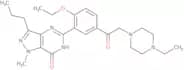
CAS :Synthetic phosphodiesterase inhibitor
Formule :C25H34N6O3Degré de pureté :Min. 95 Area-%Couleur et forme :White PowderMasse moléculaire :466.58 g/molRef: 3D-FA16499
Produit arrêtéHMN-154
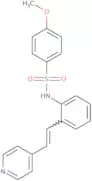
CAS :Please enquire for more information about HMN-154 including the price, delivery time and more detailed product information at the technical inquiry form on this page
Formule :C20H18N2O3SDegré de pureté :Min. 95%Masse moléculaire :366.43 g/molNVP-QAV 680
CAS :NVP-QAV 680 is a kinase inhibitor, which is a synthetic compound designed to obstruct the enzymatic activity of specific kinases involved in various cellular processes. It is derived from precise chemical synthesis, allowing for targeted interaction with the ATP-binding pockets of kinases pertinent to oncogenic signaling pathways. The mode of action involves competitive inhibition, where NVP-QAV 680 competes with ATP, effectively decreasing the phosphorylation of downstream substrates and resulting in the inhibition of aberrant cell proliferation.
Formule :C18H18N2O4SDegré de pureté :Min. 95%Masse moléculaire :358.41 g/molGW 311616A
CAS :GW 311616A is an experimental immunomodulatory compound, which is synthesized through chemical processes designed to interact with specific biological pathways. The compound works by selectively inhibiting particular enzymes involved in the immune response, thereby modulating inflammatory processes. This mode of action allows researchers to explore its potential in regulating overactive immune systems or in conditions where immune suppression might be beneficial.
Formule :C19H31N3O4S·HClDegré de pureté :Min. 95%Masse moléculaire :433.99 g/molGMC 1-161
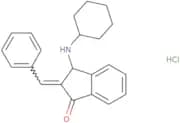
CAS :GMC 1-161 is a specialized biochemical compound, acting as a mitochondrial function modulator, which is synthetically derived with high precision. Its primary mode of action involves the targeted inhibition of the mitochondrial electron transport chain, particularly affecting complexes I and III. This inhibition results in altered ATP synthesis and increased production of reactive oxygen species, which are critical mechanisms for studying cellular respiration and oxidative stress pathways.
Formule :C22H24ClNODegré de pureté :Min. 95%Masse moléculaire :353.9 g/mol1-Deoxy-L-threo-sphinganine-d3
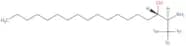
CAS :Produit contrôlé1-Deoxy-L-threo-sphinganine-d3 is a deuterated sphingolipid analogue, which is a synthetic derivative obtained through selective hydrogen-deuterium exchange. This compound acts as a stable isotope-labeled internal standard, essential for accurate quantification in mass spectrometry-based lipidomics and metabolomics studies. As an analog of naturally occurring sphingolipids, it participates in cellular signaling by modulating pathways involved in cell growth, differentiation, and apoptosis.
Formule :C18H36D3NODegré de pureté :Min. 95%Masse moléculaire :288.53 g/molCEP-33779
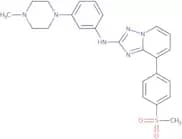
CAS :CEP-33779 is a small-molecule inhibitor designed to target the Janus kinase 2 (JAK2) enzyme, which is a crucial component in the JAK-STAT signaling pathway originating from pro-inflammatory cytokine and growth factor receptors. Derived through sophisticated medicinal chemistry and pharmacological exploration, CEP-33779 functions by selectively inhibiting JAK2 activity. This inhibition is achieved by binding to the ATP-binding pocket of the JAK2 enzyme, thereby blocking the phosphorylation and subsequent activation of STAT proteins, which are essential for the transcription of genes involved in inflammation and tumor proliferation.
Formule :C24H26N6O2SDegré de pureté :Min. 95%Masse moléculaire :462.6 g/molVapreotide acetate
CAS :Produit contrôléVapreotide acetate is a synthetic somatostatin analog, which is derived through chemical synthesis to mimic the naturally occurring hormone somatostatin. Its mode of action involves binding to somatostatin receptors, leading to the inhibition of the secretion of several hormones and growth factors, such as growth hormone (GH), insulin, glucagon, and gastrin. This inhibitory effect is achieved due to its structural similarity to somatostatin, allowing it to effectively modulate endocrine and exocrine functions.
Formule :C59H74N12O11S2Degré de pureté :Min. 95%Masse moléculaire :1,191.4 g/mol(+)-Azasetron hydrochloride
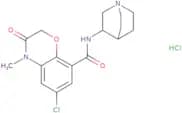
CAS :(+)-Azasetron hydrochloride is a chemical compound known as a 5-HT3 receptor antagonist, which is synthesized through chemical processes. Its primary mode of action involves the selective inhibition of the serotonin 5-HT3 receptor, located in both the central and peripheral nervous systems. This block prevents serotonin from binding to its receptor, which is a crucial step in the emetic response—a physiological reaction that leads to nausea and vomiting.
Formule :C17H21Cl2N3O3Degré de pureté :Min. 95%Masse moléculaire :386.3 g/mol3-Methyl-1-trityl-1H-1,2,4-triazole
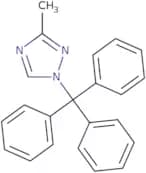
CAS :3-Methyl-1-trityl-1H-1,2,4-triazole is a chemical compound that belongs to the class of triazole derivatives. It is synthesized in a laboratory setting through organic synthesis techniques, involving the tritylation of a triazole moiety. Its mode of action is primarily centered on its triazole ring, which is known to interact with a variety of biological targets, potentially affecting enzymatic functions and inhibiting certain pathways. Due to its unique structure, this compound is of interest in medicinal chemistry for its possible role as a bioactive agent. Applications include its use as a research tool in the study of enzyme inhibition, exploring new therapeutic pathways, and as a scaffold for the development of more complex bioactive molecules. Its structure allows for modifications that can yield analogs with diverse biological activities, making it a valuable compound for scientists working in drug discovery and development.
Formule :C22H19N3Degré de pureté :Min. 95%Masse moléculaire :325.4 g/molRMC-4550
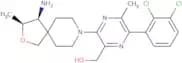
CAS :RMC-4550 is an adhesive compound, which is a synthetic formulation with high-performance bonding capabilities. It is derived from an optimized blend of polymers, designed to enhance its adhesion and tensile strength on diverse substrates. The mode of action involves forming molecular interactions and mechanical interlocks with the surfaces it bonds, which provides exceptional resistance to environmental degradation and mechanical stress.
Formule :C21H26Cl2N4O2Degré de pureté :Min. 95%Masse moléculaire :437.36 g/molMSX-122
CAS :MSX-122 is a small-molecule inhibitor, which is synthetically derived through pharmaceutical research. It functions as an antagonist to hypoxia-inducible factor-1α (HIF-1α), a transcription factor pivotal in cellular response to low oxygen conditions. By inhibiting HIF-1α, MSX-122 effectively disrupts the transcriptional activation of genes involved in angiogenesis, metabolism, and survival pathways that are often upregulated in cancerous tissues.
Formule :C16H16N6Degré de pureté :Min. 95%Masse moléculaire :292.34 g/molProcaterol
CAS :Procaterol is a bronchodilator, which is a synthetic beta-2 adrenergic agonist. It is derived through chemical processes designed to specifically target the beta-2 adrenergic receptors located in the bronchial smooth muscle. The mode of action involves the activation of these receptors, which leads to the relaxation of bronchial smooth muscles. This relaxation effect facilitates the widening of airways, improving airflow and respiratory function.
Formule :C16H22N2O3Degré de pureté :Min. 95%Masse moléculaire :290.36 g/molVU591
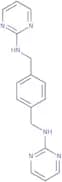
CAS :VU591 is a molecular probe, which is a synthetic chemical compound designed for research purposes. It originates from a series of high-throughput screening processes aimed at identifying modulators of X-linked inhibitor of apoptosis proteins (XIAP). The mode of action of VU591 involves binding to the XIAP, thereby disrupting its interaction with caspases, essential components in cellular apoptosis pathways. By modulating XIAP, VU591 can serve as an effective tool in studying apoptosis regulation and its implications in diseases where cell death is dysregulated, such as cancer. It is commonly utilized in laboratory settings to elucidate the molecular mechanisms governing apoptosis and to investigate potential therapeutic strategies targeting XIAP-mediated pathways, offering valuable insights for developing anti-cancer treatments.
Formule :C16H12N6O5Degré de pureté :Min. 95%Masse moléculaire :368.3 g/molMS402
CAS :MS402 is a biological control agent derived from a naturally occurring entomopathogenic fungus, which targets specific agricultural pests through a parasitic mode of action. Upon application, this microorganism adheres to the host insect’s cuticle, penetrating it and proliferating within the body. Subsequently, the pest is incapacitated, which results in its death, thereby mitigating pest populations in crop environments.
Formule :C20H19ClN2O3Degré de pureté :Min. 95%Masse moléculaire :370.8 g/molGW 583340 Dihydrochloride
CAS :GW 583340 Dihydrochloride is a selective antagonist primarily targeting the G protein-coupled receptor 55 (GPR55), which is a type of membrane receptor implicated in various physiological and pathological processes. It is synthesized through complex organic chemical processes involving specific assembly of molecular components to achieve high specificity and efficiency in receptor binding.
Formule :C28H25ClFN5O3S2·2HClDegré de pureté :Min. 95%Masse moléculaire :598.11 g/molVincristine-d3 sulfate
CAS :Produit contrôléVincristine-d3 sulfate is a labeled compound, which is a deuterium-labeled form of vincristine. It originates from Catharanthus roseus (Madagascar periwinkle), where it is derived as an indole alkaloid. This compound is chemically modified to include deuterium atoms, which serve as traceable markers, facilitating the study of its pharmacokinetics and metabolism.
Formule :C46H55D3N4O14SDegré de pureté :Min. 95%Masse moléculaire :926.05 g/molML365
CAS :ML365 is an advanced data analysis tool developed to support machine learning workflows. It is designed using proprietary algorithms from cutting-edge computational research, intended to optimize and automate various stages of the machine learning pipeline with exceptional efficiency.
Formule :C22H20N2O3Degré de pureté :Min. 95%Masse moléculaire :360.41 g/mol