Ligands organométalliques
Sous-catégories appartenant à la catégorie "Ligands organométalliques"
- Ligands de Buchwald(22 produits)
- DPEN(4 produits)
- DPHEN(4 produits)
- JOSIPHOS(4 produits)
- Phosphine(497 produits)
- Porphyrines(75 produits)
2889 produits trouvés pour "Ligands organométalliques"
5-Chloro-2-methyl-3-isothiazolone-d3
CAS :5-Chloro-2-methyl-3-isothiazolone-d3 is a deuterated form of the chemical compound 5-chloro-2-methyl-3-isothiazolone, often employed in specialized research settings. This compound is derived synthetically and isotopically labeled for accurate tracking in various analytical applications. The incorporation of deuterium atoms in place of hydrogen allows for enhanced detection and precise identification in mass spectrometry-based analyses.
Formule :C4H4ClNOSDegré de pureté :Min. 95%Masse moléculaire :152.62 g/molClothiapine
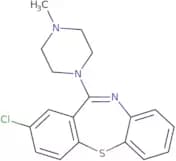
CAS :Produit contrôléClothiapine is a psychotropic agent, which is a type of drug used in psychiatry. It is sourced from the dibenzothiazepine class of compounds. As a thioxanthene derivative, clothiapine acts as a dopamine receptor antagonist, specifically targeting D2 receptors. This mode of action results in its antipsychotic effects by modulating neurotransmitter pathways in the brain, particularly those involving dopamine, which is often implicated in psychiatric disorders.
Formule :C18H18ClN3SDegré de pureté :Min. 95%Masse moléculaire :343.88 g/molTGR5 Receptor Agonist
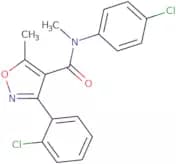
CAS :TGR5 Receptor Agonist is a synthetic compound designed to activate the G protein-coupled bile acid receptor 1, commonly known as TGR5. This receptor is largely expressed in various tissues, including liver, brown adipose tissue, and the gastrointestinal tract. TGR5 agonists are derived through chemical synthesis, enabling precise modulation of biological pathways. The mechanism of action involves activation of the TGR5 receptor, which leads to downstream signaling cascades that enhance energy expenditure, improve insulin sensitivity, and exert anti-inflammatory effects.
Formule :C18H14Cl2N2O2Degré de pureté :Min. 95%Masse moléculaire :361.22 g/mol3-[[2-[4-Phenyl-3-(trifluoromethyl)phenyl]-1-benzothiophen-5-yl]methylamino]propanoic acid
CAS :Produit contrôlé3-[[2-[4-Phenyl-3-(trifluoromethyl)phenyl]-1-benzothiophen-5-yl]methylamino]propanoic acid is a small organic molecule, which is a synthetically derived compound often investigated for its potential pharmacological properties. This compound originates from advanced chemical synthesis techniques designed to explore new biologically active molecules. Its mode of action typically involves modulation of specific molecular pathways or receptors, though the precise mechanisms may vary depending on the biological system studied.Formule :C25H20F3NO2SDegré de pureté :Min. 95%Masse moléculaire :455.5 g/molDMU2105
CAS :DMU2105 is a novel photosensitizer, developed from synthetic organic compounds, which operates through the absorption of specific wavelengths of light to produce reactive oxygen species. These reactive species interact with cellular components, inducing cytotoxicity and aiding in selective destruction of target cells. This mode of action is particularly effective in photodynamic therapy (PDT) and medical imaging.
Formule :C18H13NODegré de pureté :Min. 95%Masse moléculaire :259.3 g/molWEHI-539 hydrochloride
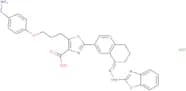
CAS :WEHI-539 hydrochloride is a chemical compound that functions as a potent and selective Bcl-XL inhibitor. It is synthetically derived and serves as a valuable tool in the study of apoptotic pathways. Bcl-XL is a member of the Bcl-2 family of proteins, which are critical regulators of apoptosis, and its inhibition can promote cell death in cancer cells that rely on this pathway for survival.
Formule :C31H30ClN5O3S2Degré de pureté :Min. 95%Masse moléculaire :620.19 g/molA 331440 Dihydrochloride
CAS :A 331440 Dihydrochloride is a potent and selective NMDA receptor antagonist, which is a synthetic compound with notable binding affinity for modulating excitatory synaptic transmission. This product is derived from chemical synthesis, designed specifically for research applications involving neuronal signaling pathways. Its mode of action involves blocking the ion channels associated with NMDA receptors, thereby inhibiting the flow of calcium ions across the cell membrane.
Formule :C22H29Cl2N3ODegré de pureté :Min. 95%Masse moléculaire :422.4 g/molTroxipide - Bio-X ™
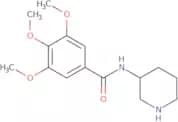
CAS :Troxipide is a gastric cytoprotective agent that is used for the treatment of gastroesophageal reflux disease (GERD). It has anti-inflammatory, anti-ulcer and mucus secreting properties. This drug inhibits proinflammatory mediators in order to restore the normal gastric mucosa.
Formule :C15H22N2O4Degré de pureté :Min. 95%Couleur et forme :PowderMasse moléculaire :294.35 g/molAP C5
CAS :AP C5 is an antimicrobial peptide, which is a biologically-derived molecule with potent bactericidal properties. It originates from natural or synthetic sources, often designed to mimic peptides found in diverse organisms such as amphibians, insects, or mammals that possess innate immune responses.
Formule :C16H13N5Degré de pureté :Min. 95%Masse moléculaire :275.31 g/molPAOPA
CAS :PAOPA is a tyrosinase inhibitor that has been shown to be a potent and selective competitive inhibitor of tyrosinase. It has been shown to inhibit the dopamine-induced tyrosinase activity in rat striatal membranes. PAOPA also blocks the binding of L-DOPA to its receptor, and inhibits the synthesis of melanin by inhibiting the conversion of DOPA to dopaquinone. The low bioavailability of PAOPA may be due to its poor absorption from the gastrointestinal tract and rapid metabolism in liver. PAOPA is effective when used at doses greater than 10 mg/kg body weight.
Formule :C11H18N4O3Degré de pureté :Min. 95%Masse moléculaire :254.29 g/mol4,5-Bis(4-methoxyphenyl)-1,3-dihydroimidazol-2-one
CAS :4,5-Bis(4-methoxyphenyl)-1,3-dihydroimidazol-2-one is a selective estrogen receptor modulator (SERM), which is a synthetic compound designed to bind with high affinity and selectivity to estrogen receptors. Derived from chemical synthesis, it incorporates structural elements that enable specific interactions with estrogen receptor subtypes.Formule :C17H16N2O3Degré de pureté :Min. 95%Masse moléculaire :296.32 g/molSNIPER(ABL)-033
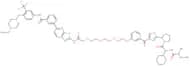
CAS :SNIPER(ABL)-033 is an advanced biotechnological tool designed to facilitate targeted research interventions. It is sourced from a collaborative effort between molecular biology specialists and biochemical engineers, ensuring robustness in complex biological environments. The product operates via advanced Antibody-Based Ligand (ABL) technology, which allows for the precise targeting and modulation of specific cellular pathways. Its mode of action involves binding to distinct molecular markers, facilitating targeted interference or activation of biological processes with high specificity and minimized off-target effects.
Formule :C61H73F3N10O9S2Degré de pureté :Min. 95%Masse moléculaire :1,211.4 g/molc24 Ceramide (d18:1/24:0)
CAS :C24 Ceramide (d18:1/24:0) is a sphingolipid molecule, which is a fundamental component of cell membranes. This specific ceramide is derived from the lipid class known for its critical role in maintaining the integrity and functionality of the stratum corneum. The structure comprises a long-chain sphingoid base, d18:1, linked to a saturated 24-carbon fatty acid, 24:0, facilitating its incorporation into the lipid bilayer.
Formule :C42H83NO3Degré de pureté :Min. 95%Masse moléculaire :650.11 g/molALS-8112
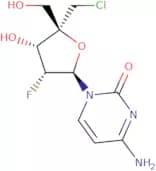
CAS :Please enquire for more information about ALS-8112 including the price, delivery time and more detailed product information at the technical inquiry form on this page
Formule :C10H13ClFN3O4Degré de pureté :Min. 95%Masse moléculaire :293.68 g/molSerine hydrolase inhibitor-11
CAS :Serine hydrolase inhibitor-11 is a biochemical research tool designed to target the serine hydrolase enzyme class. This compound is synthesized through advanced chemical methods, offering precise inhibitory effects on serine hydrolase enzymes. It functions by covalently binding to the active serine site within the enzyme's structure, effectively blocking its catalytic action and altering substrate metabolism.
Formule :C9H13N3ODegré de pureté :Min. 95%Masse moléculaire :179.22 g/molRS 102221 hydrochloride
CAS :Antagonist of 5-HT2C receptor
Formule :C27H31F3N4O7SDegré de pureté :Min. 95%Masse moléculaire :612.62 g/molLY-255283
CAS :LY-255283 is a potent leukotriene B4 (LTB4) receptor antagonist, which is a synthetic compound developed for research purposes. The source of LY-255283 is a chemically synthesized molecule designed to interfere with the biological pathways mediated by leukotriene B4, a pro-inflammatory lipid mediator involved in various inflammatory responses.
Formule :C19H28N4O3Degré de pureté :Min. 95%Masse moléculaire :360.45 g/molHomocarbonyltopsentin
CAS :Homocarbonyltopsentin is a heteroaromatic alkaloid, which is isolated from marine sponges. This compound is characterized by its unique indole-imidazole structure, derived from natural products found primarily in marine ecosystems. Its mode of action involves the inhibition of specific enzymes and interference with cellular processes, such as DNA synthesis and signal transduction pathways.
Formule :C21H14N4O3Degré de pureté :Min. 95%Masse moléculaire :370.4 g/molSulfamethoxazole-d4
CAS :Sulfamethoxazole-d4 is a deuterated analog of sulfamethoxazole, which is a synthetic antibacterial agent. It is primarily sourced from chemical synthesis processes that involve replacing hydrogen atoms with deuterium in the sulfamethoxazole molecule. This isotope labeling provides a distinctive advantage in pharmacokinetic studies, as it allows for the precise tracking and differentiation of the deuterated form from the non-labeled drug in biological systems.
Formule :C10H11N3O3SDegré de pureté :Min. 95%Masse moléculaire :257.3 g/molJZP 430
CAS :JZP 430 is a pharmaceutical compound, which is synthesized in a laboratory setting with advanced techniques of medicinal chemistry. It functions as a modulator of specific neural pathways associated with sleep regulation. By targeting and interacting with specific neurotransmitter systems, JZP 430 aims to optimize the sleep-wake cycle, offering potential therapeutic benefits for sleep disorders. Its mode of action involves binding to neural receptors, enhancing sleep quality, and reducing the latency to sleep onset. The applications of JZP 430 are focused on treating conditions such as narcolepsy and idiopathic hypersomnia, where irregular sleep patterns significantly impact daily functioning. The compound is undergoing rigorous clinical evaluations to determine its efficacy and safety profile, aiming to fill the current therapeutic gaps in managing complex sleep disorders.
Formule :C16H26N4O3SDegré de pureté :Min. 95%Masse moléculaire :354.5 g/mol


![3-[[2-[4-Phenyl-3-(trifluoromethyl)phenyl]-1-benzothiophen-5-yl]methylamino]propanoic acid](/_next/image/?url=https%3A%2Fstatic.cymitquimica.com%2Fproducts%2F3D%2Fthumb-webp%2FVHB24077.webp&w=3840&q=75)