Ligands organométalliques
Sous-catégories appartenant à la catégorie "Ligands organométalliques"
- Ligands de Buchwald(22 produits)
- DPEN(4 produits)
- DPHEN(4 produits)
- JOSIPHOS(4 produits)
- Phosphine(497 produits)
- Porphyrines(75 produits)
2889 produits trouvés pour "Ligands organométalliques"
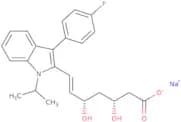
Fluvastatin sodium
CAS :Fluvastatin is a statin that lowers blood cholesterol and triglycerides by inhibiting HMG-CoA reductase, an enzyme that plays a critical role in the synthesis of cholesterol. Fluvastatin has also been shown to reduce the incidence of myocardial infarction, and to reduce atherosclerotic lesions in animal models, reducing the incidence of cardiovascular disease. Fluvastatin also has been shown to inhibit the activation of toll-like receptor 4 (TLR4) by lipopolysaccharide (LPS), which may be related to its anti-inflammatory effects. Furthermore, through lowering blood cholesterol, Fluvastatin also inhibits tubulointerstitial injury and prevents renal damage caused by high concentrations of the lipid.
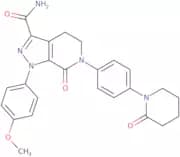
Formule :C24H25FNNaO4Degré de pureté :Min. 98%Couleur et forme :Off-White PowderMasse moléculaire :433.45 g/molApixaban - Bio-X ™
CAS :Apixaban is an anticoagulant agent used for the prophylaxis of stroke and deep vein thrombosis leading to pulmonary embolism. This drug is an inhibitor of factor Xa and prothrominase. As a result, this prevents the formation of a thrombus.Formule :C25H25N5O4Degré de pureté :Min. 95%Couleur et forme :PowderMasse moléculaire :459.5 g/molRosuvastatin calcium - Bio-X ™
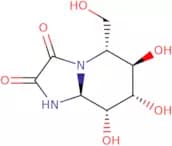
CAS :Rosuvastatin is a drug that belongs to the group of statins. It is used for the treatment of high cholesterol and as an adjunct therapy for patients with coronary heart disease. Rosuvastatin reduces serum cholesterol by inhibiting HMG-CoA reductase, which is the rate-limiting enzyme in the production of cholesterol. Furthermore, this drug has been shown to have anti-inflammatory properties, which may be due to its ability to inhibit prostaglandin synthesis.Formule :C22H27FN3O6SCaDegré de pureté :(%) Min. 95%Couleur et forme :PowderMasse moléculaire :500.57 g/molKifunensine - Bio-X ™
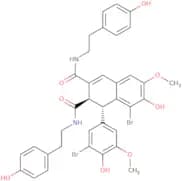
CAS :Kifunensine is a small molecule inhibitor that was designed and synthesized to inhibit plant and animal α-mannosidase I. It is a potent and specific inhibitor with IC50 in nanomolar range. It inhibits the enzyme isoforms in Golgi apparatus (GMI) and endoplasmatic reticulum (ERMI). The compound prevents mannose trimming on glycoproteins and shifts the glycoform content from complex to oligomannose type. Used for the production of recombinant therapeutic glycoproteins with mannose rich N-linked glycans.Formule :C8H12N2O6Degré de pureté :Min. 95%Couleur et forme :White PowderMasse moléculaire :232.19 g/molrel-(1R,2S)-8-Bromo-1-(3-bromo-4-hydroxy-5-methoxyphenyl)-1,2-dihydro-7-hydroxy-N2,N3-bis[2-(4-hydroxyphenyl)ethyl]-6-methoxy-2,3-na phthalenedicarboxamide
CAS :rel-(1R,2S)-8-Bromo-1-(3-bromo-4-hydroxy-5-methoxyphenyl)-1,2-dihydro-7-hydroxy-N2,N3-bis[2-(4-hydroxyphenyl)ethyl]-6-methoxy-2,3-naphthalenedicarboxamide is a synthetic chemical compound, which is derived through targeted organic synthesis and structural optimization efforts. Its source lies in advanced laboratory methodologies designed to enhance specific pharmacological properties. The mode of action is expected to involve selective interaction with particular molecular targets, potentially modulating distinct pathways related to cellular function or signaling processes.Formule :C36H34Br2N2O8Degré de pureté :Min. 95%Couleur et forme :PowderMasse moléculaire :782.47 g/molNicaraven
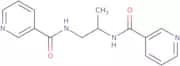
CAS :Hydroxyl radical scavenger; anti-vasospasticFormule :C15H16N4O2Degré de pureté :Min. 95%Masse moléculaire :284.31 g/molYPSPV (EYGF-33)
During extraction of lecithin from egg yolk, peptide by-products can be isolated and purified by gel filtration. Within the by-products this has led to the discovery of biologically active value-added products. The egg yolk gel filtration (EFGF) fractions were analysed for their antioxidant and angiotensin converting enzyme (ACE) inhibitory activities. EYGF-33 predominantly contained 3 peptides - KLSDW, YPSPV, and MPVHTDAD). YPSPV in EYGF-33 was found to have minimal antioxidant activity. However, YPSPV showed notably high angiotensin converting enzyme (ACE) inhibitory activity, it exceeded the positive control captopril.Degré de pureté :Min. 95%Masse moléculaire :560.3 g/molPep2-8
Proprotein convertase subtilisin/kexin type 9 (PCSK9) is negative regulator of hepatic low-density lipoprotein (LDL) receptors by promoting their degradation. This leads to an increase in plasma levels of cholesterol-LDL (LDL-c). PCSK9 binds to the LDL receptor at the epidermal growth factor precursor homology domain A (EGF-A) which leads the receptor to be targeted for degradation. Natural loss of function mutations in PCSK9 have been linked to improved coronary health and lower cholesterol levels with reduced risk of coronary heart disease. This has led to further study to find inhibitors of PCSK9 with the hope that they may be clinically relevant in the future.As discussed, PCSK9 binds to EGF-A on the LDL receptor. A peptide named pep 2-8 is a mimic of EGF-A and binds PCSK9 in the same manner observed with the LDL receptor. Pep 2-8 is a potent selective competitive inhibitor of PCSK9. Pep 2-8 restores LDL receptor function and LDL uptake of PCSK9-treated HepG2 cells. This is still an active area of research to optimise inhibition of PCSK9 for cholesterol regulation.Pep 2-8 has also been utilised as an anchor peptide in phage-display experiments to bind an extension peptide library to the groove site.Peptide Ac-TVFTSWEEYLDWV-NH2 is a Research Peptide with significant interest within the field academic and medical research. This peptide is available for purchase at Cymit Quimica in multiple sizes and with a specification of your choice.
Degré de pureté :Min. 95%Masse moléculaire :1,714.8 g/molMitomycin C - Bio-X ™
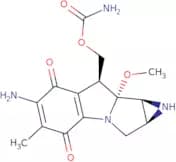
CAS :Mitomycin C is a cytotoxic agent that belongs to the class of mitomycins. It has been used for the treatment of a range of cancers and for ocular surface diseases, such as the glaucoma surgery trabeculectomy. In this case it is administered to reduce post-operative scarring which could otherwise lead to failure of the procedure. Mitomycin C is an alkylating antibiotic that inhibits DNA synthesis by cross-linking the DNA double helix. Mitomycin C also stimulates the production of transforming growth factor β1 (TGF-β1) and basic fibroblast growth factor (bFGF). Clinically, mitomycin can be used both intravenously and topically, and has been studied in a range of wound healing models.Formule :C15H18N4O5Degré de pureté :Min. 95%Couleur et forme :PowderMasse moléculaire :334.33 g/mol7-Prenyloxycoumarin
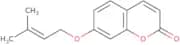
CAS :7-Prenyloxycoumarin is a naturally occurring compound, often categorized as a phytochemical, which is primarily isolated from various plant sources including the Rutaceae family. This compound exhibits intriguing biochemical properties due to its unique molecular structure, primarily the presence of a prenyloxy group attached to the coumarin core. The mode of action of 7-Prenyloxycoumarin primarily involves its ability to interact with biological membranes and proteins, leading to modulation of enzymatic activity and disruption of pathogen cell walls.Formule :C14H14O3Degré de pureté :Min. 98 Area-%Couleur et forme :PowderMasse moléculaire :230.26 g/molAutocamtide-2 Related Inhibitory Peptide
Autocamtide-2-related inhibitory peptide is a calmodulin-dependent protein kinase II (CaMKII) inhibitor.CAMK represents a class of Ca2+/calmodulin-dependent protein kinase enzymes. CAMKs are activated by increases in the concentration of intracellular calcium ions (Ca2+) and transfers phosphates from ATP to defined serine or threonine residues in other proteins. Activated CAMK is involved in the phosphorylation of transcription factors and therefore, in the regulation of expression of responding genes.Degré de pureté :Min. 95%Couleur et forme :PowderMasse moléculaire :1,707.1 g/molSR 4835
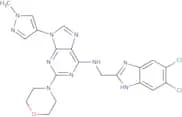
CAS :SR 4835 is a synthetic compound, which is an advanced molecular entity derived from extensive medicinal chemistry efforts. This compound exhibits a novel mechanism of action, targeting specific cellular pathways implicated in disease processes. SR 4835 functions by modulating enzyme activity, thus influencing intracellular signaling cascades that play a critical role in pathophysiological conditions.
Formule :C21H20Cl2N10ODegré de pureté :Min. 98 Area-%Couleur et forme :PowderMasse moléculaire :499.36 g/mol(5Z)-7-Oxozeaenol
CAS :(5Z)-7-Oxozeaenol is a potent and selective small-molecule inhibitor, primarily characterized as a natural product derived from fungal sources. It specifically targets and inhibits transforming growth factor-beta (TGF-β) type I receptor kinase, also known as activin receptor-like kinase 5 (ALK5), as well as TAO kinases. The inhibition occurs through covalent modification, which results in the suppression of downstream signaling pathways that are crucial in various cellular processes.Formule :C19H22O7Degré de pureté :Min. 95%Couleur et forme :PowderMasse moléculaire :362.37 g/molBRD 6989
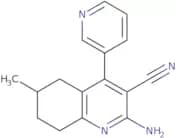
CAS :A small molecule inhibitor with high selectivity for CDK8 over CDK19. Increases IL-10 production in stimulated human and murine macrophages and dendritic cells. Modulatory action on inflammatory responses has therapeutic potential.Formule :C16H16N4Degré de pureté :Min. 95%Couleur et forme :SolidMasse moléculaire :264.33 g/molDacomitinib
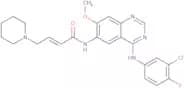
CAS :Pan-EGFR inhibitor (HER1, HER2 and HER4); antineoplasticFormule :C24H25ClFN5O2Degré de pureté :Min. 98 Area-%Couleur et forme :PowderMasse moléculaire :469.95 g/molPonalrestat
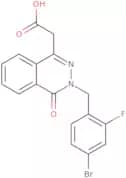
CAS :Ponalrestat is an aldose reductase inhibitor, which is a synthetic compound developed for pharmacological purposes. It originates from chemical synthesis designed to target and inhibit the enzyme aldose reductase effectively. The mode of action involves the competitive inhibition of aldose reductase, an enzyme involved in the polyol pathway of glucose metabolism. By preventing the reduction of glucose to sorbitol, it reduces sorbitol accumulation associated with diabetic complications.Formule :C17H12BrFN2O3Degré de pureté :Min. 98 Area-%Couleur et forme :PowderMasse moléculaire :391.19 g/molPitolisant hydrochloride
CAS :Pitolisant is an inverse agonist and antagonist of the histamine (H3) receptor. It acts as an allosteric modulator of the H3 receptor to increase the activity of histamine at the M1 receptor. Pitolisant has been used in the treatment of narcolepsy, schizophrenia and Alzheimer's disease. Its mechanism of action involves binding to the amide group on histamine, which increases its affinity for the H3 receptor and enhances its activity at this site. Pitolisant has been shown to improve cognitive ability and reduce fatigue in patients with Alzheimer's disease.
Formule :C17H26ClNO·HClDegré de pureté :Min. 95%Couleur et forme :White Off-White PowderMasse moléculaire :332.31 g/molSDZ 220-581 hydrochloride
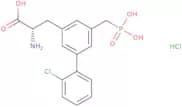
CAS :NMDA receptor antagonistFormule :C16H17ClNO5P•HClDegré de pureté :Min. 95%Masse moléculaire :406.2 g/molFlurbiprofen
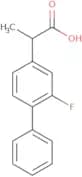
CAS :Inhibitor of cytochrome P450; inhibitor of prostaglandin synthesis
Formule :C15H13FO2Degré de pureté :Min. 98 Area-%Couleur et forme :PowderMasse moléculaire :244.26 g/mol