Composés organosiliciés
Sous-catégories appartenant à la catégorie "Composés organosiliciés"
4338 produits trouvés pour "Composés organosiliciés"
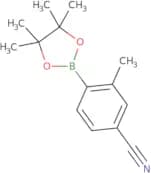
4-Cyano-2-methylphenylboronic acid, pinacol ester
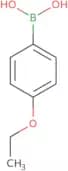
CAS :Please enquire for more information about 4-Cyano-2-methylphenylboronic acid, pinacol ester including the price, delivery time and more detailed product information at the technical inquiry form on this pageFormule :C14H18BNO2Degré de pureté :Min. 95%Masse moléculaire :243.11 g/mol(4-Ethoxyphenyl)boronic acid
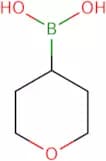
CAS :4-Ethoxyphenylboronic acid is a boron-containing compound that has been shown to have potent antiviral activity. This compound is synthesized from adipose tissue and optical properties of the phenoxazine derivative are studied in order to find an efficient process for solid-phase synthesis. 4-Ethoxyphenylboronic acid has been shown to inhibit triglyceride lipase and fatty acid, which may be an important drug target. It has also been found to have potent antagonistic effects on fatty acids.Formule :C8H11BO3Degré de pureté :Min. 95%Masse moléculaire :165.98 g/molTetrahydropyran-4-boronicacid
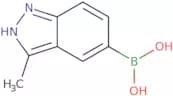
CAS :Please enquire for more information about Tetrahydropyran-4-boronicacid including the price, delivery time and more detailed product information at the technical inquiry form on this pageFormule :C5H11BO3Degré de pureté :Min. 95%Masse moléculaire :129.95 g/mol3-Methyl-1H-indazol-5-yl-5-boronic acid
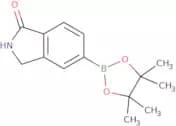
CAS :Please enquire for more information about 3-Methyl-1H-indazol-5-yl-5-boronic acid including the price, delivery time and more detailed product information at the technical inquiry form on this pageFormule :C8H9BN2O2Degré de pureté :Min. 95%Masse moléculaire :175.98 g/mol5-(4,4,5,5-Tetramethyl-1,3,2-dioxaborolan-2-yl)isoindolin-1-one
CAS :Please enquire for more information about 5-(4,4,5,5-Tetramethyl-1,3,2-dioxaborolan-2-yl)isoindolin-1-one including the price, delivery time and more detailed product information at the technical inquiry form on this page
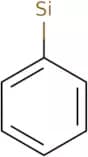
Formule :C14H18BNO3Degré de pureté :Min. 95%Masse moléculaire :259.11 g/molPhenylsilane
CAS :Phenylsilane is a model system for the study of the reaction mechanism of nucleophilic substitution. It is used to investigate the steric interactions between a substrate molecule and an electrophile that are important in determining the rate of reactivity. Phenylsilane has been shown to have antioxidative properties, which may be due to its ability to scavenge reactive oxygen species (ROS), such as hydroxyl radicals, superoxide ions, and hydrogen peroxide. Phenylsilane also has low kinetic energy and can form hydrogen bonds with carbonyl groups and amines. This chemical substance can react with quinoline derivatives, including benzoquinone, which is a toxic by-product of the metabolism of many drugs.
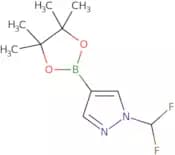
Formule :C6H8SiDegré de pureté :Min. 95%Couleur et forme :Clear LiquidMasse moléculaire :108.21 g/mol1-(difluoromethyl)-4-(4,4,5,5-tetramethyl-1,3,2-dioxaborolan
CAS :Please enquire for more information about 1-(difluoromethyl)-4-(4,4,5,5-tetramethyl-1,3,2-dioxaborolan including the price, delivery time and more detailed product information at the technical inquiry form on this page
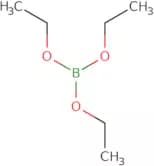
Formule :C10H15BF2N2O2Degré de pureté :Min. 95%Masse moléculaire :244.05 g/molTriethyl borate
CAS :Triethyl borate is an inorganic acid that is used as a catalyst. It has been shown to react with hydrochloric acid and orthoboric acid to form hydrogen boron hydride (H3BO3) and water. It also reacts with hydrogen chloride, forming hydrogen boron chloride, which can be used to prepare the active form of boric acid. This reaction is reversible and the equilibrium can be shifted by adding a base such as sodium hydroxide or ammonia. Triethyl borate is reactive, so it should only be handled in well-ventilated areas. The structural analysis of this compound reveals that it contains two hydroxyl groups that are involved in intramolecular hydrogen bonding, which helps stabilize its structure. Triethyl borate has been shown to have anti-infectious properties, inhibiting the growth of infectious bacteria such as Staphylococcus aureus and Streptococcus pneumoniae.
Formule :C6H15BO3Degré de pureté :Min. 95%Masse moléculaire :145.99 g/molcis-1-Propene-1-boronicacid
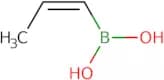
CAS :cis-1-Propene-1-boronicacid is a chiral, pyranoside compound that can be synthesized from the reaction of 2,3,4,5-tetrahydropyran with boron trichloride. cis-1-Propene-1-boronicacid has been shown to be useful for the palladium catalyzed cross coupling reactions. cis-1-Propene-1-boronicacid has been shown to react with cyclopentenone and alkylate different functional groups such as amines and alcohols. cis-1 -Propene 1 boronic acid has been used in peptidomimetics as well as in nature.Formule :C3H7BO2Degré de pureté :Min. 95%Masse moléculaire :85.9 g/mol1,1,3,3-Tetramethyldisiloxane
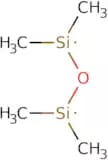
CAS :1,1,3,3-Tetramethyldisiloxane is a chemical compound that belongs to the group of functional groups. It can be isolated from hydrolysis of methyltrichlorosilane with sodium hydroxide and cellulose acetate. 1,1,3,3-Tetramethyldisiloxane has two isomers with different properties: 3-methylsilsesquioxane and 3-ethylsilsesquioxane. The former has an ethyl group at the end of its molecule and the latter has an ethyl group in the middle. The two isomers are not interchangeable because they have different physical properties. The 3-methylsilsesquioxane isomer reacts with aluminium to form a metathesis reaction product containing silanol groups on one side of the aluminum molecule and hydroxy groups on the other side. This product can be used as a catalyst for subsequent reactions in organic synthesis reactions involving
Formule :C4H14OSi2Degré de pureté :Min. 95%Couleur et forme :Clear LiquidMasse moléculaire :134.32 g/molTriisopropylsilylacetylene
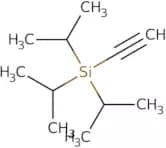
CAS :Triisopropylsilylacetylene is an aliphatic hydrocarbon with a reactive site that can be used in the synthesis of other chemical compounds. It has been shown to have an inhibitory effect on the formation of reactive oxygen species and inflammation in mice, which may be due to its ability to reduce the production of inflammatory mediators such as prostaglandin E2. Triisopropylsilylacetylene also has a hydroxyl group, which allows it to act as an anti-inflammatory agent by inhibiting the enzyme cyclooxygenase. Additionally, triisopropylsilylacetylene has a carbonyl group, which gives it aromatic properties that can be used for synthetic purposes.Formule :C11H22SiDegré de pureté :Min. 97 Area-%Couleur et forme :Clear LiquidMasse moléculaire :182.38 g/mol(4-Chloro-3-(methoxycarbonyl)phenyl)boronic acid
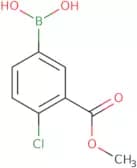
CAS :Please enquire for more information about (4-Chloro-3-(methoxycarbonyl)phenyl)boronic acid including the price, delivery time and more detailed product information at the technical inquiry form on this page
Formule :C8H8BClO4Degré de pureté :Min. 95%Masse moléculaire :214.41 g/molPinacol vinylboronate
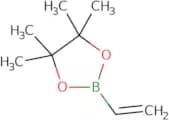
CAS :Pinacol vinylboronate is an anticancer agent that has been shown to inhibit the growth of cancer cells. Pinacol vinylboronate inhibits the activity of cellular targets and generates reactive oxygen species through a hydrogen-bond-mediated mechanism, which eventually leads to cell death. This drug has also been shown to have functional groups that act as pharmacophores for cancer, which may be due to its ability to form hydrogen bonds with the hydroxyl group in DNA.Formule :C8H15BO2Degré de pureté :Min. 95%Couleur et forme :Clear LiquidMasse moléculaire :154.01 g/molTetrahydropyran-3-boronic acid pinacol ester
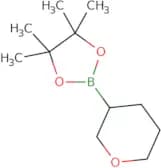
CAS :Please enquire for more information about Tetrahydropyran-3-boronic acid pinacol ester including the price, delivery time and more detailed product information at the technical inquiry form on this pageFormule :C11H21BO3Degré de pureté :Min. 95%Masse moléculaire :212.09 g/mol4-Isopropoxyphenylboronic acid
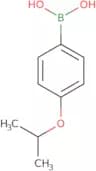
CAS :4-Isopropoxyphenylboronic acid is a boronic acid that can be used as a cross-coupling partner in palladium-catalyzed cross-coupling reactions. It is synthesized by reacting 4-hydroxyphenylacetic acid with 2 equivalents of naphthoquinone diazide. The addition of the 4-isopropoxy group to the phenyl substituent increases the reactivity of this boronic acid. This compound has been used in the synthesis of rofecoxib and cyclooxygenase inhibitors, such as aspirin and ibuprofen. The presence of an electron withdrawing group on one phenyl ring enhances the reactivity of this boronic acid towards nucleophiles, such as amines or alcohols.Formule :C9H13BO3Degré de pureté :Min. 95%Masse moléculaire :180.01 g/mol4-Phenoxyphenylboronic acid
CAS :4-Phenoxyphenylboronic acid is a chemical inhibitor of protein kinase. It binds to the ATP binding site of the enzyme and prevents ATP from binding, thereby inhibiting the phosphorylation of proteins. This inhibition blocks the activation of downstream pathways that are involved in cell proliferation, leading to apoptotic cell death. 4-Phenoxyphenylboronic acid has been shown to inhibit growth of human cancer cells in vitro. This molecule also inhibits root formation and plant growth, which may be due to its ability to selectively inhibit protein kinases found in plant cells.
Formule :C12H11BO3Degré de pureté :Min. 95%Masse moléculaire :214.02 g/mol9,12-Diiodo-1,2-carborane
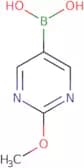
CAS :Produit contrôléPlease enquire for more information about 9,12-Diiodo-1,2-carborane including the price, delivery time and more detailed product information at the technical inquiry form on this pageFormule :I2C2B10H10Degré de pureté :Min. 95%Masse moléculaire :396.02 g/mol2-Methoxypyrimidine-5-boronic acid
CAS :Please enquire for more information about 2-Methoxypyrimidine-5-boronic acid including the price, delivery time and more detailed product information at the technical inquiry form on this pageFormule :C5H7BN2O3Degré de pureté :Min. 95%Masse moléculaire :153.93 g/molPotassium trimethylsilanolate
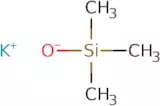
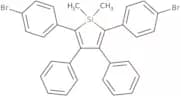
CAS :Potassium trimethylsilanolate is a chemical substance that has inhibitory properties. It is a trifluoroacetic acid derivative that inhibits the activity of certain enzymes, such as proteases and lipases. The compound's inhibitory properties are due to its ability to bind to cytochrome cb2 receptors by means of hydrogen bonding. The binding of potassium trimethylsilanolate to the receptor prevents the activation of apoptosis proteins and protein synthesis in cells. This substance also has an inhibitory effect on water vapor, inhibiting the formation of water molecules from hydrogen atoms and oxygen atoms. Potassium trimethylsilanolate can be used as an anti-cancer agent by preventing cell division in tumor cells and preventing cancer metastasis through inhibition of protease activity.Formule :C3H9KOSiDegré de pureté :Min. 95%Masse moléculaire :128.29 g/mol2,5-Bis(4-bromophenyl)-1,1-dimethyl-3,4-diphenylsilole
CAS :Please enquire for more information about 2,5-Bis(4-bromophenyl)-1,1-dimethyl-3,4-diphenylsilole including the price, delivery time and more detailed product information at the technical inquiry form on this pageFormule :C30H24Br2SiDegré de pureté :Min. 95%Masse moléculaire :572.41 g/mol