Composés organosiliciés
Sous-catégories appartenant à la catégorie "Composés organosiliciés"
4336 produits trouvés pour "Composés organosiliciés"
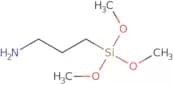
3-Aminopropyltrimethoxysilane
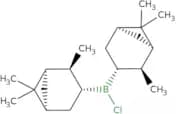
CAS :3-Aminopropyltrimethoxysilane is a chemical that belongs to the group of aminopropyltriethoxysilanes. It is a reactive substance and is commonly used as an additive in adhesives and sealants. 3-Aminopropyltrimethoxysilane has been shown to be an efficient coupling agent for the formation of hydroxyl groups on nanoparticles, which are then used as drug carriers. The optimum concentration of 3-aminopropyltrimethoxysilane lies between 0.01 and 0.1 M, with a pH range of 6 and 8. This chemical can react with hydrochloric acid, resulting in the production of hydrogen gas; with cervical cancer cells in culture, leading to cell death; or with skin cells, causing damage to their transport properties.Formule :C6H17NO3SiDegré de pureté :Min. 95%Couleur et forme :Clear LiquidMasse moléculaire :179.29 g/mol(-)-B-Chlorodiisopinocampheylborane, 60% in Hexane, ca. 1.7mol/L
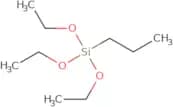
CAS :(-)-B-Chlorodiisopinocampheylborane is a carbonyl group that can be used for asymmetric synthesis. It was synthesized from the reaction of chlorodiisopinocampheylborane with butyllithium and allyl bromide, followed by aqueous workup. The enantiomers were separated through thin layer chromatography on silica gel plates with hexane as the eluent. The resolution of racemic latanoprost lactol was achieved in the same manner. (-)-B-Chlorodiisopinocampheylborane is also a diketone that can be prepared from para-chloroacetophenone and sodium hydroxide in ethanol. This diketone undergoes an intramolecular cyclization to produce noradrenaline (norepinephrine) and hydrochloric acid, which can then be converted into dioxolanes or other products.Formule :C20H34BClDegré de pureté :Min. 95%Couleur et forme :Clear LiquidMasse moléculaire :320.75 g/molTriethoxy(propyl)silane
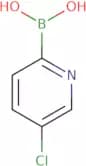
CAS :Triethoxy(propyl)silane is an organosilicon compound that has reactive properties. It is a polymeric material that can be used as a component in paints, coatings, and sealants. The reaction of triethoxy(propyl)silane with sodium hydroxide solution yields hydrogen fluoride, water vapor, and hydrochloric acid. Triethoxy(propyl)silane has been shown to react with hydroxide solution to form polycarboxylic acids. The hydroxyl group on the triethoxy(propyl)silane molecule is responsible for the transport properties of this compound.Formule :C9H22O3SiDegré de pureté :Min. 95%Masse moléculaire :206.35 g/mol5-Chloropyridine-2-boronicacid
CAS :Please enquire for more information about 5-Chloropyridine-2-boronicacid including the price, delivery time and more detailed product information at the technical inquiry form on this pageFormule :C5H5BClNO2Degré de pureté :Min. 95%Masse moléculaire :157.36 g/mol9,12-Diiodo-1,2-carborane
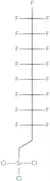
CAS :Produit contrôléPlease enquire for more information about 9,12-Diiodo-1,2-carborane including the price, delivery time and more detailed product information at the technical inquiry form on this pageFormule :I2C2B10H10Degré de pureté :Min. 95%Masse moléculaire :396.02 g/molTrichloro(1H,1H,2H,2H-heptadecafluorodecyl)silane
CAS :Produit contrôléTrichloro(1H,1H,2H,2H-heptadecafluorodecyl)silane is a chemical substance that belongs to the group of synthetic substances. It has been shown to have antiviral properties in clinical studies. Trichloro(1H,1H,2H,2H-heptadecafluorodecyl)silane is used to synthesize thymidylate by a two-step process. The first step involves the hydrolysis of sodium hydroxide solution in the presence of hydroxide solution and chemical substances. The second step involves the reaction of synthase enzyme with waveform and water vapor to produce monolayer. This product also has antiviral activity against human pathogens such as HIV and herpes simplex virus type 1 (HSV-1).Formule :C10H4Cl3F17SiDegré de pureté :Min. 95%Couleur et forme :Clear LiquidMasse moléculaire :581.56 g/molBoron carbide - 10um particle size
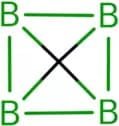
CAS :Produit contrôléBoron carbide is a hard, refractory material with high melting point. It is used in the production of ceramic and as a catalyst. Boron carbide has been shown to be effective in the treatment of wastewater due to its ability to adsorb organic matter and heavy metals. Boron carbide also has thermal expansion properties that make it suitable for use in various engineering applications. Boron carbide is composed of boron and carbon atoms, which interact through steric effects. The nitrogen atoms on the surface of boron carbide particles are responsible for its reactivity with other materials, such as silicon or zirconium oxide. The kinetic energy of the reaction mechanism can be determined by examining the surface methodology of boron carbide particles with a microscope.Formule :B4CDegré de pureté :Min. 95%Masse moléculaire :55.25 g/molPhenyl-1,2-carborane
CAS :Produit contrôléPlease enquire for more information about Phenyl-1,2-carborane including the price, delivery time and more detailed product information at the technical inquiry form on this page
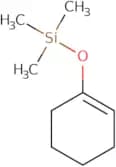
Formule :C8H16B10Degré de pureté :Min. 95%Couleur et forme :Colourless Or White To Off-White Solid Or Liquid (May Vary)Masse moléculaire :220.32 g/mol1-(Trimethylsilyloxy)cyclohexene
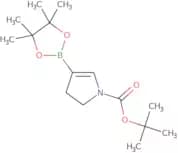
CAS :The trimethylsilyloxy group is a very efficient method for the synthesis of antireflection coatings consisting of metal carbonyls. One such metal carbonyl is tetradentate zirconium oxide. Tetradentate zirconium oxide has been shown to be a good catalyst for the reaction between triflic acid and 1-(trimethylsilyloxy)cyclohexene. The ethyl group on the 1-carbon atom of 1-(trimethylsilyloxy)cyclohexene allows it to coordinate with the zirconium atom in tetradentate zirconium oxide, while the triflic acid acts as an acid catalyst to increase the rate of reaction.Formule :C9H18OSiDegré de pureté :Min. 95%Masse moléculaire :170.32 g/mol1-BOC-2,3-Dihydropyrrole-4-boronic acid, pinacol ester
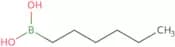
CAS :Please enquire for more information about 1-BOC-2,3-Dihydropyrrole-4-boronic acid, pinacol ester including the price, delivery time and more detailed product information at the technical inquiry form on this pageFormule :C15H26BNO4Degré de pureté :Min. 95%Masse moléculaire :295.18 g/molN-Hexylboronic acid
CAS :N-Hexylboronic acid is an organometallic compound that has been used as a model system to study the catalytic mechanism of the Suzuki coupling reaction. It has also been shown to be a substrate film for use in the suzuki coupling reaction when combined with Raney nickel, which can be used to synthesize organic compounds. N-Hexylboronic acid has been shown to inhibit the activity of pancreatic lipase, but not cholesterol esterase or cholesterol ester hydrolase. The skeleton of this molecule is made up of six carbon atoms and one boron atom. Hydrogen chloride and aliphatic hydrocarbons are inhibitors of N-hexylboronic acid.Formule :C6H15BO2Degré de pureté :Min. 95%Masse moléculaire :129.99 g/mol4-(Ethylsulfonyl)phenylboronicacid
CAS :Please enquire for more information about 4-(Ethylsulfonyl)phenylboronicacid including the price, delivery time and more detailed product information at the technical inquiry form on this page
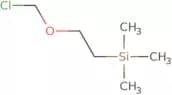
Formule :C8H11BO4SDegré de pureté :Min. 95%Masse moléculaire :214.05 g/mol2-(Chloromethoxyethyl)trimethyl silane - stabilized with ca. 0.1% Diisopropylethylamine
CAS :Silyl protecting group for alcohols; reagent for introducing protected C atom
Formule :C6H15ClOSiDegré de pureté :Min. 95%Couleur et forme :Colorless Clear LiquidMasse moléculaire :166.72 g/molTriethyl borate
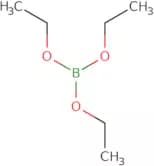
CAS :Triethyl borate is an inorganic acid that is used as a catalyst. It has been shown to react with hydrochloric acid and orthoboric acid to form hydrogen boron hydride (H3BO3) and water. It also reacts with hydrogen chloride, forming hydrogen boron chloride, which can be used to prepare the active form of boric acid. This reaction is reversible and the equilibrium can be shifted by adding a base such as sodium hydroxide or ammonia. Triethyl borate is reactive, so it should only be handled in well-ventilated areas. The structural analysis of this compound reveals that it contains two hydroxyl groups that are involved in intramolecular hydrogen bonding, which helps stabilize its structure. Triethyl borate has been shown to have anti-infectious properties, inhibiting the growth of infectious bacteria such as Staphylococcus aureus and Streptococcus pneumoniae.
Formule :C6H15BO3Degré de pureté :Min. 95%Masse moléculaire :145.99 g/molLithium difluoro(oxalato)borate
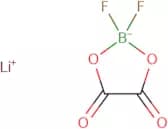
CAS :Lithium difluoro(oxalato)borate is an electron-microscopic corrosion inhibitor that belongs to the class of ester compounds. It is a solid compound that has been shown to be efficacious against oxidation products. The efficiency of this compound is dependent on the concentration and purity of lithium difluoro(oxalato)borate and the type of metal, such as steel or aluminum. Lithium difluoro(oxalato)borate can be used in rechargeable batteries, due to its transport properties, high salt tolerance, and low self-discharge rate. This compound has been shown to have functional groups that are capable of interacting with hydrogen fluoride in an organic solution.Formule :C2BF2O4•LiDegré de pureté :Min. 95%Masse moléculaire :143.77 g/molN-Methoxymethyl-N-(trimethylsilylmethyl)benzylamine
CAS :N-Methoxymethyl-N-(trimethylsilylmethyl)benzylamine is a chiral, electron deficient reagent that reacts with aldehydes and boronic esters to form products with high chemical yields. This compound can be used as a catalyst for acylation reactions, such as the synthesis of p-nitrophenol. N-Methoxymethyl-N-(trimethylsilylmethyl)benzylamine is synthesized by the reaction of trifluoroacetic acid and an amine, followed by chloroformate displacement. The product is then reacted with acylating agents in the presence of catalysts.Formule :C13H23NOSiDegré de pureté :Min. 95%Couleur et forme :Clear Colourless To Pale Yellow LiquidMasse moléculaire :237.41 g/molN-alpha-Fmoc-Nepsilon-allyloxycarbonyl-D-lysine
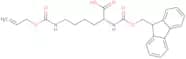
CAS :N-alpha-Fmoc-Nepsilon-allyloxycarbonyl-D-lysine is a medicament that is modified with an amino group at the alpha position. It is synthesized by modification of the chain with a ganirelix acetate. N-alpha-Fmoc-Nepsilon-allyloxycarbonyl-D-lysine can be used to produce ganirelix, which inhibits the release of follicle stimulating hormone (FSH). The chemical synthesis of this drug has been shown to be successful in large scale production, and it has been shown to be effective in treating patients with prostate cancer. Impurities in this drug have been found and treated by removing the methyl ester group from the lysine residue.Formule :C25H28N2O6Degré de pureté :Min. 95%Masse moléculaire :452.5 g/molH-Arg-epsilon-aminocaproyl-Arg-epsilon-aminocaproyl-Arg-epsilon-aminocaproyl-Arg-epsilon-aminocaproyl-Arg-epsilon-aminocaproyl-Arg-e psilon-aminocaproyl-Arg-OH trifluoroacetate salt
CAS :Please enquire for more information about H-Arg-epsilon-aminocaproyl-Arg-epsilon-aminocaproyl-Arg-epsilon-aminocaproyl-Arg-epsilon-aminocaproyl-Arg-epsilon-aminocaproyl-Arg-e psilon-aminocaproyl-Arg-OH trifluoroacetate salt including the price, delivery time and more detailed product information at the technical inquiry form on this pageFormule :C78H152N34O14Degré de pureté :Min. 95%Masse moléculaire :1,790.26 g/mol3-Methoxyphenylboronic acid
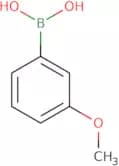
CAS :3-Methoxyphenylboronic acid is a photophysical molecule that can be used as an analytical reagent in plant physiology and analytical chemistry. 3-Methoxyphenylboronic acid reacts reversibly with copper ions to form a complex. The binding constants of the copper complex depend on the pH of the solution, which can be altered by adding a phosphate derivative to the solution. This reaction was investigated using cross-coupling techniques and showed that the binding constants for this complex are dependent on the type of solvent used. 3-Methoxyphenylboronic acid has also been used to measure glucose levels in blood samples.Formule :C7H9BO3Degré de pureté :Min. 95%Couleur et forme :White PowderMasse moléculaire :151.96 g/mol(R)-(+)-2-Methyl-CBS-oxazaborolidine
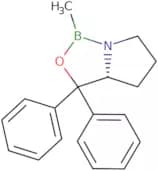
CAS :(R)-(+)-2-Methyl-CBS-oxazaborolidine is a dpp-iv inhibitor that is a β-unsaturated ketone. It has been shown to inhibit the enzyme histone lysine demethylase, which may be involved in the regulation of bone mass. This compound also has a pharmacokinetic profile that is characterized by high oral bioavailability, low plasma protein binding, and rapid metabolism by liver enzymes. The reaction mechanism for this compound is based on the formation of an enolate carbanion. (R)-(+)-2-Methyl-CBS-oxazaborolidine can be synthesized with high stereoselectivity and yields from reactions with simple starting materials. This synthetic route also has a number of advantages over other methods: it does not require any protecting groups, it does not use toxic solvents such as dichloromethane or chloroform, and it can be performed in anhydrous conditionsFormule :C18H20BNODegré de pureté :Min. 95%Couleur et forme :SolidMasse moléculaire :277.17 g/mol