Signalisation du cytosquelette
Les inhibiteurs de la signalisation du cytosquelette sont des composés qui perturbent les voies de signalisation régulant le cytosquelette, essentiel pour la forme, la motilité, la division des cellules et le transport intracellulaire. Ces inhibiteurs sont utilisés pour étudier la dynamique des protéines du cytosquelette, telles que l'actine et la tubuline, et leur rôle dans des processus comme la migration cellulaire, l'adhésion et la métastase du cancer. Les inhibiteurs de la signalisation du cytosquelette sont précieux dans la recherche en biologie cellulaire, en cancérologie et en neurobiologie. Chez CymitQuimica, nous offrons une gamme complète d'inhibiteurs de la signalisation du cytosquelette de haute qualité pour soutenir vos recherches dans ces domaines.
1534 produits trouvés pour "Signalisation du cytosquelette"
Trier par
Degré de pureté (%)
0
100
|
0
|
50
|
90
|
95
|
100
JC168
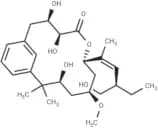
CAS :JC168 is a phenyl analog of peloruside and functions as a microtubule inhibitor with antiproliferative and anticancer properties. It enhances tubulin polymerization, thereby disrupting microtubule dynamics, making it a useful agent in the study of microtubule-associated diseases.Formule :C26H40O7Couleur et forme :SolidMasse moléculaire :464.592Quinagolide hydrochloride
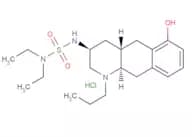
CAS :Quinagolide hydrochloride is a selective agonist of dopamine D2 receptor.Formule :C20H34ClN3O3SDegré de pureté :98%Couleur et forme :SolidMasse moléculaire :432.02Tau ligand-1
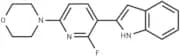
CAS :Tau ligand-1 (Compound 75) is a ligand of aggregated tau protein that can penetrate the blood-brain barrier. In tissues affected by Alzheimer's disease, progressive supranuclear palsy, corticobasal degeneration, and Pick's disease, Tau ligand-1 shows high affinity for aggregated tau protein, with equilibrium dissociation constants (KD) ranging from 1 to 3.8 nM. It holds potential as a positron emission tomography (PET) tracer for imaging studies of tau-related diseases within the central nervous system.Formule :C17H16FN3OCouleur et forme :SolidMasse moléculaire :297.327RMS-07
CAS :RMS-07, a covalent MPS1/TTK inhibitor, has an IC50 of 13.1 nM, targeting a kinase hinge cysteine.Formule :C35H40N8O2Couleur et forme :SolidMasse moléculaire :604.74Tubulin polymerization-IN-32
Tubulin polymerization-IN-32: a cancer cell growth inhibitor used for research in cancers like lymphoma.Formule :C29H30N2O7Couleur et forme :SolidMasse moléculaire :518.56HG-7-86-01
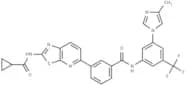
CAS :HG-7-86-01 is a selective type II tyrosine kinase inhibitor with antiproliferative activity against mutant T315I- Bcr-Abl for chronic myeloid leukemia (CML).Formule :C28H21F3N6O2SDegré de pureté :99.07%Couleur et forme :SolidMasse moléculaire :562.57HPK1-IN-61
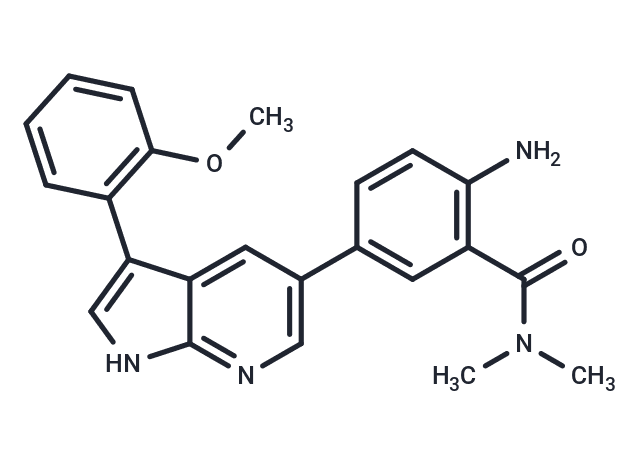
CAS :HPK1-IN-61 (Compound 1) serves as an inhibitor of hematopoietic progenitor kinase 1 (HPK1) with a Ki of 0.4 nM, and also inhibits Abl with an IC50 of less than 0.51 nM. Additionally, HPK1-IN-61 displays inhibitory activity against LCK, with an IC50 of 24 nM.Formule :C23H22N4O2Couleur et forme :SolidMasse moléculaire :386.45SF0166
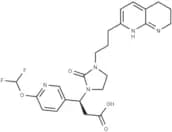
CAS :SF0166: potent αvβ3 antagonist, IC50: 0.6 nM. Blocks cell adhesion, IC50: 7.6 pM-76 nM. Reduces neovascularization in mice.Formule :C23H27F2N5O4Couleur et forme :SolidMasse moléculaire :475.49AChE/BChE-IN-23
AChE/BChE-IN-23 (Compound 6e) is a dual inhibitor of acetylcholinesterase and butyrylcholinesterase, exhibiting IC50 values of 0.91 μM for AChE, 1.19 μM for eqBChE, and 1.01 μM for hBChE. This compound also demonstrates antioxidant properties and inhibits the aggregation of Aβ1-42 and Tau proteins. Moreover, AChE/BChE-IN-23 prevents the activation of microglial cells by inhibiting the release of reactive oxygen species and mitochondrial damage. Additionally, it reduces the levels of the NLRP3 inflammasome in human microglial cells and reverses memory impairment in mice induced by scopolamine.Formule :C19H21N5O3Couleur et forme :SolidMasse moléculaire :367.4HSP90-IN-9
HSP90-IN-9: potent HSP90 inhibitor, dose-dependent fungicide, impedes biofilm/morphology with FLC, reverses FLC resistance.Couleur et forme :SolidL 734217
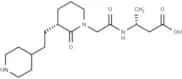
CAS :L 734217 is an antagonist of the fibrinogen receptor.Formule :C18H31N3O4Degré de pureté :98%Couleur et forme :SolidMasse moléculaire :353.46EV206
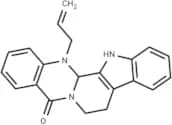
CAS :EV206 is an effective inhibitor of Hsp70, exhibiting antiproliferative properties. This compound induces cell apoptosis (apoptosis) and enhances the protein expression of cleaved PARP and caspase-3. Additionally, EV206 demonstrates antitumor activity.Formule :C21H19N3OCouleur et forme :SolidMasse moléculaire :329.40AMXI-5001 hydrochloride
AMXI-5001 hydrochloride, an oral inhibitor of PARP1/2 and microtubules, shows greater potency and selective anti-cancer effects.Formule :C25H21ClFN5O3Couleur et forme :SolidMasse moléculaire :493.92Tubulin polymerization-IN-34
"Tubulin-IN-34 inhibits oxazolylisoindole microtubule assembly, selective for VL51 lymphoma."Formule :C31H35N3O6Couleur et forme :SolidMasse moléculaire :545.63Nrf2/HO-1 activator 2
Compound 13m, a difluoro derivative, activates Nrf2/HO-1, showing neuroprotective and antioxidant effects, useful in PD research.Formule :C20H16F2O5Couleur et forme :SolidMasse moléculaire :374.33Hsp110-STAT3 interaction-IN-1
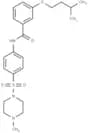
CAS :Row174336 (compound 29) serves as an efficient inhibitor of the Hsp110-STAT3 interaction, exhibiting antiproliferative activity in the HPAEC cell line with an IC50 of 22.67 μM.Formule :C23H31N3O4SCouleur et forme :SolidMasse moléculaire :445.58PROTAC α-synuclein degrader 6
CAS :PROTACα-synuclein degrader 6 (compound T3) is a PROTAC degrader of α-synuclein and tau, with an EC50 of 1.57 μM and 4.09 μM, respectively. This compound plays a significant role in neurodegenerative disease (ND) research.Formule :C37H39N5O9SMasse moléculaire :729.80AKT-IN-10
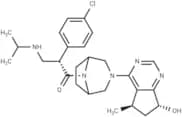
CAS :AKT-IN-10, a potent AKT inhibitor, has potential for breast and prostate cancer research, impacting cell growth and survival pathways.Formule :C26H34ClN5O2Couleur et forme :SolidMasse moléculaire :484.03NAP1051
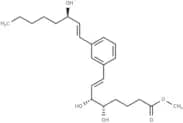
CAS :NAP1051, a biomimetic analog of Lipoxin A4, serves an anti-tumor role by targeting the inflammatory tumor microenvironment. It inhibits the chemotaxis of neutrophils to fMLP and stimulates macrophage efferocytosis by activating AKT. NAP1051 is utilized in research on colorectal cancer.Formule :C23H34O5Couleur et forme :SolidMasse moléculaire :390.51DCEM1
CAS :DCEM1 binds to heat shock protein 60 (HSP60) and inhibits the interaction between HSP60 and ClpP, thereby blocking the mitochondrial unfolded protein response. Additionally, DCEM1 suppresses the expression of β-catenin and reduces ATP production in PC-3 and TKO cells. It is utilized in research related to prostate cancer.Formule :C22H23N3O2SCouleur et forme :SolidMasse moléculaire :393.50