Réactifs synthétiques
Sous-catégories appartenant à la catégorie "Réactifs synthétiques"
- Auxiliaires chiraux(76 produits)
- Molécules organiques diverses avec substitutions isotopiques(6.251 produits)
- Acides et bases organiques(919 produits)
- Ligands organiques(569 produits)
- Réactifs à base de polymères(13 produits)
- Résines pour la synthèse(41 produits)
- Divers liquides ioniques(499 produits)
7380 produits trouvés pour "Réactifs synthétiques"
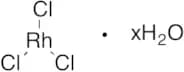
Rhodium(III) Chloride Hydrate
CAS :Produit contrôléApplications Rhodium(III) chloride is often used in synthetic chemistry as a hydrogenation catalyst. Rhodium(III) chloride is also used to make transition metal complexes, some of which are used as reagents in the decarbonylation dehydration reactions of fatty acids to alkenes.
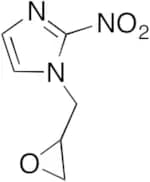
References Foglia, T. & Barr, P.: J. Am. Oil Chem. Soc., 53, 737 (1976); Hillis, J. & DeArmond, M.: J. Lum., 4, 273 (1971); James, B. & Rempel, G.: Can. J. Chem., 44, 233 (1966)Formule :Cl3Rh·xH2OCouleur et forme :Dark BrownMasse moléculaire :209.261-(2,3-Epoxypropyl)-2-nitroimidazole
CAS :Produit contrôléApplications 1-(2,3-Epoxypropyl)-2-nitroimidazole is an intermediate in the synthesis of Pimonidazole-d10 (P447814). Isotope labelled Pimonidazole (P447813) is an effective and nontoxic hypoxia detection reagent. Pimonidazole forms adducts with thiol groups in proteins, peptides and amino acids. It abels hypoxic tumor cells in vivo. Also labels hypoxic mesenchymal stem cells in mouse bone marrow.
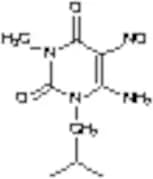
References Sato et al.: PLoS One 11 e0165946 PMID:(2016); Bennewith et al.: Cancer Res. 62 6827 PMID: 12460894, (2002)Formule :C6H7N3O3Couleur et forme :NeatMasse moléculaire :169.146-Amino-1-isobutyl-3-methyl-5-nitroso-2,4-pyrimidinedione
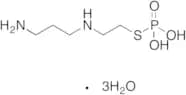
CAS :Produit contrôléFormule :C9H14N4O3Couleur et forme :NeatMasse moléculaire :226.23Amifostine Trihydrate
CAS :Produit contrôléApplications Amifostine Trihydrate is a widely used cytoprotective and radio-protective agent.
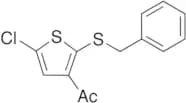
References Adibhatla K.S., et al. Novel method of manufacture of high purity Amifostine trihydrate. Indian Pat. Appl. IN 2005CH01592 A 20080125. Jan 25, 2008Formule :C5H15N2O3PS·3H2OCouleur et forme :NeatMasse moléculaire :268.271-(2-(Benzylthio)-5-chlorothiophen-3-yl)ethanone
CAS :Produit contrôléApplications Reagent used in the preparation of carbonic anhydrase inhibitors.
Formule :C13H11ClOS2Couleur et forme :White To Light YellowMasse moléculaire :282.81Iron(III) Chloride Hexahydrate
CAS :Applications Iron(III) Chloride Hexahydrate is used as a reagent in the synthesis of Iron Trisglycinate (I775475); a compound used in biological studies to evaluate the dietary iron absorption from whole corn meal in humans.
Not a dangerous good if item is equal to or less than 1g/ml and there is less than 100g/ml in the package
References Bovell-Benjamin, A. C., et al.: Am. J. Clin. Nutr., 71, 1563 (2000)Formule :Cl3Fe·6H2OCouleur et forme :NeatMasse moléculaire :270.3Vincristine-d3 Sulfate
CAS :Produit contrôléApplications Labelled Vincristine. An antitumor alkaloid isolated from Vinca rosea Linn. An antineoplastic.
Not a dangerous good if item is equal to or less than 1g/ml and there is less than 100g/ml in the package
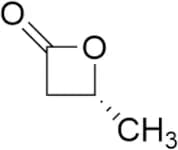
References Burns, J.H., et al.: Anal. Profiles Drug Subs., 1, 463 (1972), Owellen, D., et al.: J. Med. Chem., 15, 894 (1972),Formule :C46H53D3N4O10·H2SO4Couleur et forme :NeatMasse moléculaire :926.05(R)-β-Butyrolactone
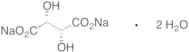
CAS :Produit contrôléFormule :C4H6O2Couleur et forme :NeatMasse moléculaire :86.089Sodium L-(+)-Tartaric Acid Dihydrate
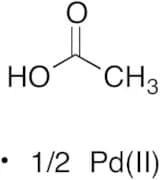
CAS :Formule :C4H4O6·2Na·2H2OCouleur et forme :NeatMasse moléculaire :230.08Palladium(II) Acetate
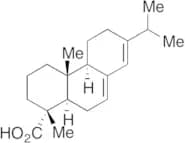
CAS :Produit contrôléFormule :(C2H3O2)2PdCouleur et forme :NeatMasse moléculaire :224.51Abietic Acid, >95%
CAS :Applications Abietic Acid is the primary component of resin acid found commonly in rosin. Abietic Acid exhibited potent testosterone 5α-reductase inhibitory activity in vitro.
Not a dangerous good if item is equal to or less than 1g/ml and there is less than 100g/ml in the package
References Roh, S.-S. et al.: J. Health Sci., 56, 451 (2010); Harris, G.C. et al.: Org. Synth., 32, 1 (1963);Formule :C20H30O2Degré de pureté :>95%Couleur et forme :YellowMasse moléculaire :302.45Castanospermine
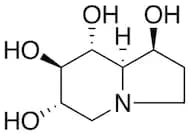
CAS :Produit contrôléApplications Castanospermine is a plant alkaloid shown to be a potent inhibitor of lysosomal a-or beta- glucosidase. It also inhibits mammalian glucosidase 1 and beta-mannosidase from sweet almonds and fungal beta-xylosidase.
References Arch. Biochem. Biophys., 221, 593 (1983), Clin. Biochem., 17, 3 (1984), Trends Bio. Sci., 9, 32, (1984), J. Biol. Chem., 260, 15873-15879 (1985), FEBS, 1985, 28 (1986)Formule :C8H15NO4Couleur et forme :Off-WhiteMasse moléculaire :189.21Kifunensine
CAS :Produit contrôléStability Desiccate and Store at -20°C
Applications Kifunensine is an alkaloid produced by the fungus, Kitasatosporia kifunense, and has been shown to be a weak inhibitor of aryl mannosidase. It is a unique oxamide derivative of mannojirimycin and a potent inhibitor of the glycoprotein processing enzyme mannosidase I. Kifunenesine is ineffective in inhibiting either mannosidase II or the endoplasmic reticulum (ER) a-mannosidase. It also possesses immunomodulating properties based on chemical, physicochemical and x-ray crystallographic analysis.When tested in cell culture using influenza virus-infected MDCK cells, kifunensine, at 1 mg/ml or less, caused almost complete inhibition of complex chain formation with the accumulation of Man9(GlcNAc)2. Thus, kifunensine was proven to be 50 to 100 times more effective than deoxymannojirimycin.Ph
References Iwami, M., et al.: J. Antibiotic., 40, 612 (1987); Elbein, A.D., et al.: J. Biol. Chem., 265, 15599 (1990); Elbein, A.D., et al.: Archives of Biochem & Biophys., 288, 1, 177 (1991); Kayakiri, H., et al.: Chem. Pharm. Bull., 39(6), 1378 (1991)Formule :C8H12N2O6Couleur et forme :White To Off-WhiteMasse moléculaire :232.19(S)-Epichlorohydrin
CAS :Produit contrôléApplications S-enantiomer of Epichlorohydrin, an important industrial chemical, is a bifunctional alkylating agent with the potential to form DNA cross-links. It is used as a solvent for natural and synthetic resins, gums, cellulose esters and ethers, paints, varnishes, nail enamels and lacquers, cement for Celluloid. Also, it is used as stabilizer.
Not a dangerous good if item is equal to or less than 1g/ml and there is less than 100g/ml in the package
References Romano, K.P. et al.: Chem. Res. Toxicol., 20, 832 (2007); Smyth, H.F., et al.: J. Ind. Hyg. Toxicol., 30, 63 (1948);Formule :C3H5ClOCouleur et forme :NeatMasse moléculaire :92.52Mirtazapine
CAS :Produit contrôléApplications Mirtazapine is an α2-Adrenergic blocker; analogue of Mianserin. Antidepressant.
References De Boer, T., et al.: Neuropharmacology, 27, 399 (1988), Smith, W.T., et al.: Psychopharmacol. Bull., 26, 191 (1990)Formule :C17H19N3Couleur et forme :WhiteMasse moléculaire :265.35Barium Chloride Dihydrate
CAS :Produit contrôléApplications Barium chloride dihydrate is used in the synthesis of 2R, 3S-Dihydroxy-4-oxo-butanoic Acid (D450800).
Not a dangerous good if item is equal to or less than 1g/ml and there is less than 100g/ml in the packageFormule :BaCl2H4O2Couleur et forme :NeatMasse moléculaire :244.26Lead(IV) Acetate, Stabilized
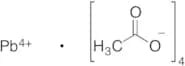
CAS :Produit contrôléStability Hygroscopic, Moisture Sensitive
Applications Lead(IV) acetate is most commonly used in synthetic chemistry as an oxidizing agent, and is a versatile precursor for lead-containing compounds. Lead(IV) acetate is a toxic substance to humans, and is also known to induce oxidative damage and hyperlipidemia in rats.
Not a dangerous good if item is equal to or less than 1g/ml and there is less than 100g/ml in the package
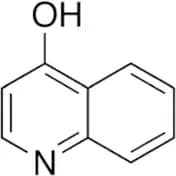
References Newairy, A., et al.: Food Chem. Toxicol., 47, 813 (2009); Rahman, S. & Sultana, S.: Chem.-Biol. Int., 160, 61 (2006); Yadav, R.: Synlett, 2012, 1262 (2012)Formule :C8H12O8PbCouleur et forme :NeatMasse moléculaire :443.384-Hydroxyquinoline
CAS :Applications 4-Hydroxyquinolineis a hydroxylated quinoline derivative with antimicrobial activity. 4-Hydroxyquinoline showed growth-inhibitory effects against intestinal bacteria. 4-Hydroxyquinoline act as sacrificial scavengers of the photogenerated oxygen species and has been shown to prevent the photodegradation of riboflavin.
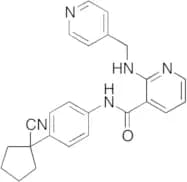
References Kim, Y.-M. et al.: Food Sci. Biotechnol., 15, 817 (2006); Criado, S. et al.: J. Photochem. Photobiol. B Biol., 71, 19 (2003):Formule :C9H7NOCouleur et forme :NeatMasse moléculaire :145.16Apatinib
CAS :Produit contrôléApplications Apatinib is an orally available, small molecule multitargeted tyrosine kinase inhibitor. Apatinib selectively inhibits the vascular endothelial growth factor receptor-2 (VEGFR2). Apatinib functions by inhibiting VEGF-mediated endothelial cell migration and proliferation thus blocking new blood vessel formation in tumor tissue. Recent studies have shown that Apatinib enhances the efficacy of conventional chemotherapeutical drugs in side population (SP) cells and ABCB1-overexpressing leukemia cells.
Not a dangerous good if item is equal to or less than 1g/ml and there is less than 100g/ml in the package
References Mi, Y. et al.: Cancer Res., 70, 7981 (2010); Tong, X.Z. et al.: Biochem. Pharmacol., 83, 586 (2012); Ding, J, et al.: J. Chrom B Anal. Technol. Biomed. Life Sci., 895, 108 (2012);Formule :C24H23N5O·CH4O3SCouleur et forme :NeatMasse moléculaire :493.58