Amines
Sous-catégories appartenant à la catégorie "Amines"
- Nitrosamines(2.649 produits)
- Amines primaires(30.948 produits)
- Cations d'ammonium quaternaire(1.102 produits)
- Amines secondaires(20.887 produits)
- Amines tertiaires(17.195 produits)
8790 produits trouvés pour "Amines"
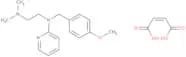
Pyrilamine maleate
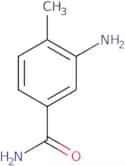
CAS :Pyrilamine maleate salt is a reagent used for optical rotation measurements. It is also known to be an antihistamine that has been shown to have mutagenic effects on Salmonella typhimurium and other bacteria. Pyrilamine maleate salt inhibits potassium ion transport across the cell membrane, which can lead to hyperpolarization of the cell membrane and inhibition of the uptake of sodium ions. This inhibition leads to an increase in intracellular sodium concentrations, which in turn leads to decreased ATP production.Formule :C17H23N3O•C4H4O4Degré de pureté :Min. 95%Couleur et forme :PowderMasse moléculaire :401.46 g/mol3-Amino-4-methylbenzamide
CAS :3-Amino-4-methylbenzamide is an interchemical that can be utilized to synthesize naphthol. 3-Amino-4-methylbenzamide is an amide that has been shown to have a molecular modeling structure of a conformation. The interaction of 3-amino-4-methylbenzamide with the P38 kinase enzyme has been shown to inhibit the activity of this enzyme, which may lead to its use as a drug for the treatment of inflammation.
Formule :C8H10N2ODegré de pureté :Min. 95%Couleur et forme :PowderMasse moléculaire :150.18 g/mol10-Aminodecanoic acid
CAS :10-Aminodecanoic acid is an organic compound that belongs to the group of fatty acids. It is a monomeric molecule with two carboxylic acid groups and one hydroxyl group. 10-Aminodecanoic acid has been shown to induce tumor regression in xenograft models for human prostate, breast, and colon cancer cells. The mechanism of action is currently unclear but may be due to specific interactions with amino acids on glycoproteins or amides on proteins. 10-Aminodecanoic acid also stabilizes membranes by forming hydrogen bonds with phospholipids.
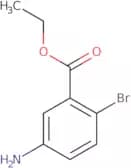
Formule :C10H21NO2Degré de pureté :Min. 95%Couleur et forme :White PowderMasse moléculaire :187.28 g/mol5-Amino-2-bromobenzoic acid ethyl ester
CAS :5-Amino-2-bromobenzoic acid ethyl ester is a chemical compound that can be used for the production of pharmaceuticals and research chemicals. It is a versatile building block that can be used in the synthesis of complex compounds with valuable applications. 5-Amino-2-bromobenzoic acid ethyl ester is a reagent, speciality chemical, and useful building block that can be used in the synthesis of high quality compounds. This compound has been identified as an intermediate in organic reactions and as a reaction component. CAS No. 208176-32-3Formule :C9H10BrNO2Degré de pureté :Min. 95%Couleur et forme :PowderMasse moléculaire :244.09 g/molDehydro norketamine
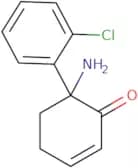
CAS :Produit contrôléDehydro norketamine is a chiral compound that is used as a sample preparation for analytical methods. It has been shown to be the major metabolite of ketamine and can be detected in human serum, urine, and sweat. Dehydro norketamine has also been found to have similar pharmacological effects as ketamine, such as analgesia and hallucinogenic properties. The detection sensitivity of dehydro norketamine is lower than that of ketamine, as it cannot be detected in human serum at concentrations less than 0.5 ng/mL. The clinical relevance of dehydro norketamine is still being studied. The following product description should not exceed 150 words: Dehydro norketamine is a chiral compound that is used as a sample preparation for analytical methods. It has been shown to be the major metabolite of ketamine and can be detected in human serum, urine, and sweat. Dehydro nork
Formule :C12H12ClNODegré de pureté :90%MinCouleur et forme :PowderMasse moléculaire :221.68 g/molDiethyl [[(3-chloro-4-fluorophenyl)amino]methylene]malonate
CAS :Diethyl [(3-chloro-4-fluorophenyl)amino]methylene]malonate is a fine chemical that is useful as a building block and intermediate for the synthesis of more complex compounds. It has been used in research as a reaction component for the synthesis of other chemicals, such as pharmaceuticals and pesticides. The CAS number for diethyl [(3-chloro-4-fluorophenyl)amino]methylene]malonate is 70032-30-3.Formule :C14H15ClFNO4Degré de pureté :Min. 95%Couleur et forme :PowderMasse moléculaire :315.72 g/mol4-Aminophenylacetonitrile
CAS :4-Aminophenylacetonitrile is a molecule that is structurally similar to nitrobenzene. 4-Aminophenylacetonitrile has been shown to be an efficient method for inhibiting faecalis growth and secretory phospholipase A2 (sPLA2) activity in vitro. It also inhibits the population growth of E. coli in vivo, which can be attributed to its ability to inhibit the enzyme catalysed by hydrogen bond formation.
Formule :C8H8N2Degré de pureté :Min. 95%Couleur et forme :PowderMasse moléculaire :132.16 g/mol2-Amino-4-hydroxypteridine
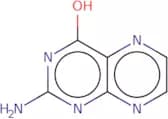
CAS :2-Amino-4-hydroxypteridine is a chemical compound that is used in the synthesis of other organic compounds. 2-Amino-4-hydroxypteridine binds to molybdenum and coordinates with it through hydrogen bonding, which stabilizes the molecule. The binding between 2-amino-4-hydroxypteridine and molybdenum has been shown to be essential for its antimicrobial activity. This compound inhibits bacterial growth by inhibiting the biosynthesis of monoamine neurotransmitters, such as dopamine and serotonin.
2-Amino-4-hydroxypteridine also inhibits enzyme activities, such as those involved in energy metabolism, as well as structural analysis of nitrogen containing molecules.
The reaction mechanism of 2 amino 4 hydroxypteridine is not well understood, but it has been proposed that this compound reacts with electron acceptors such as oxygen or nitric oxide to form an excited stateFormule :C6H5N5ODegré de pureté :Min. 95%Couleur et forme :PowderMasse moléculaire :163.14 g/mol4-Amino-1-Boc-piperidine
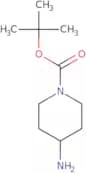
CAS :4-Amino-1-Boc-piperidine is a potent inhibitor of the CCR5 receptor. It is an x-ray crystal structure with a hydroxide solution that inhibits the growth of cancer cells. The inhibitor binding site for 4-Amino-1-Boc-piperidine was determined to be the CCR5 receptor, which is located on the surface of hematopoietic cells. The compound has been shown to inhibit human T lymphocyte proliferation in vitro and inhibit HIV replication in infected patients. 4-Amino-1-Boc-piperidine is able to inhibit the growth of cancer cells by blocking the production of cytokines, such as interleukin 2, that are needed for cell division and growth.
Formule :C10H20N2O2Degré de pureté :Min. 95%Couleur et forme :PowderMasse moléculaire :200.28 g/molRhodamine B
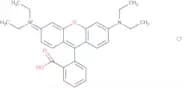
CAS :Rhodamine B is a fluorescent dye that has been used as a model system to study the effects of drugs on P-glycoprotein (P-gp) function. It has been shown to inhibit P-gp function by binding to the transporter protein, which is responsible for pumping drugs and other compounds out of cells. Rhodamine B can be used as a probe for P-gp activity in cell lines, including squamous carcinoma cells, and can also be used to measure drug efflux from cells.
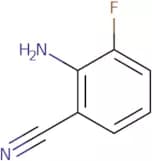
Rhodamine B was found to have an optimum concentration of 10 μM and a structural analysis showed it forms a complex with the transporter protein.Formule :C28H31ClN2O3Degré de pureté :Min. 95%Couleur et forme :Yellow Clear LiquidMasse moléculaire :479.01 g/mol2-Amino-3-fluorobenzonitrile
CAS :A 2-aminopyridine substituent is added to the 3-position of benzonitrile to form 2-amino-3-fluorobenzonitrile. The hydrogenolysis of this compound at low temperatures yields indoles. Cyanogen bromide can be used as a catalyst for the reaction, but it must be removed before the product is purified. This reaction also produces a cyano group, which can be used in other reactions such as nitration or reduction. The glycinate molecule can also be formed by this process, and it is a neutral functional group that is capable of forming esters with carboxylic acids.
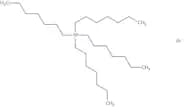
Formule :C7H5FN2Degré de pureté :Min. 95%Masse moléculaire :136.13 g/molTetraheptylammonium bromide
CAS :Tetraheptylammonium bromide is a solid catalyst that can be used for the preparation of pyrimidine compounds. Tetraheptylammonium bromide is a phase transition material with a melting point of about -60°C. It is used as an analytical reagent in the determination of metal ions by solution equilibria, and has been shown to have hemolytic activity. Tetraheptylammonium bromide has been shown to be a selective hydroxyl group-containing compound, which can be used in analytical chemistry methods such as linear calibration curves and carbon disulfide titrations.
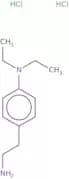
Formule :C28H60BrNDegré de pureté :Min. 98%Couleur et forme :PowderMasse moléculaire :490.69 g/mol2-(4-Diethylaminophenyl)ethylamine dihydrochloride
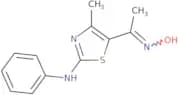
CAS :2-(4-Diethylaminophenyl)ethylamine dihydrochloride is a fine chemical that belongs to the group of versatile building blocks. It is mainly used as a reagent and speciality chemical in research. 2-(4-Diethylaminophenyl)ethylamine dihydrochloride can be used as a high quality, useful intermediate or reaction component in the synthesis of complex compounds. As a scaffold, it can be used to synthesize other useful compounds.Formule :C12H20N2·2HClDegré de pureté :Min. 95%Couleur et forme :PowderMasse moléculaire :265.22 g/mol(3-((hydroxyimino)ethyl)-4-methyl(2,5-thiazolyl))phenylamine
CAS :Please enquire for more information about (3-((hydroxyimino)ethyl)-4-methyl(2,5-thiazolyl))phenylamine including the price, delivery time and more detailed product information at the technical inquiry form on this page
Formule :C12H13N3OSDegré de pureté :Min. 95%Couleur et forme :Clear LiquidMasse moléculaire :247.32 g/molTris(3-Aminopropyl)amine
CAS :Tris(3-Aminopropyl)amine is a polypeptide that binds to copper ions and forms a chelate ring. It also has binding constants with nitrogen atoms, which are important in enzyme activities, biochemical properties, and the molecule's structure. Tris(3-Aminopropyl)amine chelates copper ions and prevents them from reacting with other molecules in the environment. This compound is used as an antioxidant for proteins and other macromolecules. Tris(3-Aminopropyl)amine has been shown to be effective in inhibiting protein synthesis and preventing the growth of bacteria such as E. coli. Tris(3-Aminopropyl)amine is also used to stabilize biomacromolecules such as DNA, RNA, or proteins against chemical modification or degradation by metal ions such as copper or iron. In addition, this compound can be used for water permeability studies because it allows water molecules to penetrate its
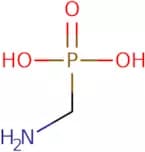
Formule :C9H24N4Degré de pureté :Min. 95 Area-%Couleur et forme :Clear LiquidMasse moléculaire :188.31 g/molAminomethylphosphonic acid
CAS :Aminomethylphosphonic acid has proven action as a mimetic of both D- and L-alanine; it acts as an inhibitor of cell wall enzymes such as D-Ala-D-Ala synthetase, alanine racemase (JAA02406), and UDP-N-acetylmuramyl-L-alanine synthetase
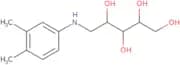
Formule :CH6NO3PDegré de pureté :Min. 95%Couleur et forme :PowderMasse moléculaire :111.04 g/mol3,4-Dimethyl-6-D-ribitylaminobenzene
CAS :3,4-Dimethyl-6-D-ribitylaminobenzene is a versatile building block that can be used as a reagent, speciality chemical, or useful scaffold in organic chemistry. 3,4-Dimethyl-6-D-ribitylaminobenzene is also known as 3,4-dimethylaniline and CAS No. 3051-94-3. It is an important intermediate in the production of polyurethanes and amines. This compound has been shown to be an effective building block for the synthesis of other compounds related to pharmaceuticals, pesticides, and agrochemicals.
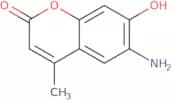
Formule :C13H21NO4Degré de pureté :Min. 95%Masse moléculaire :255.31 g/mol6-Amino-7-hydroxy-4-methylcoumarin
CAS :6-Amino-7-hydroxy-4-methylcoumarin is an antibacterial agent that has been shown to be effective against a range of Gram-positive and Gram-negative bacteria. It is synthesized from coumarins in nature, but also can be synthesized in the laboratory. This compound has been shown to inhibit bacterial growth by forming a covalent bond with the bacterial enzyme DNA gyrase, preventing the synthesis of DNA. 6-Amino-7-hydroxy-4-methylcoumarin has also been shown to have anti cancer properties.
Formule :C10H9NO3Degré de pureté :Min. 95%Couleur et forme :Yellow solid.Masse moléculaire :191.18 g/mol2,2-Bis[4-(4-aminophenoxy)phenyl]propane
CAS :2,2-Bis[4-(4-aminophenoxy)phenyl]propane is a monomer that is used in the production of polyurethanes. It has a number of alkyl substituents, including chloride, which are removed during the process. 2,2-Bis[4-(4-aminophenoxy)phenyl]propane reacts with chlorides to form hydrochloric acid and 2,2-bis(4-hydroxyphenyl)propane. The reaction time depends on the concentration of chloride and can be determined by gel permeation chromatography. This monomer has been shown to have a kinetic data that is dependent on temperature, as well as magnetic resonance spectroscopy and proton NMR data. The product also exhibits an increase in thermal expansion when compared to other monomers.
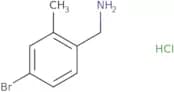
Formule :C27H26N2O2Degré de pureté :Min. 98 Area-%Couleur et forme :White PowderMasse moléculaire :410.51 g/mol4-Bromo-2-methylbenzylamine hydrochloride
CAS :4-Bromo-2-methylbenzylamine hydrochloride is a high quality, versatile building block that can be used in the synthesis of many different compounds. It is a reagent that can be used as an intermediate in the production of other compounds. 4-Bromo-2-methylbenzylamine hydrochloride is also a fine chemical and speciality chemical that can be used for research purposes. This compound has been shown to be useful as a reaction component in the synthesis of complex compounds.
Formule :C8H10BrN·HClDegré de pureté :Min. 95%Masse moléculaire :236.54 g/mol


![Diethyl [[(3-chloro-4-fluorophenyl)amino]methylene]malonate](/_next/image/?url=https%3A%2Fstatic.cymitquimica.com%2Fproducts%2F3D%2Fthumb-webp%2FFD95922.webp&w=3840&q=75)


![2,2-Bis[4-(4-aminophenoxy)phenyl]propane](/_next/image/?url=https%3A%2Fstatic.cymitquimica.com%2Fproducts%2F3D%2Fthumb-webp%2FFB62700.webp&w=3840&q=75)