Amines
Sous-catégories appartenant à la catégorie "Amines"
- Nitrosamines(2.661 produits)
- Amines primaires(30.947 produits)
- Cations d'ammonium quaternaire(1.100 produits)
- Amines secondaires(20.887 produits)
- Amines tertiaires(17.195 produits)
8788 produits trouvés pour "Amines"
[1-(Azepan-1-ylcarbonyl)butyl]amine hydrochloride
CAS :Produit contrôléPlease enquire for more information about [1-(Azepan-1-ylcarbonyl)butyl]amine hydrochloride including the price, delivery time and more detailed product information at the technical inquiry form on this page
Formule :C11H22N2ODegré de pureté :Min. 95%Masse moléculaire :198.31 g/mol3-Amino-4-methylbenzamide
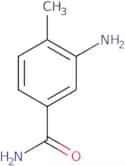
CAS :3-Amino-4-methylbenzamide is an interchemical that can be utilized to synthesize naphthol. 3-Amino-4-methylbenzamide is an amide that has been shown to have a molecular modeling structure of a conformation. The interaction of 3-amino-4-methylbenzamide with the P38 kinase enzyme has been shown to inhibit the activity of this enzyme, which may lead to its use as a drug for the treatment of inflammation.
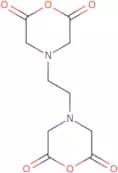
Formule :C8H10N2ODegré de pureté :Min. 95%Couleur et forme :PowderMasse moléculaire :150.18 g/molEthylenediaminetetraacetic Dianhydride
CAS :Ethylenediaminetetraacetic dianhydride (EDTA) is a dianhydride that is used in wastewater treatment. It is a strong chelating agent and reacts with metal ions to form complexes, which are then removed as sludge. EDTA also has amide groups that can react with water under acidic conditions, which increases its adsorption capacity. This compound is thermally stable and has a high chemical stability in the presence of human serum and basic fibroblasts. EDTA binds to DNA by electrostatic interactions, forming hydrogen bonds between the amine group of the EDTA molecule and the phosphate groups of DNA. This prevents cross-linking of DNA chains and results in an increased rate of DNA synthesis.
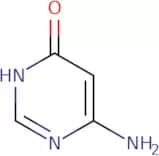
Formule :C10H12N2O6Degré de pureté :Min. 95%Couleur et forme :PowderMasse moléculaire :256.21 g/mol6-Aminopyrimidin-4-ol
CAS :6-Aminopyrimidin-4-ol is an intermediate in the synthesis of orotic acid. It is also a precursor to 6-chloropurine, which is used in the manufacture of orotic acid and 6-aminopurine. 6-Aminopyrimidin-4-ol can be prepared by benzannulation of phosphorus oxychloride with orotic acid or by hydrolysis of 6-chloropurine with thiourea. The latter method is preferred because it results in less waste.
6-Aminopyrimidin-4-ol is labile and must be stored under an inert gas at low temperature to prevent decomposition. It undergoes inactivating reactions with strong oxidizing agents, such as chlorine dioxide, peracetic acid, hydrogen peroxide, and potassium permanganate.
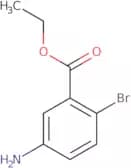
It also reacts with nucleophiles such as ammonia or amines to form stable tautFormule :C4H5N3ODegré de pureté :Min. 95%Couleur et forme :PowderMasse moléculaire :111.1 g/mol5-Amino-2-bromobenzoic acid ethyl ester
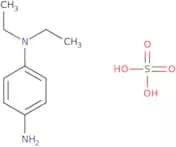
CAS :5-Amino-2-bromobenzoic acid ethyl ester is a chemical compound that can be used for the production of pharmaceuticals and research chemicals. It is a versatile building block that can be used in the synthesis of complex compounds with valuable applications. 5-Amino-2-bromobenzoic acid ethyl ester is a reagent, speciality chemical, and useful building block that can be used in the synthesis of high quality compounds. This compound has been identified as an intermediate in organic reactions and as a reaction component. CAS No. 208176-32-3Formule :C9H10BrNO2Degré de pureté :Min. 95%Couleur et forme :PowderMasse moléculaire :244.09 g/molp-Amino-N,N-diethylaniline sulfate
CAS :p-Amino-N,N-diethylaniline sulfate (ADESA) is an organic compound that has been used as a reagent in analytical chemistry. ADESA is used to measure the concentration of 5-hmf, a metabolite of vitamin C, and it is also used to analyze the concentration of hydrogen chloride and hydrogen sulfate in water samples. ADESA is prepared by mixing hydrochloric acid with ethylene diamine and then adding diethaniline. It can be purified by chromatography or electrochemical methods. ADESA is an oxidant that can be used for analytical purposes because it reacts with potassium dichromate to form a colorless complex. This reaction has been shown to be useful for analyzing antioxidants in food products, such as pomegranate juice.
Formule :C10H18N2O4SCouleur et forme :White PowderMasse moléculaire :262.33 g/molDehydro norketamine
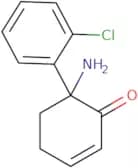
CAS :Produit contrôléDehydro norketamine is a chiral compound that is used as a sample preparation for analytical methods. It has been shown to be the major metabolite of ketamine and can be detected in human serum, urine, and sweat. Dehydro norketamine has also been found to have similar pharmacological effects as ketamine, such as analgesia and hallucinogenic properties. The detection sensitivity of dehydro norketamine is lower than that of ketamine, as it cannot be detected in human serum at concentrations less than 0.5 ng/mL. The clinical relevance of dehydro norketamine is still being studied. The following product description should not exceed 150 words: Dehydro norketamine is a chiral compound that is used as a sample preparation for analytical methods. It has been shown to be the major metabolite of ketamine and can be detected in human serum, urine, and sweat. Dehydro nork
Formule :C12H12ClNODegré de pureté :90%MinCouleur et forme :PowderMasse moléculaire :221.68 g/molPurmorphamine
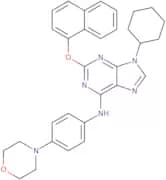
CAS :Purmorphamine is a cell factor that belongs to the group of morphogens. It is structurally related to dopamine and has been shown to be effective in the treatment of Parkinson's disease. Purmorphamine is involved in the regulation of neuronal survival, differentiation, proliferation, and axon guidance. Purmorphamine binds to a receptor on neurons called the cholinergic receptor, which stimulates a G-protein linked signal transduction pathway. This leads to an increase in intracellular calcium levels and activation of protein kinase C. Purmorphamine also has anti-inflammatory effects and can inhibit leukemia inhibitory factor (LIF). It has been shown to be effective against LPS-induced inflammatory responses by inhibiting protein synthesis. Purmorphamine also inhibits cancer cells through its ability to stimulate growth factor-β1 (GF-β1) gene expression.
Formule :C31H32N6O2Degré de pureté :Min. 95%Couleur et forme :PowderMasse moléculaire :520.63 g/molThiamine hydrochloride
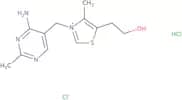
CAS :Thiamine hydrochloride is a water-soluble vitamin that belongs to the group of B vitamins. It has been used as a model system for investigating the phase transition temperature of fatty acids in biological membranes. In addition, it has been shown to enhance thermal expansion and improve chronic exposure in fetal bovine brain cells. Thiamine hydrochloride has also shown insecticidal activity against various species of insects, including the tobacco budworm and the Indianmeal moth. This drug has been found to be active against phytophagous insects that cause crop damage, such as Anthranilate and Pyridoxine Hydrochloride. Thiamine hydrochloride is involved in cellular metabolism by enhancing the conversion of l-lysine into succinic acid via an intermediate product called anthranilate. It also plays an important role in pyridoxal phosphate synthesis, which is essential for protein synthesis and tissue growth.
Formule :C12H18Cl2N4OSDegré de pureté :Min. 95%Couleur et forme :White Off-White PowderMasse moléculaire :337.27 g/molDimethyldistearylammonium chloride
CAS :Dimethyldistearylammonium chloride is a chemical compound that is used as an antimicrobial agent. It is a cationic quaternary ammonium salt that functions by forming a covalent bond with the sulfhydryl group of cysteine residues in proteins, which disrupts the disulfide bonds in the protein's tertiary or quaternary structure. Dimethyldistearylammonium chloride has been shown to have high antimicrobial activity against gram-positive bacteria and fungi but low activity against gram-negative bacteria. The optimum concentration for this compound is 0.2%. Dimethyldistearylammonium chloride has been used as a model system to study the effect of molecular weight on transfer reactions and polymer compositions, and it has also been used to study the biological properties of human immunoglobulin G (IgG).
Formule :C38H80ClNCouleur et forme :PowderMasse moléculaire :586.5 g/molDiethyl [[(3-chloro-4-fluorophenyl)amino]methylene]malonate
CAS :Diethyl [(3-chloro-4-fluorophenyl)amino]methylene]malonate is a fine chemical that is useful as a building block and intermediate for the synthesis of more complex compounds. It has been used in research as a reaction component for the synthesis of other chemicals, such as pharmaceuticals and pesticides. The CAS number for diethyl [(3-chloro-4-fluorophenyl)amino]methylene]malonate is 70032-30-3.Formule :C14H15ClFNO4Degré de pureté :Min. 95%Couleur et forme :PowderMasse moléculaire :315.72 g/mol4-Aminophenylacetonitrile
CAS :4-Aminophenylacetonitrile is a molecule that is structurally similar to nitrobenzene. 4-Aminophenylacetonitrile has been shown to be an efficient method for inhibiting faecalis growth and secretory phospholipase A2 (sPLA2) activity in vitro. It also inhibits the population growth of E. coli in vivo, which can be attributed to its ability to inhibit the enzyme catalysed by hydrogen bond formation.
Formule :C8H8N2Degré de pureté :Min. 95%Couleur et forme :PowderMasse moléculaire :132.16 g/mol2-Amino-4-hydroxypteridine
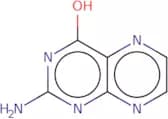
CAS :2-Amino-4-hydroxypteridine is a chemical compound that is used in the synthesis of other organic compounds. 2-Amino-4-hydroxypteridine binds to molybdenum and coordinates with it through hydrogen bonding, which stabilizes the molecule. The binding between 2-amino-4-hydroxypteridine and molybdenum has been shown to be essential for its antimicrobial activity. This compound inhibits bacterial growth by inhibiting the biosynthesis of monoamine neurotransmitters, such as dopamine and serotonin.
2-Amino-4-hydroxypteridine also inhibits enzyme activities, such as those involved in energy metabolism, as well as structural analysis of nitrogen containing molecules.
The reaction mechanism of 2 amino 4 hydroxypteridine is not well understood, but it has been proposed that this compound reacts with electron acceptors such as oxygen or nitric oxide to form an excited stateFormule :C6H5N5ODegré de pureté :Min. 95%Couleur et forme :PowderMasse moléculaire :163.14 g/mol2-Amino-3,4-dimethylbenzoic acid
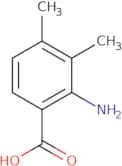
CAS :Protocatechuic acid is a phenolic compound that is found in the cell wall of plants. It has been shown to have radical scavenging activities and antioxidant properties. Protocatechuic acid binds to acetylcholine receptors, which are proteins that are involved in neurotransmission. Protocatechuic acid also inhibits the production of 4-hydroxy radicals, which are reactive oxygen species. This effect was observed when an ethanol extract was used as a source of protocatechuic acid in a study on rats with experimental myocardial infarction. The activity of the muscarinic acetylcholine receptor has been shown to be dose-dependent, with greater activity at lower concentrations and lower activity at higher concentrations. Higher doses can lead to allosteric modulation of this receptor by protocatechuic acid.
Formule :C9H11NO2Degré de pureté :Min. 95%Couleur et forme :PowderMasse moléculaire :165.19 g/mol6-Amino-4-hydroxy-2-mercaptopyrimidine monohydrate
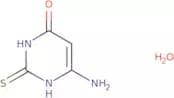
CAS :6-Amino-4-hydroxy-2-mercaptopyrimidine monohydrate (6AP) is a chemical compound that has been shown to have potent antibacterial activity against Gram-positive bacteria. It is also effective at inhibiting the growth of S. aureus, both in vitro and in vivo. 6AP can be used as an alternative treatment for cancer, where it inhibits the growth of tumor cells by blocking ferrocene, which plays an important role in cancer cell proliferation and survival. The efficacy of 6AP against bacterial infections has been demonstrated in vitro with a variety of Gram-positive pathogens, including S. aureus, Streptococcus pneumoniae, Enterococcus faecalis, and Bacillus anthracis.Formule :C4H5N3OS•H2ODegré de pureté :Min. 95%Couleur et forme :PowderMasse moléculaire :161.18 g/mol3-Aminoisoxazole
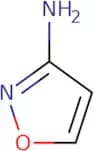
CAS :3-Aminoisoxazole is a chemical compound that belongs to the class of quinoline derivatives. It has potent antitumor activity and has been shown to inhibit the growth of cancer cells in vitro. 3-Aminoisoxazole is also an inhibitor of inflammatory disease, and has been shown to inhibit the production of cytokines (e.g., TNF-α) and nitric oxide, which are key mediators of inflammation. The mechanism by which 3-aminoisoxazole inhibits the production of inflammatory cytokines and nitric oxide may be due to its ability to react with nucleophilic groups on proteins and deactivate them, or by inhibiting the formation of reactive oxygen species through chemical reactions.
Formule :C3H4N2ODegré de pureté :Min. 95%Couleur et forme :Light (Or Pale) Yellow LiquidMasse moléculaire :84.08 g/molKetorolac tromethamine
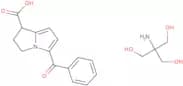
CAS :Ketorolac tromethamine salt is a nonsteroidal anti-inflammatory drug used to treat pain and inflammation. It is often administered intravenously or intramuscularly. Ketorolac tromethamine salt may interact with other drugs, such as monoethyl ethers or benzalkonium chloride, which can result in adverse effects. The polymerase chain reaction (PCR) method was used to detect the presence of ketorolac and its metabolite, ketorolac tromethamine in neural cells. The PCR method has been shown to be a statistically reliable method for detecting these substances.Formule :C15H13NO3•C4H11NO3Degré de pureté :Min. 98 Area-%Couleur et forme :PowderMasse moléculaire :376.4 g/molRef: 3D-FK27530
Produit arrêté2,3-Dimethyl-1H-indol-7-amine
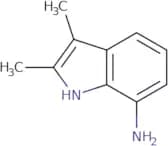
CAS :2,3-Dimethyl-1H-indol-7-amine is an organic compound that belongs to the group of ethyl acetoacetate esters. It is a colorless liquid with a sweet odor and can be used as a solvent and in the manufacture of other compounds such as dibenzoylmethane. 2,3-Dimethyl-1H-indol-7-amine reacts with acetylacetone to form acetoacetic acid, which is then catalyzed by alcohol dehydrogenase to form oxaloacetate. This reaction also produces acetoacetate, which is oxidized by the enzyme dibenzoylmethane to form benzaldehyde.
Formule :C10H12N2Degré de pureté :Min. 95%Couleur et forme :PowderMasse moléculaire :160.22 g/molN-Nitrosodiisopropylamine
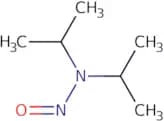
CAS :N-Nitrosodiisopropylamine is an alkylating agent that binds to DNA and inhibits the synthesis of proteins, leading to cell death. It has been shown to be carcinogenic in animal studies, where it caused bladder cancer in Sprague-Dawley rats. N-Nitrosodiisopropylamine is also a reactive chemical compound that reacts with other chemicals in the body. It is often found as a contaminant in urine samples of smokers who are exposed to nitrites and other nitrogen oxides and can be detected using gas chromatography mass spectrometry (GC-MS/MS) methods. The most common method for sample preparation is liquid–liquid extraction followed by hydrolysis with hydroxide solution.
Formule :C6H14N2ODegré de pureté :Min. 95 Area-%Couleur et forme :Off-White PowderMasse moléculaire :130.19 g/mol2,4-Diamino-6-hydroxypyrimidine
CAS :2,4-Diamino-6-hydroxypyrimidine is a potent antitumor agent that has been shown to have potent cytotoxicity against tubule cells in the kidney. It binds to DNA and inhibits transcription by interfering with polymerase chain reaction. This drug also inhibits protein synthesis and has been shown to be effective in treating diabetic patients. 2,4-Diamino-6-hydroxypyrimidine has been found to be useful in detecting high levels of c-reactive protein (CRP) in serum, which can help diagnose inflammation or myocardial infarct. 2,4-Diamino-6-hydroxypyrimidine is also used as a fluorescent probe for determining low levels of hydrogen bonds between polymers or proteins.
Formule :C4H6N4ODegré de pureté :Min. 95%Couleur et forme :White PowderMasse moléculaire :126.12 g/mol
![[1-(Azepan-1-ylcarbonyl)butyl]amine hydrochloride](/_next/image/?url=https%3A%2Fstatic.cymitquimica.com%2Fproducts%2F3D%2Fthumb-webp%2FFA130693.webp&w=3840&q=75)


![Diethyl [[(3-chloro-4-fluorophenyl)amino]methylene]malonate](/_next/image/?url=https%3A%2Fstatic.cymitquimica.com%2Fproducts%2F3D%2Fthumb-webp%2FFD95922.webp&w=3840&q=75)