Organoborane
Les organoboranes sont des composés organiques caractérisés par la présence d'atomes de bore liés au carbone. Ces composés sont des dérivés de la molécule BH3 et jouent un rôle important dans diverses réactions chimiques, notamment comme intermédiaires en synthèse organique. Chez CymitQuimica, nous proposons une large gamme d'organoboranes pour répondre à vos besoins en recherche et en industrie. Nos produits sont conçus pour offrir des performances élevées et une fiabilité dans vos processus de synthèse.
6123 produits trouvés pour "Organoborane"
Trier par
Degré de pureté (%)
0
100
|
0
|
50
|
90
|
95
|
100
1-Boc-3-trifluoromethylpyrazole-5-boronic acid
CAS :Formule :C9H12BF3N2O4Degré de pureté :98%Masse moléculaire :280.009Potassium 3-bromopropyltrifluoroborate
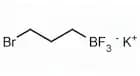
CAS :Formule :C3H6BBrF3KDegré de pureté :95%Masse moléculaire :228.888Poly ε L-lysine HCl - Average MW 2000~4700Da
CAS :<p>Antimicrobial cationic peptide; used for microscopy glass slides coating</p>Formule :(C6H12N2O•HCl)nDegré de pureté :Min. 95 Area-%Couleur et forme :White Yellow PowderTributylborane (1.0 M in THF)
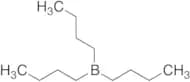
CAS :Produit contrôlé<p>Applications Tributylborane is a reducing agent used in the controlled radical polymerization of alkyl acrylates.<br>References Ludin, D. et al.: Russ. Chem. Bill., 65, 1859 (2016); Semenycheva, L. et al.: Russ. J. App. Chem., 89, 1667 (2016);<br></p>Formule :C12H27BCouleur et forme :Single SolutionMasse moléculaire :182.152-Isopropoxy-4,4,5,5-tetramethyl-1,3,2-dioxaborolane
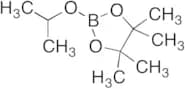
CAS :Produit contrôlé<p>Applications 2-Isopropoxy-4,4,5,5-tetramethyl-1,3,2-dioxaborolane was used in the synthesis of Alternariol [A575760] which is an alternaria mycotoxin and genotoxin, found in common edible crops. Also used in synthesis of highly efficient nanostructured organosilicon luminophore with fast photoluminescence.<br> Not a dangerous good if item is equal to or less than 1g/ml and there is less than 100g/ml in the package<br>References Won, M., et al.: J. Korean. Chem. Soc., 59, 471 (2015); Starikova, T., et al.: J. Mater. Chem., 4, 4699 (2016);<br></p>Formule :C9H19BO3Couleur et forme :NeatMasse moléculaire :186.064-Phenoxyphenylboronic acid
CAS :<p>4-Phenoxyphenylboronic acid is a chemical inhibitor of protein kinase. It binds to the ATP binding site of the enzyme and prevents ATP from binding, thereby inhibiting the phosphorylation of proteins. This inhibition blocks the activation of downstream pathways that are involved in cell proliferation, leading to apoptotic cell death. 4-Phenoxyphenylboronic acid has been shown to inhibit growth of human cancer cells in vitro. This molecule also inhibits root formation and plant growth, which may be due to its ability to selectively inhibit protein kinases found in plant cells.</p>Formule :C12H11BO3Degré de pureté :Min. 95%Masse moléculaire :214.02 g/mol6-(4,4,5,5-Tetramethyl-1,3,2-dioxaborolan-2-yl)-2,3-dihydrobenzo-1,4-dioxoline
CAS :<p>Please enquire for more information about 6-(4,4,5,5-Tetramethyl-1,3,2-dioxaborolan-2-yl)-2,3-dihydrobenzo-1,4-dioxoline including the price, delivery time and more detailed product information at the technical inquiry form on this page</p>Formule :C14H19BO4Degré de pureté :Min. 95%Masse moléculaire :262.11 g/molTetrahydroxydiborane
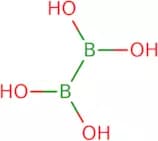
CAS :<p>Tetrahydroxydiborane is an organic compound that contains a hydroxyl group. It has been shown to be an effective nucleophile in the mechanism studies of hydrolysis of halides and nitro compounds. Tetrahydroxydiborane is also used in the Suzuki coupling reaction, which is a chemical reaction between an aryl halide and sodium carbonate, as well as in cationic polymerization. This compound may also have biological applications such as the use of tetrahydroxydiborane as a fluorescence probe for optical sensor detection of autoimmune diseases.</p>Formule :H4B2O4Degré de pureté :Min. 95%Couleur et forme :White PowderMasse moléculaire :89.65 g/molPotassium dihydrogen arsenate
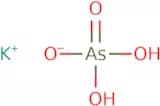
CAS :<p>Potassium dihydrogen arsenate is an inorganic chemical that is used as a pesticide. It prevents the synthesis of proteins by inhibiting soybean trypsin. The optimum concentration for chrysoperla is 1.6 mg/L, which has been shown to be sublethal at levels below 5 mg/L. This chemical has also been shown to have effects on light exposure and thermal expansion. Potassium dihydrogen arsenate belongs to the ferroelectric class of compounds and has a hydrogen bond with water, which may explain its uptake into plants.</p>Formule :H2AsKO4Degré de pureté :Min. 95%Masse moléculaire :180.04 g/molRef: 3D-FP30728
Produit arrêtéPhenyl-1,2-carborane
CAS :Produit contrôlé<p>Please enquire for more information about Phenyl-1,2-carborane including the price, delivery time and more detailed product information at the technical inquiry form on this page</p>Formule :C8H16B10Degré de pureté :Min. 95%Couleur et forme :Colourless Or White To Off-White Solid Or Liquid (May Vary)Masse moléculaire :220.32 g/mol(1H-Benzo[d][1,2,3]triazol-5-yl)boronic acid
CAS :<p>Please enquire for more information about (1H-Benzo[d][1,2,3]triazol-5-yl)boronic acid including the price, delivery time and more detailed product information at the technical inquiry form on this page</p>Formule :C6H6BN3O2Degré de pureté :Min. 95%Masse moléculaire :162.94 g/mol4-Piperazinylphenylboronic acid, pinacol ester
CAS :<p>Please enquire for more information about 4-Piperazinylphenylboronic acid, pinacol ester including the price, delivery time and more detailed product information at the technical inquiry form on this page</p>Formule :C16H25BN2O2Degré de pureté :Min. 95%Couleur et forme :PowderMasse moléculaire :288.19 g/mol1,2-Bis(hydroxymethyl)-O-carborane
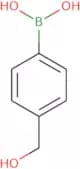
CAS :Produit contrôlé<p>1,2-Bis(hydroxymethyl)-O-carborane is a cyclic molecule that can be used in the synthesis of organic compounds. It can be prepared by reacting anhydrous sodium chloride with propiolic acid. It has been shown to produce decaborane and anion when reacted with chlorine. The chlorides are catalytic for the formation of methyl alcohol and methacrylates. 1,2-Bis(hydroxymethyl)-O-carborane has been used as a starting material for the synthesis of triflates and methyl alcohols. This compound has also been found to produce diffraction patterns that can be used for structural analysis.</p>Formule :C4H16B10O2Degré de pureté :Min. 95%Masse moléculaire :204.28 g/mol4-(Hydroxymethyl)phenylboronic acid
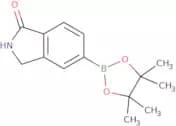
CAS :<p>4-(Hydroxymethyl)phenylboronic acid is an organic compound that has been identified as a reactive, fatty acid. It has shown antibacterial efficacy against gram-positive and gram-negative bacteria in the presence of nanogels. 4-(Hydroxymethyl)phenylboronic acid is also a cross-linking agent that can be used to form hydrogels for tissue engineering applications. This chemical is being studied as a potential treatment for inflammatory bowel disease and diabetes mellitus. 4-(Hydroxymethyl)phenylboronic acid has been shown to have anti-cancer properties by inhibiting the proliferation of cancer cells and inducing apoptosis. The molecule also undergoes structural analysis using confocal microscopy.</p>Formule :C7H9BO3Masse moléculaire :151.96 g/mol5-(4,4,5,5-Tetramethyl-1,3,2-dioxaborolan-2-yl)isoindolin-1-one
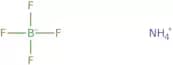
CAS :<p>Please enquire for more information about 5-(4,4,5,5-Tetramethyl-1,3,2-dioxaborolan-2-yl)isoindolin-1-one including the price, delivery time and more detailed product information at the technical inquiry form on this page</p>Formule :C14H18BNO3Degré de pureté :Min. 95%Masse moléculaire :259.11 g/molAmmonium tetrafluoroborate
CAS :<p>Ammonium tetrafluoroborate is a salt of the organic compound tetrafluoroborate and ammonium. It is a colorless solid that can be used as a chemical reagent. Ammonium tetrafluoroborate has a higher chemical stability than other salts of tetrafluoroborate, such as ammonium hexafluorophosphate and ammonium hexafluoroarsenate. Ammonium tetrafluoroborate is used to make the dinucleotide phosphate, which is an important component in DNA synthesis. In a redox potential test, ammonium tetrafluoroborate showed no electrochemical activity in water vapor at pH 7. Ammonium tetrafluoroborate reacts with trifluoroacetic acid to produce hydrogen fluoride and ammonium chloride. This reaction is reversible, which means that it can be used for the synthesis of ammonia gas from hydrogen and nitrogen gases or for the</p>Formule :NH4BF4Degré de pureté :Min. 98%Couleur et forme :White PowderMasse moléculaire :104.84 g/mol


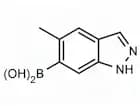




![(1H-Benzo[d][1,2,3]triazol-5-yl)boronic acid](/_next/image/?url=https%3A%2Fstatic.cymitquimica.com%2Fproducts%2F3D%2Fthumb-webp%2FFB141627.webp&w=3840&q=75)