Acides carboxyliques
Les acides carboxyliques sont des molécules organiques caractérisées par un groupe fonctionnel de type carboxyle (-COOH). Ces acides sont fondamentaux dans diverses réactions chimiques, y compris l'estérification, l'amidation et la décarboxylation. Les acides carboxyliques sont largement utilisés dans la production de produits pharmaceutiques, de polymères et d'agrochimiques. Dans cette section, vous pouvez trouver un grand nombre d'acides carboxyliques prêts à l'emploi. Chez CymitQuimica, nous fournissons une large gamme d'acides carboxyliques de haute qualité pour soutenir vos applications de recherche et industrielles.
12454 produits trouvés pour "Acides carboxyliques"
Trier par
Degré de pureté (%)
0
100
|
0
|
50
|
90
|
95
|
100
Isobutyric acid
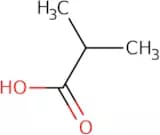
CAS :<p>Isobutyric acid is a short-chain carboxylic acid that has been shown to be a potent inhibitor of congestive heart failure. Isobutyric acid binds to the dinucleotide phosphate and is then hydrolyzed by glycol ethers to release isobutyric acid, which can induce vasodilation. The surface methodology used in this study revealed that Isobutyric acid inhibits the polymerase chain reaction activity of human DNA. This inhibition may be due to its structural similarity with mycobacterial sesquiterpene lactones, which have been shown to inhibit protein synthesis in human cells. Isobutyric acid also has antibacterial properties, and has been shown to have an activity index of 0.5 against methicillin-resistant Staphylococcus aureus (MRSA) isolates and erythromycin-resistant Mycobacterium avium complex isolates.</p>Formule :C4H8O2Degré de pureté :Min. 95%Couleur et forme :Colorless Clear LiquidMasse moléculaire :88.11 g/molDideuterosulfuric acid
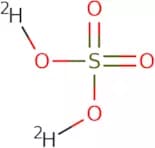
CAS :Produit contrôlé<p>Dideuterosulfuric acid is a protonated molecule that is found in the tropone class of organic compounds. It has been shown to have optical properties similar to those of ferrocene, which is why it is often used as a replacement for this compound. Dideuterosulfuric acid has been studied extensively using a kinetic method with the goal of determining its mechanism and rate constants. Hydroxyl groups are found on the molecule's trifluoroacetic acid side chains, which may contribute to its reactivity with chloride ions and nitrogen atoms. Electrophotographic measurements show that hydrogen bonding occurs between molecules in dilute solutions.</p>Formule :D2SO4Degré de pureté :Min. 95%Masse moléculaire :100.09 g/molCyclo(-Arg-Gly-Asp-D-Phe-Cys) acetate salt
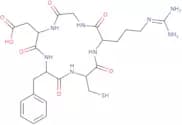
CAS :<p>Cyclo(-Arg-Gly-Asp-D-Phe-Cys) acetate salt is a peptide that has been modified to be an active targeting agent. It is an amphipathic molecule that can be used to deliver therapeutic agents specifically to cancer cells. Cyclo(-Arg-Gly-Asp-D-Phe-Cys) acetate salt is conjugated to a drug and is taken up by cells through the process of endocytosis. Once inside the cell, the drug is released and binds with the cell membrane, which leads to cell death. The uptake of this peptide has been shown to be pH dependent; it is taken up more readily in acidic environments than in neutral or alkaline environments. This peptide has also been shown to have cytotoxic effects on both MFC7 cells and rat liver cells.</p>Formule :C24H34N8O7SDegré de pureté :Min. 95%Masse moléculaire :578.64 g/molTetrahydro-a-(1-naphthalenylmethyl)-2-furanpropanoic Acid 2-(Diethylamino)ethyl Ester
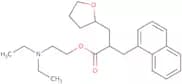
CAS :Produit contrôlé<p>Tetrahydro-a-(1-naphthalenylmethyl)-2-furanpropanoic Acid 2-(Diethylamino)ethyl Ester is a fatty acid analog that has antimicrobial properties. It is used in the treatment of bone cancer, and can be used to diagnose and treat other diseases such as glomerular filtration rate, receptor binding, and malonic acid. Tetrahydro-a-(1-naphthalenylmethyl)-2-furanpropanoic Acid 2-(Diethylamino)ethyl Ester binds to receptors on cells, which leads to an increase in the amount of monoamine neurotransmitters released by the cells.</p>Formule :C24H33NO3Degré de pureté :Min. 95%Masse moléculaire :383.52 g/molRuthenium(III) nitrosyl nitrate, soluble in 10% dilute nitric acid
CAS :<p>Please enquire for more information about Ruthenium(III) nitrosyl nitrate, soluble in 10% dilute nitric acid including the price, delivery time and more detailed product information at the technical inquiry form on this page</p>Formule :RuN4O10Degré de pureté :Min. 95%Couleur et forme :Clear LiquidMasse moléculaire :317.09 g/molEndothelin-1 (human, bovine, dog, mouse, porcine, rat) acetate
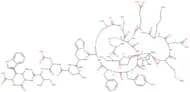
CAS :<p>Endothelin-1 (ET-1) is a peptide that is produced by the endothelium. ET-1 is involved in numerous biological processes, including vasoconstriction, inflammation, and cell proliferation. Endothelin-1 (human ET-1) acetate salt H-Cys-Ser-Cys-Ser-Ser-Leu-Met-Asp-Lys-(Glu)-Cys-(Val)-Tyr-(Phe)-Cys-(His)-Leu -Asp(-Ile)-Ile(-Trp)) acetate salt is a recombinant protein that has been shown to significantly upregulate the production of endothelin in primary pulmonary hypertension. It also plays an important role in bowel disease, where it may be involved in the development of chronic inflammatory bowel disease.</p>Formule :C109H159N25O32S5•(C2H4O2)xDegré de pureté :Min. 95%Masse moléculaire :2,491.91 g/molFmoc-L-Lys[Oct-(otBu)-Glu-(otBu)-AEEA-AEEA]-OH
CAS :<p>Please enquire for more information about Fmoc-L-Lys[Oct-(otBu)-Glu-(otBu)-AEEA-AEEA]-OH including the price, delivery time and more detailed product information at the technical inquiry form on this page</p>Formule :C64H101N5O16Degré de pureté :Min. 95%Masse moléculaire :1,196.51 g/molRef: 3D-FC165871
Produit arrêtéDiethyldithiocarbamic acid sodium trihydrate
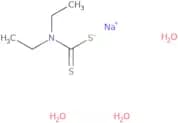
CAS :<p>Diethyldithiocarbamic acid sodium salt trihydrate (DDC) is an inhibitor of the response element that belongs to a class of pharmacological agents called diethyldithiocarbamates. DDC inhibits the growth of tumor cells by blocking enzyme activities and decreasing the production of GSH-Px enzymes, which are required for cellular protection against oxidative stress. DDC is also a potent inducer of experimental models for myocardial infarcts. The matrix effect is another mechanism by which DDC exerts its antitumor activity. This effect is due to its ability to inhibit protein synthesis in tumor cells and its ability to inhibit the synthesis of collagen in endothelial cells, thereby preventing angiogenesis.</p>Formule :C5H11NS2•Na•(H2O)3Degré de pureté :Min. 95%Couleur et forme :PowderMasse moléculaire :226.32 g/molOvalbumin (257-264) (chicken) trifluoroacetate salt
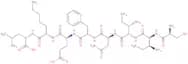
CAS :<p>Please enquire for more information about Ovalbumin (257-264) (chicken) trifluoroacetate salt including the price, delivery time and more detailed product information at the technical inquiry form on this page</p>Formule :C45H74N10O13·C2HF3O2Degré de pureté :Min. 95%Masse moléculaire :1,077.15 g/molNaphthenic acid
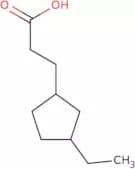
CAS :<p>Naphthenic acid is a metal chelate that is used in synchronous fluorescence spectroscopy. It has been shown to have biodegradation properties and can be used as an indicator for water quality. Naphthenic acid has been found to be a potent inhibitor of corrosion and is often used as an additive to petroleum products, such as gasoline, that are made from crude oil. Naphthenic acid also has acute toxicities and can cause toxicity studies on humans. It is able to inhibit energy metabolism in cells by binding to the mitochondrial membrane, which may be due to its ability to bind with benzalkonium chloride. Naphthenic acid can also be used for analytical methods, such as electrochemical impedance spectroscopy, because it has high sensitivity and specificity.</p>Formule :C7H10O2Couleur et forme :Clear LiquidMasse moléculaire :126.15 g/molAcetyl-(3,4-dehydro-Pro1,4-fluoro-D-Phe2,D-Trp3·6)-LHRH trifluoroacetate salt
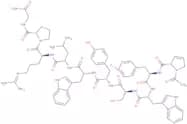
CAS :<p>Please enquire for more information about Acetyl-(3,4-dehydro-Pro1,4-fluoro-D-Phe2,D-Trp3·6)-LHRH trifluoroacetate salt including the price, delivery time and more detailed product information at the technical inquiry form on this page</p>Formule :C69H85FN16O13Degré de pureté :Min. 95%Masse moléculaire :1,365.51 g/molPeptide YY (3-36) (human) trifluoroacetate salt
CAS :<p>Peptide YY (3-36) (human) trifluoroacetate salt H-Ile-Lys-Pro-Glu-Ala-Pro-Gly-Glu-Asp-Ala-Ser-Pro-Glu-Glu-Leu-Asn -Arg -Tyr -Tyr -Ala -Ser -Leu -Arg <br>Peptide YY (3.36) is a peptide hormone that is secreted by L cells in the small intestine and colon. It has been shown to be an effective treatment for obesity, type 2 diabetes, and other metabolic disorders. Peptide YY (3.36) has been shown to increase insulin sensitivity, reduce food intake and body weight, increase metabolic rate, and improve glucose homeostasis in animal studies. In humans, it has been found to have similar effects on postprandial plasma levels of peptide YY (3.</p>Formule :C180H279N53O54Degré de pureté :Min. 95%Masse moléculaire :4,049.47 g/molPhosphomolybdic acid hydrate
CAS :<p>Phosphomolybdic acid hydrate is a molybdenum-containing compound that exhibits biological activity. It has been found to have an effect on water permeability and the biological sample, which can be detected by synchronous fluorescence. The electrochemical impedance spectroscopy can be used to measure the effects of phosphomolybdic acid hydrate on energy metabolism. This compound has also been shown to act as a catalyst in analytical methods, such as laser ablation, and can be used in a model system for hydrogen bonding interactions with zirconium oxide.</p>Formule :MoO3·H3PO4·xH2ODegré de pureté :Min. 95%Couleur et forme :Off-White To Dark Yellow SolidMasse moléculaire :1,825.49 g/molLysergic acid hydrazide
CAS :Produit contrôlé<p>Lysergic acid hydrazide is a synthetic drug with an active form of lysergic acid. It is used in the synthesis of ergocryptine and other drugs. The compound can be synthesized using methyl alcohol, trifluoromethyl group, hydroxy group, skeleton, and C1-4 alkyl as reactants. Lysergic acid hydrazide can also be synthesized from an inorganic acid such as nitrous or oxoalkyl. This compound has been used as a pharmaceutical preparation for the treatment of psychotic disorders. Lysergic acid hydrazide has shown to have reactive amide groups that may react with organic amines to form neurotoxic compounds.</p>Formule :C16H18N4ODegré de pureté :Min. 95%Masse moléculaire :282.34 g/mol


![Fmoc-L-Lys[Oct-(otBu)-Glu-(otBu)-AEEA-AEEA]-OH](/_next/image/?url=https%3A%2Fstatic.cymitquimica.com%2Fproducts%2F3D%2Fthumb-webp%2FFC165871.webp&w=3840&q=75)