Glycosciences
La glycosciences est l'étude des glucides et de leurs dérivés, ainsi que des interactions et des fonctions biologiques auxquelles ils participent. Ce domaine de recherche est crucial pour comprendre une grande variété de processus biologiques, y compris la reconnaissance cellulaire, la signalisation, la réponse immunitaire et le développement des maladies. La glycosciences a des applications importantes en biotechnologie, en médecine et dans le développement de nouveaux médicaments et thérapies. Chez CymitQuimica, nous proposons une large sélection de produits de haute qualité et pureté pour la recherche en glycosciences. Notre catalogue comprend des monosaccharides, des oligosaccharides, des polysaccharides, des glyconjugués et des réactifs spécifiques, conçus pour soutenir les chercheurs dans leurs études sur la structure, la fonction et les applications des glucides dans les systèmes biologiques. Ces ressources sont destinées à faciliter les découvertes scientifiques et les applications pratiques dans divers domaines des biosciences et de la médecine.
Sous-catégories appartenant à la catégorie "Glycosciences"
- Aminosucres(108 produits)
- Anticorps Glyco-Related(282 produits)
- Glycolipides(46 produits)
- Glycosaminoglycanes (GAGs)(55 produits)
- Glycosides(419 produits)
- Monosaccharides(6.624 produits)
- Oligosaccharides(3.682 produits)
- Polysaccharides(503 produits)
11046 produits trouvés pour "Glycosciences"
Trier par
Degré de pureté (%)
0
100
|
0
|
50
|
90
|
95
|
100
2-Bromoethyl a-L-fucopyranoside
<p>This compound is a modification of the 2-bromoethyl a-L-fucopyranoside. It is an oligosaccharide that is a carbohydrate. It is made up of many monosaccharides, which are sugar molecules linked together. This modified carbohydrate has been synthesized from other carbohydrates and then fluorinated to make it more stable.</p>Degré de pureté :Min. 95%N-Acetylneuraminic acid trimer disodium salt
<p>N-Acetylneuraminic acid trimer disodium salt is a methylated saccharide that is used in the synthesis of complex carbohydrates. It can be modified by Click chemistry to produce a variety of compounds, including oligosaccharides. N-Acetylneuraminic acid trimer disodium salt can also be fluorinated for use as an organic fluorinating agent in glycosylation reactions to make sugar derivatives. This compound has high purity and is custom synthesized to meet customer needs.</p>Formule :C33H50N3O25Na3Degré de pureté :Min. 95%Couleur et forme :White PowderMasse moléculaire :957.72 g/molMan-1 N-Glycan
CAS :<p>Man-1 N-glycan is a synthetic oligosaccharide with a sugar chain that is terminated by an alpha-D-mannose. It is synthesized using the Click reaction and modified with fluorine. This product can be used in glycosylation, or the addition of sugar chains to proteins or lipids. Man-1 N-Glycan has high purity and can be custom synthesized to order.</p>Formule :C22H38N2O16Degré de pureté :Min. 95%Couleur et forme :White to off-white solid.Masse moléculaire :586.54 g/mol9,10-Dimethoxy-pterocarpane-3-O-b-D-glucoside
<p>9,10-Dimethoxy-pterocarpane-3-O-b-D-glucoside is a custom synthesis that is a polysaccharide with a complex carbohydrate structure. The chemical name for this compound is 9,10-dimethoxy-pterocarpane-3-O-[4′″-(1″″′′)-b′″'-D-glucopyranosyl]-3′′′,4′″’,6′"’] bibenzyl. This compound has been modified by methylation and glycosylation. It can be used in the treatment of cancer and diabetes due to its high purity and fluorination. 9,10-Dimethoxy pterocarpane 3β O glucoside is a sugar or saccharide that can be found in plants such as the roots of tobacco plants. The modification of this sugar by methylation and glycosylation makes it more</p>Degré de pureté :Min. 95%2,5-Anhydro-D-glucitol-6-phosphate
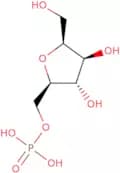
CAS :<p>2,5-Anhydro-D-glucitol-6-phosphate is a phosphorylated derivative of D-glucitol 6 phosphate. It has been shown to be a major metabolic intermediate in the glycolytic pathway. 2,5-Anhydro-D-glucitol 6 phosphate is produced by the enzyme phosphofructokinase and hydrolyzed by the enzyme pyruvate kinase. The conversion of 2,5-anhydro -D-glucitol 6 phosphate to D -fructose 1 phosphate occurs at a rate that is dependent on the availability of oxygen. The activity of 2,5 anhydro -D-glucitol 6 phosphate in cells is also dependent on whether or not there are aerobic glycolytic enzymes present.</p>Formule :C6H13O8PDegré de pureté :Min. 95%Masse moléculaire :244.14 g/mol3'-N-Acetylneuraminyl-N-acetyllactosamine HSA
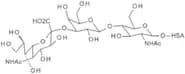
<p>3'-N-Acetylneuraminyl-N-acetyllactosamine HSA is a carbohydrate that is synthesized by the attachment of an acetyl group to a terminal glucose residue. The product is a custom synthesis and can be used for click modification. 3'-N-Acetylneuraminyl-N-acetyllactosamine HSA has been shown to have high purity and is a complex carbohydrate. This product comes in the form of an oligosaccharide or polysaccharide, which are carbohydrates composed of many sugars. 3'-N-Acetylneuraminyl-N-acetyllactosamine HSA has been fluorinated, which may reduce its degradation in vivo.</p>Formule :C25H42N2O20Degré de pureté :Min. 95%Masse moléculaire :690.6 g/mol4-Toluoyl-α-D-thiomannopyranoside
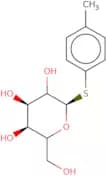
CAS :<p>The 4-Toluoyl-a-D-thiomannopyranoside is a six-membered ring with a hydrogen atom at the center. The structure of this molecule is composed of two chains, each of which has four atoms in their backbone. There are also two conformations to the molecule, one that can be observed as a chair conformation and one that can be seen as a boat conformation. In the chair conformation, there are three bonds that form from the central carbon atom to other carbons on the same chain. These bonds are called alpha bonds, and they connect in a linear fashion. In the boat conformation, these three bonds form an angle of 120 degrees with each other and have staggered geometry. The alpha bonds in this case form an angle of 180 degrees with each other.</p>Formule :C13H18O5SDegré de pureté :Min. 95%Masse moléculaire :286.35 g/molSodium carboxymethyl cellulose, viscosity 50-200 cps
CAS :<p>Please enquire for more information about Sodium carboxymethyl cellulose, viscosity 50-200 cps including the price, delivery time and more detailed product information at the technical inquiry form on this page</p>Diethylaminoethyl-dextran HCl
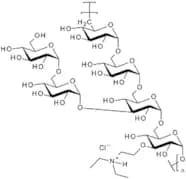
CAS :<p>DEAE-Dextran hydrochloride (DEAE-D) is a positively-charged dextran derivative that can be used for vaccine production, gene therapy, protein stabilisation, dyslipidemia prevention, as flocculating agent, and many other applications. DEAE-D is also used for transfecting animal cells with foreign DNA. DEAE-Sepharose, DEAE-650 and DEAE-Sephadex are commonly used in chromatography for the separation of biological molecules such as proteins and carbohydrates.</p>Degré de pureté :Min. 95%Couleur et forme :White Off-White PowderFrucoste-proline
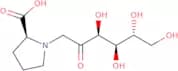
CAS :<p>Frucoste-proline is a l-amino acid that is found in the leaves of tobacco plants. Frucoste-proline is synthesized by dehydration of L-proline, which is catalyzed by the enzyme tabacum l. Frucoste-proline can also be found in maltol and diazepine. The major function of frucoste-proline is to act as a cofactor for enzymes involved in the synthesis of aromatic compounds such as aldehydes and sulfides. This amino acid has been identified as an analytical marker for tobacco leaf, due to its low energy and high specificity.</p>Degré de pureté :Min. 95%D-Sorbitol hexahydrate
<p>D-Sorbitol hexahydrate is a sugar that is used in the food industry as a substitute for sucrose. It is also an important component of many pharmaceuticals and other products. Sorbitol hexahydrate can be synthesized from glucose, which is oxidized to sorbitol, and then hydrolyzed by sulfuric acid to produce D-sorbitol hexahydrate. The product is often used as a sweetener for diabetic patients because it does not cause blood glucose levels to rise rapidly. Sorbitol hexahydrate also has anti-inflammatory properties and can be used in the treatment of gastric ulcers.</p>Formule :C6H14O6·6H2ODegré de pureté :Min. 95%Masse moléculaire :290.26 g/mol1,3,6-Tri-O-benzyl-4-O-(3,6-di-O-acetyl-2,4-dideoxy-2-phthalimido-b-D-glucopyranosyl)-2-deoxy-2-phthalimido-b-D-glucopyranoside
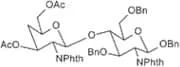
<p>Methylated, saccharide-containing, polysaccharide-containing, carbohydrate-containing. CAS No.: 169800-74-1. Click modification: Click chemistry reaction with a reactive group on the saccharide or polysaccharide to form a bond with another molecule. Modification: The addition of one or more side chains to a saccharide or polysaccharide to produce a modified carbohydrate. Oligosaccharides: Carbohydrates that are composed of only two to ten monosaccharides. Glycosylation: The process in which a glycosyl group is transferred from an activated donor sugar to an acceptor molecule, forming glycosidic linkage (e.g., between sugars). High purity: The degree of chemical purity as expressed by the percent of impurities that may be present in the product (e.g., 99% pure). Carbohydrate: A class of organic compounds that includes sugars and starches and functions</p>Formule :C53H50N2O14Degré de pureté :Min. 95%Masse moléculaire :938.97 g/mol2,4-Anhydro-3,5-O-[(S)-phenylmethylene]- D-lyxonic acid methyl ester
CAS :2,4-Anhydro-3,5-O-[(S)-phenylmethylene]- D-lyxonic acid methyl ester is a synthetic monosaccharide that has a fluorination modification. It is commonly used as a raw material in the synthesis of oligosaccharides and polysaccharides. This chemical can be synthesized using Click chemistry or methylation reactions. 2,4-Anhydro-3,5-O-[(S)-phenylmethylene]- D-lyxonic acid methyl ester is used in the production of complex carbohydrates with glycosylation and polysaccharide modifications. This chemical exhibits high purity and can be custom synthesized to meet specific needs.Formule :C13H14O5Degré de pureté :Min. 95%Masse moléculaire :250.25 g/mol3,6-Di-O-benzoyl-D-glucal
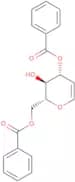
CAS :<p>3,6-Di-O-benzoyl-D-glucal is a glycosylation reagent that can be used to modify proteins with oligosaccharides. It is a naturally occurring sugar that can be synthesized and modified for use in research. 3,6-Di-O-benzoyl-D-glucal has been shown to be effective in Click chemistry, which uses copper ions to produce reactive esters from alcohols and carboxylic acids. This reagent can also be used to fluorinate saccharides and sugars for high purity synthesis.</p>Degré de pureté :Min. 95%5-O-Benzoyl-1,2-O-isopropylidene-a-D-xylofuranose
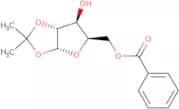
CAS :<p>Ai Product Descriptions 50 Creative</p>Formule :C15H18O6Degré de pureté :Min. 95%Masse moléculaire :294.31 g/molD-myo-Inositol-1,5,6-triphosphate sodium salt
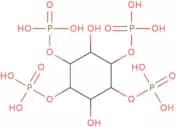
CAS :<p>D-myo-Inositol-1,5,6-triphosphate sodium salt is a synthetic compound that is used in the study of the structure and function of carbohydrates. It is a complex carbohydrate that has been modified with fluorination and methylation. It is also glycosylated and click-modified. D-myo-Inositol-1,5,6-triphosphate sodium salt has CAS number 120965-76-6.</p>Formule :C6H12O15P3·xNaDegré de pureté :Min. 95%Masse moléculaire :417.07 g/mol1,2,3,4,6-Penta-O-pivaloyl-a-D-mannopyranose
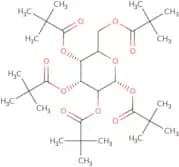
CAS :<p>1,2,3,4,6-Penta-O-pivaloyl-a-D-mannopyranose is a sugar that belongs to the group of complex carbohydrates. It is custom synthesized and can be modified to suit customer requirements. The synthesis process includes glycosylation, fluorination and methylation. 1,2,3,4,6-Penta-O-pivaloyl-a-D-mannopyranose is used as a raw material for saccharide and oligosaccharide production. It also has applications in the food industry as a sweetener or flavor enhancer.</p>Formule :C31H52O11Degré de pureté :Min. 95%Masse moléculaire :600.74 g/mol3-Acetamido-3-deoxy-D-allose
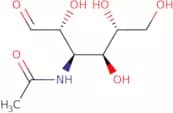
CAS :<p>3-Acetamido-3-deoxy-D-allose is a ringed sugar that is nucleophilic and reacts with hydroxide solution to form a dithioacetal. It has been analyzed using deuterium and cyclic voltammetry. 3-Acetamido-3-deoxy-D-allose can be oxidized by periodate to form an alditol acetal and then reacted with ammonium hydroxide to produce the corresponding amine. This reaction was used to generate the compound in large quantities.</p>Formule :C8H15NO6Degré de pureté :Min. 95%Masse moléculaire :221.21 g/molPhenyl 2-azido-3-O-benzyl-4,6-O-benzylidene-2-deoxy-b-D-thioglucopyranoside
<p>Phenyl 2-azido-3-O-benzyl-4,6-O-benzylidene-2-deoxy-b-D-thioglucopyranoside is a synthetically modified carbohydrate. It is a saccharide with an Oligosaccharide structure and has been fluorinated. The CAS No. for this compound is 104984-61-5. Phenyl 2-azido-3,6,2″′′′′′′′'-O-(benzylidene)-b-[D]thioglucopyranoside is a methylated glycoside which has been click modified.</p>Degré de pureté :Min. 95%D-Glucose 6-phosphate - Powder
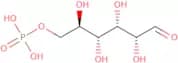
CAS :<p>D-glucose 6-phosphate is an intermediate in the hexose monophosphate shunt pathway. It is formed by the enzyme phosphoglucomutase from D-glucose 1-phosphate and UTP. D-glucose 6-phosphate is also an important intermediate in glycolysis. The conversion of D-glucose 6-phosphate to glucose 1,6-bisphosphate occurs through a series of reactions catalyzed by enzymes that are sensitive to inhibition by magnesium ions. These reactions include the phosphofructokinase, hexokinase, and pyruvate kinase reactions. The accumulation of glucose 6-phosphate leads to increased levels of lactate production and decreased levels of ATP production. This may be due to its ability to inhibit monoamine reuptake, which would lead to decreased synthesis of dopamine and serotonin.</p>Formule :C6H13O9PDegré de pureté :Min. 95%Couleur et forme :PowderMasse moléculaire :260.14 g/mol4-Methylphenyl 2-O-acetyl-3-O-benzyl-b-D-thioglucuronide methyl ester
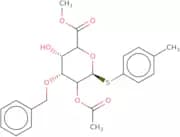
CAS :<p>4-Methylphenyl 2-O-acetyl-3-O-benzyl-b-D-thioglucuronide methyl ester is a custom synthesis of an oligosaccharide. It has been modified with fluorination and methylation, which are chemical reactions that alter the structure of the substance. Click modification is also a type of chemical reaction involving this substance.</p>Formule :C23H26O7SDegré de pureté :Min. 95%Masse moléculaire :446.51 g/molLacto-N-difucohexaose I-APD-HSA
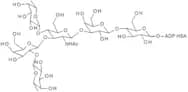
<p>Lacto-N-difucohexaose I-APD-HSA is a custom synthesis of an oligosaccharide with a molecular weight of 5,000 Da. It is modified with fluorine and methyl groups at the C6 and C1 positions. Lacto-N-difucohexaose I-APD-HSA is synthesized by click chemistry and has been shown to be effective in inhibiting the growth of cancer cells. This sugar can be modified by glycosylation or carbohydrate modification.</p>Degré de pureté :Min. 95%a-D-Galactopyranose 1,2-(methyl orthoacetate)
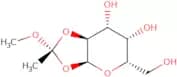
CAS :<p>a-D-Galactopyranose 1,2-(methyl orthoacetate) is an oligosaccharide. It is a white to off-white crystalline solid with a sweet taste. This product can be used as a sugar substitute and is often used in the food industry.</p>Formule :C9H16O7Degré de pureté :Min. 95%Masse moléculaire :236.22 g/mol1,4-Anhydro-2-deoxy-3,5-bis-O-(t-butyldimethylsilyl)-D-erythro-pent-1-enitol
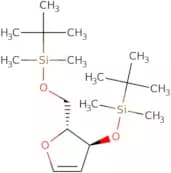
CAS :<p>1,4-Anhydro-2-deoxy-3,5-bis-O-(t-butyldimethylsilyl)-D-erythro-pent-1-enitol is a custom synthesis that has been fluorinated. It is a high purity oligosaccharide with a complex carbohydrate structure. This product was synthesized by click modification and methylation of the saccharide. It is a monosaccharide and sugar with a molecular formula C8H14FNO6S.</p>Formule :C17H36O3Si2Degré de pureté :Min. 95%Couleur et forme :Clear LiquidMasse moléculaire :344.64 g/molD-Gluconic acid - 45-50% in water
CAS :<p>D-Gluconic acid is a white or colorless crystalline powder that is soluble in water. It has a molecular weight of 144.1 g/mol and its chemical formula is C6H12O7. D-Gluconic acid can be used as an antimicrobial agent, which inhibits the growth of bacteria by disrupting the formation of cell walls and inhibiting protein synthesis. It also has biochemical properties such as glycol ether, wild-type strain, and enzyme activities. D-Gluconic acid is often used as an additive to food products to improve flavor, stability, and shelf life.</p>Formule :C6H12O7Degré de pureté :Min. 95%Couleur et forme :PowderMasse moléculaire :196.16 g/mol1,6-Anhydro-2,3-O-isopropylidene-b-D-mannopyranose
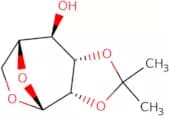
CAS :<p>1,6-Anhydro-2,3-O-isopropylidene-b-D-mannopyranose is a monosaccharide that is used as a building block for the synthesis of oligosaccharides and polysaccharides. The methylation of 1,6-Anhydro-2,3-O-isopropylidene-b-D-mannopyranose can provide a variety of structures with different functionalities. It can be modified by fluorination to form a complex carbohydrate. This compound has been shown to have high purity and is available in custom synthesis.</p>Formule :C9H14O5Degré de pureté :Min. 95%Couleur et forme :White To Off-White SolidMasse moléculaire :202.2 g/mol(R)-Monoethyl 3-acetoxyglutarate
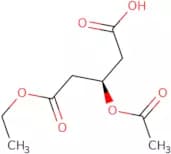
CAS :<p>(R)-Monoethyl 3-acetoxyglutarate is a synthetic molecule that is used in the synthesis of complex carbohydrates. It can be fluorinated, methylated and glycosylated. This compound has CAS No. 113036-11-6.</p>Formule :C9H14O6Degré de pureté :Min. 95%Masse moléculaire :218.2 g/molHyaluronate fluorescein - Molecular Weight - 10kDa
<p>Hyaluronate fluorescein is a custom synthesized molecule that has been modified with fluorination, methylation, and monosaccharide. This product is a synthetic oligosaccharide saccharide that has a molecular weight of 10kDa. It's CAS number is <br>Hyaluronate fluorescein is a complex carbohydrate that is synthesized through the modification of glycosylation. It contains sugar and carbons.</p>Degré de pureté :Min. 95%Octyl D-galactofuranoside tetraacetate
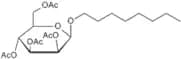
CAS :<p>Octyl D-galactofuranoside tetraacetate is a fluorinated monosaccharide that is synthesized from octyl galactopyranoside. It is a synthetic oligosaccharide with a molecular weight of 806. Octyl D-galactofuranoside tetraacetate has been modified for glycosylation, methylation, and click modification. The chemical name is 4-O-(2-deoxy-beta-D-glucopyranosyl)galactopyranose 1,2,3,4,6-pentaacetate and it has CAS No. 223412-29-1. This product can be custom synthesized to order in high purity as per the customer's requirements.</p>Formule :C22H36O10Degré de pureté :Min. 95%Masse moléculaire :460.52 g/molNeocarratetraose-41-O-sulfate sodium salt
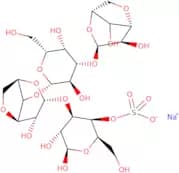
CAS :<p>Neocarratetraose-41-O-sulfate sodium salt is a high purity, synthetic oligosaccharide with a CAS number of 108321-78-4. It is an oligosaccharide that has been modified with methylation, saccharide, and Click modification. Neocarratetraose-41-O-sulfate sodium salt is used in the synthesis of complex carbohydrates and glycosylations. <br>Neocarratetraose-41-O-sulfate sodium salt is synthesized by reacting the sugar neocarratetraose with sulfuryl chloride to form the corresponding sulfonic acid chloride. The resulting compound is then treated with sodium hydroxide to produce its sodium salt form.</p>Formule :C24H37NaO22SDegré de pureté :Min. 95%Couleur et forme :PowderMasse moléculaire :732.59 g/mol3,5-Bis-O-(2,4-Dichlorobenzyl)-2-C-methyl-a-D-ribofuranose
<p>3,5-Bis-O-(2,4-Dichlorobenzyl)-2-C-methyl-a-D-ribofuranose is a custom synthesis that can be modified by fluorination, methylation, and monosaccharide or oligosaccharide addition. This sugar has a molecular weight of 476.28 g/mol and CAS No. 94629-04-0. It is a polysaccharide that is glycosylated with sugar at carbons 1 and 2. 3,5-Bis-O-(2,4-Dichlorobenzyl)-2-C-methyl-a-D-ribofuranose is used as an intermediate in the synthesis of complex carbohydrates such as Glycogenin A (CAS No. 94629 04 0), which has been shown to have antihyperglycemic effects.</p>Degré de pureté :Min. 95%Methyl 1-thiolincosaminide
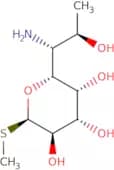
CAS :<p>Intermediate in the production of biosynthetic antibiotics</p>Formule :C9H19NO5SDegré de pureté :Min. 95%Masse moléculaire :253.32 g/molAgar
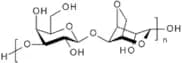
CAS :<p>The major gel forming component in agar, agarose, consists of a linear chain of sequences of 1,3 linked β-D-galactopyranosyl units and 1,4 linkages to 3,6-anhydro-α-L-galactopyranosyl units. Gelation is done via the formation of double helices (Arnott, 1974). Agar's properties are similar to gelatin as it is primarily used as a plating gel for microbial cultures (Lahaye, 1991). However, agar is a good substitute for animal-based gelatin in vegetarian foods and is easy to use in food gels in a similar way to the carrageenans. Common food applications of agar include: puddings, custards, and soft candies. Agar improves the texture of processed cheese and frozen desserts, and is also added to baked goods to inhibit staling. A creative food application uses agar-based gel cubes that are infused with fruit extract or wine to make a vegetable-based aspic (Armisén, 2009).<br>Agar contains two polysaccharides Agarobiose and Agaropectin. Both Gelidium latifolium and Gelidium amansii are sources of both Agar and Agarose. The images were kindly provided by Prof Mike Guiry from Cork who runs ‘The Seaweed Site’.<br>Agaropectin<br>Agaropectin is a sulphated non-gelling galactan comprising about 30% of Agar. Half ester sulphate is present in varying amounts plus D-glucuronic acid and small amounts of pyruvic acid. As with Agarose the main chain has alternating residues of D-galactose and L-galactose heavily modified with acidic side-groups which are usually sulfate, glucuronate, and pyruvate. Pyruvic acid is possibly attached in an acetal form to the D-galactose residues of the agarobiose skeleton. No formal structure of Agaropectin appears to have been published.<br>Agarose<br>Agarose is a linear gelling polysaccharide of (1-3) linked β-D-galactopyranose residues linked to 3,6-anhydro-α-L-galactopyranose via 1-4 bonds. Agar contains about 60% Agarose.</p>Degré de pureté :Min. 95%Couleur et forme :Powder(R)-Ketoprofen b-D-glucuronide
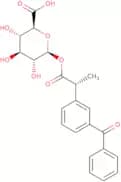
CAS :<p>(R)-Ketoprofen b-D-glucuronide is a synthetic modified sugar that is produced by the glucuronidation of ketoprofen, a nonsteroidal anti-inflammatory drug. The modification of ketoprofen with glucuronic acid can be achieved through an enzymatic process, which is catalyzed by UDP-glucuronyltransferase. This modification increases the solubility of ketoprofen and its ability to penetrate cells. (R)-Ketoprofen b-D-glucuronide has been shown to have antibacterial properties against Gram positive bacteria such as Staphylococcus aureus and Streptococcus pyogenes. It has also shown antiviral activity against HIV-1 due to its inhibition of reverse transcriptase, which is an enzyme important for viral replication.</p>Formule :C22H22O9Degré de pureté :Min. 95%Couleur et forme :White to off-white solid.Masse moléculaire :430.4 g/mol4-Methoxyphenyl 4-O-(2,3,6-tri-O-benzyl-b-D-galactopyranosyl)-2,3,6-tri-O-benzyl-b-D-glucopyranoside
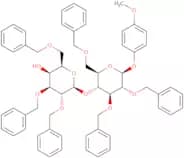
CAS :<p>4-Methoxyphenyl 4-O-(2,3,6-tri-O-benzyl-b-D-galactopyranosyl)-2,3,6-tri-O-benzyl-b-D-glucopyranoside is a sugar that is custom synthesized. It is fluorinated and modified with saccharides. The molecular weight of this compound is 582.06 g/mol and the CAS number for it is 15041281.</p>Formule :C61H64O12Degré de pureté :Min. 95%Masse moléculaire :989.15 g/molAbacavir 5'-β-D-glucuronide
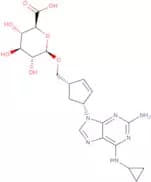
CAS :<p>Main metabolite of antiretroviral drug Abacavir with potent activity against human immunodeficiency virus type 1 (HIV-1). Abacavir is eliminated by hepatic metabolism to two major metabolites: 5’-glucuronide formed by uridine diphosphate glucuronyl transferase and 5’-carboxylate formed by cytosolic alcohol dehydrogenase.</p>Formule :C20H26N6O7Degré de pureté :Min. 95%Couleur et forme :PowderMasse moléculaire :462.46 g/mol2,6-Di-O-acetyl-3,4-di-O-benzyl-a-D-mannopyranosyl trichloroactimidate
CAS :2,6-Di-O-acetyl-3,4-di-O-benzyl-a-D-mannopyranosyl trichloroactimidate is a synthetic, glycosylate sugar that can be used in the synthesis of oligosaccharides and polysaccharides. This molecule has been fluorinated to increase its lipophilicity and stability. It has been modified with methyl groups to improve its reactivity with other molecules. The purity of 2,6-Di-O-acetyl-3,4-di-O-benzyl-a-D-mannopyranosyl trichloroactimidate is greater than 98%.Formule :C26H28Cl3NO8Degré de pureté :Min. 95%Masse moléculaire :588.86 g/molPhosphoric acid mono-((2R,3R,4S,5R)-2,3,4,5,7-pentahydroxy-6-hydroxyimino-heptyl) ester disodium salt (compound H)
Phosphoric acid mono-((2R,3R,4S,5R)-2,3,4,5,7-pentahydroxy-6-hydroxyimino-heptyl) ester disodium salt (compound H) is a high purity compound that can be custom synthesized to suit the customer's needs. It is a synthetically modified sugar with Click modification. This product has been fluorinated and glycosylated. Modification and methylation are also available on request.Formule :C7H14O10NPNa2Degré de pureté :Min. 95%Masse moléculaire :349.14 g/mol(2S- trans) -4- Hydroxy- N- methyl 2- pyrrolidinecarboxami de
CAS :<p>(2S- trans)-4-Hydroxy-N-methyl 2-pyrrolidinecarboxamide is a modification of the sugar molecule. It is a complex carbohydrate that belongs to the group of oligosaccharides. It has CAS number 143035-54-5 and can be synthesized in high purity with a glycosylation process. This chemical can also be fluorinated and saccharide substituted to create a wide range of products with different properties.</p>Degré de pureté :Min. 95%Blood group A type I tetrasaccharide
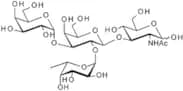
GalNAca1-3(Fuca1-2)Galb1-3GlcNAcFormule :C28H48N2O20Degré de pureté :Min. 95%Masse moléculaire :732.68 g/mola-D-Galactopyranosyl-(1-1)-a-D-galactopyranoside
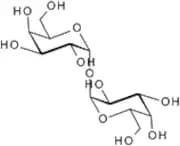
CAS :<p>a-D-Galactopyranosyl-(1-1)-a-D-galactopyranoside is a complex carbohydrate that belongs to the saccharides. It is an oligosaccharide that contains both a monosaccharide and a disaccharide. This compound is synthesized from sugar, which is obtained from sucrose. The sugar molecule has been modified with fluorination, methylation, glycosylation, and click chemistry. This product has high purity and can be custom synthesized for any specific requirements.</p>Formule :C12H22O11Degré de pureté :Min. 95%Masse moléculaire :342.3 g/mol3-O-Acetyl-1,6-anhydro-2-azido-2',3'-di-O-benzyl-4',6'-O-benzylidene-2-deoxy-b-D-cellobiose
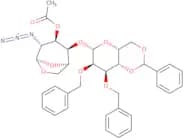
CAS :<p>3-O-Acetyl-1,6-anhydro-2-azido-2',3'-di-O-benzyl-4',6'-O-benzylidene-2-deoxy-b,D cellobiose is a fluorinated oligosaccharide that can be customized for a variety of applications. The sugar unit contains an acetyl group on the C1 position and an azido group at the C2 position. This compound has been subjected to click chemistry in order to form a covalent bond with 4,6'-O-benzylidene 2,3'-dideoxy b,D cellobiose.</p>Formule :C35H37N3O10Degré de pureté :Min. 95%Masse moléculaire :659.68 g/mol3,4-O-Isopropylidene-D-galactal
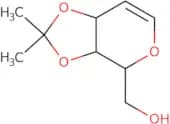
CAS :<p>3,4-O-Isopropylidene-D-galactal is a modified form of galactal. This compound is a methylated derivative of D-galactal that has been synthesized by the click reaction. It can be used in the synthesis of oligosaccharides and polysaccharides. 3,4-O-Isopropylidene-D-galactal is a high purity compound with a CAS number of 124477-12-9.</p>Degré de pureté :Min. 95%Methyl-O-b-D-glucopyranosyl-(1-3)-S-b-D-glucopyranosyl-(1-4)-O-4-thio-b-D-glucopyranosyl-(1-4)-b-D-glucopyranoside
CAS :<p>Methyl-O-b-D-glucopyranosyl-(1-3)-S-b-D-glucopyranosyl-(1-4)-O-4-thio-b-D-glucopyranosyl-(1,4)-b-D-[2] glucopyranoside is a synthetic saccharide with a single modification of 4'-fluoro substitution on the O6 position. This modification provides an increased stability to acid hydrolysis. Methylation and saccharide synthesis is performed in our lab and custom modifications are available upon request.</p>Formule :C25H44O20SDegré de pureté :Min. 95%Masse moléculaire :696.67 g/mol1,2,3,4,6-Penta-O-benzoyl-α-D-galactopyranose
CAS :<p>1,2,3,4,6-Penta-O-benzoyl-a-D-galactopyranose is a custom synthesis of an oligosaccharide with a glycosylation site that can be modified by the addition of other sugars. It has been fluorinated and methylated at the 6 position. The CAS number for this compound is 41545-55-5.</p>Formule :C41H32O11Degré de pureté :Min. 95%Couleur et forme :PowderMasse moléculaire :700.69 g/molTolmetin acyl-b-D-glucuronide
CAS :Tolmetin acyl-b-D-glucuronide is a nonsteroidal anti-inflammatory drug that is metabolized to the active form, tolmetin, in the liver. The major route of elimination is through the kidneys as an inactive conjugate with glucuronic acid and excreted in urine. Tolmetin acyl-b-D-glucuronide has been shown to react with lysines on proteins in biological fluids by forming covalent adducts. This reaction can lead to allergic reactions and other problems.Formule :C21H23NO9Degré de pureté :Min. 95%Couleur et forme :White to pale yellow solid.Masse moléculaire :433.41 g/mol4-Methoxyphenyl 3-O-allyl-2-O-benzyl-4,6-O-benzylidene-2-deoxy-b-D-galactopyranoside
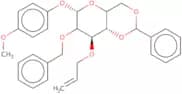
CAS :<p>4-Methoxyphenyl 3-O-allyl-2-O-benzyl-4,6-O-benzylidene-2-deoxy-b-D galactopyranoside is a fluorinated monosaccharide that is synthesized from allose. It has been modified with click chemistry to introduce a benzyl group at the C2 position and an allyl group at the C4 position. This compound has been glycosylated with glucose and methylated with methanol to produce a complex carbohydrate that can be used as a control for glycosylation reactions. The compound was purified to high purity using column chromatography.</p>Formule :C30H32O7Degré de pureté :Min. 95%Masse moléculaire :504.59 g/molBenzyl 2-acetamido-4,6-di-O-acetyl-3-O-(2,3,4,6-tetra-O-acetyl-b-D-galactosyl)-2-deoxy-a-D-galactopyranoside
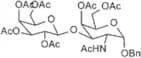
CAS :<p>This product is a custom synthesis. It is an acetamido-galactoside with a benzyl 2-acetamido-4,6-di-O-acetyl-3-O-(2,3,4,6-tetra-O-acetyl)-b-D-galactopyranoside moiety. This compound has been modified with fluorination and methylation. The molecular weight of this compound is 328.27 g/mol and the CAS number is 3809-10-7.</p>Formule :C33H43NO17Degré de pureté :Min. 95%Masse moléculaire :725.69 g/molPhenyl 2,4,6-tri-O-acetyl-3-O-benzyl-b-D-thioglucopyranoside
CAS :Phenyl 2,4,6-tri-O-acetyl-3-O-benzyl-b-D-thioglucopyranoside is a synthetic sugar that has been modified with three fluorine atoms. It is an intermediate in the synthesis of the Methylated Polysaccharides and Click Modifications. This product is a high purity, custom synthesis and can be used for glycosylation or to synthesize other carbohydrates.Formule :C25H28O8SDegré de pureté :Min. 95%Couleur et forme :PowderMasse moléculaire :488.55 g/molBenzyl 4-O-a-D-glucosaminyl-b-D-xylopyranoside
Benzyl 4-O-a-D-glucosaminyl-b-D-xylopyranoside is a methylated saccharide. It is a product of the Click modification of an oligosaccharide with benzyl alcohol. Benzyl 4-O-a-D-glucosaminyl-b-D-xylopyranoside is produced by glycosylation of D-(+)-glucose with glucuronic acid and galactose. The product can be used as a synthetic building block for complex carbohydrate synthesis, fluorination, or click modification.Degré de pureté :Min. 95%Methyl 4,6-di-O-acetyl-2,3-carbonyl-b-D-mannopyranoside
CAS :<p>Methyl 4,6-di-O-acetyl-2,3-carbonyl-b-D-mannopyranoside is a saccharide that is modified by the Click reaction with osmium tetroxide and methyl iodide. It can be used in glycosylation reactions to produce complex carbohydrates. This product is made of high purity and has a CAS No. 53958-22-8.</p>Formule :C12H16O9Degré de pureté :Min. 95%Masse moléculaire :304.25 g/molN-(e-Aminocaproyl)-b-D-galactopyranosyl amine
CAS :<p>N-(e-Aminocaproyl)-b-D-galactopyranosyl amine is a fluorinated monosaccharide with a complex carbohydrate structure that has been synthesized by custom synthesis. This product is used for glycosylation, polysaccharide modification, and click chemistry. It has been shown to be a high purity product with CAS No. 38822-56-9 and can be methylated or fluorinated.</p>Formule :C12H24N2O6Degré de pureté :Min. 95%Couleur et forme :SolidMasse moléculaire :292.33 g/molMono(6-ethanediamine-6-deoxy)-beta-cyclodextrin
CAS :<p>This beta-cyclodextrin (β-CD) derivative is a functionalized cyclic oligosaccharide composed of seven glucose units, characterized by a hydrophilic exterior and a lipophilic cavity (bigger than α-CD and smaller than γ-CDs), which allows it to encapsulate various guest molecules. This structural feature facilitates its use in multiple applications, including pharmaceuticals, food enhancement, and cosmetics. In the pharmaceutical industry, it enhances the solubility and stability of poorly water-soluble drugs, improving their bioavailability and efficacy while also masking unpleasant tastes. The food sector utilizes it as a stabilizer for flavors, colors, and nutrients, extending shelf life by protecting sensitive ingredients from degradation. In cosmetics, it serves as a complexing agent for fragrances and active components, ensuring their stability and controlled release. Its use expands to many other fields, including nanotechnology for drug delivery systems, environmental remediation for extracting organic pollutants, textiles for slow-release fragrances, and analytical chemistry for chiral separation.</p>Formule :C44H76N2O34Degré de pureté :Min. 95%Masse moléculaire :1,177.1 g/molEthyl-3,6-di-O-benzoyl-2-trifluoromethanesulfonyl-4-O-(2,3,4,6-tetra-O-acetyl-b-D-galactopyranosyl)-b-D-mannopyranoside
CAS :<p>Ethyl-3,6-di-O-benzoyl-2-trifluoromethanesulfonyl-4-O-(2,3,4,6-tetra-O-acetyl-b-D-galactopyranosyl)-b-D-mannopyranoside is a synthetic modified oligosaccharide that has been fluorinated. It is a complex carbohydrate that has a CAS number of 1008750-65-9. The modification of the monosaccharides in this product are methylation and click modification.</p>Formule :C37H41F3O19SDegré de pureté :Min. 95%Masse moléculaire :878.77 g/mol6-O-(4,7-Di-O-methyl-N-acetyl-α-neuraminosyl)-D-galactopyranoside
6-O-(4,7-Di-O-methyl-N-acetyl-alpha-neuraminosyl)-D-galactopyranoside is a complex carbohydrate that is used in the synthesis of glycoprotein and saccharide. It has been modified with methylation, Click reaction, and fluorination to provide an improved product for research purposes. This chemical has CAS No. 68450-29-1 and can be custom synthesized to meet your needs.Degré de pureté :Min. 95%Allo-3a-tetrahydro cortisol 3-O-b-D-glucuronide
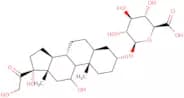
CAS :Allo-3a-tetrahydro cortisol 3-O-b-D-glucuronide is a methylated glucuronide of allo-3a,4b,5,6,7,9b tetrahydrocortisol. It is a synthetic modification of the natural hormone cortisol and has been shown to stimulate glycogenolysis in rat liver cells. Allo-3a,4b,5,6,7,9b tetrahydrocortisol has been shown to have antiinflammatory effects on skin cells and has been used as an analgesic in veterinary medicine. The compound is also used for the preparation of polysaccharides and glycosylations.Formule :C27H42O11Degré de pureté :Min. 95%Masse moléculaire :542.62 g/mol3-Chloro-3-deoxy-1,2:5,6-di-O-isopropylidene-a-D-glucofuranose
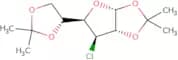
CAS :3-Chloro-3-deoxy-1,2:5,6-di-O-isopropylidene-a-D-glucofuranose is a monosaccharide that is used as an intermediate in the synthesis of complex carbohydrates. It is synthesized by the Click reaction of 3,4,5,6,-tetrachlorohexanoic acid with 2,3:5,6-diisopropylidene glucose. This product has been modified by fluorination and saccharide modification. Custom synthesis can be performed on this product to produce any desired oligosaccharides or polysaccharides. The purity of this product is >98%.Formule :C12H19ClO5Degré de pureté :Min. 95%Masse moléculaire :278.73 g/molα,β-D-Glucose pentaacetate
CAS :<p>Glucose pentaacetate is a form of glucose that reacts with boron trifluoride etherate to produce anomers. This process can be used to synthesize the anomeric form of glucose, which is important for the biosynthesis of glycosides. Glucose pentaacetate has been shown to react with nitrate and trifluoride, forming conjugates with aluminum and chloride. The catalytic stereocontrol of this reaction allows for the production of disaccharides without hydrogen chloride or formylation.</p>Formule :C16H22O11Masse moléculaire :390.35 g/mol1-O-Oleoyl-2-O-acetyl-3-O-(b-D-galactopyranosyl) syn-glycerol
<p>1-O-Oleoyl-2-O-acetyl-3-O-(b-D-galactopyranosyl) syn-glycerol is a complex carbohydrate that is custom synthesized for use in modification reactions. It has been shown to be compatible with a variety of other saccharides and can be methylated, glycosylated, or fluorinated. This product is available in high purity and can be ordered as either a monosaccharide or a polysaccharide.</p>Formule :C29H52O10Degré de pureté :Min. 95%Masse moléculaire :560.72 g/molBlood Group B type I tetrasaccharide
CAS :<p>Gala1-3(Fuca1-2)Galb1-3GlcNAc</p>Formule :C26H45NO20Degré de pureté :Min. 95%Couleur et forme :White/Off-White SolidMasse moléculaire :691.63 g/molD-Glucofuranuronic acid,gamma-lactone,1,6-13C2
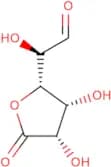
CAS :<p>D-Glucofuranuronic acid,gamma-lactone,1,6-13C2 is an organic compound that is a glycosidic acid with a uronic acid group. It is composed of a hydrocarbon group and an acetylated d-xylose. This compound has been shown to have inhibitory activities against glycosidases and glycoside hydrolases. D-Glucofuranuronic acid,gamma-lactone,1,6-13C2 is synthesized by the reaction of trifluoroacetic acid with glyceraldehyde in the presence of water and an acid catalyst. It can be used as medicine for treating blood sugar levels but should not be taken in conjunction with other medicines because it inhibits their absorption.</p>Formule :C2C4H8O6Degré de pureté :Min. 95%Masse moléculaire :178.12 g/moltert-Amyl 2-acetamido-2-deoxy-b-D-glucopyranoside
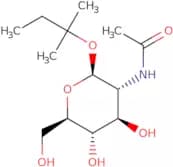
CAS :<p>Tert-Amyl 2-acetamido-2-deoxy-b-D-glucopyranoside is a synthetic derivative of the natural sugar nucleotide, UDP-N-acetylgalactosamine. It is a precursor for the synthesis of glycosaminoglycans, which are important components of proteoglycans and glycosaminoglycan aggregates. Tert-Amyl 2-acetamido-2-deoxy-b-D-glucopyranoside has been modified by fluorination and methylation to provide increased stability and reactivity. This product is available in high purity with a CAS number of 262849-66-1.</p>Formule :C13H25NO6Degré de pureté :Min. 95%Masse moléculaire :291.34 g/molCyclohexylethanoyl-N-Hydroxyethylglucamide
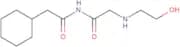
CAS :Cyclohexylethanoyl-N-Hydroxyethylglucamide (CYE) is a membrane protein with a strong affinity for the bacterial enzyme histidine kinase, which is involved in the regulation of bacterial cell wall synthesis. CYE binds to the catalytic site of this enzyme and inhibits its activity. CYE also has an inhibitory effect on clostridium dehydrogenases and campylobacter adenylate cyclases. CYE has been shown to bind to other enzymes, such as tecnologia and diffraction, synchrotron, staphylococcus kinases, and campylobacter adenylate cyclases. Structural studies of CYE have been carried out using crystallography at the Instituto de Tecnología Química e Biológica in Campinas, Brazil.Formule :C16H31NO7Degré de pureté :Min. 95%Masse moléculaire :349.42 g/molLacto-N-fucopentaose II-APD-HSA
<p>Lacto-N-fucopentaose II-APD-HSA is a complex carbohydrate that has been chemically modified to include a fucose sugar. Lacto-N-fucopentaose II-APD-HSA is synthesized by the click reaction and then modified with the addition of an acetyl group. The product is then methylated and purified by HPLC. Lacto-N-fucopentaose II-APD-HSA can be used in a wide range of applications, including as a component in glycosylation reactions or as an adjuvant for fluorescence labelling.</p>Degré de pureté :Min. 95%Heptadecyl 2-acetamido-2-deoxy-b-D-glucopyranoside
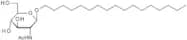
CAS :<p>Heptadecyl 2-acetamido-2-deoxy-b-D-glucopyranoside is a solubilized ion pair that can be catalysed by amines and immobilized lipase. It is also a hydrophobic fatty acid ester. Heptadecyl 2-acetamido-2-deoxy-b-D-glucopyranoside is catalyzed by an enzyme, lipase, to form the corresponding amide. This reaction yield is increased in the presence of hexane, which aids in hydrolysis of the ester linkage between heptadecyl and 2,2′-diacetylidenebis(3,4,6,-trimethylphenol). Heptadecyl 2-acetamido-2-deoxyglucopyranoside is used as a substrate for lipases to produce amides from amines. This product has been used in the production of</p>Formule :C25H49NO6Degré de pureté :Min. 95%Masse moléculaire :459.66 g/molDodecyl 2-acetamido-2-deoxy-b-D-glucopyranoside
CAS :<p>Dodecyl 2-acetamido-2-deoxy-b-D-glucopyranoside is a synthetic glycosylate which has the potential to be used for the synthesis of various oligosaccharides and polysaccharides. It has a high purity and can be modified with various functional groups such as fluorination, methylation, acetylation, and click chemistry. Dodecyl 2-acetamido-2-deoxy-b-D-glucopyranoside is currently being researched as a treatment for cancer.</p>Formule :C20H39NO6Degré de pureté :Min. 95%Masse moléculaire :389.53 g/molCyclohexylpropanoyl-N-Hydroxyethylglucamide
CAS :<p>Cyclohexylpropanoyl-N-Hydroxyethylglucamide is a custom synthesis of a complex carbohydrate with high purity and high quality. This compound is an Oligosaccharide, Polysaccharide, and Modification. It is also a CAS No. 864434-14-0, Methylation, Glycosylation, Carbohydrate, Click modification, sugar and Fluorination. Cyclohexylpropanoyl-N-Hydroxyethylglucamide has been synthesized with Fluorination for use in the synthesis of new compounds.</p>Formule :C17H33NO7Degré de pureté :Min. 95%Masse moléculaire :363.45 g/mol4-Toluoyl 2-O-benzyl-4,6-O-benzylidene-3-O-p-methoxybenzyl-a-D-thiomannopyranoside
<p>4-Toluoyl 2-O-benzyl-4,6-O-benzylidene-3-O-p-methoxybenzyl a (1 → 4)-D-thiomannopyranoside is a carbohydrate with an α-(1→4) linkage. It is synthesized by the modification of the hydroxymethyl group on the C2 position of toluose with benzyl bromide and then methylation of the C6 position. This product has been custom synthesized for our customer and can be produced in high purity. It is also glycosylated and click modified.</p>Formule :C35H36O6SDegré de pureté :Min. 95%Masse moléculaire :584.72 g/molDodecyl 2-acetamido-3,4,6-tri-O-acetyl-2-deoxy-b-D-glucopyranoside
CAS :<p>Dodecyl 2-acetamido-3,4,6-tri-O-acetyl-2-deoxy-b-D-glucopyranoside is a kinetic probe that can be used to measure the activity of cellular enzymes. The production of this probe is mediated by the enzyme profile and is influenced by kinetic parameters such as the substrate concentration, rate of reaction, and the concentrations of reactants. The profile can be determined by profiling experiments in which cells are grown with varying concentrations of substrate or varying rates of reaction. Dodecyl 2-acetamido-3,4,6-tri-O-acetyl-2-deoxyb -D -glucopyranoside can be used to study microorganisms such as bacteria and photosynthetic organisms that use polypeptides for catalysis. This probe can also be recycled to yield more probes for future experiments.</p>Formule :C26H45NO9Degré de pureté :Min. 95%Masse moléculaire :515.64 g/molHexyl 2-acetamido-3,4,6-tri-O-acetyl-2-deoxy-b-D-glucopyranoside
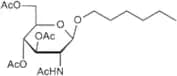
CAS :<p>Hexyl 2-acetamido-3,4,6-tri-O-acetyl-2-deoxy-b-D-glucopyranoside is a compound that is used in the research of cellular biology. It was found to have a significant effect on gene expression levels. This compound has been shown to be able to alter the expression profile of cells and may be useful for understanding how different genes affect cell function. The high density microarray provides a highly sensitive and accurate way to measure changes in gene expression levels.</p>Formule :C20H33NO9Degré de pureté :Min. 95%Masse moléculaire :431.48 g/molOctadecyl 2-acetamido-3,4,6-tri-O-acetyl-2-deoxy-b-D-glucopyranoside
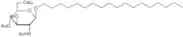
CAS :<p>Octadecyl 2-acetamido-3,4,6-tri-O-acetyl-2-deoxy-b-D-glucopyranoside is a synthetic monosaccharide that has been modified with a click chemistry. It is also known as octadecyl 2-(N′,N′′-(diacetoxyacetyl)-2′,3′,4′,6′-triacetyl)alpha,alpha″-(1″→4″→1″)dideoxygalactopyranosiduronic acid. This compound is an oligosaccharide that consists of a chain of three sugar units and may have a glycosylation site at either position 1 or 4. Octadecyl 2-(N′,N′′-(diacetoxyacetyl)-2’,3’,4’,6’-triacetyl)alpha,alpha”-(</p>Formule :C32H57NO9Degré de pureté :Min. 95%Masse moléculaire :599.8 g/molOctyl 2,3,4,6-tetra-O-acetyl-b-D-thioglucopyranoside
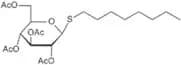
CAS :<p>Octyl 2,3,4,6-tetra-O-acetyl-b-D-thioglucopyranoside is a chemical that is used to evaluate renal injury. It is typically detected in the urine of patients with renal injury and can be correlated with prognosis. Octyl 2,3,4,6-tetra-O-acetyl-b-D-thioglucopyranoside has been shown to be useful for the diagnosis of renal injury by detecting protein or body fluid in the reagents and assays. This substance is also used to detect protein in body fluids such as urine.</p>Formule :C22H36O9SDegré de pureté :Min. 95%Couleur et forme :White PowderMasse moléculaire :476.58 g/mol4-Formylphenyl 2,3,4,6-tetra-O-acetyl-b-D-glucopyranoside
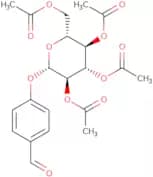
CAS :<p>4-Formylphenyl 2,3,4,6-tetra-O-acetyl-b-D-glucopyranoside is a custom synthesis that is modified with fluorine, methylated and acetylated. This compound has CAS No. 31873-42-4 and is a monosaccharide. It also can be used to synthesize oligosaccharides and polysaccharides. 4-Formylphenyl 2,3,4,6-tetra-O-acetyl-b-D-glucopyranoside is an example of a carbohydrate that has been glycosylated and modified with click chemistry.</p>Formule :C21H24O11Degré de pureté :Min. 95%Masse moléculaire :452.4 g/mol1,6-Anhydro-4-O-p-toluenesufonyl-b-D-glucopyranose
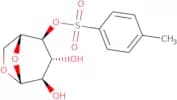
CAS :This modified sugar can be used in the synthesis of oligosaccharides and polysaccharides. It can also be used as a custom synthesis to introduce fluorine atoms into saccharides. This modification is useful for obtaining specific glycosylation products, such as those that are methylated or click-modified.Formule :C13H16O7SDegré de pureté :Min. 95%Masse moléculaire :316.33 g/mol3,4-O-Isopropylidene-b-D-arabinopyranose
CAS :<p>3,4-O-Isopropylidene-b-D-arabinopyranose is a synthetic monosaccharide that is used in the synthesis of oligosaccharides and polysaccharides. It can be fluorinated, methylated, or glycosylated to produce a range of compounds with different properties. 3,4-O-Isopropylidene-b-D-arabinopyranose is not active against bacteria, but it does inhibit the growth of yeast cells. In addition to its use in biochemistry and as a nutritional supplement for animals and humans, 3,4-O-Isopropylidene-b-D-arabinopyranose can be used as an additive for plastics and other materials.</p>Formule :C8H14O5Degré de pureté :Min. 95%Masse moléculaire :190.19 g/mol2-Acetamido-2-deoxy-4-O-(b-D-galactopyranosyl)-D-mannopyranose
CAS :<p>2-Acetamido-2-deoxy-4-O-(b-D-galactopyranosyl)-D-mannopyranose is a disaccharide with the chemical formula C8H14N2O6. It has a glycosidic bond between two acetamides and a sequence of three sugars. It is also known as n-acetyl-d-mannosamine, or NAM. 2-Acetamido-2-deoxy-4-O-(b-D-galactopyranosyl)-D-mannopyranose is an important building block in the synthesis of glycoproteins. This molecule's carbohydrate structure confers it with properties that are similar to other monosaccharides.</p>Formule :C14H25NO11Degré de pureté :Min. 95%Masse moléculaire :383.35 g/mol2-Acetamido-3-O-acetyl-2-deoxy-D-glucopyranose
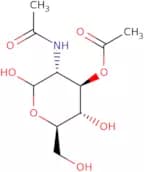
CAS :<p>2-Acetamido-3-O-acetyl-2-deoxy-D-glucopyranose is a methylated, acetylated, and fluorinated sugar that is used in the synthesis of glycosides. It is a polysaccharide with an Oligosaccharide and saccharide with Click modification that can be modified to suit your needs. The carbohydrate has high purity and can be synthesized from custom molecules. It can be synthesized from carbohydrates or sugars. This product is made synthetically for research purposes only, not for human consumption.</p>Formule :C10H17NO7Degré de pureté :Min. 95%Couleur et forme :Yellow syrup.Masse moléculaire :263.24 g/molN1-b-D-Glucopyranosylamino-guanidine HNO3
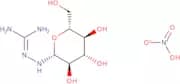
CAS :N1-b-D-Glucopyranosylamino-guanidine HNO3 is a modification of the sugar N1-b-D-glucopyranosylamino. It is a monosaccharide that can be methylated and glycosylated, and is an example of a complex carbohydrate. The compound can also undergo fluorination or saccharide modifications such as click chemistry. It is synthesized with high purity and has been used in research to study the interactions between carbohydrates and proteins.Formule :C7H16N4O5·HNO3Degré de pureté :Min. 95%Masse moléculaire :299.24 g/mol3-Deoxy-3-fluoro-D-myo-inositol 1,4,5-trisphosphate hexasodium salt
CAS :<p>3-Deoxy-3-fluoro-D-myo-inositol 1,4,5-trisphosphate hexasodium salt is a synthetic sugar that has been modified with fluorination and glycosylation. It is used for the synthesis of oligosaccharides and monosaccharides. 3-Deoxy-3-fluoro-D-myo-inositol 1,4,5-trisphosphate hexasodium salt is a carbohydrate that can be found in complex carbohydrates such as glycolipids and glycoproteins. The CAS number for this compound is 129365–68–0.</p>Formule :C6H8FO14P3Na6Degré de pureté :Min. 95%Masse moléculaire :553.98 g/mol3-Deoxy-3,3-difluoro-1,2-O-isopropylidene-a-D-xylofuranose
<p>3-Deoxy-3,3-difluoro-1,2-O-isopropylidene-a-D-xylofuranose is a custom synthesis that is a complex carbohydrate. This product has CAS No. and is a polysaccharide with methylation and glycosylation. 3DDFIOPY has high purity, fluorination, and click modification. It is a sugar or carbohydrate with a saccharide that can be modified with methylation and glycosylation.</p>Formule :C8H12F2O4Degré de pureté :Min. 95%Masse moléculaire :210.18 g/mol2,6-Dimethyl-4-heptyl-b-D-maltopyranoside
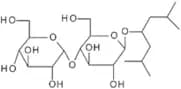
CAS :<p>2,6-Dimethyl-4-heptyl-b-D-maltopyranoside is a cell specific additive that can be used as an interconnecting agent between cells. It has been shown to bind specifically to the dna of invertebrates, such as the fruit fly Drosophila melanogaster and the nematode Caenorhabditis elegans. This compound has also been shown to bind to cancer cells and is able to disrupt their growth. 2,6-Dimethyl-4-heptyl-b-D-maltopyranoside has been used in diagnostic assays for detecting cancer cells in tissue samples and was found to have limited cytotoxicity. The use of this compound may lead to improvements in diagnosis and treatment of cancer.</p>Formule :C21H40O11Degré de pureté :Min. 95%Masse moléculaire :468.54 g/molOctyl 2,3,4,6-tetra-O-acetyl-b-D-mannopyranoside
CAS :<p>Octyl 2,3,4,6-tetra-O-acetyl-b-D-mannopyranoside is a glycosylated monosaccharide. This sugar is synthesized by the enzymatic action of acetyl CoA:mannose 3-O-acetyltransferase and bromoacetamidomalonic acid in the presence of ATP. The product of this reaction is an acetamidomalonic acid derivative with a beta (1,2)-linked mannose at C2 and an acetylated alpha (1,3)-linked mannose at C4. The compound has been shown to inhibit the growth of bacteria that are resistant to penicillin, ampicillin, and erythromycin.</p>Formule :C22H36O10Degré de pureté :Min. 95%Masse moléculaire :460.52 g/molOctyl 2-acetamido-2-deoxy-3-O-(b-D-galactopyranosyl)-a-D-glucopyranoside
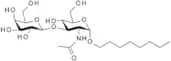
CAS :<p>Octyl 2-acetamido-2-deoxy-3-O-(b-D-galactopyranosyl)-a-D-glucopyranoside is a synthetic sugar that is used in the production of various drugs. It is used as an intermediate in the synthesis of a variety of drugs, including antihistamines, antidiabetic agents, and antihypertensive agents. Octyl 2-acetamido-2-deoxy-3-O-(b-D-galactopyranosyl)-a-D--glucopyranoside is also used to modify proteins and carbohydrates. This compound has been shown to be useful for the fluorination of saccharides and for click modification with an azide group.</p>Formule :C22H41NO11Degré de pureté :Min. 95%Masse moléculaire :495.56 g/mol6-Deoxy-6-fluoro-L-galactose
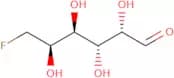
CAS :<p>6-Deoxy-6-fluoro-L-galactose is a sugar nucleotide that is extracted from the dithioacetal of l-fucose and d-galactose. It inhibits the synthesis of DNA and RNA by binding to the enzyme that catalyzes this reaction, thereby blocking these processes. 6DFLG has been shown to inhibit transformation in Escherichia coli. The mechanistic studies of 6DFLG show that it reacts with oxygen at the electrophilic site to produce an olefinic product, which then reacts with nucleophiles, such as water, to form a trackable product. This reagent can be used to determine whether or not a particular sugar is present in a sample.</p>Formule :C6H11FO5Degré de pureté :Min. 95 Area-%Couleur et forme :PowderMasse moléculaire :182.15 g/molBenzyl N,N'-di-acetyl-b-chitobioside
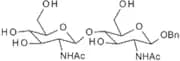
CAS :<p>Benzyl N,N'-di-acetyl-b-chitobioside is a fluorinated glycoside. It is a synthetic compound that has been modified by the addition of a benzyl group to the acetyl group at the C3 position and an N,N'-diacetyl group to the b-chitobioside. This modification has been carried out in order to improve its water solubility and bioavailability.</p>Formule :C23H34N2O11Degré de pureté :Min. 95%Couleur et forme :PowderMasse moléculaire :514.52 g/molHyaluronate octasaccharide
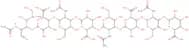
CAS :<p>Hyaluronate octasaccharide is a regulatory molecule that has been found to be useful for staining and as a chondrocyte culture supplement. Hyaluronate octasaccharide is composed of two sugar molecules: glucuronic acid and N-acetylglucosamine. The molecular weight of this compound is about 5000 Daltons, and it has been found to show high levels of proton hydrogen bonding interactions with other molecules in the extracellular matrix. It also contains oligosaccharides and disaccharides. Hyaluronate octasaccharide can be used in vitro to stimulate cell growth, which may be due to its ability to stabilize collagen and elastin fibers by binding with collagenase.</p>Formule :C56H86N4O45Degré de pureté :Min. 95%Masse moléculaire :1,535.3 g/mol2,3-Desisopropylidene topiramate
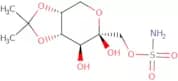
CAS :<p>2,3-Desisopropylidene topiramate is a modified sugar that is synthesized from 2-deoxy-D-ribose and 3,4,5-trihydroxybenzoic acid. This product is a white to off-white powder with a molecular weight of 238.17 g/mol. It has been shown to have excellent stability and high purity in synthesis.</p>Formule :C9H17NO8SDegré de pureté :Min. 95%Couleur et forme :White to off-white solid.Masse moléculaire :299.3 g/mol4-Bromophenyl 2-acetamido-2-deoxy-b-D-glucopyranoside
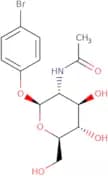
CAS :<p>4-Bromophenyl 2-acetamido-2-deoxy-b-D-glucopyranoside is a synthetic glycosylate that is used for the modification of saccharides and polysaccharides. It can be used for click chemistry to modify proteins, antibodies, and other biomolecules. The modification of saccharides with 4-Bromophenyl 2-acetamido-2-deoxy-b-D-glucopyranoside can be done using the "glycosylation" reaction. This reaction will result in the formation of a glycosidic linkage between the sugar and the brominated acetamide group. The modification of polysaccharides with 4Bromophenyl 2-acetamido2 deoxy bD glucopyranoside can be done using "Oligosaccharide". This reaction will result in the formation of a glycosidic linkage between the sugar and</p>Formule :C14H18BrNO6Degré de pureté :Min. 95%Masse moléculaire :376.2 g/mol5-(Acetylamino)-4-amino-2,6-anhydro-3,4,5-trideoxy-7-O-methyl-D-glycero-D-galacto-non-2-enonic acid
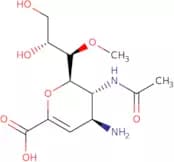
CAS :<p>5-(Acetylamino)-4-amino-2,6-anhydro-3,4,5-trideoxy-7-O-methyl-D-glycero-D-galacto-non-2-enonic acid is a custom synthesis. It is synthesized by modification of the 7th carbon in the glycosidic bond and fluorination of the 4th carbon on the sugar ring. The chemical structure is based on an amino sugar composed of two acetic acid residues, one anhydro sugar residue and one methyl group. This product is a white to off white solid with a molecular weight of 597.07 g/mol that has a melting point of 154°C.</p>Formule :C12H20N2O7Degré de pureté :Min. 95%Masse moléculaire :304.3 g/mola1-3,a1-6-Mannotriose-BSA
<p>a1-3,a1-6-Mannotriose-BSA is a carbohydrate that is synthesized by the modification of maltotriose with a fluorinated alcohol. It is an oligosaccharide made up of three glucose units linked together in a 1,3 configuration and one glucose unit linked together in a 1,6 configuration. The molecular weight of this carbohydrate is 793 Daltons. This product has been shown to be high purity and custom synthesis for use in research.</p>Degré de pureté :Min. 95%Couleur et forme :Powder1-Acetyl-2-deoxy-3,5-di-O-benzoylribofuranose
CAS :<p>1-Acetyl-2-deoxy-3,5-di-O-benzoylribofuranose is a fluorinated carbohydrate that is synthesized by click chemistry with acetic anhydride and 3,5-di-O-benzoylribofuranose. It is a complex carbohydrate with a high purity. This product can be custom synthesized to meet the specific requirements of customers.</p>Formule :C21H20O7Degré de pureté :Min. 95%Masse moléculaire :384.38 g/molCimifugin 4'-O-b-D-glucopyranoside
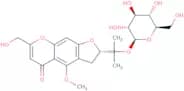
CAS :Cimifugin 4'-O-b-D-glucopyranoside is a complex carbohydrate that has been modified with methylamine and fluorine. It is a custom synthesis of cimifugin, which is an oligosaccharide found in the roots of the Chinese medicinal plant Cimicifuga. Cimifugin 4'-O-b-D-glucopyranoside has been modified to increase its solubility and stability. The modification also increases its bioavailability, which may be due to the ability of methylamine to chelate heavy metals or the fluoroalkylation of cimifugin, making it more lipophilic. Cimifugin 4'-O-b-D-glucopyranoside has been shown to have antiinflammatory effects, as well as hepatoprotective properties.Degré de pureté :Min. 95%Tri-O-acetyl-b-D-GlcNAc-Fmoc Asn tert-Butyl Ester
<p>Tri-O-acetyl-b-D-GlcNAc-Fmoc Asn tert-Butyl Ester is a synthetic, high purity, custom synthesis, and glycosylation agent. It is a fluorinated, methylated, and modified monosaccharide. Tri-O-acetyl-b-D-GlcNAc-Fmoc Asn tert-Butyl Ester is used in the synthesis of oligosaccharides and complex carbohydrates. CAS number: 203883–42–7</p>Formule :C34H45N3O13Degré de pureté :Min. 95%Masse moléculaire :703.73 g/molRhamnolipid
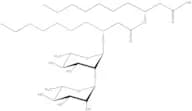
<p>Rhamnolipids are a class of biosurfactants which contain rhamnose as the sugar moiety linked to β-hydroxylated fatty acid chains. Rhamnolipids can be widely applied in many industries including; petroleum, food, agriculture and bioremediation etc.</p>Formule :C26H48O9Degré de pureté :(%) Min. 95%Couleur et forme :Yellow PowderMasse moléculaire :504.65 g/molSennoside C
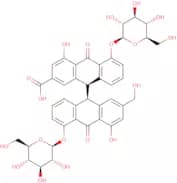
CAS :<p>Sennoside C is a bioactive phytochemical extracted from the leaves of Eclipta prostrata. It has been shown to have anti-tumor and anti-inflammatory properties. Sennoside C has also been found to be effective in treating autoimmune diseases, including psoriasis and rheumatoid arthritis. Sennoside C is a low-energy compound that binds with fatty acids to form a bound form. This bound form can be hydrolyzed by sodium hydroxide solution to release free sennosides, which are anthraquinone glycosides that can be used for the treatment of skin conditions such as eczema and dermatitis.</p>Formule :C42H40O19Degré de pureté :Min. 95%Couleur et forme :SolidMasse moléculaire :848.76 g/molDesmethyl ranolazine b-D-glucuronide
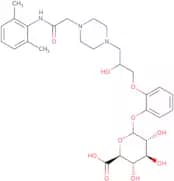
CAS :<p>Desmethyl ranolazine b-D-glucuronide is a complex carbohydrate that is a modification of the sugar, glycosylation and carbohydrate. It is a fluorinated synthetic compound that has been modified with methyl groups, click chemistry and glycosylation. Desmethyl ranolazine b-D-glucuronide is soluble in water and methanol, and insoluble in ethanol. The CAS number for this compound is 172300-93-5.</p>Formule :C29H39N3O10Degré de pureté :Min. 95%Masse moléculaire :589.65 g/molHeptyl b-D-thioglucopyranoside
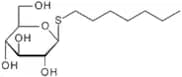
CAS :<p>Heptyl b-D-thioglucopyranoside is a small molecule that is used as a regulator of the phosphatase enzyme (PP1). PP1 is an important enzyme in the regulation of cellular signaling pathways. Heptyl b-D-thioglucopyranoside interacts with the regulatory domain of PP1, which is required for its activity. The ligand binds to an antenna on the regulatory domain and induces conformational changes in the protein, leading to increased phosphatase activity. This small molecule also has two binding sites for ATP and L-phenylalanine, which are required for its regulatory function.</p>Formule :C13H26O5SDegré de pureté :Min. 95%Masse moléculaire :294.41 g/mol1,2,3,4,6-Penta-O-acetyl-a-D-thiogalactopyranose
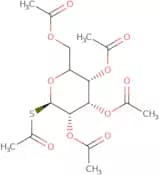
CAS :<p>1,2,3,4,6-Penta-O-acetyl-a-D-thiogalactopyranose is a fluorinated saccharide that can be used as a research tool. It has been modified with methylation and glycosylation. This product is purified and custom synthesized to meet customer specifications.</p>Formule :C16H22O10SDegré de pureté :Min. 95%Masse moléculaire :406.41 g/mol1,2,3,4-Tetra-O-benzoyl-6-O-tert-butyldimethylsilyl-b-D-galactopyranose
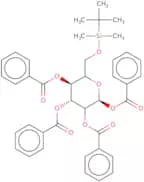
<p>Tetra-O-benzoyl-6-O-tert-butyldimethylsilyl-b-D-galactopyranose is a tetrasaccharide that has been modified with the fluoride ion. This compound is synthesized from 1,2,3,4-tetraacetyl bromoacetone and 2,3,4,6-tetraacetyl bromoethanol by an acetalization reaction followed by a silylation reaction. Tetra-O-benzoyl-6-O-tert butyldimethylsilyl b D galactopyranose may be used in glycosylation reactions. The product is soluble in water or ethanol and can be stored for up to 2 weeks at 4°C.</p>Formule :C40H42O10SiDegré de pureté :Min. 95%Masse moléculaire :710.86 g/mol3'-(5'-Deoxy-a-D-ribofuranoyl capecitabine
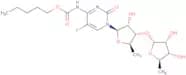
CAS :3'-(5'-Deoxy-a-D-ribofuranoyl capecitabine is a modified form of the anticancer drug capecitabine, which is used in the treatment of breast cancer and metastatic colorectal cancer. 3'-(5'-Deoxy-a-D-ribofuranoyl capecitabine is synthesized by modification of the sugar moiety with a fluorinated methyl group, followed by glycosylation with a saccharide. The fluorination increases the lipophilicity and enhances the solubility of this compound, while retaining its cytotoxic activity. It has been shown to have an IC50 value of 0.1 μM against human colon carcinoma cells.Formule :C20H30FN3O9Degré de pureté :Min. 95%Masse moléculaire :475.47 g/mol



![2,4-Anhydro-3,5-O-[(S)-phenylmethylene]- D-lyxonic acid methyl ester](/_next/image/?url=https%3A%2Fstatic.cymitquimica.com%2Fproducts%2F3D%2Fthumb-webp%2FFA76878.webp&w=3840&q=75)