Glycosciences
La glycosciences est l'étude des glucides et de leurs dérivés, ainsi que des interactions et des fonctions biologiques auxquelles ils participent. Ce domaine de recherche est crucial pour comprendre une grande variété de processus biologiques, y compris la reconnaissance cellulaire, la signalisation, la réponse immunitaire et le développement des maladies. La glycosciences a des applications importantes en biotechnologie, en médecine et dans le développement de nouveaux médicaments et thérapies. Chez CymitQuimica, nous proposons une large sélection de produits de haute qualité et pureté pour la recherche en glycosciences. Notre catalogue comprend des monosaccharides, des oligosaccharides, des polysaccharides, des glyconjugués et des réactifs spécifiques, conçus pour soutenir les chercheurs dans leurs études sur la structure, la fonction et les applications des glucides dans les systèmes biologiques. Ces ressources sont destinées à faciliter les découvertes scientifiques et les applications pratiques dans divers domaines des biosciences et de la médecine.
Sous-catégories appartenant à la catégorie "Glycosciences"
- Aminosucres(108 produits)
- Anticorps Glyco-Related(284 produits)
- Glycolipides(46 produits)
- Glycosaminoglycanes (GAGs)(55 produits)
- Glycosides(419 produits)
- Monosaccharides(6.622 produits)
- Oligosaccharides(3.693 produits)
- Polysaccharides(506 produits)
11036 produits trouvés pour "Glycosciences"
Trier par
Degré de pureté (%)
0
100
|
0
|
50
|
90
|
95
|
100
(1R) -1- [(2R, 3R,4S) -N-Benzyl-3- benzyloxy- 4-hydroxymethyl-1- azetidinyl] -1, 2- ethanediol
(1R) -1- [(2R, 3R,4S) -N-Benzyl-3- benzyloxy- 4-hydroxymethyl-1- azetidinyl] -1, 2- ethanediol is a modification of the oligosaccharide glycogen. It is a synthetic compound that has been modified by methylation and glycosylation. This compound is soluble in water and ethanol, but insoluble in ether. It has a CAS number of 55634-00-2.Degré de pureté :Min. 95%3-Deoxypentulose
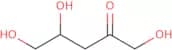
CAS :3-Deoxypentulose is a kinetic, reactive and chromatographic compound that belongs to the family of glycolysis. It is present in small amounts in the blood and is derived from pentose sugars. The reaction mechanism of 3-deoxypentulose can be divided into two steps: glyoxal formation and hydroxide solution modification. In the first step, 3-deoxypentulose reacts with glucose to form glyoxal. In the second step, 3-deoxypentulose reacts with hydroxide solution to form galactose, which can further react with other compounds or be modified by enzymatic reactions. This compound has been used as a tagatose substitute in food products and as an oligosaccharide modifier. Recently, it has been shown that 3-deoxypentulose may be used as a chemical probe for studying glycolic acid synthesis in bacteria.Formule :C5H10O4Degré de pureté :Min. 95%Couleur et forme :PowderMasse moléculaire :134.13 g/molSodium alginate, Laminaria Hyperborea
CAS :Sodium alginate is a biocompatible polymer that is used in the treatment of wastewater. It is a water-soluble substance that forms a viscous solution when dissolved in water. Sodium alginate has been shown to inhibit the growth of bacteria and fungi, as well as to reduce the number of coliforms and other microorganisms in water. The potential for an alginate to be biocompatible depends on its chemical structure, with Laminaria Hyperborea being the most biocompatible. Alginates have been shown to have surface properties that are similar to those of natural tissue, making them useful for wound dressings.Viscosity: 10-20 mPa.sFormule :C6H9NAO7Couleur et forme :PowderMasse moléculaire :216.12 g/molPhenyl 4,6-O-benzylidene-β-D-glucopyranoside
CAS :Phenyl 4,6-O-benzylidene-b-D-glucopyranoside is a white crystalline powder that belongs to the group of glycoconjugates. It has been made by the modification of glycosides and saccharides. This product can be used as a fluorination agent in organic synthesis, or as a click modification in carbohydrate chemistry. Phenyl 4,6-O-benzylidene-b-D-glucopyranoside can also be used for glycosylation reactions and methylation reactions.Formule :C19H20O6Degré de pureté :Min. 95%Couleur et forme :White to off-white solid.Masse moléculaire :344.36 g/mol1,2,3,6-Tetra-O-acetyl-4-O-(2,3,6-tri-O-acetyl-4-O-(2,3,4,6-tetra-O-acetyl-a-D-glucopyranosyl)-a-D-glucopyranosyl)-b-D-thioglucopyra nose
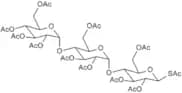
1,2,3,6-Tetra-O-acetyl-4-O-(2,3,6-tri-O-acetyl-4-O-(2,3,4,6-tetra-O-acetylaDglucopyranosyl)-aDglucopyranosyl)-bDthioglucopyra nose is a sugar with the chemical formula C27H42O14. This compound is synthesized by the glycosylation of 1,2,3,6 tetra O acetyl 4 O (2 3 6 tri O acetyl 4 O (2 3 4 6 tetra O acetyl a D glucopyranosyl) a D glucopyranosyl) b D thioglucopyrazine with 2 3 6 tri O acetate 4 O (2 3 4 6 tetra O acetate a D glucopyranoside a D glucopyranosideFormule :C40H54O26SDegré de pureté :Min. 95%Masse moléculaire :982.91 g/mol3,4,6-Tri-O-benzyl-D-galactal
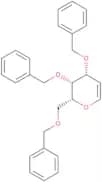
CAS :3,4,6-Tri-O-benzyl-D-galactal is a hydrogen bond donor and has been shown to have physiological activities. It was found to increase the number of lymphocytes in unimmunized mice. It also inhibits the growth of psoralea virus. The glycosidic bond between 3,4,6-tri-O-benzyl-D-galactal and glucose produces a product with an acetylated hydroxyl group and an aldehyde group. This type of bond is stereoselective and benzofuran derivatives are formed from the reaction. 3,4,6-Tri-O-benzyl-D-galactal has been shown to have anticancer activity against cancer cells in laboratory experiments.Formule :C27H28O4Degré de pureté :Min. 95%Couleur et forme :White PowderMasse moléculaire :416.51 g/mol2,3,5-Tri-O-benzhydryloxybis(trimethylsilyloxy)silyl-2-C-methyl-D-ribono-1.4-lactone
2,3,5-Tri-O-benzhydryloxybis(trimethylsilyloxy)silyl-2-C-methyl-D-ribono-1.4-lactone is a custom synthesis that is used as a building block for saccharides and polysaccharides due to its high purity. It is also used for the modification of saccharides and polysaccharides. It is synthesized using Click chemistry, which has been shown to be effective in glycosylation reactions. This product has fluorination at C2 and C3 positions, which provides resistance against hydrolysis by esterases and glucuronidases. It also has methylation at the 3' position of the sugar moiety, which makes it resistant to hydrolysis by phosphodiesterases. The CAS number of this product is 549299-05-5.br>br> br>br> ThisDegré de pureté :Min. 95%3-Deoxy-3-fluoro-D-galactose - Aqueous solution
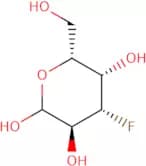
CAS :3-Deoxy-3-fluoro-D-galactose (3DFGal) is a potential drug that has been shown to shift the metabolic pathway of gram-positive pathogens from glycolysis to gluconeogenesis. This compound may be used as a tool for studying the enzymatic reaction catalyzed by galactokinase, which is involved in the conversion of 3DFGal to D-galactose. 3DFGal is a stereospecific carbohydrate and can be used as a substrate for biochemical studies. The bacterial surface profile of 3DFGal has been investigated and it has been found that 3DFGal is not significantly toxic to Gram-negative bacteria. The kinetics of 3DFGal hydrolysis have been studied and it was found that the hydrolysis rate was increased when the solution was acidified with hydrofluoric acid.Formule :C6H11FO5Degré de pureté :Min. 98 Area-%Couleur et forme :PowderMasse moléculaire :182.15 g/mol5-Deoxy- 5- iodo- 2, 3- O- isopropylidene -D- ribonic acid γ-lactone
5-Deoxy-5-iodo-2,3-O-isopropylidene-D-ribonic acid gamma-lactone is a sugar molecule that has been modified and synthesized. It is a glycosylation product of 5'-deoxy-5'-iodoarabinose with 3,4,6-trihydroxybenzoic acid. It can be used for the synthesis of oligosaccharides and saccharides. This compound has been shown to inhibit the growth of Mycobacterium tuberculosis in culture.Degré de pureté :Min. 95%1,2,3-Tri-O-benzyl-4,6-O-(4-methoxybenzylidene)-b-D-galactopyranoside
1,2,3-Tri-O-benzyl-4,6-O-(4-methoxybenzylidene)-b-D-galactopyranoside is a synthetic compound that has been synthesized as an example of a fluorinated sugar. This compound is an oligosaccharide with a molecular weight of 839.Formule :C35H36O7Degré de pureté :Min. 95%Masse moléculaire :568.66 g/mol2-Azido-2-deoxy-3,4:5,6-di-O-isopropylidene-L-gulonic acid methyl ester
This product is a custom synthesized and modified monosaccharide. It is an oligosaccharide, which is made up of two or more sugars that are linked together by glycosidic bonds. The sugar in this product is a glycosylation, which is a type of sugar that has been modified by adding a new chemical group to it. This modification can be done by fluorination, methylation, or click modification. This product also contains a saccharide, which is a large carbohydrate molecule that consists of many sugar molecules. This type of carbohydrate can be either polysaccharides or complex carbohydrates. This product has high purity and CAS number (CAS No.).Degré de pureté :Min. 95%1,3,4,6-Tetra-O-acetyl-2-azido-2-deoxy-b-D-galactopyranose
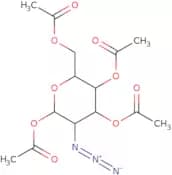
CAS :1,3,4,6-Tetra-O-acetyl-2-azido-2-deoxy-b-D-galactopyranose (TAZ) is an aromatic heterocyclic sugar compound that is used in pharmaceutical formulations. It has low toxicity and can be synthesized using a number of methods. TAZ has been shown to have antifungal effects against Candida albicans and antitumor effects against cancer cells. TAZ also inhibits the activity of teniposide, which is a drug used for the treatment of leukemia. TAZ may be effective against cancer cells by acting as an amido donor and changing the conformation of the cyclic peptide.Formule :C14H19N3O9Degré de pureté :Min. 95%Couleur et forme :PowderMasse moléculaire :373.32 g/molRaloxifene-6-D-glucuronide D4 lithium salt
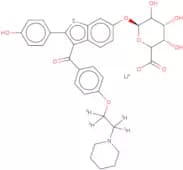
Produit contrôléThis is a custom synthesis of an oligosaccharide with a 6-D-glucuronide D4 lithium salt. It is a complex carbohydrate that has been modified with methylation and glycosylation. This compound can be used as a synthetic intermediate for the production of other compounds or it can be used as a pharmaceutical agent.Formule :C34H30NO10SD4·LiDegré de pureté :Min. 95%Masse moléculaire :659.66 g/mol2-Acetamido-6-O-(a-2-N-acetylneuraminyl)-2-deoxy-a-D-galactopyranosyl serine
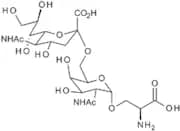
CAS :2-Acetamido-6-O-(a-2-N-acetylneuraminyl)-2-deoxy-a-D-galactopyranosyl serine is a monosaccharide sugar that is the terminal sugar at the nonreducing end of the glycosidic linkage in gangliosides. It has been shown to be a marker for colorectal adenocarcinoma and may be used as a prognostic marker. 2-Acetamido-6-O-(a-2-N-acetylneuraminyl)-2-deoxy--aDgalactopyranosyl serine, along with other gangliosides, has been found to be elevated in maternal blood and human serum during bowel diseases such as ulcerative colitis. This molecule has also been shown to have structural similarities to antigens that are associated with infectious diseases such as malaria.Formule :C22H37N3O16Degré de pureté :Min. 95 Area-%Couleur et forme :White PowderMasse moléculaire :599.54 g/molLewis Y pentasaccharide
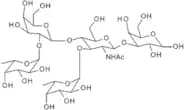
Lewis Y pentasaccharide is a carbohydrate antigen that is expressed on the surface of cells in the cancer, tissue and lymphatic system. It has been shown to be a polyvalent carbohydrate ligand for lectins, which are proteins that bind carbohydrates. Lewis Y pentasaccharide has a high affinity for erythrocytes of blood group A and B, which makes it useful as an antigen for detection of these blood groups. The binding of Lewis Y pentasaccharide to glycolipids on tumor cells initiates complement-dependent cytotoxicity (CDC) by activating the classical pathway of the immune system. CDC can be used as an adjuvant therapy in cancer treatment.Formule :C32H55NO24Degré de pureté :Min. 95%Couleur et forme :PowderMasse moléculaire :837.79 g/molChondroitin disaccharide di-0S sodium salt
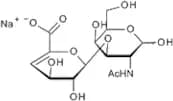
CAS :The structural analysis of chondroitin disaccharide di-0S sodium salt has been done by a bacterial enzyme, which is an enzyme that catalyzes the hydrolysis of glycosidic bonds. The reaction mechanism is spontaneous and the biochemical analysis indicates that the molecule is a glycosidic bond with hemiketal and hydration. The active site residues are found to be water molecule, which help in binding with the substrate to form a hemiketal. Biochemical analysis of this molecule reveals that it is an oligosaccharide with two sugar molecules linked by glycosidic bond.Formule :C14H20NNaO11Degré de pureté :Min. 95 Area-%Couleur et forme :PowderMasse moléculaire :402.31 g/molSorbitan monostearate
CAS :Sorbitan monostearate is a lipid-soluble compound that is used as a surfactant and emulsifier in food products. It has been found to be nontoxic when administered at concentrations up to 5000 mg/kg of body weight for 28 days. Sorbitan monostearate has been shown to be nontoxic in vitro, but the long-term toxicity of this compound has not been established. Sorbitan monostearate also exhibits hydrogen bonding interactions with calcium pantothenate, sodium salts, and coumarin derivatives. The model system used was an artificial membrane composed of chitosan quaternary ammonium and monolaurate. This study found that sorbitan monostearate is able to permeabilize the membrane at an optimum concentration.Formule :C24H46O6Couleur et forme :White PowderMasse moléculaire :430.62 g/mol2-Azidoethyl 2-acetamido-2-deoxy-3-O-(2-acetamido-2-deoxy-b-D-galactopyranosyl)-b-D-glucopyranoside
CAS :2-Azidoethyl 2-acetamido-2-deoxy-3-O-(2-acetamido-2-deoxy-b-D-galactopyranosyl)-b-D-glucopyranoside is an oligosaccharide. It is used as a reagent in the synthesis of complex carbohydrates.Formule :C18H31N5O11Degré de pureté :Min. 95%Masse moléculaire :493.47 g/mol2-Acetamido-1,3,4,6-tetra-O-acetyl-2-deoxy-a-D-glucopyranose
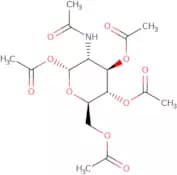
CAS :2-Acetamido-1,3,4,6-tetra-O-acetyl-2-deoxy-a-D-glucopyranose (2AAT) is a synthetic nucleoside that binds to the same sequence of n-acetylgalactosamine in the cell wall of Gram positive bacteria. It was found to be effective against bacterial strains that produce beta lactamase enzymes. 2AAT has been shown to inhibit the growth of Gram positive bacteria and is able to penetrate tissues. It also prevents bacterial DNA gyrase and topoisomerase IV from binding with their respective substrates. 2AAT is made up of four parts: two ribose molecules, one deoxyribose molecule and one acetamido group. This last part is what makes it bind to the bacterial cell wall and inhibits protein synthesis by preventing mRNA from being translated into proteins.Formule :C16H23NO10Degré de pureté :Min. 98 Area-%Couleur et forme :White PowderMasse moléculaire :389.36 g/mol(2S, 3R, 4R) -3- Hydroxy- 4- (hydroxymethyl) - 2- azetidinecarboxylic acid
(2S, 3R, 4R) -3- Hydroxy- 4- (hydroxymethyl) - 2- azetidinecarboxylic acid is a carbohydrate that has been modified for use in research and the biomedical industry. It is a monosaccharide that can be used as a building block for custom synthesis of saccharides or oligosaccharides. This product is also available with fluorination, methylation, glycosylation, or click modification.Degré de pureté :Min. 95%
![(1R) -1- [(2R, 3R,4S) -N-Benzyl-3- benzyloxy- 4-hydroxymethyl-1- azetidinyl] -1, 2- ethanediol](/_next/image/?url=https%3A%2Fstatic.cymitquimica.com%2Fproducts%2F3D%2Fthumb-webp%2FMB163369.webp&w=3840&q=75)