Glycosciences
La glycosciences est l'étude des glucides et de leurs dérivés, ainsi que des interactions et des fonctions biologiques auxquelles ils participent. Ce domaine de recherche est crucial pour comprendre une grande variété de processus biologiques, y compris la reconnaissance cellulaire, la signalisation, la réponse immunitaire et le développement des maladies. La glycosciences a des applications importantes en biotechnologie, en médecine et dans le développement de nouveaux médicaments et thérapies. Chez CymitQuimica, nous proposons une large sélection de produits de haute qualité et pureté pour la recherche en glycosciences. Notre catalogue comprend des monosaccharides, des oligosaccharides, des polysaccharides, des glyconjugués et des réactifs spécifiques, conçus pour soutenir les chercheurs dans leurs études sur la structure, la fonction et les applications des glucides dans les systèmes biologiques. Ces ressources sont destinées à faciliter les découvertes scientifiques et les applications pratiques dans divers domaines des biosciences et de la médecine.
Sous-catégories appartenant à la catégorie "Glycosciences"
- Aminosucres(108 produits)
- Anticorps Glyco-Related(282 produits)
- Glycolipides(46 produits)
- Glycosaminoglycanes (GAGs)(55 produits)
- Glycosides(419 produits)
- Monosaccharides(6.624 produits)
- Oligosaccharides(3.682 produits)
- Polysaccharides(503 produits)
11046 produits trouvés pour "Glycosciences"
Trier par
Degré de pureté (%)
0
100
|
0
|
50
|
90
|
95
|
100
Methyl 3-deoxy-D-arabino-heptulopyranoside-7-phosphate
CAS :<p>Methyl 3-deoxy-D-arabino-heptulopyranoside-7-phosphate is a custom synthesis that can be modified for fluorination, methylation, or monosaccharide modification. It is a monosaccharide that has been synthesized and modified with a click modification. This glycosylated carbohydrate has been synthesized from a saccharide and polysaccharide. The CAS number of this compound is 91382-81-9.</p>Formule :C8H15O10PDegré de pureté :Min. 95%Masse moléculaire :302.17 g/molEpi-N-Acetyl-lactosamine
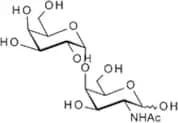
CAS :<p>Epi-N-Acetyl-lactosamine is a glycosylation agent that is used to modify proteins, carbohydrates, and other biomolecules. It is also used in the synthesis of oligosaccharides and polysaccharides. This product has been custom synthesized to meet your specifications and has been purified to high purity.</p>Formule :C14H25NO11Degré de pureté :Min. 95%Masse moléculaire :383.35 g/molD-Glucose-1,3-13C2
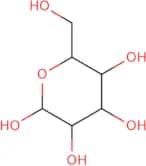
CAS :<p>Please enquire for more information about D-Glucose-1,3-13C2 including the price, delivery time and more detailed product information at the technical inquiry form on this page</p>Formule :C6H12O6Degré de pureté :Min. 95%Masse moléculaire :182.14 g/molLipid A (Salmonella) triethylammonium
<p>Lipid A is a complex carbohydrate that is found in the outer membrane of Gram-negative bacteria. The lipid A molecule consists of a long chain of fatty acids linked to a phosphate group, with sugar and phosphate groups attached. Lipid A is important for the virulence of many Gram-negative bacteria, including Salmonella. Fluorination, monosaccharide, oligosaccharide and polysaccharide modifications are used to modify lipid A to increase its immunogenicity as an adjuvant or vaccine component. Click modification and methylation are also used to alter lipid A structure. This product has been custom synthesized in our lab using high purity ingredients.</p>Formule :C110H208N2O26P2Degré de pureté :Min. 95%Masse moléculaire :2,036.77 g/molChondroitin sulphate tetrasaccharide ammonium salt
<p>Prepared by high resolution gel filtration of partial chondroitin ABC lyase digestion of mixed isomer chondroitin sulfate.Average MW ~ 992General formula:∆UA – (GalNAc,6S or 4S - GlcA)n - GalNAc,6S or 4Swhere n is number of disaccharide units n = 1 in a tetrasaccharide (dp4) Uronic acid (∆UA) at the non-reducing ends of the oligosaccharides has a C4-C5 double bond as a result of endolytic scission. The main disaccharide repeat in the original chondroitin sulphate is GlcA – GalNAc sulphated at C-6 or C-4 of the GalNAc residue; the CSD disaccharide unit (GlcA,2S – GalNAc,6S) is a minor component comprising approx. 5% of total disaccharides.</p>Couleur et forme :PowderMasse moléculaire :Average MW 9921,2-O-Isopropylidene-3-O-benzyl-5-deoxy-5-C-(2-pyridyl)-D-xylofuranose
<p>1,2-O-Isopropylidene-3-O-benzyl-5-deoxy-5-C-(2-pyridyl)-D-xylofuranose is a fluorinated sugar. This compound has been synthesized by modifying the glycosylation site of N4,N4'-diisopropylidene-1,2,3,5,5'-pentaacetamido-[1,6]hexanedioic acid methyl ester to 1,2-O-isopropylidene. The structure of this compound consists of a C(2) pyridine moiety and an O(1) protonated methyl group on the terminal carbon atom.</p>Degré de pureté :Min. 95%Masse moléculaire :341.37 g/mol2,3-O-Isopropylidene-L-apiose
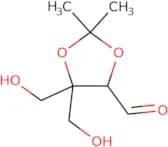
CAS :<p>2,3-O-Isopropylidene-L-apiose is a synthetic monosaccharide with a fluorinated substituent at the C2 position. It is an oligosaccharide that has been custom synthesized for glycosylation and polysaccharide modifications. The chemical name of 2,3-O-Isopropylidene-L-apiose is 2,3-O-(2,3,4,5,6) -Heptafluoroisopropylidene apiose. The CAS number for this compound is 70147-51-2. This product is available in high purity.</p>Formule :C8H14O5Degré de pureté :Min. 95%Masse moléculaire :190.19 g/mol3-Indolyl b-D-glucopyranoside trihydrate
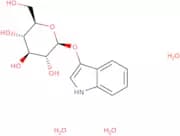
CAS :Precursor of the uremic toxin indoxyl sulfateFormule :C14H17NO6·3H2ODegré de pureté :Min. 95%Masse moléculaire :349.33 g/molG-NGA2 N-Glycan
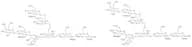
CAS :<p>G-NGA2 N-glycan is a custom synthesis and modification of the carbohydrate. This product contains a fluorination, methylation, and monosaccharide. The average molecular weight is 1257. G-NGA2 N-Glycan is a saccharide that is synthesized from glucose by glycosyltransferase. It can be modified with a click reaction to form an oligosaccharide or polysaccharide. G-NGA2 N-Glycan has been assigned the CAS number 103584-68-5 and molecular weight of 1257 Da.</p>Formule :C56H94N4O41Degré de pureté :Min. 95%Masse moléculaire :1,479.35 g/molNicotine-N-b-D-glucuronide hydrate
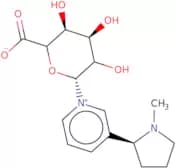
CAS :<p>Nicotine-N-b-D-glucuronide hydrate is a metabolite of nicotine that is excreted in the urine as an organic anion. It has been shown to have anticancer activity against a variety of human cancer cell lines, including lung, stomach, colon, and prostate. Nicotine-N-b-D-glucuronide hydrate has also been shown to inhibit protein synthesis in vitro by interfering with the ability of cells to import amino acids such as tryptophan and phenylalanine. The same study also showed that this metabolite can cause symptoms similar to those caused by nicotine withdrawal.</p>Formule :C16H22N2O6·xH2ODegré de pureté :Min. 95%Masse moléculaire :338.36 g/mol1-(2,3,5-Tri-O-acetyl-b-D-ribofuranosyl)-1,2,4-triazole-3-carboxylic acid methyl ester
CAS :<p>1-(2,3,5-Tri-O-acetyl-b-D-ribofuranosyl)-1,2,4-triazole-3-carboxylic acid methyl ester is a synthetic carbohydrate that has been modified with fluorine. It is an off white solid that has a molecular formula of C6H8O6 and a molecular weight of 252.1 g/mol. This compound is soluble in water and sparingly soluble in alcohol. 1-(2,3,5-Tri-O-acetyl-b-D-ribofuranosyl)-1,2,4-triazole-3-carboxylic acid methyl ester has been shown to possess antiviral activity against HIV as well as cytotoxicity to cancer cells.</p>Formule :C15H19N3O9Degré de pureté :Min. 95%Masse moléculaire :385.33 g/molMinoxidil D-glucuronide
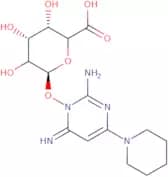
CAS :<p>Minoxidil D-glucuronide is a modification of minoxidil, which is an antihypertensive drug. It has been shown to have stronger activity than minoxidil in the treatment of hypertension. Minoxidil D-glucuronide is a complex carbohydrate that has been synthesized from minoxidil and glucuronic acid. It is a white powder with high purity, and it can be used for glycosylation reactions.</p>Formule :C15H23N5O7Degré de pureté :Min. 95%Masse moléculaire :385.37 g/mol6'-Sialyllactose-PAA-biotin
<p>6'-Sialyllactose-PAA-biotin is a high purity, custom synthesis, and synthetic oligosaccharide with a molecular weight of 792.04 Da. It is a glycosylated saccharide that has been modified with fluorination, glycosylation, methylation and click modification.</p>Degré de pureté :Min. 95 Area-%Couleur et forme :PowderGala1-3Galb1-4GlcNAcb1-3Galb1-4Glc
CAS :<p>Methylated glycans are carbohydrate-based molecules that are modified by the addition of a methyl group. These modifications can be used for many purposes, including as probes for enzymatic reactions and to block or enhance specific cell surface receptors. The modification is often done with a click chemistry reaction, which is a fast and efficient method that can also be used to modify other compounds such as proteins. Methylation of glycans is often done in the lab using methylamine gas, but it can also be accomplished through more complex methods like click chemistry or fluorination. Glycosylation is the process of adding sugars to other molecules and is one way to produce methylated glycans. Galactosamine (GalN) is an example of a monosaccharide that can be methylated and glycosylated, producing galactose-N-methyltransferase (Gal1MT) and Gal1M3GnT1. This product has been synthesized in</p>Formule :C32H55NO26Degré de pureté :Min. 95%Masse moléculaire :869.77 g/mol3'-Sialyllactosyl azide
<p>3'-Sialyllactosyl azide is a complex carbohydrate that is modified with fluorination, saccharide modification, and methylation. 3'-Sialyllactosyl azide is synthesized from a monosaccharide by glycosylation, methylation, click modification, or polysaccharides. The CAS number for this compound is 814-07-1. This product can be custom synthesized to meet the customer's needs.</p>Degré de pureté :Min. 95%4-Methylphenyl 1-thio-2,3,4,6-tetra-O-(trimethylsilyl)-b-D-glucopyranoside
CAS :<p>4-Methylphenyl 1-thio-2,3,4,6-tetra-O-(trimethylsilyl)-b-D-glucopyranoside is a carbohydrate that can be made in custom synthesis. This product is a high purity and has a CAS number of 942043-17-6. The chemical name for this product is 4-(methylphenyl)-1-[(trimethylsilyl)oxy]-2,3,4,6-tetra‑O‑benzoyl--b‑D‑glucopyranoside. It has been fluorinated and methylated.</p>Degré de pureté :Min. 95%1,2,3,4-Tetra-O-acetyl-a-D-glucuronide methyl ester
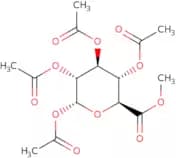
CAS :<p>1,2,3,4-Tetra-O-acetyl-a-D-glucuronide methyl ester is a synthetic molecule that has been modified with the click chemistry technique. This product is a white solid that can be used to modify saccharides and polysaccharides. It can also be used in the synthesis of oligosaccharides or glycosylation reactions. This product is useful for modifying sugars with custom modifications and fluorination. 1,2,3,4-Tetra-O-acetyl-a-D-glucuronide methyl ester has CAS number 5432-32-6 and can be synthesized from glyceraldehyde and acetone.</p>Formule :C15H20O11Degré de pureté :Min. 95%Masse moléculaire :376.31 g/molOctyl L-glucopyranoside
CAS :<p>Octyl L-glucopyranoside is a detergent that is used in biochemical research. It is used as a signal peptide to purify proteins by binding to the hydrophobic region of the protein. In addition, it binds to human polymorphonuclear leukocytes and dextran sulfate. Octyl L-glucopyranoside also has a rate constant of 8 × 10 M-1 s-1 and an analytical method for glycol ethers. The octyl glucopyranoside has been shown to inhibit axonal growth, which may be due to its ability to bind toll-like receptor 4 (TLR4) on dendritic cells.</p>Formule :C14H28O6Degré de pureté :Min. 95%Masse moléculaire :292.37 g/molQuinovic acid 3-O-a-L-rhamnopyranoside
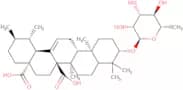
CAS :<p>Quinovic acid 3-O-a-L-rhamnopyranoside is a saponin that belongs to the group of steroid alkaloids and glycosides. It has been used in traditional Chinese medicine for the treatment of menopausal symptoms. The chemical structure of quinovic acid 3-O-a-L-rhamnopyranoside has been identified as fukinolic acid, which is an active chemical constituent. Pharmacological studies have shown that this saponin has antiinflammatory and antidiabetic activities, and inhibits the enzymes related to hormone synthesis.</p>Degré de pureté :Min. 95%N-Allyloxycarbonyl-b-lactosamine
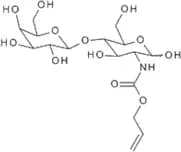
CAS :<p>The linker N-Allyloxycarbonyl-b-lactosamine (NALB) is a bifunctional molecule that can be used to form triplexes with DNA. The NALB has been shown to inhibit the growth of gram-negative bacteria such as Escherichia coli and Haemophilus influenzae by binding to the bacterial cell wall and disrupting its permeability. The linker is synthesized by solid phase synthesis. This process involves the stepwise addition of building blocks in a sequence that is predetermined. The residues are usually protected with protecting groups, which are then removed at the end of the synthesis process.</p>Formule :C16H27NO12Degré de pureté :Min. 95%Masse moléculaire :425.38 g/mol