Glycosciences
Sous-catégories appartenant à la catégorie "Glycosciences"
- Aminosucres(108 produits)
- Anticorps Glyco-Related(284 produits)
- Glycolipides(46 produits)
- Glycosaminoglycanes (GAGs)(55 produits)
- Glycosides(419 produits)
- Monosaccharides(6.622 produits)
- Oligosaccharides(3.693 produits)
- Polysaccharides(506 produits)
11036 produits trouvés pour "Glycosciences"
Chitopentaose hydrochloride
CAS :Pentasaccharide derived from chitin
Formule :C30H57N5O21·5HClDegré de pureté :Min. 95 Area-%Couleur et forme :White PowderMasse moléculaire :1,006.01 g/mol2-Azido-2-deoxy-2-C-methyl-3,5-di-O-tert.butyldimethylsilyl-D-ribono-1.4-lactone
2-Azido-2-deoxy-2-C-methyl-3,5-di-O-tert.butyldimethylsilyl-D-ribono-1.4-lactone is a custom synthesis that has been modified with a click chemistry reaction and fluorination. It is an oligosaccharide and polysaccharide, which are carbohydrates that contain multiple saccharides. This product also contains high purity, which means it's of the highest grade available on the market. The modification of this product is done through the use of a monosaccharide or sugar, which can be synthesized in the laboratory.
Degré de pureté :Min. 95%Heparin derived dp26 saccharide ammonium salt
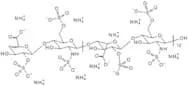
Heparin derived dp26 saccharide ammonium salt (HDA) is a glycosylation product of heparin. It is a complex carbohydrate polymer with a molecular weight of over 10,000 Da and consists of repeating disaccharides. The first sugar in the repeating disaccharide is N-acetyl-D-glucosamine, which is then methylated on the 6 position. HDA has been modified by fluorination to give it improved stability and prolonged half life. This product has been custom synthesized for use in biotechnology research and has high purity.
Formule :C156H207N13O247S39Na52Degré de pureté :Min. 95%Masse moléculaire :8,662.29 g/molGlobopentaose
CAS :Carbohydrate moiety of globopentaosylceramide
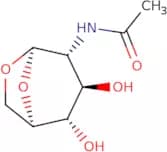
Formule :C32H55NO26Degré de pureté :Min. 95%Couleur et forme :White PowderMasse moléculaire :869.77 g/mol2-Acetamido-1,6-anhydro-2-deoxy-β-D-glucopyranose
CAS :2-Acetamido-1,6-anhydro-2-deoxy-b-D-glucopyranose is widely used in carbohydrate chemistry. It is used as reagent for the synthesis of oligosaccharides and also as a precursor in the synthesis of oligopeptides. 2-Acetamido-1,6-anhydro-2-deoxy-b-D-glucopyranose is an analog of levoglucosan, a compound that is often used to trace for biomass burning in enviromental chemistry studies.
Formule :C8H13NO5Degré de pureté :Min. 95%Couleur et forme :PowderMasse moléculaire :203.19 g/molPullulan
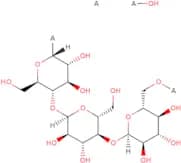
CAS :Pullulan is a polysaccharide that is made up of D-glucose units linked in a beta-1,6 configuration. Pullulan has been used as a model system to study the molecular mechanisms of intramolecular hydrogen transfer reactions. The process optimization of pullulan production was studied using skin cells and structural analysis. This polymer is also used in food hydrocolloids, where it can be used to control the phase transition temperature. Pullulan has also been shown to have anti-angiogenic effects on liver cells and water vapor absorption properties.
Formule :(C6H12O5)nNeoagaro oligosaccharides
Potential prebiotic oligosaccharides made from agar by enzymatic hydrolysis
Degré de pureté :Min. 95%4,6-O-Benzylidene-D-glucose
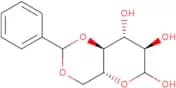
CAS :4,6-O-Benzylidene-D-glucose is a potent inhibitor of the enzyme dibutyltin oxide, which is involved in the synthesis of energy. It has been shown to have clinical activity in rat cardiomyocytes and has been tested in clinical studies. 4,6-O-Benzylidene-D-glucose inhibits enzymes by forming hydrogen bonds with their substrates. This compound also interacts with hydrochloric acid to form a stable complex that prevents it from interacting with other molecules. 4,6-O-Benzylidene-D-glucose is rapidly broken down into glucose and benzaldehyde when it reacts with carbonyl groups or amines. The asymmetric synthesis of this compound can be achieved using an intramolecular hydrogen transfer reaction.
4,6-O-Benzylidene glucose is derived from D-mannose derivatives and contains a hydroxyl group on the central carbonFormule :C13H16O6Degré de pureté :Min. 98 Area-%Couleur et forme :White PowderMasse moléculaire :268.26 g/molOctyl 2,3,4,6-tetra-O-acetyl-b-D-glucopyranoside
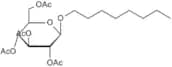
CAS :Octyl 2,3,4,6-tetra-O-acetyl-b-D-glucopyranoside is an analog of 6-(trifluoromethyl)indoxyl beta-D-galactopyranoside. It is a potent antituberculosis agent that inhibits the growth of Mycobacterium tuberculosis and has been shown to be active against other bacteria in vitro. Octyl 2,3,4,6-tetra-O-acetyl-b-D-glucopyranoside inhibits bacterial growth by binding to DNA dependent RNA polymerase and prevents transcription and replication. This compound has been tested for its ability to inhibit neoplastic cell proliferation in humans.Formule :C22H36O10Degré de pureté :(%) Min. 95%Couleur et forme :PowderMasse moléculaire :460.52 g/molD-Xylose
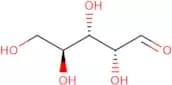
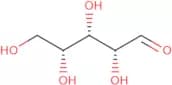
CAS :Xylose (Xyl) is an aldopentose also known as wood sugar (Collins, 2006). The main sources of xylose are hemicelluloses found in hardwood and perennial plants, such as, grasses, cereals, and herbs (Petzold-Welcke, 2014) and some algae. Xylose is used in the production of xylitol, a low calory sugar substitute. Xylose is used in glycosaminoglycan (GAG) biosynthesis, which is initiated by peptide O-xylosyltransferases, which transfer xylose onto selected serine residues in the core proteins. The first enzyme in the pathway, peptide O-xylosyltransferase, catalyzes the transfer of xylose from uridine diphosphate (UDP)-α-D-xylose onto serine and thus determines the site(s) of GAG attachment on the core protein (Briggs, 2018).
Formule :C5H10O5Degré de pureté :Min. 98.0 Area-%Couleur et forme :White PowderMasse moléculaire :150.13 g/molIsopropyl beta-D-glucopyranoside
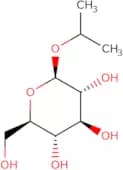
CAS :Isopropylbeta-D-glucopyranoside is a chemical compound that has been studied for its antibacterial activity. It has been shown to inhibit the growth of bacteria by reacting with fatty acids in the cell membrane, which leads to the disruption of the cell membrane and death. Isopropylbeta-D-glucopyranoside is a member of the sugar alcohols class, and it can be synthesized from glucose, fatty acid, and hydrochloric acid using an acid catalyst. The reaction system is typically carried out in microcapsules.
Formule :C9H18O6Degré de pureté :Min. 95%Couleur et forme :PowderMasse moléculaire :222.24 g/molMannan (ex Saccharomyces cerevisiae)
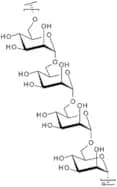
CAS :The main cell-wall components of baker’s yeast (Saccharomyces cerevisiae) as well as β-glucan are mannans with an α-1,6 mannose backbone and α-1,2 and α-1,3 mannose branches.
The image was kindly provided by Dr. Chris Lawson.Couleur et forme :White Slightly Brown PowderRef: 3D-YM63069
Produit arrêtéL-Fucose
CAS :L-Fucose is a monosaccharide that is an important component of glycoproteins and glycolipids. L-Fucose is also found in the cell wall of bacteria. The most abundant sources of L-fucose are from the hydrolysis of lactose or sucrose by bacteria, or as a result of intestinal microbial fermentation. L-Fucose has been shown to be involved in the regulation of many metabolic processes, including the glomerular filtration rate and sephadex g-100 binding capacity in the kidney. It has also been shown to improve growth in infant rats with protein malnutrition. The enzyme that catalyzes the conversion of D-arabinose to L-fucose is known as fucokinase.
Formule :C6H12O5Degré de pureté :Min. 98.0 Area-%Masse moléculaire :164.16 g/molRef: 3D-F-8060
Produit arrêté2,5-Di-O-acetyl-3-C-methyl-D-lyxono-1,4-lactone
2,5-Di-O-acetyl-3-C-methyl-D-lyxono-1,4-lactone is a hydrogen bonded lactone. The crystal structure of the compound has been determined by X-ray crystallography and found to be a hydrogen bonded dimer with two molecules of water located between the two monomers. This compound is also known as 3,6,9,12,15,18,21 hexaoxahexacontane 1,4-lactone or DAL.
Formule :C10H14O7Degré de pureté :Min. 95%Masse moléculaire :246.21 g/mol1,6-Anhydro-b-D-cellobiose
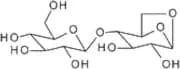
CAS :Produced by the fast pyrolysis of cellulose
Formule :C12H20O10Degré de pureté :Min. 95 Area-%Couleur et forme :White PowderMasse moléculaire :324.28 g/molD-Fructose 1-phosphate disodium
CAS :Please enquire for more information about D-Fructose 1-phosphate disodium including the price, delivery time and more detailed product information at the technical inquiry form on this page
Formule :C6H11Na2O9PDegré de pureté :90%Couleur et forme :PowderMasse moléculaire :304.1 g/mol6'-O-Acetylpaniculoside II
6'-O-Acetylpaniculoside II is an oligosaccharide that contains a methylated saccharide. It has CAS No. 836-50-4 and Click modification, which is a chemical reaction between the glycone of a saccharide and an electrophile. 6'-O-Acetylpaniculoside II is also a glycosylation product of a polysaccharide and it can be custom synthesized to produce high purity carbohydrates. This compound is fluorinated for complex carbohydrate chemistry.
Degré de pureté :Min. 95%(1S) -1- [(2S, 3S,4R) -N-Benzyl-4-hydroxymethyl-3- hydroxy- 1- azetidinyl] -1, 2- ethanediol
The synthesis of 1,2-ethanediol is accomplished by the reaction of benzaldehyde with ethanol. This product is a synthetic sugar that is used in the modification of polysaccharides and glycosylation. The molecular weight of this product ranges from 200 to 400 Daltons. It has a CAS number of 730-25-6.
Degré de pureté :Min. 95%Fleetamine
Fleetamine is a piperidine compound that has been shown to be an inhibitor of the enzyme glycosylation. Inhibitors of glycosylation are useful for treating diseases such as diabetes and Alzheimer's disease. It is thought that Fleetamine may inhibit human glycosylating enzymes, such as glucosyl transferase, which catalyzes the addition of a glucose molecule to a protein. This inhibition prevents the formation of oligosaccharides and glycoconjugates, which are necessary for proper functioning of cells.
Degré de pureté :Min. 95%DL-Arabinose
CAS :Arabinose is a pentose sugar that has been shown to have antimicrobial properties. It inhibits the growth of bacteria by binding to their ribosomes and interfering with protein synthesis. Arabinose has also been shown to inhibit the growth of bone cancer cells in mice, which may be due to its ability to stimulate the production of growth factor-β1. The biochemical properties of arabinose are similar to those of d-arabinose, an active analogue that is used as a water vapor pump inhibitor. X-ray crystal structures have been obtained for both compounds, and they show that they differ in the position of one hydrogen atom on the sugar ring.
Formule :C5H10O5Degré de pureté :Min. 95%Couleur et forme :White Off-White PowderMasse moléculaire :150.1 g/mol





![(1S) -1- [(2S, 3S,4R) -N-Benzyl-4-hydroxymethyl-3- hydroxy- 1- azetidinyl] -1, 2- ethanediol](/_next/image/?url=https%3A%2Fstatic.cymitquimica.com%2Fproducts%2F3D%2Fthumb-webp%2FMB163383.webp&w=3840&q=75)