Glycosciences
Sous-catégories appartenant à la catégorie "Glycosciences"
- Aminosucres(108 produits)
- Anticorps Glyco-Related(283 produits)
- Glycolipides(46 produits)
- Glycosaminoglycanes (GAGs)(55 produits)
- Glycosides(419 produits)
- Monosaccharides(6.619 produits)
- Oligosaccharides(3.711 produits)
- Polysaccharides(505 produits)
11027 produits trouvés pour "Glycosciences"
NGA3F N-Glycan
CAS :NGA3F N-Glycan is a custom synthesis product that has been fluorinated, methylated, and modified with a click modification. It is a monosaccharide that can be found in the form of polysaccharides or glycosylations. This product is made of saccharides, which are carbohydrates that have been modified with glycosylation or polysaccharide modifications. NGA3F N-Glycan can be used in a variety of applications such as pharmaceuticals, food additives, and cosmetics.
Formule :C64H107N5O45Degré de pureté :Min. 95%Masse moléculaire :1,666.54 g/molNefopam glucuronide
Nefopam is a compound that has been used as an analgesic and antipyretic. It is structurally related to the benzodiazepine class of drugs, but is not chemically equivalent to any other known drug. Nefopam has a low therapeutic index and can cause severe toxic effects in overdose. The most common adverse effects of nefopam are dizziness, drowsiness, headache, nausea and vomiting. An overdose can lead to death by respiratory paralysis or cardiac arrest.
Formule :C23H27NO7Degré de pureté :Min. 95%Masse moléculaire :429.46 g/mol3-Deoxy-3-fluoro-D-mannose
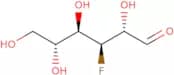
CAS :3-Deoxy-3-fluoro-D-mannose (3DFM) is a synthetic sugar molecule that acts as an inhibitor of bacterial growth. It binds to the 6-phosphate group of nucleic acids, which prevents the addition of sugar molecules to ribose or deoxyribose groups. 3DFM also inhibits the synthesis of proteins and RNA, which are necessary for bacterial growth. 3DFM is a structural analog of mannose and glucose, and has been shown to be effective against chronic infections caused by bacteria that produce lectins, such as C. difficile. This drug can be used in combination with other antibiotics to enhance their effectiveness.
Formule :C6H11FO5Degré de pureté :Min. 95%Couleur et forme :PowderMasse moléculaire :182.15 g/molSN-38 glucuronide
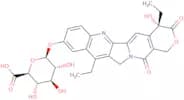
CAS :SN-38 glucuronide is a metabolite of irinotecan that inhibits the growth of cancer cells by binding to the DNA polymerase, blocking the synthesis of DNA. SN-38 glucuronide has potent antitumor activity and high values for inhibiting tumor metastasis. It is mainly excreted in urine as a conjugate with glucuronic acid, which may be why urine samples are often used to measure its concentration. SN-38 glucuronide also interacts with other drugs, including chemical inhibitors and ATP-binding cassette transporters, which can affect its pharmacological properties.
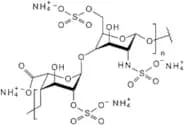
Formule :C28H28N2O11Degré de pureté :Min. 97.5 Area-%Couleur et forme :PowderMasse moléculaire :568.53 g/molHeparin derived dp20 saccharide ammonium salt
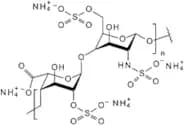
Heparin derived dp20 saccharide ammonium salt is a synthetic, high purity, complex carbohydrate that has been modified with fluorination and methylation. It is a polysaccharide composed of repeating units of D-glucosamine and D-mannose, which are linked by alternating alpha 1-6 and alpha 1-4 glycosidic bonds. This product can be used as a monosaccharide or sugar in the synthesis of oligosaccharides or polysaccharides.
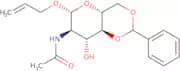
Degré de pureté :Of Main Disaccharide Unit Approx. 75%Couleur et forme :White Off-White PowderMasse moléculaire :~5750 (Average)Allyl 2-acetamido-4,6-O-benzylidene-2-deoxy-b-D-glucopyranoside
CAS :Allyl 2-acetamido-4,6-O-benzylidene-2-deoxy-b-D-glucopyranoside is a synthetic compound that belongs to the class of carbohydrates. It is used as a reagent in sugar chemistry and glycosylation reactions. Allyl 2-acetamido-4,6-O-benzylidene-2-deoxy-b-D-glucopyranoside is also used for the modification of polysaccharides and fluorination reactions. This product has been shown to be effective as a substrate for site specific methylation reactions. Allyl 2 acetamido 4,6 O benzylidene 2 deoxy b D glucopyranoside has been tested in vitro against methicillin resistant Staphylococcus aureus (MRSA) with promising results.
Formule :C18H23NO6Degré de pureté :Min. 95%Masse moléculaire :349.39 g/molD-Ribose-2,3,4,5-13C4
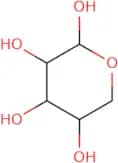
CAS :D-Ribose-2,3,4,5-13C4 is a complex carbohydrate with saccharide units. It is synthesized by the chemical modification of D-ribose. This product can be used to modify or methylate glucose and other carbohydrates. It has been shown to inhibit the formation of amyloid plaques in Alzheimer's disease, which may be due to its ability to reduce nitric oxide and reactive oxygen species levels. The purity of this product is at least 98%.
Formule :C5H10O5Degré de pureté :Min. 95%Masse moléculaire :154.1 g/molHeparin derived dp16 saccharide ammonium salt
Heparin derived dp16 saccharide ammonium salt is a synthetic oligosaccharide with a molecular weight of approximately 16,000 Da. The compound is an amine-modified heparin sulfate fragment containing 16 saccharides linked in a linear fashion. It has been used for the click modification of proteins, and as a carbohydrate receptor in glycosylation studies. Heparin derived dp16 saccharide ammonium salt can also be custom synthesized to meet specific needs. Click modification and fluorination are two modifications that have been applied to the compound for various purposes.
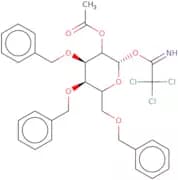
Degré de pureté :Min. 95%Couleur et forme :Powder2-O-Acetyl-3,4,6-tri-O-benzyl-b-D-glucopyranosyl trichloroacetimidate
CAS :2-O-Acetyl-3,4,6-tri-O-benzyl-b-D-glucopyranosyl trichloroacetimidate is a product of sugar modification. The modification is performed by the addition of acetyl groups to the hydroxyl groups on the glucose molecule. This process can be used to produce oligosaccharides and complex carbohydrates. The compound has no fluorine atoms and is not methylated or glycosylated. It has a CAS number of 180714-32-3.Formule :C31H32Cl3NO7Degré de pureté :Min. 95%Masse moléculaire :636.95 g/molCYMAL-5 neopentyl glycol
CAS :CyMAL-5 neopentyl glycol is a membrane protein that is n-glycosylated. Its deglycosylation has been shown to be inhibited by light exposure, which may lead to an increase in the population of this protein. CyMAL-5 neopentyl glycol is a ligand for the G protein coupled receptor and can be used as a fluorescent probe for labeling and staining. It has been shown that the binding of this ligand to the receptor alters its conformation, causing it to activate downstream signaling pathways. The crystal structure of CyMAL-5 neopentyl glycol has also been determined, revealing its large size and shape.
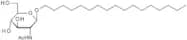
Formule :C45H80O22Degré de pureté :Min. 95%Masse moléculaire :973.1 g/molHeptadecyl 2-acetamido-2-deoxy-b-D-glucopyranoside
CAS :Heptadecyl 2-acetamido-2-deoxy-b-D-glucopyranoside is a solubilized ion pair that can be catalysed by amines and immobilized lipase. It is also a hydrophobic fatty acid ester. Heptadecyl 2-acetamido-2-deoxy-b-D-glucopyranoside is catalyzed by an enzyme, lipase, to form the corresponding amide. This reaction yield is increased in the presence of hexane, which aids in hydrolysis of the ester linkage between heptadecyl and 2,2′-diacetylidenebis(3,4,6,-trimethylphenol). Heptadecyl 2-acetamido-2-deoxyglucopyranoside is used as a substrate for lipases to produce amides from amines. This product has been used in the production of
Formule :C25H49NO6Degré de pureté :Min. 95%Masse moléculaire :459.66 g/molAmitriptilyne N-b-D-glucuronide
Amitriptilyne N-b-D-glucuronide is a fluorinated, monosaccharide that is used in synthetic oligosaccharides and polysaccharides. This product can be custom synthesized to meet customer specifications. Amitriptilyne N-b-D-glucuronide is an oligosaccharide with a complex carbohydrate structure. It can be modified by glycosylation, methylation, and click chemistry. The CAS number for this product is 122470-06-8. The sugar content of this product ranges from 98% to 99%. The purity of this product is greater than 99%.
Degré de pureté :Min. 95%Sertraline carbamoyl glucuronide
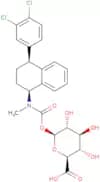
CAS :Sertraline is a selective serotonin reuptake inhibitor (SSRI) that is used primarily in the treatment of depression and anxiety. It inhibits the serotonin transporter protein, making more serotonin available for binding to postsynaptic receptors. Sertraline also has a minor inhibitory effect on norepinephrine and dopamine reuptake, but its primary function is as a selective serotonin reuptake inhibitor. The major metabolite of sertraline is sertraline carbamoyl glucuronide, which is formed through glucuronidation by UGT2B7. This metabolite has been found to be bifurcated with one half being excreted in urine and the other half being excreted in faeces. The half that undergoes urinary excretion has been shown to have a half-life of 24 hours whereas the other half has a much shorter half-life of 2 hours. Carbamoylation of sertraline may
Formule :C24H25Cl2NO8Degré de pureté :Min. 95%Masse moléculaire :526.36 g/mol1,2-o-Isopropylidene-β-L-idofuranuronic acid 5-o-pivaloate 6,3-lactone
CAS :Please enquire for more information about 1,2-o-Isopropylidene-β-L-idofuranuronic acid 5-o-pivaloate 6,3-lactone including the price, delivery time and more detailed product information at the technical inquiry form on this page
Formule :C14H20O7Degré de pureté :Min. 95%Masse moléculaire :300.3 g/mol1,2,3,4-Tetra-O-acetyl-D-fucopyranose
1,2,3,4-Tetra-O-acetyl-D-fucopyranose is a glycosylation agent that can be used in the synthesis of complex carbohydrates or in the modification of natural polysaccharides. It can be fluorinated to produce 1,2,3,4-tetra-O-fluoro-D-fucopyranose or modified with a click reagent to produce 1,2,3,4-tetra-[5-(N'-diethylamino)pentyl]-D-fucopyranose. The CAS number for this product is 109712-63-7. This product is available for custom synthesis and is sold at a purity of >99%.
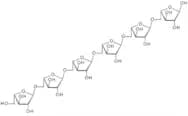
Degré de pureté :Min. 95%1,5-α-L-Arabinohexaose
CAS :1,5-α-L-Arabinohexaose is a carbohydrate. It is a nonreducing sugar that can be found in plants. 1,5-α-L-Arabinohexaose has an optimum pH of 5 and an ethanol concentration of 0.02%. The enzyme form of 1,5-α-L-Arabinohexaose is α-(1→6)-glycosidase. This enzyme hydrolyzes the α-(1→6) glycosidic bond between two glucose residues in a polysaccharide chain to produce β-(1→4) bonds. It also hydrolyzes the β-(1→4) glycosidic bond between two galactose residues to produce β-(1→2) bonds and oxidizes the terminal carbon atom to produce aldehyde products.
A structural analysis of this carbohydrate was conducted using marine microorganisms and it was found that they contain galacturonic acid and sugar residuesFormule :C30H50O25Degré de pureté :Min. 95%Couleur et forme :PowderMasse moléculaire :810.7 g/mol1,4:3,6-Dianhydro-5-nitro-D-glucitol
CAS :Isosorbide is a naturally occurring sugar alcohol (polyol) that is found in small quantities in many plants and fruits. It is used as a pharmaceutical drug to treat angina pectoris, congestive heart failure, and high blood pressure. Isosorbide has been shown to inhibit the activity of matrix metalloproteinases (MMPs), which are enzymes that degrade extracellular matrix proteins. This effect may be beneficial for patients with disorders such as arthritis. Isosorbide also increases nitric oxide production, leading to vasodilation and improved blood flow. The therapeutic effect of isosorbide has been demonstrated in experimental models using mice with congestive heart failure due to myocardial infarction or chronic heart disease. Pharmacological treatment of these animals with isosorbide resulted in an improvement of left ventricular function, reduction of myocardial fibrosis, and reduced levels of cardiac markers.
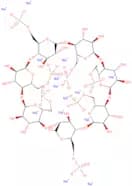
Formule :C6H9NO6Degré de pureté :Min. 95%Masse moléculaire :191.14 g/molb-Cyclodextrin dihydrogen phosphate, sodium salt
CAS :This beta-cyclodextrin (β-CD) derivative is a functionalized cyclic oligosaccharide composed of seven glucose units, characterized by a hydrophilic exterior and a lipophilic cavity (bigger than α-CD and smaller than γ-CDs), which allows it to encapsulate various guest molecules. This structural feature facilitates its use in multiple applications, including pharmaceuticals, food enhancement, and cosmetics. In the pharmaceutical industry, it enhances the solubility and stability of poorly water-soluble drugs, improving their bioavailability and efficacy while also masking unpleasant tastes. The food sector utilizes it as a stabilizer for flavors, colors, and nutrients, extending shelf life by protecting sensitive ingredients from degradation. In cosmetics, it serves as a complexing agent for fragrances and active components, ensuring their stability and controlled release. Its use expands to many other fields, including nanotechnology for drug delivery systems, environmental remediation for extracting organic pollutants, textiles for slow-release fragrances, and analytical chemistry for chiral separation.
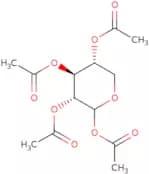
Formule :C42H70O35Degré de pureté :Min. 95%Masse moléculaire :1,134.98 g/mol1,2,3,4-Tetra-O-acetyl-D-xylopyranose
CAS :1,2,3,4-Tetra-O-acetyl-D-xylopyranose is a molecule that is derived from D-xylose. It has been shown to inhibit the growth of fungi such as T. rubrum and L. candidum by acetylation of l-threonine at the C2 position. This molecule can be recycled and its inhibitory activity can be increased through acetylation of the hydroxymethyl group on the C4 position. The mechanism of inhibition is not known but it may be due to steric hindrance or peracylation.
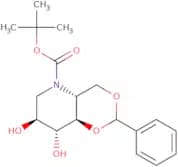
Formule :C13H18O9Degré de pureté :Min. 95%Masse moléculaire :318.28 g/mol4,6-O-Benzylidene-N-Boc-1,5-imino-D-glucitol
CAS :Methylation is a chemical reaction that transfers a methyl group to an organic molecule. It is one of the most common modifications in organic chemistry and can be used to synthesize saccharides and oligosaccharides, as well as to modify polysaccharides. This compound is a glycosylated benzylidene-N-Boc-1,5-imino-D-glucitol, which has been modified by Click chemistry. It was synthesized from 4,6-O-benzylidene-N-Boc-1,5-imino-D-mannitol with a custom synthesis protocol. The final product has high purity and is available for purchase at CAS No. 133697-16-2.
Formule :C18H25NO6Degré de pureté :Min. 95%Masse moléculaire :351.39 g/mol