Antimicrobiens
Sous-catégories appartenant à la catégorie "Antimicrobiens"
- Antibiotiques(4.146 produits)
- Antifongiques(912 produits)
- Antiparasitaires(712 produits)
- Antiviraux(767 produits)
2427 produits trouvés pour "Antimicrobiens"
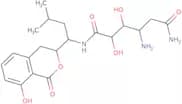
Amicoumacin A
CAS :Amicoumacin A is an antibiotic compound, which is derived from the bacterium Bacillus subtilis. This natural source is known for its production of a variety of biologically active compounds that contribute to its utility in numerous scientific contexts. The mode of action of Amicoumacin A involves the inhibition of bacterial protein synthesis by targeting the ribosomal subunit. Specifically, it interferes with the translation process, effectively disrupting the growth and proliferation of susceptible bacterial strains.
Amicoumacin A is primarily utilized in research settings to study bacterial resistance mechanisms, as well as to explore novel antibacterial therapies. Its application in scientific research extends to examining its potential synergistic effects with other antimicrobial agents, and it serves as a model compound for understanding ribosomal inhibition. The study of Amicoumacin A not only contributes to the broader field of antibiotic development but also offers insights into the molecular interactions that underlie bacterial protein synthesis and antibiotic resistance. This compound's unique properties make it an important subject of investigation for microbiologists and pharmacologists alike, emphasizing its relevance in the ongoing battle against antibiotic-resistant pathogens.Formule :C20H29N3O7Degré de pureté :Min. 95%Couleur et forme :PowderMasse moléculaire :423.46 g/mol4-Epichlortetracycline
CAS :4-Epichlortetracycline is a metabolite of chlortetracycline, which is derived from the Streptomyces genus of bacteria. It is structurally related to tetracycline antibiotics but differs specifically in its epimerization at the fourth position. This alteration results in a product with significantly reduced antibacterial activity compared to its parent compound. The mechanism of action primarily involves ribosomal binding, inhibiting protein synthesis in susceptible bacteria; however, the epimerization here compromises this efficacy.
Formule :C22H23ClN2O8Degré de pureté :Min. 95%Masse moléculaire :478.9 g/molCarbomycin
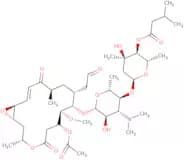
CAS :Carbomycin is a macrolide antibiotic, which is derived from the bacterium Streptomyces halstedii. This antibiotic functions by binding to the 50S ribosomal subunit, thereby inhibiting bacterial protein synthesis. Through this mechanism, carbomycin effectively disrupts the growth and replication of susceptible bacterial strains, making it a potent tool in combating bacterial infections.
Formule :C42H67NO16Degré de pureté :Min. 95%Masse moléculaire :841.98 g/molMeayamycin B
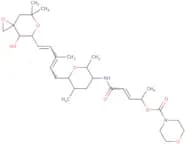
CAS :Meayamycin B is a synthetic macrolide, a complex organic compound, which is derived from the natural product FR901464. This compound functions as an antagonist of the spliceosome, the cellular machinery responsible for pre-mRNA splicing. By binding to specific components of the spliceosome, Meayamycin B disrupts the splicing process, leading to the accumulation of unspliced precursor mRNA. This action effectively induces apoptosis in cancer cells, making it a notable candidate for cancer therapy research.
Formule :C31H48N2O8Degré de pureté :Min. 95%Masse moléculaire :576.72 g/molTigecycline hydrochloride
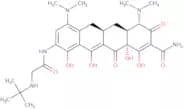
CAS :Inhibitor of protein synthesis; glycylcycline class
Formule :C29H39N5O8·HClDegré de pureté :Min. 95%Masse moléculaire :622.11 g/molHerbicidin K
CAS :Herbicidin K is a naturally derived herbicide, known for its biological origin from microbial fermentation processes. It is primarily sourced from certain strains of Streptomyces, a genus of Gram-positive bacteria notable for their diverse secondary metabolites. The mode of action of Herbicidin K involves the inhibition of key enzymatic pathways within target plants, leading to the disruption of cellular functions and ultimately plant death. This selectivity is particularly effective against broadleaf weeds, providing a targeted approach to weed management.
Formule :C22H27N5O10Degré de pureté :Min. 95%Masse moléculaire :521.48 g/molNitrocycline
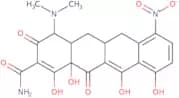
CAS :Nitrocycline is a broad-spectrum antibiotic, which is a synthetic derivative of tetracycline with enhanced antibacterial properties. As a chemically synthesized compound, nitrocycline has been engineered to overcome resistance mechanisms common in bacterial pathogens. Its mode of action involves the inhibition of protein synthesis, achieved by binding to the 30S ribosomal subunit, effectively preventing the addition of new amino acids to nascent peptide chains. This binding action interrupts bacterial growth and replication, providing robust activity against both Gram-positive and Gram-negative bacteria.
Formule :C21H21N3O9Degré de pureté :Min. 95%Masse moléculaire :459.4 g/molSTAADIUM™ PeptiZide L-Ala
CAS :STAADIUM⢠PeptiZide L-Ala is a targeted inhibitor for L-alanine aminopeptidase-producing bacteria. The antibacterial activity of STAADIUM⢠PeptiZide L-Ala is triggered by the enzyme L-alanine aminopeptidase, an enzyme located in the bacterial cell wall and is a characteristic of Gram-negative bacteria. L-alanine aminopeptidase has not been experimentally detected in Campylobacter species, anaerobic bacilli, Gram-positive and Gram-variable bacteria. More details in the application notes document.
Formule :C15H18ClN3O2SDegré de pureté :Min. 95.0 Area-%Masse moléculaire :339.84 g/molViramidine
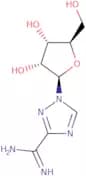
CAS :Viramidine is a nucleotide analogue prodrug, which is derived from naturally occurring nucleosides, specifically optimized for enhanced therapeutic profiles. Its mode of action involves conversion into ribavirin triphosphate within the body. This active form inhibits viral RNA polymerase, a critical enzyme necessary for viral replication. By disrupting the synthesis of viral RNA, Viramidine effectively reduces viral proliferation within host cells.
Degré de pureté :Min. 95%iso-Nystatin
CAS :iso-Nystatin is an antifungal compound, which is derived from the bacterium *Streptomyces noursei*. This specific strain of actinobacteria produces polyene macrolide antifungals, and iso-Nystatin is a derivative that exhibits similar bioactivity as its parent compound, Nystatin. Its mode of action is based on binding ergosterol, a crucial component of fungal cell membranes. This binding disrupts the membrane's structural integrity, inducing pore formation, which leads to ion leakage and ultimately cell lysis and fungal cell death.
Formule :C47H75NO17Degré de pureté :Min. 95%Masse moléculaire :926.09 g/molSTAADIUM™ GlucuroniZide
CAS :STAADIUM⢠GlucuroniZide is a targeted inhibitor of glucuronidase-producing bacteria, which is activated by E. coli-specific glucuronidase enzyme. Glucuronidases are enzymes catalysing the cleavage of complex carbohydrates and E. coli is a well-known producer. In complex cultures, E. coli strains often outcompete bacteria that present at lower titre and STAADIUM⢠GlucuroniZide can help to selectively reduce the growth of E. coli. STAADIUM⢠GlucuroniZide can be used in microbiome studies, food control, environmental safety, hygiene, and clinical diagnostics. More details can be found in the application notes document.
Formule :C18H19NO8SDegré de pureté :Min. 95.0 Area-%Masse moléculaire :409.41 g/molEthyl Bromoacetate
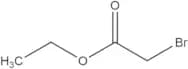
CAS :Formule :C4H7BrO2Couleur et forme :Clear Colourless to Yellow OilMasse moléculaire :167.0Tenofovir diphosphate
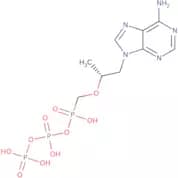
CAS :Tenofovir diphosphate is an antiviral compound, which is a key active metabolite derived from the prodrugs tenofovir disoproxil fumarate and tenofovir alafenamide, both originating from chemical synthesis. Its mode of action involves inhibiting the activity of HIV-1 reverse transcriptase by competing with the natural substrate, deoxyadenosine 5’-triphosphate, and causing chain termination after incorporation into viral DNA. This mechanism effectively prevents the replication of retroviral DNA, thus halting the progression of the infection.
Formule :C9H16N5O10P3Degré de pureté :Min. 95%Masse moléculaire :447.17 g/molPerfluorodecanephosphonic acid
CAS :Perfluorodecanephosphonic acid is a fluorinated organic compound, which is synthesized through the controlled polymerization of fluorinated precursors. It is characterized by its unique perfluorinated alkyl chain and a phosphonic acid group, providing a distinctive combination of hydrophobic and functional properties. Its mode of action involves the strong adsorption onto surfaces through the phosphonic acid moiety, allowing the formation of highly stable self-assembled monolayers (SAMs).
Formule :C10H2F21O3PDegré de pureté :Min. 95%Masse moléculaire :600.06 g/mol8-Methylpyrido[2,3-d]pyridazin-5(6H)-one
CAS :8-Methylpyrido[2,3-d]pyridazin-5(6H)-one is a heterocyclic compound used in the field of medicinal chemistry. This compound is synthesized through complex organic reactions involving pyridazine and pyridine derivatives. As a molecule, its primary mode of action involves interactions with specific biochemical pathways, potentially influencing enzymatic activity or receptor bindings, leading to modulation of biological activities.
Formule :C8H7N3ODegré de pureté :Min. 95%Masse moléculaire :161.16 g/molRef: 3D-QDA00407
Produit arrêtéGanciclovir, Antibiotic for Culture Media Use Only
CAS :Ganciclovir is an antiviral agent specifically designed for culture media use. It is a synthetic analogue of 2'-deoxy-guanosine, derived from nucleoside compounds, and operates primarily by inhibiting the replication of viral DNA. Its mode of action involves selective phosphorylation by viral kinases, which converts it into ganciclovir triphosphate, a potent inhibitor of viral DNA polymerase, ultimately preventing viral DNA synthesis.
Formule :C9H13N5O4Degré de pureté :Min. 98.0 Area-%Masse moléculaire :255.23 g/molDicloxacillin sodium salt
CAS :Dicloxacillin is a penicillin antibiotic that is used to treat bacterial infections of the gastrointestinal tract, skin, and urinary tract. It binds to the penicillin-binding proteins in bacterial cell walls by competitive inhibition. Dicloxacillin inhibits bacterial growth by binding to the enzyme cell wall synthesis that is required for cell wall biosynthesis, inhibiting protein synthesis and cell division. This drug also has a toxic effect on respiratory system cells, which may be due to its ability to induce apoptosis. Dicloxacillin sodium salt is available as tablets for oral administration or as an intravenous solution for injection. It can interact with other drugs, such as benzalkonium chloride and matrix effect; it also has analytical methods such as chromatographic analysis and rate constant.
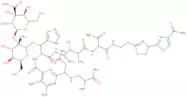
Formule :C19H17Cl2N3O5S·NaDegré de pureté :Min. 95%Masse moléculaire :493.32 g/molPhleomycin
CAS :Phleomycin is an antibiotic, which is derived from the bacterium *Streptomyces verticillus*. Its mode of action involves binding to DNA and inducing breaks by generating free radicals in the presence of oxygen and ferrous ions, leading to cell death. Phleomycin is prominently used in molecular biology applications as a selective agent in the generation of stable transfectants. It is particularly effective in selecting for cells that have integrated vectors conferring resistance, such as the Sh ble gene used in yeast, plant, and mammalian cell systems. Due to its potent DNA-cleaving ability, Phleomycin is valuable in studies requiring stringent selection pressure. Researchers commonly utilize it in experiments focusing on genetic modification and cellular resistance development.
Formule :C51H75N17O21S2Degré de pureté :Min. 95%Masse moléculaire :1,326.38 g/molMecillinam, Antibiotic for Culture Media Use Only
CAS :Mecillinam is a beta-lactam antibiotic specifically designed for use in culture media. It is derived from the amidinopenicillin family, featuring a unique ability to interfere with bacterial cell wall synthesis. Its mode of action involves inhibiting penicillin-binding protein 2 (PBP2), an essential enzyme for cell wall elongation and maintenance in Gram-negative bacteria. This targeted inhibition results in the formation of spherical cells and subsequent cell lysis.
Formule :C15H23N3O3SDegré de pureté :Min. 95 Area-%Masse moléculaire :325.43 g/molRef: 3D-Q-201343
Produit arrêtéAminosidine
CAS :Aminosidine is a nucleoside analogue that inhibits the HIV-1 reverse transcriptase and the integrase, which are enzymes involved in viral DNA synthesis. Aminosidine is active against Leishmania spp., but not against bacteria. Aminosidine has been shown to be effective in experimental models of human bowel disease and in patients with inflammatory bowel disease. It was also found to be active against wild-type strains of human immunodeficiency virus type 1, but not resistant mutants. The mechanism of action is the inhibition of cellular mitochondrial membrane potential.
Degré de pureté :Min. 95%Isoflucypram
CAS :Please enquire for more information about Isoflucypram including the price, delivery time and more detailed product information at the technical inquiry form on this page
Formule :C19H21ClF3N3ODegré de pureté :Min. 95%Masse moléculaire :399.8 g/molBentaluron
CAS :Bentaluron is a synthetic fungicide, which is a chemical compound developed to combat fungal pathogens in agriculture. Its source originates from rigorous industrial chemical synthesis, ensuring efficacy and stability. The mode of action of Bentaluron involves disrupting essential biochemical pathways within fungal cells, specifically targeting and inhibiting enzymes critical for fungal growth and metabolism. This precise interference prevents the synthesis of vital cellular components, ultimately halting the proliferation of the fungus.
Formule :C11H13N3OSDegré de pureté :Min. 95%Masse moléculaire :235.31 g/molButirosin disulfate
CAS :Butirosin disulfate is an aminoglycoside antibiotic, which is derived from a strain of *Bacillus circulans*. Its primary mode of action involves binding to the 30S subunit of the bacterial ribosome, leading to the inhibition of protein synthesis. This interaction results in the misreading of mRNA, ultimately causing bactericidal effects.
Formule :C21H45N5O20S2Degré de pureté :Min. 95%Masse moléculaire :751.7 g/molAbacavir sulfate
CAS :Abacavir sulfate is a pharmaceutical compound classified as a nucleoside reverse transcriptase inhibitor (NRTI), which is derived from synthetic sources. Its mode of action involves the inhibition of the reverse transcriptase enzyme, essential for the replication of HIV. By incorporating itself into the viral DNA chain during replication, Abacavir effectively halts the process, preventing further multiplication of the virus within the host cells.
This antiretroviral medication is primarily used in the management and treatment of human immunodeficiency virus (HIV-1) infections. Abacavir sulfate is a critical component in highly active antiretroviral therapy (HAART), contributing to the reduction of viral load, enhancing immune function, and improving the long-term clinical outcomes in patients living with HIV. Its application in combination therapies has been instrumental in transforming HIV from a fatal disease into a manageable chronic condition.Formule :C14H18N6O·H2O4SDegré de pureté :Min. 95%Masse moléculaire :384.41 g/molCephalexin hydrate, Antibiotic for Culture Media Use Only
CAS :Please enquire for more information about Cephalexin hydrate, Antibiotic for Culture Media Use Only including the price, delivery time and more detailed product information at the technical inquiry form on this page
Formule :C16H19N3O5SDegré de pureté :Min. 95.0 Area-%Masse moléculaire :365.41 g/molCyclosporin V
CAS :Cyclosporin V is an immunosuppressant medication with action on calcineurin inhibition and is used for preventing organ rejection in transplants and treating autoimmune diseases.
Formule :C63H113N11O12Degré de pureté :Min. 95%Couleur et forme :PowderMasse moléculaire :1,216.64 g/mol









![8-Methylpyrido[2,3-d]pyridazin-5(6H)-one](/_next/image/?url=https%3A%2Fstatic.cymitquimica.com%2Fproducts%2F3D%2Fthumb-webp%2FQDA00407.webp&w=3840&q=75)