Caroténoïdes
Les caroténoïdes sont une classe de tétraterpènes (C₄₀) qui sont des pigments naturels présents dans les plantes, les algues et les bactéries photosynthétiques. Ils jouent des rôles essentiels dans la photosynthèse et fournissent des couleurs vives allant du jaune au rouge dans divers fruits et légumes. Les caroténoïdes sont connus pour leurs propriétés antioxydantes et leurs potentiels bienfaits pour la santé, notamment en favorisant la santé oculaire et en réduisant le risque de certaines maladies. Chez CymitQuimica, vous pouvez trouver une variété de caroténoïdes pour des applications de recherche en nutrition, biologie végétale et sciences pharmaceutiques.
59 produits trouvés pour "Caroténoïdes"
Trier par
Degré de pureté (%)
0
100
|
0
|
50
|
90
|
95
|
100
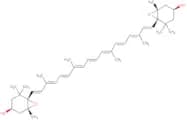
Violoxanthin
CAS :<p>Violoxanthin is a naturally occurring carotenoid, which is a type of pigment found primarily in plants. As a product of the xanthophyll cycle, it plays a significant role in photosynthesis by protecting plants from photooxidative damage. Violoxanthin is derived from plant sources, including various fruits and vegetables that exhibit vivid colors due to the presence of carotenoids.</p>Formule :C40H56O4Degré de pureté :Min. 95%Masse moléculaire :600.89 g/molZeaxanthin - 10%
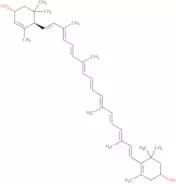
CAS :<p>Zeaxanthin - 10% is a concentrated carotenoid formulation, specifically derived from natural sources such as marigold flowers. It functions primarily as a potent antioxidant within the human body, playing an essential role in quenching free radicals and reducing oxidative stress. This protective action is particularly concentrated in the macular region of the eye, where zeaxanthin and its isomer lutein are vital components.</p>Formule :C40H56O2Degré de pureté :Min. 95%Masse moléculaire :568.87 g/molLutein - 5%
CAS :<p>Lutein - 5% is a carotenoid compound, which is derived primarily from the petals of marigold flowers (Tagetes erecta). This natural source is known for its high concentration of xanthophylls, which are essential for the product's activity. The mode of action of Lutein involves its capacity to absorb blue light and quench reactive oxygen species, thereby exerting protective antioxidant effects. This mechanism is vital in preventing oxidative stress in biological tissues.</p>Formule :C40H56O2Degré de pureté :Min. 95%Masse moléculaire :568.87 g/moltrans-Crocetin-98%
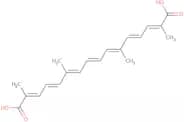
CAS :<p>trans-Crocetin-98% is a high-purity carotenoid, which is a type of organic pigment. It is derived from the stigmas of the saffron (Crocus sativus) flower, where it is obtained through meticulous extraction processes to ensure its purity and efficacy. trans-Crocetin acts primarily as an antioxidant, neutralizing free radicals and reducing oxidative stress within biological systems. It modulates various signaling pathways, which can result in neuroprotective, anti-inflammatory, and potential anti-cancer activities.</p>Formule :C20H24O4Degré de pureté :Min. 95%Couleur et forme :Orange Red PowderMasse moléculaire :328.4 g/molFucoxanthine - 50%
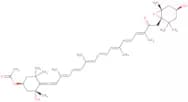
CAS :<p>Fucoxanthine - 50% is a carotenoid compound typically derived from brown seaweeds, such as Undaria pinnatifida and Laminaria japonica. This naturally occurring xanthophyll is recognized for its role in promoting metabolic health due to its unique mode of action. Fucoxanthine enhances the expression of uncoupling protein 1 (UCP1) in white adipose tissue, leading to increased thermogenesis and fat oxidation. This process is largely mediated through the activation of antioxidant pathways and modulation of metabolic regulators.</p>Formule :C42H58O6Degré de pureté :Min. 95%Couleur et forme :PowderMasse moléculaire :658.91 g/molβ-Carotene - >95%
CAS :<p>beta-Carotene - >95% is a high-purity carotenoid compound, which is a naturally occurring pigment found in plants and fruits. This compound is primarily sourced from natural plant derivatives, such as carrots, sweet potatoes, and other colorful vegetables and fruits, where it functions as a photosynthetic pigment. The mode of action of beta-Carotene lies in its ability to convert enzymatically into retinol (vitamin A) in the human body, a crucial component for vision, immune function, and skin health.</p>Formule :C40H56Degré de pureté :>95%Masse moléculaire :536.87 g/molSpheroidenone
CAS :<p>Spheroidenone is a fatty acid-derived carotenoid and hydroxyl group that is found in low light environments. It has been shown to be an effective dose for the treatment of certain types of cancer, such as breast cancer. Spheroidenone is an analog of astaxanthin, a type of molecule that contains a carbonyl group. The wild-type strain of this molecule is found in the genus "Cyanobacteria." The growth factor and syndrome type are unknown at this time.</p>Formule :C41H58O2Degré de pureté :Min. 95%Couleur et forme :PowderMasse moléculaire :582.9 g/molall-trans-Canthaxanthin - Technical grade
CAS :<p>All-trans-Canthaxanthin - Technical grade is a carotenoid compound, which is a naturally occurring pigment. It is typically sourced through chemical synthesis or extraction from microorganisms such as algae or fungi. This compound functions as an antioxidant, donating electrons to neutralize free radicals, thereby preventing oxidative damage within cellular structures.</p>Formule :C40H52O2Degré de pureté :Min. 95%Couleur et forme :Red PowderMasse moléculaire :564.84 g/molZeaxanthin
CAS :<p>Zeaxanthin is a naturally occurring carotenoid, which is primarily derived from various plant sources such as leafy green vegetables, corn, and yellow fruits. As a xanthophyll carotenoid, Zeaxanthin plays a significant role in the light-absorption processes of plants, contributing to their photosynthetic efficiency and protection against light-induced oxidative damage.</p>Formule :C40H56O2Degré de pureté :(%) Min. 80%Couleur et forme :PowderMasse moléculaire :568.87 g/mol