Lipides
Les lipides sont un groupe diversifié de molécules hydrophobes essentielles pour la structure cellulaire, le stockage d'énergie et la signalisation. Ils incluent les graisses, huiles, phospholipides, stérols et cires, chacun jouant des rôles uniques dans les membranes biologiques et les processus métaboliques. Dans cette catégorie, vous trouverez une variété de lipides adaptés à la recherche en biochimie, biologie cellulaire et nutrition. Chez CymitQuimica, nous fournissons des lipides de haute qualité pour soutenir vos études sur le métabolisme des lipides, la dynamique des membranes et les interactions lipide-protéine, garantissant des résultats fiables et reproductibles dans vos expériences.
Sous-catégories appartenant à la catégorie "Lipides"
- Acides Gras et Dérivés(3.283 produits)
- Glycérolipides(98 produits)
- Phospholipides(382 produits)
- Isoprènes(550 produits)
- Lipides physiologiquement actifs(3.398 produits)
- Polykétides(533 produits)
- Sphingolipides(226 produits)
- Stérols(200 produits)
1431 produits trouvés pour "Lipides"
Trier par
Degré de pureté (%)
0
100
|
0
|
50
|
90
|
95
|
100
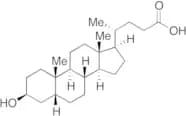
(3β,5β)-3-Hydroxycholan-24-oic acid
CAS :<p>Applications (3β,5β)-3-Hydroxycholan-24-oic acid has been used for the study of the activation of β1 subunit-containing BK channels with respect to the structure of monohydroxylated bile acids.<br>References Bukiya, A.N., ey al.: J. Lipid. Res., 49, 2441-2451 (2008)<br></p>Formule :C24H40O3Couleur et forme :NeatMasse moléculaire :376.578-Dehydrocholesterol
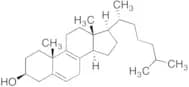
CAS :<p>Applications 8-Dehydrocholesterol is an intermediate in the synthesis of Zymostenol, which is the derivative of Zymosterol (Z701520), an sterol intermediate in the biosynthesis of cholesterol (C432501).<br>References Roland, E.D., et al.: J. Am. Chem. Soc., 111, 278 (1989); Echevarria, F., et al.: J. Biol. Chem., 265, 8484 (1990); Baranovskii, A.V., et al.: Russian. J. Bioorg. Chem., 28, 250 (2002); Schoenheimer, et al.: J. Biol. Chem., 105, 355 (1934);<br></p>Formule :C27H44OCouleur et forme :NeatMasse moléculaire :384.64Sodium Oleate
CAS :Produit contrôlé<p>Applications Sodium oleate (cas# 143-19-1) is a useful research chemical.<br></p>Formule :C18H33NaO2Couleur et forme :NeatMasse moléculaire :304.44C24:1 Ceramide
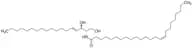
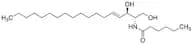
CAS :Produit contrôlé<p>Applications Production of ceramide occurs upon hydrolysis of sphingomyelin by a specific isoform of phospholipase C, appropriately named sphingomyelinase.<br>References Gu, Q, et al.: Anal. Biochem., 244, 347 (1997), Perry, D.K., et al.: Trends Cardiovasc. Med., 6, 158 (1996), Clayton, R.B., et al.: J. Lipid Res., 15, 557 (1974),<br></p>Formule :C42H81NO3Couleur et forme :NeatMasse moléculaire :648.103b,5a,6b-Trihydroxycholestane
CAS :<p>Applications Cholesterol analog. Useful for treatment of hyperlipemia, arteriosclerosis, diabetes, obesity.<br>References Watson, K., et al.: J. Clin. Invest., 93, 2106 (1994), Wada, T., et al.: Circ. Res., 84, 166 (1999), Engelse, M., et al.: Cardiovasc. Res., 52, 281 (2001), Landis, M., et al.: J. Biol. Chem., 277, 4713 (2002),<br></p>Formule :C27H48O3Couleur et forme :NeatMasse moléculaire :420.67(11Z)-11-Eicosenoic Acid
CAS :<p>Applications (11Z)-11-Eicosenoic Acid, is a monostaturated fatty acid. The combined C20:1 isomers constitute 70% of the total fatty acid pool in jojoba seed oil isolated from plants in the Arizona desert.<br>References Miwa, T.K. et al.: J. Am. Chem. Soc. 48(6), 259-264 (1971).;<br></p>Formule :C20H38O2Couleur et forme :White To Off-WhiteMasse moléculaire :310.5112-Hydroxystearic Acid
CAS :Produit contrôlé<p>Applications 12-Hydroxystearic Acid is used in edible vegetable oils and organogels.<br>References Rogers, M. et al.: Soft. Matt., 4, 1483 (2008); Hughes, N. et al.: Trends. Food. Sci. Tech., 20, 470 (2009);<br></p>Formule :C18H36O3Couleur et forme :White To BeigeMasse moléculaire :300.48C8 Ceramide
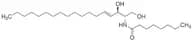
CAS :Produit contrôlé<p>Stability Temperature Sensitive<br>Applications A biologically active, cell permeable, but nonphysiologic ceramide analog. It induces phosphorylation on Thr-669 in A-431 cells by stimulation of ceramide-activated protein kinase. It stimulates IL-2 secretion and induces apoptosis.<br>References Mathias, S., et al.: Proc. Natl. Sci. USA, 88, 10009 (1991), Mathias, S., et al.: Science, 259, 519 (1993), Jarvis, W.D., et al.: Proc. Natl. Acad. Sci. USA, 91, 73 (1994)<br></p>Formule :C26H51NO3Couleur et forme :NeatMasse moléculaire :425.69(±)-2-Hydroxydodecanoic Acid
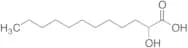
CAS :Produit contrôlé<p>Applications (8Z,11Z,14Z)-8,11,14-Heptadecatrienoic Acid, is a naturally occurring hydroxylated fatty acid that is found in Acinetobacter species. It acts as a partial agonist of free fatty acid receptor 1 (FFAR1/GPR40) and GPR84 receptors in vitro. It also inhibits bovine hepatic ligase (Ki = 4.4 μM) and mouse kidney mitochondrial medium-chain acyl-CoA synthetase by 48% at a concentration of 40 μM.<br>References Moss, C.W., et al.: J. Clin. Microbiol. 26(3), 484-492 (1988).; Kaspersen, M.H., et al.: Med. Chem. Commun. 8(6), 1360-1365 (2017).<br></p>Formule :C12H24O3Couleur et forme :NeatMasse moléculaire :216.32C6 Ceramide
CAS :Produit contrôlé<p>Applications A biologically active, cell permeable, but nonphysiologic ceramide analog. It stimulates protein phosphatase 2A at concentrations as low as 10 nM and activiates MAP kinase. It induces apoptosis and inhibits glycoproptein traffic by the secretory pathway.<br>References Liu, Z., et al.: J. Neurochem., 106, 2463 (2008), Heakal, Y., et al.: Mol. Cancer Res., 7, 724 (2009), Chen-Quay, S., et al.: J. Pharm. Sci., 98, 606 (2009), Mahdy, A., et al.: Mol. Ther., 17, 430 (2009),<br></p>Formule :C24H47NO3Couleur et forme :White To Off-WhiteMasse moléculaire :397.63β-Sitosterol-d7 (mixture of diasteromers)
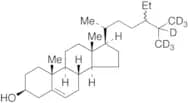
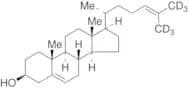
CAS :Produit contrôlé<p>Applications Labelled Sitosterol (S497050). A common sterol in plants. Isolated from wheat germ oil, corn oil. Antilipemic. Used in the treatment of prostatic adenoma.<br>References Tanaka, et al.: J. Biochem., 17, 483 (1933), Nigro, N.D., et al.: J. Natl. Cancer Inst., 69, 103 (1982),<br></p>Formule :C29D7H43OCouleur et forme :NeatMasse moléculaire :421.75(E)-2-Octenoyl-L-carnitine Inner Salt
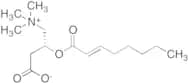
CAS :Produit contrôlé<p>Applications (E)-2-Octenoyl-L-carnitine Inner Salt is an L-carnitine metobolite which are often used to diagnose specific inherited metabolic diseases especially glucose related ones.<br>References Yang, S. et l.: J. Chrom. B., Anal. Tech. Biomed. Life Sci., 857, 251 (2007); Anderson, K. et al.: Mol. Endocrinol., 26, 281 (2012);<br></p>Formule :C15H27NO4Couleur et forme :White To Off-WhiteMasse moléculaire :285.38Allolithocholic acid
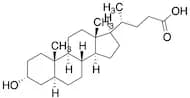
CAS :Produit contrôlé<p>Applications Allolithocholic acid is used as steroid compound as T regulatory lymphocyte modulators and uses for treatment of inflammatory or autoimmune disorders.<br>References Littman, D. R., et al.: PCT Int. Appl. 160pp. (2020)<br></p>Formule :C24H40O3Couleur et forme :NeatMasse moléculaire :376.58(-)-Thujopsene (>85%)
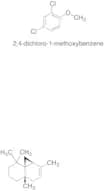
CAS :Produit contrôléFormule :C15H24Degré de pureté :>85%Couleur et forme :ColourlessMasse moléculaire :204.35(R,S,R)-2-Acetyl-4-(1,2,3,4-tetrahydroxybutyl)-imidazole
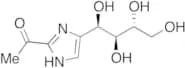
CAS :Produit contrôlé<p>Applications (R,S,R)-2-Acetyl-4-(1,2,3,4-tetrahydroxybutyl)-imidazole (THI) inhibits sphinogosine-1-phosphate (S1P) lyase for treatment of autoimmune disorders.<br>References Zhang, H., et al.: Tetrahedron, 69, 4041 (2013); Bagdanoff, J.T., et al.: J. Med. Chem., 53, 8650 (2010); Bagdanoff, J.T., et al.: J. Med. Chem., 52, 3941 (2009)<br></p>Formule :C9H14N2O5Couleur et forme :White To Light BrownMasse moléculaire :230.22(1S,4S)-N-Desmethyl Sertraline Hydrochloride
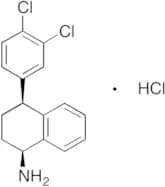
CAS :Formule :C16H15Cl2N·ClHCouleur et forme :White SolidMasse moléculaire :328.66Glycocholic Acid
CAS :<p>Applications Glycocholic Acid (cas# 475-31-0) is a useful research chemical.<br></p>Formule :C26H43NO6Couleur et forme :Off-WhiteMasse moléculaire :465.62Stearoyl L-a-Lysolecithin
CAS :<p>Stability Hygroscopic, moisture sensitive<br>Applications Stearoyl L-α-Lysolecithin is an bioactive lysophosphatidylcholine derived compound found to be released by bronchial epithelial cells. Stearoyl L-α-Lysolecithin have also been utilized in the development of liposomes and michelles by drug transdermal delivery devices.<br>References Zhuge, Y., et al.: Allergy Asthma Immunol Res., 6, 66 (2014)<br></p>Formule :C26H54NO7PCouleur et forme :NeatMasse moléculaire :523.68Lithocholic Acid-d4
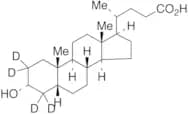
CAS :Produit contrôlé<p>Applications A labelled cholic acid derivative as TGR5 modulator. Found in ox bile, human bile, rabbit bile, and in ox and pig gallstones.<br>References Brindle, J., et al.: Nat. Med., 12, 1439 (2002), Lindon, J., et al.: Biomarkers, 9, 1 (2004), Holmes, E., et al.: Cell, 134, 714 (2008),<br></p>Formule :C242H4H36O3Couleur et forme :Off-WhiteMasse moléculaire :380.60D-erythro-Sphingosine-1-phosphate
CAS :<p>Stability Moisture, Temperature Sensitive; Hygroscopic<br>Applications A putative lipid second messenger; found to inhibit cellular mobility of melanoma cells at very low concentrations with no toxic effects thereby making it a possible agent for prevention of tumor cell metastasis and inflammatory processes. It mobilizes intracellular calcium stores, decreases cellular cAMP, activates phospholipase D and does not inhibitprotein kinase C.<br>References Yeh, C., et al.: Am. J. Physiol., 296, H1193 (2009), Hagen, N., et al.: J. Biol. Chem., 284, 11346 (2009), Kuehnel, M., et al.: J. Cell Sci., 122, 499 (2009),<br></p>Formule :C18H38NO5PCouleur et forme :NeatMasse moléculaire :379.47Cholic Acid-d4
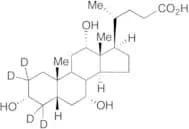
CAS :Produit contrôlé<p>Applications Cholic Acid-d4 is a labelled analog of Cholic acid (C432600) which is a choleretic produced by, and isolated from liver cells.<br>References Nomoto, M., et al.: Biol. Pharm. Bull., 32, 172 (2009), Simonsen, H., et al.: J. Agric. Food Chem., 57, 2056 (2009), Miyata, M., et al.: Drug Metab. Disposition, 37, 338 (2009),<br></p>Formule :C24D4H36O5Couleur et forme :White To Off-WhiteMasse moléculaire :412.6Phytantriol
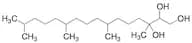
CAS :Produit contrôlé<p>Applications Phytantriol 74563-64-7 (cas# 74563-64-7) is a useful research chemical.<br></p>Formule :C20H42O3Couleur et forme :NeatMasse moléculaire :330.55(5Z)-5-Dodecenoic Acid
CAS :Produit contrôlé<p>Stability Light Sensitive<br>Applications (5Z)-5-Dodecenoic acid is a fatty acid and a component of the essential oils of certain plants, such as Paeonia lactiflora Pall., and is used as biofuel.<br>References Liu, P.; et al.: Industrial Crops and Products, 107, 260 (2017); Xu, L.; et al.: Renewable Energy, 130, 910 (2019).<br></p>Formule :C12H22O2Couleur et forme :NeatMasse moléculaire :198.3021-Deoxy Cortisone
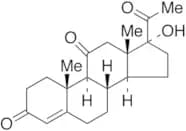
CAS :Produit contrôlé<p>Applications A Cortisone derivative, a glucocorticoid.<br>References Mickelson, K., et al.: Biochemistry, 20, 6211 (1981), Westphal, U., et al.: J. Steroid Biochem., 19, 1 (1983),<br></p>Formule :C21H28O4Couleur et forme :NeatMasse moléculaire :344.44Lithocholic Sulfate Disodium Salt
CAS :Produit contrôléFormule :C24H38Na2O6SCouleur et forme :NeatMasse moléculaire :500.6(-)-Maackiain
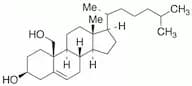
CAS :Produit contrôlé<p>Applications (-)-Maackiain (CAS# 2035-15-6) is a useful research chemical compound.<br></p>Formule :C16H12O5Couleur et forme :White To Off-WhiteMasse moléculaire :284.2619-Hydroxy Cholesterol
CAS :<p>Applications A metabolite of Cholesterol. Cholesterol oxidation product having cytotoxicity effects.<br>References Higley, N., et al.: Food Chem. Toxicol., 22, 983 (1984), Emanuel, H., et al.: J. Food Sci., 56, 843 (1991), Kilsdonk, E., et al.: J. Lipid Res., 36, 505 (1995), Cantwell, H., et al.: Cell Biol. Toxicol., 14, 401 (1998),<br></p>Formule :C27H46O2Couleur et forme :NeatMasse moléculaire :402.65Isodeoxycholic Acid
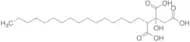
CAS :Produit contrôlé<p>Applications Isodeoxycholic Acid is used for comprehensive bile acid profiling in hereditary intrahepatic cholestasis.<br>References Liu, T., et al.: Liver Int. 38, 1676 (2018)<br></p>Formule :C24H40O4Couleur et forme :White To Off-WhiteMasse moléculaire :392.58Agaricinic Acid
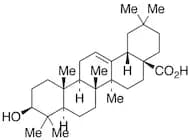
CAS :Formule :C22H40O7Couleur et forme :Beige To Light BrownMasse moléculaire :416.55Oleanolic Acid
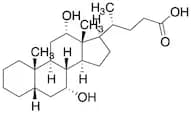
CAS :<p>Applications A triterpenoid known for its anti-inflammatory properties, is commonly present in several medicinal plants. Inhibits secretory phospholipase A2.<br>References Andrikopoulos, N., et al.: J. Med. Food, 5, 1 (2002), Lanteri, S., et al.: Food Chem., 76, 501 (2002), Rodriguez-Rodriguez, R., et al.: Br. J. Pharmacol., 155, 535 (2008), Sotiroudis, T., et al.: Eur. J. Nutr, 47, 69 (2008),<br></p>Formule :C30H48O3Couleur et forme :White To Off-WhiteMasse moléculaire :456.705b-Cholanic Acid-3a,6b-diol
CAS :Produit contrôlé<p>Applications 5β-Cholanic Acid-3α, 6β-Diol is a cholesterol derivative; Plasma lipophilic biomarkers in rats. Also, it is one of two major metabolites from the hydroxylation of hepatic lithocholic acid catalyzed by Cyp3a/Cyp3a11 enzymes in mice.<br>References Mayengbam, S., et al.: Eur. J. Nutr., 55, 1213-1223 (2016); Hrycay, E., et al.: Mol. Cell. Biochem., 389, 119-132 (2014)<br></p>Formule :C24H40O4Couleur et forme :White To Off-WhiteMasse moléculaire :392.587ß-Hydroxycholesterol-d7
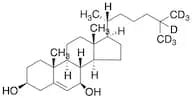
CAS :Produit contrôlé<p>Applications 7ß-Hydroxycholesterol-d7 is a standard used in the simultaneous measurement of F2-isoprostane, hydroxyoctadecadienoic acid, hydroxyeicosatetraenoic acid, and hydroxycholesterols in plasma and liver of hepatitis patients.<br>References Yoshida, Yasukazu., Analytical Biochemistry, 379, 105-115, (2008)<br></p>Formule :C272H7H39O2Couleur et forme :NeatMasse moléculaire :409.70Brassicasterol
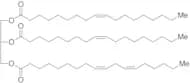
CAS :<p>Applications A phytosterol found in canola oil, rapeseed oil, marine algae and shellfish. This compound has been shown to inhibit sterol Δ24-reductase, an enzyme involved in the mammalian cholesterol biosynthesis pathway.<br>References Bishop, G.J., et al.: Plant Cell Physiol. 42, 114, (2001), Fernandez, C., et al., Biochem. J. 366, 109 (2002),<br></p>Formule :C28H46OCouleur et forme :WhiteMasse moléculaire :398.661,2-Dioleoyl-3-linoleoyl-rac-glycerol (>90%)
CAS :Formule :C57H102O6Degré de pureté :>90%Couleur et forme :NeatMasse moléculaire :883.42(9Z,11E)-Methyl Ester 9,11-Octadecadienoate
CAS :<p>Applications (9Z,11E) Methyl Ester 9,11-Octadecadienoic Acid is a fatty acid methyl ester that can be found in olive leaves and in suet oil.<br>References Jiang, J., et al.:Int. J. Mol. Sci., 16, 2864 (2015); Xie, Pu., et al.: Linchan Huaxue Yu Gongye, 34, 97 (2014)<br></p>Formule :C19H34O2Couleur et forme :NeatMasse moléculaire :294.47Isovaleryl L-Carnitine Chloride
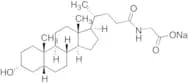
CAS :Produit contrôlé<p>Applications Isovaleryl L-Carnitine Chloride is used to prepare carnitine benzyl esters as neuroprotectant prodrugs.<br>References Gong, X., et al.: J. Chem. Res., 6, 327 (2008)<br></p>Formule :C12H24ClNO4Couleur et forme :NeatMasse moléculaire :281.78Glycolithocholic Acid Sodium Salt
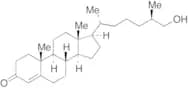
CAS :<p>Applications Glycolithocholic Acid Sodium Salt is a bile salt and may induce calcium uptake in human erythrocytes.<br>References Oelberg, D.G., et al.: Hepatology, 7 245-52 (1987);<br></p>Formule :C26H42NNaO4Couleur et forme :NeatMasse moléculaire :455.61(25R)-26-Hydroxy-cholest-4-en-3-one
CAS :Produit contrôlé<p>Applications (25R)-26-Hydroxy-cholest-4-en-3-one is an oxygenated sterol which has many important biological activities. (25R)-26-Hydroxy-cholest-4-en-3-one has been used as a reactant for the synthesis of other sterols.<br>References Li, S., et. al.: Chem. Phys. Lipids, 99, 33 (1999); Khripach, V., et. al.: Steroids, 70, 551 (2005)<br></p>Formule :C27H44O2Couleur et forme :NeatMasse moléculaire :400.6424(R/S)-Hydroxycholesterol-d7
CAS :Produit contrôlé<p>Applications 24(R/S)-Hydroxycholesterol-d7 is used in the study of biochemical methods for quantitative detection of steroids containing quantitative charge tags and oxidizing agents and using mass spectroscopy for detection.<br>References Groffoths, Williams., US 20150233953, (2015)<br></p>Formule :C272H7H39O2Couleur et forme :NeatMasse moléculaire :409.70(+/-)-N-3-Benzylnirvanol
CAS :Produit contrôlé<p>Applications It is a potent and selective human CYP2C19 inhibitor.<br>References Suzuki, H., et al.: Drug Metab. Dispos., 30, 235 (2002), Robert, L., et al.: Drug Metab. Dispos., 31, 343 (2003),<br></p>Formule :C18H18N2O2Couleur et forme :NeatMasse moléculaire :294.35Desmosterol-d6
CAS :Produit contrôlé<p>Applications A labelled metabolite of Cholesterol (C432501).<br>References Marx, J., et al.: Science, 294, 508 (2001), Plosch, T., et al.: J. Biol. Chem., 277, 33870 (2002), Lund, E., et al.: J .Biol. Chem., 278, 22980 (2003),<br></p>Formule :C272H6H38OCouleur et forme :NeatMasse moléculaire :390.67Ursocholic Acid
CAS :Produit contrôlé<p>Impurity Ursodeoxycholic Acid EP Impurity D<br>Applications Ursocholic Acid (Ursodeoxycholic Acid EP Impurity D) is an Ursodeoxycholic Acid (U850000) impurity.<br>References Ward, A., et al.: Drugs, 1984, 27, 95 (1984), Sama, C., et al.: Clin. Drug Invest., 13, 192 (1997), Nobilis, M., et al.: J. Pharm. Biomed. Anal., 24, 937 (2001),<br></p>Formule :C24H40O5Couleur et forme :White To BeigeMasse moléculaire :408.57Chenodeoxycholic Acid
CAS :Produit contrôlé<p>Impurity Ursodeoxycholic Acid EP Impurity A<br>Applications Chenodeoxycholic Acid (Ursodeoxycholic Acid EP Impurity A) is a major bile acid in many vertebrates, occurring as the N-glycine and/or N-taurine conjugate. With other bile acids, forms mixed micelles with lecithin in bile which solubilize cholesterol and thus facilitates its excretion. Facilitates fat absorption in the small intestine by micellar solubilization of fatty acids and monoglycerides. Anticholelithogenic. Epimeric with Ursodiol.<br>References Danzinger, et al.: N. Engl. J. Med., 286, 1 (1972), Iser, J.H., et al.: Drugs, 21, 90 (1981), Tint, G.S., et al.: Gastroenterology, 91, 1007 (1986),<br></p>Formule :C24H40O4Couleur et forme :BeigeMasse moléculaire :392.57Glycidol
CAS :Produit contrôlé<p>Applications Stabilizer in manufacturing of vinyl polymers; intermediate in synthesis of glycerol, glycidyl ethers, and amines; additive for oil and synthetic hydraulic fluids; epoxy resin diluent.<br> Not a dangerous good if item is equal to or less than 1g/ml and there is less than 100g/ml in the package<br>References Hiles, R.A., et al.: Food Cosmet. Toxicol., 19, 347 (1981); Thompson, E.D., et al.: Food Chem. Toxicol., 22, 665 (1984);<br></p>Formule :C3H6O2Couleur et forme :ColourlessMasse moléculaire :74.08(E)-3-(4-Hydroxy-3,5-dimethoxyphenyl)acrylaldehyde
CAS :<p>Stability Air Sensitive<br>Applications (E)-3-(4-Hydroxy-3,5-dimethoxyphenyl)acrylaldehyde (cas# 4206-58-0) is a useful research chemical.<br></p>Formule :C11H12O4Couleur et forme :NeatMasse moléculaire :208.21Cholesterol 3-Acetate
CAS :Produit contrôlé<p>Applications Cholesterol (C432501) derivative. Cholesterol is a major component of all biological membranes; ~25% of total brain lipid is Cholesterol. Cholesterol is the principal sterol of the higher animals. Cholesterol was found in all body tissues, especial in the brain, spinal cord, and in animal fats or oils. Cholesterol is the main constituent of gallstones.<br>References Rosin, Z., et al.: Physiol. Chem., 124, 282 (1923), Schoenheimer, et al.: J. Biol. Chem., 105, 355 (1934), Gemant, et al.: Life Sci., 1, 233 (1962), Johnson, K., et al.: 4, 457 (1964),<br></p>Formule :C29H48O2Couleur et forme :NeatMasse moléculaire :428.69(E,E)-Farnesol 11,11,11,12,12,12-d6
CAS :Produit contrôléFormule :C15H20D6OCouleur et forme :NeatMasse moléculaire :228.424-Epicerebrosterol
CAS :Produit contrôléFormule :C27H46O2Couleur et forme :NeatMasse moléculaire :402.6517α-Estradiol
CAS :Produit contrôlé<p>Impurity Estradiol 17?-Hydroxy Impurity; Estradiol EP Impurity B; Ethinylestradiol EP Impurity L<br>Applications Estradiol (known as α-Estradiol or 17 α-Estradiol) is a biologically active estrogen in human breast cancer cells in tissue culture. 17-Εstradiol and its selective receptor, ER-X, are not part of a classical hormone/receptor endocrine system but of a system with important autocrine/paracrine functions in the developing and adult brain(1,2). 17-Estradiol may have enormous implications for hormone replacement strategies at the menopause and in the treatment of such neurodegenerative disorders as Alzheimer’s disease and ischemic stroke(3).This compound is a contaminant of emerging concern (CECs). Drinking water contaminant candidate list 3 (CCL 3) compound as per United States Environmental Protection Agency (EPA). Environmental contaminants; Food contaminants.<br>References 1. Lievertz, R. et al.: J. Obstet. Gynecol. 1987 May;156(5):1289-932. Kuhnz, W. et al.: Arzneimittelforschung. 1993 Sep;43(9):966-73.3. Toran-Allerand, C. et al.: Endocrinology. 2005 Sep;146(9):3843-50.<br></p>Formule :C18H24O2Couleur et forme :WhiteMasse moléculaire :272.38