Nucléotides
Les nucléotides sont des composés organiques qui servent de building blocks aux acides nucléiques, essentiels à la formation de l'ADN et de l'ARN. Chaque nucléotide est composé d'une base azotée, d'une molécule de sucre et d'un ou plusieurs groupes phosphate. Ces nucléotides s'assemblent pour former de longues chaînes, créant le matériel génétique qui porte et transmet l'information génétique dans tous les organismes vivants. Dans cette section, vous trouverez une large gamme de nucléotides essentiels pour la recherche en génétique, biologie moléculaire et biochimie. Ils sont fondamentaux pour étudier les processus génétiques, synthétiser des acides nucléiques et développer des outils diagnostiques et thérapeutiques. Chez CymitQuimica, nous proposons des nucléotides de haute qualité pour soutenir vos recherches scientifiques et applications, garantissant précision et fiabilité dans vos expériences.
Sous-catégories appartenant à la catégorie "Nucléotides"
2634 produits trouvés pour "Nucléotides"
Trier par
Degré de pureté (%)
0
100
|
0
|
50
|
90
|
95
|
100
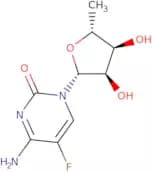
5'-Deoxy-5-fluorocytidine
CAS :<p>5'-Deoxy-5-fluorocytidine is a cytosolic nucleoside analogue that is phosphorylated by cellular enzymes to the active form 5'-deoxy-5-fluorouridine monophosphate. It is a prodrug, which is activated in the body to release 5-FU and inhibits the growth of cancer cells. 5'-Deoxy-5-fluorocytidine has been shown to be effective against metastatic colorectal cancer in humans and resistant breast cancer in mice. The drug can also be used as an oral prodrug for 5-FU, which has a wide therapeutic index and low toxicity. Studies have shown that it selectively inhibits proliferation of solid tumours through inhibition of protein synthesis and cell division. The drug also has antiangiogenic effects, which are thought to contribute to its antitumor activity.</p>Formule :C9H12FN3O4Degré de pureté :Min. 98 Area-%Couleur et forme :White PowderMasse moléculaire :245.21 g/mol2'-Deoxy-3,5-dimethylcytidine
CAS :2'-Deoxy-3,5-dimethylcytidine is a nucleoside analog that is an activator of the ribonucleotide reductase enzyme. It has been shown to have anticancer properties in vitro and in vivo. 2'-Deoxy-3,5-dimethylcytidine has also been shown to be effective against HIV and herpes virus infections. 2'-Deoxy-3,5-dimethylcytidine is synthesized from deoxyribonucleosides or nucleosides by phosphitylation with phosphoramidites or diphosphates. The CAS number for this product is 198198-29-7.Formule :C11H17N3O4Degré de pureté :Min. 95%Couleur et forme :PowderMasse moléculaire :255.27 g/mol5'-O-DMT-2'-O-hexylphthalimidouridine
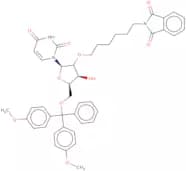
<p>5'-O-DMT-2'-O-hexylphthalimidouridine is a novel nucleoside analog with anticancer activity. It is a modified nucleoside that has been synthesized and purified in high purity. 5'-O-DMT-2'-O-hexylphthalimidouridine is an activator of DNA and RNA synthesis and has antiviral properties. It also inhibits the production of tumor necrosis factor alpha (TNFα) by human synovial cells. This compound binds to the RNA polymerase II enzyme, which prevents transcription of genetic material from DNA templates into messenger RNA. This leads to inhibition of protein synthesis and cell death by apoptosis.</p>Formule :C44H45N3O10Degré de pureté :Min. 95%Masse moléculaire :775.86 g/mol2'-O-Methylcytidine
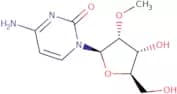
CAS :<p>2'-O-Methylcytidine is a nucleoside with a hydroxyl group on the 2' carbon. The hydroxyl group makes it an effective inhibitor of viral replication, and it has been shown to be active against HIV-1 in cell culture. 2'-O-Methylcytidine is also metabolized by nucleotide salvage pathways, and the metabolic response can be studied using proton nuclear magnetic resonance (NMR) spectroscopy and x-ray diffraction data. It has been found that 2'-O-Methylcytidine inhibits protein synthesis in cancer cells, and this may be due to its ability to bind to the response element on DNA.</p>Formule :C10H15N3O5Degré de pureté :Min. 95%Couleur et forme :White PowderMasse moléculaire :257.24 g/molβ-Nicotinamide adenine dinucleotide sodium dihydrate
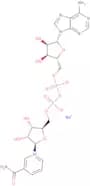
CAS :<p>Coenzyme and regenerating electron donor in catabolic processes</p>Formule :C21H26N7NaO14P2•(H2O)2Degré de pureté :Min. 95%Couleur et forme :White PowderMasse moléculaire :721.44 g/mol4-Hydroxy-6-methylpyrimidine
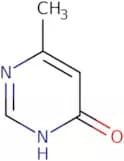
CAS :<p>4-Hydroxy-6-methylpyrimidine (4-OHMP) is a metabolite of trimethyltin. It is formed in the liver by methylation of 4,6-dimethylpyrimidine (4,6-DMPU). The levels of 4-OHMP in urine samples are used to monitor exposure to this agent. The median values for urinary concentrations of 4-OHMP are typically 10 times higher than those found in blood samples. The metabolite can be detected in urine up to 2 weeks after an individual’s last contact with trimethyltin. This compound has been shown to inhibit the synthesis of glycol dimethyl ethers and carbamates.</p>Formule :C5H6N2ODegré de pureté :Min. 95%Masse moléculaire :110.11 g/molN2,N2,7-Trimethylguanosine
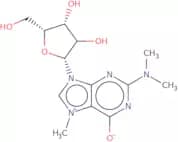
CAS :Trimethylguanosine is a hydrogen-bonded base that is found in the DNA of all living organisms. It has a diagnostic role in cancer and metabolic disorders, as well as in the study of cell culture. Trimethylguanosine can be used to identify cancer cells by measuring its fluorescence properties, which are different from those of healthy cells. This compound also has a role in the diagnosis of metabolic disorders, such as diabetes mellitus and renal disease. Trimethylguanosine is also involved in biological function, and is necessary for the synthesis of proteins and nucleic acids.Formule :C13H20N5O5Degré de pureté :Min. 95 Area-%Couleur et forme :PowderMasse moléculaire :326.33 g/molN6-Benzoyl-2'-O-(2-methoxyethyl)adenosine
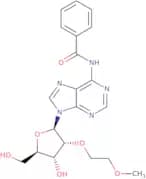
CAS :<p>N6-Benzoyl-2'-O-(2-methoxyethyl)adenosine is a novel nucleoside that can be used as an antiviral agent. It is an activator of viral polymerase and inhibits the proliferation of cells infected with HIV. This compound has been synthesized from 2'-deoxyadenosine monophosphate, which is a precursor to RNA and DNA synthesis. N6-Benzoyl-2'-O-(2-methoxyethyl)adenosine has also been shown to inhibit the growth of experimental tumors in mice. The synthesis of this compound is reliable and reproducible, making it a high quality product.</p>Formule :C20H23N5O6Degré de pureté :Min. 95%Masse moléculaire :429.43 g/mol2'-Deoxy-5'-O-DMT-cytidine
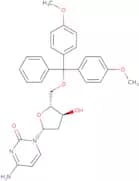
CAS :<p>2'-Deoxy-5'-O-DMT-cytidine is an organic compound. It is a synthetic, combinational and amine nitrogen containing heterocyclic compound that is used in organic synthesis. This chemical is also used as a building block for the synthesis of heterocyclic compounds with other functional groups such as thionyl, formulae, chlorides and hydrogen atoms.</p>Formule :C30H31N3O6Degré de pureté :Min. 95 Area-%Couleur et forme :White PowderMasse moléculaire :529.58 g/mol1-(α-D-Ribofuranosyl)uracil
CAS :1-(α-D-Ribofuranosyl)uracil is a nucleoside analog made up of a uracil attached to a ribose sugar at the 1-position, with the sugar in the α configuration. This compound is of interest in biochemistry research and nucleoside chemistry, especially when studying stereochemistry or synthesizing analogs.Formule :C9H12N2O6Degré de pureté :(¹H-Nmr) Min. 95 Area-%Couleur et forme :PowderMasse moléculaire :244.2 g/mol2',3'-Dideoxyinosine
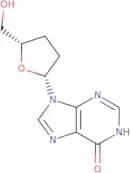
CAS :<p>2',3'-Dideoxyinosine is a purine analog that can suppress human immunodeficiency virus (HIV) replication after intracellular metabolic conversion</p>Formule :C10H12N4O3Degré de pureté :Min. 95 Area-%Couleur et forme :White Off-White PowderMasse moléculaire :236.23 g/molUridine 5'-monophosphate disodium salt
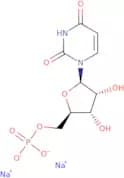
CAS :Uridine 5'-monophosphate disodium salt (UDP-MS) is a structural analog of uridine that is used as a dietary supplement. It has been shown to inhibit phosphodiesterases and cyclic nucleotide phosphodiesterases, which are enzymes that degrade the secondary messenger, cyclic adenosine monophosphate (cAMP). This inhibition leads to increased levels of cAMP in cells, which stimulates protein kinase A activity and promotes cellular differentiation. The analysis of UDP-MS has been performed using liquid chromatography with ultraviolet detection.Formule :C9H11N2Na2O9PDegré de pureté :Min. 98 Area-%Couleur et forme :White Off-White PowderMasse moléculaire :368.15 g/mol2'-Deoxy-5-formylcytidine
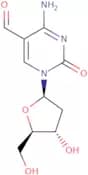
CAS :<p>2'-Deoxy-5-formylcytidine is a nucleoside analog that is used as a chemotherapeutic agent. It is cytotoxic to cells by binding to DNA and preventing the synthesis of DNA, RNA, and protein. The drug has been shown to induce cellular senescence in human fibroblasts, which can be reversed by the addition of deuterium. 2'-Deoxy-5-formylcytidine also inhibits the production of reactive oxygen species (ROS) by inducing the expression of antioxidant enzymes such as superoxide dismutase 2 and glutathione peroxidase 1. The oxidation products are misincorporated into DNA strands, leading to intramolecular hydrogen bonds with cytosine bases. These modifications lead to denaturation of DNA and inhibition of transcription and replication.<br>2'-Deoxy-5-formylcytidine also interacts with oligodeoxynucleotides, which leads to misinc</p>Formule :C10H13N3O5Degré de pureté :Min. 97 Area-%Couleur et forme :White PowderMasse moléculaire :255.23 g/mol7-Deaza-2'-deoxyxanthosine
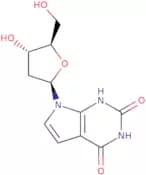
CAS :<p>7-Deaza-2'-deoxyxanthosine is an oligodeoxynucleotide that is a substrate for the enzyme dUTPase. The allyl group on 7-deaza-2'-deoxyxanthosine is used to attach it to the 3' end of DNA, where it acts as a competitive inhibitor of RNA synthesis. The ethyl group at the end of the molecule is used to attach it to the 5' end of DNA, where it inhibits transcription and replication by binding with RNA polymerase. 7-Deaza-2'-deoxyxanthosine has been shown to be effective in preventing stenosis following coronary bypass surgery, as well as in treating heart disease by reducing levels of xanthosine.</p>Formule :C11H13N3O5Degré de pureté :Min. 95%Couleur et forme :Beige PowderMasse moléculaire :267.24 g/molUridine 5'-diphosphate choline ammonium
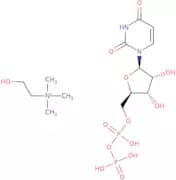
CAS :Uridine 5'-diphosphate choline ammonium salt is a chemical compound that contains two molecules of uridine and one molecule of choline. It is a hexamer with an empirical formula of C6H14N4O13P3. Uridine 5'-diphosphate choline ammonium salt can be found in plants and animals, as well as being synthesized by the human body. This compound is present in the interstitium, which are the spaces between cells, and may play a role in the nutritional status of humans.Formule :C14H28N4O12P2Degré de pureté :Min. 90 Area-%Couleur et forme :PowderMasse moléculaire :506.34 g/mol2'-Deoxy-2'-fluoroinosine
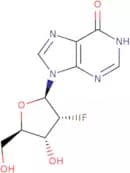
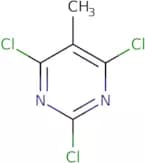
CAS :<p>2'-Deoxy-2'-fluoroinosine is a modified nucleoside analog derived from inosine, where the 2' hydroxyl group of the sugar (normally present in ribonucleosides) is replaced with a fluorine atom, and the molecule contains a deoxyribose sugar.</p>Formule :C10H11FN4O4Degré de pureté :Min. 95%Couleur et forme :White PowderMasse moléculaire :270.22 g/mol2,4,6-Trichloro-5-methylpyrimidine
CAS :<p>2,4,6-Trichloro-5-methylpyrimidine is a nucleoside for use in research applications</p>Formule :C5H3Cl3N2Degré de pureté :Min. 95%Couleur et forme :PowderMasse moléculaire :197.45 g/molThymidine-5'-diphosphate-L-rhamnose disodium
CAS :Thymidine-5'-diphosphate-L-rhamnose disodium is a nucleoside that belongs to the class of modified nucleosides. It is a synthetic, modified thymidine with a phosphate group at the 5'-position and L-rhamnose at the 2' position. Thymidine-5'-diphosphate-L-rhamnose disodium has antiviral and anticancer activities, as well as high purity and high quality. This compound has been shown to inhibit HIV replication in vitro and in vivo. Thymidine-5'-diphosphate-L-rhamnose disodium is also used in the synthesis of DNA and RNA.Formule :C16H24N2O15P2Na2Degré de pureté :Min. 95 Area-%Couleur et forme :PowderMasse moléculaire :592.29 g/mol2'-Azido-2'-deoxyadenosine
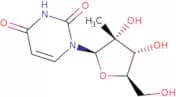
CAS :<p>2'-Azido-2'-deoxyadenosine is a synthetic nucleoside analog of adenosine in which the 2'-hydroxyl group of the ribose sugar is replaced by an azido group (–N₃), and the 3'- and 5'-hydroxyl groups remain intact. This modification confers unique chemical properties, including the ability to participate in bioorthogonal "click" chemistry reactions, particularly azide-alkyne cycloadditions, making it useful for labeling and tracking nucleic acids in biochemical studies. Additionally, the azido substitution can influence enzymatic recognition and incorporation by polymerases, allowing its use in studying nucleic acid metabolism, drug design, and therapeutic nucleoside analog development.</p>Formule :C10H12N8O3Degré de pureté :Min. 95%Couleur et forme :PowderMasse moléculaire :292.25 g/mol2'-C-Methyluridine
CAS :<p>2'-C-Methyluridine is a synthetic nucleoside analog derived from uridine, modified with a methyl group at the 2'-carbon of the ribose sugar. This small chemical change has important implications for RNA biology, antiviral drug development, and biochemical research, especially in targeting RNA viruses.</p>Formule :C10H14N2O6Degré de pureté :Min. 95%Couleur et forme :PowderMasse moléculaire :258.23 g/mol