Nucléotides
Les nucléotides sont des composés organiques qui servent de building blocks aux acides nucléiques, essentiels à la formation de l'ADN et de l'ARN. Chaque nucléotide est composé d'une base azotée, d'une molécule de sucre et d'un ou plusieurs groupes phosphate. Ces nucléotides s'assemblent pour former de longues chaînes, créant le matériel génétique qui porte et transmet l'information génétique dans tous les organismes vivants. Dans cette section, vous trouverez une large gamme de nucléotides essentiels pour la recherche en génétique, biologie moléculaire et biochimie. Ils sont fondamentaux pour étudier les processus génétiques, synthétiser des acides nucléiques et développer des outils diagnostiques et thérapeutiques. Chez CymitQuimica, nous proposons des nucléotides de haute qualité pour soutenir vos recherches scientifiques et applications, garantissant précision et fiabilité dans vos expériences.
Sous-catégories appartenant à la catégorie "Nucléotides"
2634 produits trouvés pour "Nucléotides"
Trier par
Degré de pureté (%)
0
100
|
0
|
50
|
90
|
95
|
100
5'-O-DMT-5-[N-(6-(trifluoroacetamido)hexyl)-3-E-acrylamido]-2'-deoxyuridine
CAS :5'-O-DMT-5-[N-(6-(trifluoroacetamido)hexyl)-3-E-acrylamido]-2'-deoxyuridine is a novel phosphoramidate nucleoside monophosphate, which is a phosphate analog of 2'-deoxyuridine. It has been shown to be an activator for DNA polymerases and is able to inhibit the replication of DNA in vitro. It also has antiviral properties, as it inhibits the synthesis of viral RNA. 5'-O-DMT-5-[N-(6-(trifluoroacetamido)hexyl)-3-E-acrylamido]-2'-deoxyuridine also has anti-inflammatory effects, as it inhibits prostaglandin synthesis.Formule :C41H45F3N4O9Degré de pureté :Min. 95%Couleur et forme :White PowderMasse moléculaire :794.83 g/mol3'-O-Methylcytidine
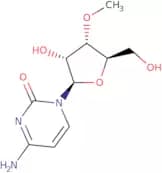
CAS :<p>3'-O-Methylcytidine is an acidic guanine nucleoside that is a component of RNA. It is a biochemical building block and a co-substrate in the synthesis of DNA and RNA. 3'-O-Methylcytidine has been shown to be hydroxylated by the enzyme cytidine 5'-monophosphate, which leads to its termination when it reaches the ribosome. This nucleoside also inhibits bacterial growth through inhibition of ribosomal function, leading to reduced protein synthesis. 3'-O-Methylcytidine can act as an environmental pollutant, especially in chloride environments such as seawater. It has been found to be globally distributed in dinucleotides and monomethylated forms, with biosynthetic pathways similar to other nucleic acids.</p>Formule :C10H15N3O5Degré de pureté :Min. 98 Area-%Couleur et forme :White PowderMasse moléculaire :257.24 g/molADP monosodium salt - Bio-X ™
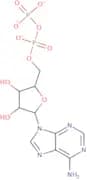
CAS :<p>Adenosine 5'-diphosphate monosodium salt (ADP) is an adenine nucleotide which is phosphorylated into ATP by the enzyme ATPase. This phosphorylation is essential in cellular homeostasis due to its role in energy storage and nucleic acid metabolism.</p>Formule :C10H15N5O10P2•NaDegré de pureté :Min. 95%Couleur et forme :PowderMasse moléculaire :449.18 g/mol2'-Deoxy-5'-O-DMT-2'-fluoro-N4-phenoxyacetylcytidine
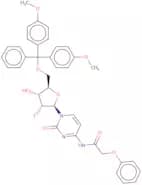
<p>2'-Deoxy-5'-O-DMT-2'-fluoro-N4-phenoxyacetylcytidine is a monophosphate nucleotide analog that is used as an antiviral agent. It inhibits viral replication by inhibiting the activity of DNA polymerase, which is needed to synthesize DNA. 2'-Deoxy-5'-O-DMT-2'-fluoro-N4-phenoxyacetylcytidine has been shown to be effective against HIV and HSV in vitro and in vivo. This nucleotide analog has also been shown to be potent against Hepatitis B viruses and adenovirus type 3.<br>2'-Deoxy-5'-O-DMT-2'-fluoro-N4-phenoxyacetylcytidine is phosphoramidate derivative of cytosine with a fluorine substitution at the 2' position on the sugar moiety, making it a novel compound. The pyrid</p>Formule :C38H36FN3O8Degré de pureté :Min. 98 Area-%Couleur et forme :Yellow PowderMasse moléculaire :681.71 g/mol2'-Deoxy-5-propynylcytidine
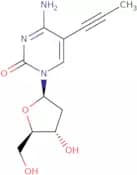
CAS :<p>Deoxynucleoside with an alkyne handle on the base which can be used for conjugation via click chemistry.</p>Formule :C12H15N3O4Degré de pureté :Min. 95%Couleur et forme :PowderMasse moléculaire :265.27 g/mol2'-Deoxyguanosine 3'-monophosphate sodium
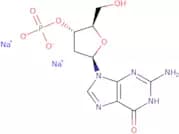
CAS :2'-Deoxyguanosine 3'-monophosphate sodium is a novel, synthetic nucleoside that inhibits DNA replication and transcription. It has been shown to be a potent inhibitor of human immunodeficiency virus type 1 (HIV-1) and human T-cell leukemia virus type I (HTLV-I). 2'-Deoxyguanosine 3'-monophosphate sodium is in the category of nucleosides, which are phosphorylated compounds that can be incorporated into DNA by DNA polymerase. This product has a high purity and is synthesized from diphosphate.Formule :C10H12Na2N5O7PDegré de pureté :Min. 95%Couleur et forme :White Off-White PowderMasse moléculaire :391.19 g/molN-Succinyl-5-aminoimidazole-4-carboxamide ribose disodium salt
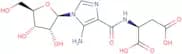
CAS :<p>N-Succinyl-5-aminoimidazole-4-carboxamide ribose disodium salt is a novel modified nucleoside with anticancer activity. The compound is a monophosphate, which activates DNA and RNA synthesis. This agent also has antiviral and antifungal effects. N-Succinyl-5-aminoimidazole-4-carboxamide ribose disodium salt is synthesized from diphosphate and deoxyribonucleosides. It was first patented in 1979 and has been approved by the US Food and Drug Administration (FDA) for use as a pharmaceutical agent. N-Succinyl-5-aminoimidazole-4-carboxamide ribose disodium salt can be used to produce phosphoramidites, which are synthetic DNA building blocks that are used in the production of DNA and RNA synthesis.</p>Formule :C13H16N4O9Na2Degré de pureté :Min. 95 Area-%Couleur et forme :Off-White PowderMasse moléculaire :418.27 g/mol1-(3',5'-Di-O-benzoyl-2'-chloro-2'-deoxy-beta-L-arabinofuranosyl)thymine
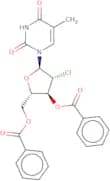
CAS :<p>1-(3`,5`-Di-O-benzoyl-2`-chloro-2`-deoxy-beta-L-arabinofuranosyl)thymine is a nucleoside analog for research applications. This compound is made up of a thymine base and the sugar 2'-Chloro-2'-deoxy-β-L-arabinofuranose. The sugar has the L-arabinose configuration and a 2'-Chloro substitution which can alter its interactions with enzymes and enhance resistance to degradation. It also contains benzoyl groups that protect the hydroxyls during chemical synthesis.</p>Formule :C24H21FN2O7Degré de pureté :Min. 95%Masse moléculaire :468.43 g/molUridine-5-oxyacetic acid methyl ester
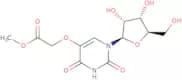
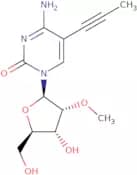
CAS :<p>Uridine-5-oxyacetic acid methyl ester is a modified nucleotide that is an intermediate in the biosynthesis of uridine. This molecule can be synthesized from 5-hydroxymethyluridine and malonic acid by a methyltransferase. Uridine-5-oxyacetic acid methyl ester can also be obtained from the metabolism of deoxyribose. Analysis of this molecule is possible with spectrometric, mass spectrometric, and chemical structures methods. It has been shown to have a function in translation and protein synthesis. The chemical structure of uridine-5-oxyacetic acid methyl ester has been determined to be guanosine-3',5'-bis(2'-carboxyethyl)phosphate, which is different from that found in DNA or RNA.</p>Formule :C12H16N2O9Degré de pureté :Min. 95%Couleur et forme :PowderMasse moléculaire :332.26 g/mol2'-O-Methyl-5-propynylcytidine
CAS :<p>2'-O-Methyl-5-propynylcytidine is an antiviral drug that inhibits the replication of retroviruses by competitive inhibition of the viral RNA polymerase. It has been shown to be effective against HIV, HSV and CMV. This drug also has shown anticancer activity in vitro and in vivo. 2'-O-Methyl-5-propynylcytidine has a novel mechanism of action and is used as a building block for oligonucleotide synthesis because it is resistant to degradation by nucleases.</p>Formule :C13H17N3O5Degré de pureté :Min. 95%Couleur et forme :PowderMasse moléculaire :295.29 g/molRiboflavin 5'-adenosine diphosphate disodium salt hydrate
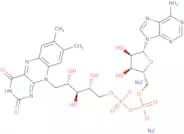
CAS :<p>Riboflavin 5'-adenosine diphosphate disodium salt hydrate is a chemical compound that can be used as a substrate for nitrate reductase in the presence of molecular oxygen. It can be used to identify mollicutes and diagnose radiation-induced lesions. The reaction mechanism involves the conversion of riboflavin 5'-adenosine monophosphate to riboflavin 5'-adenosine diphosphate by an enzyme called nitrate reductase, which is present in the microorganism. This reaction is accompanied by the release of electrons, which are detected by a fluorescence detector. The rate constant for this reaction is <br>k=1.5x10^-4/s at pH 7 and 37 degrees Celsius with an electrochemical detector and k=2.0x10^-3/s at pH 7 and 37 degrees Celsius with a carbonyl oxygens detector. Riboflavin 5'-</p>Formule :C27H31N9Na2O15P2·xH2ODegré de pureté :(Uv) Min. 95%Couleur et forme :Yellow Orange PowderMasse moléculaire :829.51 g/mol2'-Deoxy-N2-DMF-5'-O-DMT-guanosine
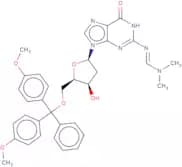
CAS :<p>2'-Deoxy-N2-DMF-5'-O-DMT-guanosine is a monophosphate nucleoside that has antiviral, anticancer, and high purity properties. It is synthesized by the phosphoramidite method from 2'-deoxy-N2-DMF and 5'-O-DMT guanosine. This compound has been shown to inhibit the growth of human cancer cells in vitro and in vivo. It also inhibits HIV replication in vitro and is not toxic to normal cells.</p>Formule :C34H36N6O6Degré de pureté :Min. 95%Couleur et forme :White PowderMasse moléculaire :624.7 g/mol1-(2'-Deoxy-5'-O-DMT-2'-fluoro-b-D-arabinofuranosyl)uracil
CAS :1-(2'-Deoxy-5'-O-DMT-2'-fluoro-b-D-arabinofuranosyl)uracil is a nucleoside analog and contains a uracil base, and a 2'-deoxy-5'-O-DMT-2'-fluoro-b-D-arabinofuranosyl sugar moiety. The 2'-fluoro modification is of particular interest due to its potential to alter the chemical and biological properties of the resulting oligonucleotides. Fluorinated nucleosides and their analogs have been extensively studied for their antiviral and anticancer activities. The incorporation of fluorine into nucleoside analogs can also affect their interaction with DNA and RNA, leading to changes in their therapeutic potential.Formule :C30H29FN2O7Degré de pureté :Min. 95%Couleur et forme :White To Off-White SolidMasse moléculaire :548.56 g/mol1-Methylpseudouridine
CAS :1-Methylpseudouridine is a substitute for uridine in modified mRNA. This substitution has shown to increase transfection by reducing immuogenicity. The 1-methylpseudouridine substituted mRNA increases protein expression due to low immune stimulation as it evades detection by the edosomal Toll-like receptor (TLR3).Formule :C10H14N2O6Degré de pureté :Min. 98.0 Area-%Masse moléculaire :258.23 g/molRef: 3D-M-4320
1gÀ demander5gÀ demander250mgÀ demander500mgÀ demander2500mgÀ demander-Unit-ggÀ demander1-(2'-Deoxy-2'-fluoro-β-D-arabinofuranosyl)-5-iodouracil
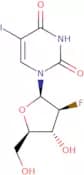
CAS :1-(2'-Deoxy-2'-fluoro-β-D-arabinofuranosyl)-5-iodouracil is a nucleoside analog with antiviral properties. It consists of a modified uracil base (5-iodouracil) attached to a fluorinated arabinofuranosyl sugar moiety. In cell culture, it inhibits the replication of varicella-zoster virus, herpes simplex virus type 1 and 2 and cytomegalovirus.Formule :C9H10FIN2O5Degré de pureté :Min. 98 Area-%Couleur et forme :White Off-White PowderMasse moléculaire :372.09 g/mol9-(b-D-Ribofuranosyl)purine
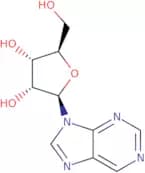
CAS :9-(b-D-Ribofuranosyl)purine (9-BRP) is a purine nucleoside that is used in the synthesis of dyes. It has been shown to be an effective inhibitor of the enzyme phosphodiesterase 3B, which breaks down cyclic adenosine monophosphate (cAMP), and therefore can prevent kidney fibrosis. 9-BRP has also been shown to inhibit the synthesis of collagen by binding to cAMP. In addition, 9-BRP binds to DNA and forms hydrogen bonds with nitrogen atoms on the phosphate groups in DNA. This interaction prevents the formation of hydrogen bonds between water molecules in water vapor and phosphate groups, thus slowing down their rate of dissociation from each other. 9-BRP also has a high affinity for Toll-like receptor 4 (TLR4), which is involved in the inflammatory response, making it an ideal therapeutic candidate for treating inflammation and renal fibrosis.Formule :C10H12N4O4Degré de pureté :Min. 97 Area-%Couleur et forme :PowderMasse moléculaire :252.23 g/molb-Nicotinamide mononucleotide
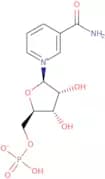
CAS :b-Nicotinamide mononucleotide, or NMN, is a precursor to nicotinamide adenine dinucleotide (NAD+), a coenzyme found in all living cells that is essential for various metabolic processes. NAD+ is involved in critical functions such as DNA repair, gene expression, and cellular stress responses.Formule :C11H15N2O8PDegré de pureté :Min. 95 Area-%Couleur et forme :PowderMasse moléculaire :334.22 g/mol3-Methyl-2-nitropyridine
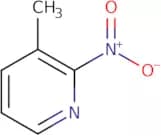
CAS :<p>3-Methyl-2-nitropyridine is a high yield byproduct of formamide, which can be activated to form an intermediate for the synthesis of nucleosides. The kinetics and labeling of this intermediate were studied using a transfer experiment. 3-Methyl-2-nitropyridine is acidic, with a pKa value of 3.6, and is reactive towards nucleophiles. It is also catalytic, yielding methyl groups and dioxane as products when heated at temperatures between 180°C and 220°C. In addition, it undergoes nucleophilic substitutions at methoxy groups.</p>Formule :C6H6N2O2Degré de pureté :Min. 95%Couleur et forme :PowderMasse moléculaire :138.12 g/molN2-Isobutyryl-3',5'-O-(1,1,3,3-tetraisopropyl-1,3-disiloxanediyl)guanosine
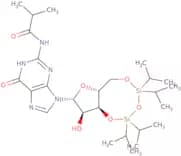
CAS :<p>N2-Isobutyryl-3',5'-O-(1,1,3,3-tetraisopropyl-1,3-disiloxane-diyl)guanosine is a nucleoside that is activated by phosphorylation. It has been shown to be an inhibitor of cancer cell growth and proliferation in vitro. This compound was also found to inhibit the expression of two oncogenes (c-MYC and c-Ki67) and induce the expression of the tumor suppressor gene p53. This nucleoside is synthesized from 2'-deoxyadenosine monophosphate (2'-DAMP) with a modified DNA synthesis protocol.</p>Formule :C26H45N5O7Si2Degré de pureté :Min. 95 Area-%Couleur et forme :White Off-White PowderMasse moléculaire :595.84 g/mol2-Aminoadenosine
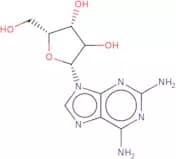
CAS :<p>2-Aminoadenosine is a synthetic nucleoside analog of adenosine in which the purine base is 2,6-diaminopurine, featuring an additional amino group at the C2 position. This modification enhances hydrogen bonding potential and alters base-pairing specificity, allowing it to form three hydrogen bonds with uracil or thymine, in contrast to adenine's two. As a result, 2-aminoadenosine has been studied for its impact on nucleic acid stability, replication fidelity, and enzymatic recognition. It has also shown potential in antiviral and anticancer research due to its ability to disrupt normal RNA and DNA metabolism.</p>Formule :C10H14N6O4Degré de pureté :Min. 98 Area-%Couleur et forme :White PowderMasse moléculaire :282.26 g/mol
![5'-O-DMT-5-[N-(6-(trifluoroacetamido)hexyl)-3-E-acrylamido]-2'-deoxyuridine](/_next/image/?url=https%3A%2Fstatic.cymitquimica.com%2Fproducts%2F3D%2Fthumb-webp%2FND08237.webp&w=3840&q=75)