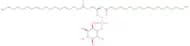
Phospholipides
Les glycérophospholipides, également appelés phospholipides, sont des composants essentiels des membranes cellulaires, assurant l'intégrité structurelle et participant à la signalisation cellulaire. Ces lipides sont constitués d'une colonne vertébrale de glycérol, de deux chaînes d'acides gras et d'un groupe contenant du phosphate. Les phospholipides sont impliqués dans divers processus biologiques, notamment la dynamique des membranes, la transduction du signal et le métabolisme des lipides. Chez CymitQuimica, nous offrons une sélection complète de glycérophospholipides et de phospholipides de haute qualité pour soutenir vos recherches et applications industrielles.
381 produits trouvés pour "Phospholipides"
Trier par
Degré de pureté (%)
0
100
|
0
|
50
|
90
|
95
|
100
1,2-Dimyristoyl-rac-glycero-3-phosphocholine
CAS :<p>1,2-Dimyristoyl-rac-glycero-3-phosphocholine (DMPC) is a lipid molecule that contains a glycerol backbone and two fatty acid chains. It is an amphipathic molecule with hydrophilic head groups and hydrophobic tails. The phase transition temperature of DMPC is around 37°C, which makes it useful as a model system for studying the effects of temperature on lipid membranes. DMPC has been shown to have interactions with pharmacological agents such as peptide hormones and enzyme inhibitors, which can lead to drug interactions. DMPC also binds copper chloride and calcium ions and has hydrogen bonding interactions with benzalkonium chloride.</p>Formule :C36H72NO8PDegré de pureté :Min. 95%Masse moléculaire :677.93 g/mol3-O-Dodecyl-sn-glycerol
CAS :<p>3-O-Dodecyl-sn-glycerol is an antimicrobial agent that belongs to the group of natural compounds. It is a monoglyceride with a 12 carbon chain and has been shown to be effective against many pathogens, including Staphylococcus aureus and Mycobacterium tuberculosis. 3-O-Dodecyl-sn-glycerol is also effective against fungi and protozoa, such as Plasmodium falciparum. This compound shows activity against both Gram positive and Gram negative bacteria. 3-O-Dodecyl-sn-glycerol displays antibacterial efficacy by inhibiting the growth of microbes through its interaction with the bacterial membrane, which results in the disruption of membrane integrity. 3-O-Dodecyl-sn glycerol also inhibits the enzyme activities of basic structure, polymerase chain reaction (PCR), DNA gyrase, and topoisomerase IV</p>Formule :C15H32O3Degré de pureté :Min. 95%Masse moléculaire :260.41 g/molHexadecylphosphoethanolamine
CAS :<p>Hexadecylphosphoethanolamine is a polyunsaturated phospholipid that is found in the cell membrane. It is an antiestrogen and has been shown to inhibit the biosynthesis of estrogens by conjugating with them. Hexadecylphosphoethanolamine has also been shown to be involved in leukemia cells, pro-apoptotic protein synthesis, and inhibiting properties. Active substances that are present in this phospholipid include carboxylic acid and choline, which are pharmacological agents. The addition of hexadecylphosphoethanolamine to food additives can increase uptake by fat tissue.</p>Formule :C18H40NO4PDegré de pureté :Min. 95%Masse moléculaire :365.49 g/mol1-Stearoyl-sn-glycero-3-phosphocholine
CAS :<p>1-Stearoyl-sn-glycero-3-phosphocholine (SGP) is a phospholipid that is used as a sample preparation agent. It has been shown to have pharmacokinetic properties in human serum and also has analytical method applications in the determination of DNA binding activity. The SGP molecule can be activated by exposure to ultraviolet light, and this activation process can be utilized to produce nanogels with high surface area. 1-Stearoyl-sn-glycero-3-phosphocholine also binds epidermal growth factor and is found in fatty acid esters, which are important for phase transition temperature and disulfide bond formation.</p>Formule :C26H54NO7PDegré de pureté :Min. 95%Couleur et forme :PowderMasse moléculaire :523.68 g/mol1-O-Octadecyl-2-O-methyl-sn-glycerol
CAS :<p>Please enquire for more information about 1-O-Octadecyl-2-O-methyl-sn-glycerol including the price, delivery time and more detailed product information at the technical inquiry form on this page</p>Formule :C22H46O3Couleur et forme :PowderMasse moléculaire :358.6 g/molSuberic acid di-n-butyl ester
CAS :<p>Suberic acid di-n-butyl ester is a diagnostic agent that is used in combination with vitamin D3. It is a liquid at room temperature and has a low viscosity. Suberic acid di-n-butyl ester can be used to measure the level of butyric acid in a sample, which may be useful in diagnosing metabolic disorders such as glycogen storage disease type I. Suberic acid di-n-butyl ester can also be used to measure the amount of unsaturated alkyl groups in an organic compound, which may be useful for determining the degree of unsaturation of fatty acids or other lipids. The chemical properties of this substance are similar to those of dibutyl phthalate.</p>Formule :C16H30O4Degré de pureté :Min. 95%Couleur et forme :Clear LiquidMasse moléculaire :286.41 g/mol1,3-Dipalmitoylglycero-2-phospho-N,N-dimethylethanolamine
CAS :<p>Please enquire for more information about 1,3-Dipalmitoylglycero-2-phospho-N,N-dimethylethanolamine including the price, delivery time and more detailed product information at the technical inquiry form on this page</p>Formule :C39H78NO8PDegré de pureté :Min. 95%Masse moléculaire :720.01 g/molHydro Soy PC
CAS :<p>Hydro Soy PC is a phosphatidylcholine product that has been shown to have high resistance to biological degradation and low toxicity. Hydro Soy PC has been used in blood sampling studies, which showed that it can be used as an alternative for lipids to prevent clotting. This product also has the ability to form stable liposomes with a phase transition temperature of approximately 10°C. Hydro Soy PC is highly soluble in water and sodium salts, making it useful as a model system for studying the surface properties of phospholipids. Hydro Soy PC is toxic at high concentrations, but has shown no signs of toxicity at lower concentrations.</p>Formule :C44H88NO8PDegré de pureté :Min. 95%Masse moléculaire :783.77 g/mol2-Oleoyl-1-palmitoyl-sn-glycero-3-phosphocholine
CAS :<p>A phospholipid for biophysical experiments; used for studying lipid rafts</p>Formule :C42H82NO8PDegré de pureté :Min. 95%Couleur et forme :White PowderMasse moléculaire :760.08 g/mol1,2-O-Dihexadecyl-sn-glycero-3-phosphoethanolamine
CAS :<p>1,2-O-Dihexadecyl-sn-glycero-3-phosphoethanolamine (DHEPE) is a lipid used as a fluorescent probe for the detection of carbohydrates. It has been shown to bind to high-mannose type oligosaccharides and to be stable in complex with them. DHEPE has been shown to form complexes with cell nuclei, which may be due to hydrogen bonding interactions between the sugar and phosphate head groups on the glycerol backbone. These interactions are thought to be responsible for the selectivity of DHEPE for mannose residues in cells. DHEPE also forms complexes with x-ray diffraction data, which is indicative of intermolecular hydrogen bonding between this molecule and other hydrophobic molecules. DHEPE's reaction mechanism is not clear, but it has been proposed that it reacts with proteins by reacting with amino groups on these proteins.</p>Formule :C37H78NO6PDegré de pureté :Min. 95%Couleur et forme :SolidMasse moléculaire :663.99 g/mol1,2-Distearoyl-rac-glycero-3-phosphoethanolamine
CAS :<p>Please enquire for more information about 1,2-Distearoyl-rac-glycero-3-phosphoethanolamine including the price, delivery time and more detailed product information at the technical inquiry form on this page</p>Formule :C41H82NO8PDegré de pureté :Min. 95%Masse moléculaire :748.07 g/mol1-O-(cis-9-Octadecenyl)-sn-glycero-3-phosphocholine
CAS :<p>1-Octadecenyl-sn-glycero-3-phosphocholine is a fine chemical that can be used as a versatile building block or reaction component in the synthesis of complex compounds. It is a useful intermediate and speciality chemical that is available at high quality. The CAS number for this compound is 97802-55-6.</p>Formule :C26H54NO6PDegré de pureté :Min. 95%Couleur et forme :PowderMasse moléculaire :507.68 g/mol1,2-Dipalmitoyl-sn-glycero-3-phosphoethanolamine
CAS :<p>1,2-Dipalmitoyl-sn-glycero-3-phosphoethanolamine is a phospholipid that plays an important role in many cellular processes. It is a major component of the lipid bilayer that surrounds cells and provides stability to the membrane. 1,2-Dipalmitoyl-sn-glycero-3-phosphoethanolamine can form hydrogen bonding interactions with other molecules in the cytoplasm. The redox potential of this compound is also high enough to allow it to participate in oxidation reactions. This phospholipid also has a phase transition temperature at which it changes from a liquid state to a solid state at room temperature. 1,2-Dipalmitoyl-sn-glycero-3-phosphoethanolamine can be used as a reaction mechanism for synthesizing glycosylated proteins or lipids. In vitro assays have been performed using this compound as</p>Formule :C37H74NO8PMasse moléculaire :691.96 g/mol1,2-Dipalmitoyl-3-O-benzyl-rac-glycerol
CAS :<p>1,2-Dipalmitoyl-3-O-benzyl-rac-glycerol is a diglyceride that has an optical rotation of +30°. It is the major component of cottonseed oil and is used in cosmetic creams and lotions to improve texture. The triglycerides are composed of glycerides linked to a glycerol backbone with three ester bonds. This product also has an acyl group that can rotate around the carbon chain, which provides a chromophore.</p>Formule :C42H74O5Degré de pureté :Min. 95%Couleur et forme :PowderMasse moléculaire :659.06 g/mol1-O-Hexadecyl-sn-glycero-3-phosphocholine
CAS :<p>1-O-Hexadecyl-sn-glycero-3-phosphocholine (1OHDGPC) is a compound that inhibits the uptake of oxidized LDL in neuronal cells and reduces neuronal death. 1OHDGPC also has antihypertensive activity, as it decreases systolic blood pressure. This compound is an antioxidant because it prevents the oxidation of LDL cholesterol, which is the main cause of atherosclerosis. 1OHDGPC has been shown to reduce the incidence of allergic reactions in animal studies. It also has been shown to have hydroxyl groups and fatty acid chains, which may contribute to its antioxidant properties.</p>Formule :C24H52NO6PCouleur et forme :PowderMasse moléculaire :481.65 g/mol1,2-Diarachidoyl-sn-glycero-3-phosphocholine
CAS :<p>1,2-Diarachidoyl-sn-glycero-3-phosphocholine is a polyunsaturated fatty acid that belongs to the group of phospholipids. It is found in plasma samples and has been shown to be involved in the regulation of cellular physiology. This compound has been identified as a potential marker for cardiovascular disease through its ability to reduce the risk of heart attack or stroke. The 1,2-diarachidoyl-sn-glycero-3-phosphocholine molecule contains two acyl chains, which are linked by ester bonds, and hydroxyl groups on either end of the molecule. The molecular modeling studies have revealed that this compound can exist in three conformations: bent (A), linear (B), or extended (C). In this study, it was found that conformational A was most prevalent in both hydrated and nonhydrated states.</p>Formule :C48H96NO8PDegré de pureté :ReportedMasse moléculaire :846.28 g/mol1,2-Dipalmitoyl-rac-glycero-3-phosphoethanolamine
CAS :<p>1,2-Dipalmitoyl-rac-glycero-3-phosphoethanolamine (DPPE) is a phospholipid that is commonly used in the formation of monolayers and bilayers. It is composed of two long hydrocarbon chains, dipalmitoyl and glycero, linked to a phosphate group and an ethanolamine headgroup. DPPE is known for its ability to form liposomes, which are spherical vesicles made up of a bilayer of phospholipids. These liposomes can be used to encapsulate drugs or other molecules and can be used as delivery vehicles for therapeutic agents. The transition from monolayer to bilayer occurs when the concentration of DPPE reaches a certain level. This transition is also affected by the presence of other lipids such as phosphatidylcholine or cholesterol, which can affect the structure and stability of the membrane bilayers.</p>Formule :C37H74NO8PCouleur et forme :PowderMasse moléculaire :691.98 g/mol1-Docosahexaenoyl-sn-glycero-3-phosphocholine
CAS :<p>1-Docosahexaenoyl-sn-glycero-3-phosphocholine (1DHCPC) is a metabolite of lysophosphatidylcholine. 1DHCPC has been found in mouse and human tissues, which indicates that it is a mouse metabolite. This compound is an acyl group attached to the glycerol backbone of phospholipids. The acyl group consists of either an unsaturated fatty acid or a saturated fatty acid with one double bond in the molecule. 1DHCPC is formed by the addition of a docosahexaenoic acid (DHA) to sn-glycero-3-phosphocholine by phospholipase A2.</p>Formule :C30H50NO7PDegré de pureté :90%MinCouleur et forme :PowderMasse moléculaire :567.70 g/molPalmitoyl-DL-carnitine
CAS :<p>Palmitoyl-DL-carnitine is a natural compound found in the body that plays an important role in energy metabolism. It has been shown to significantly increase intracellular calcium levels and activate the enzyme activity of phospholipase A2, which is responsible for the release of arachidonic acid from membrane phospholipids. Palmitoyl-DL-carnitine also has an effect on cellular energy metabolism by increasing mitochondrial membrane potential and decreasing reactive oxygen species production. Palmitoyl-DL-carnitine also protects against muscle cell death by inhibiting apoptosis and necrosis, which are usually triggered by pharmacological agents such as rotenone or bafilomycin A1.</p>Formule :C23H45NO4Degré de pureté :Min. 95%Couleur et forme :PowderMasse moléculaire :399.61 g/molL-α-Phosphatidylinositol, from soy bean, 20%
CAS :<p>L-α-Phosphatidylinositol is a molecule that is found in soy beans. It has a fatty acid group, which makes it hydrophobic. L-α-Phosphatidylinositol can signal the release of growth factors and hydroxy groups, which are polar molecules. L-α-Phosphatidylinositol also has optical properties that make it useful in polarizers and optical systems. This product can be used to treat renal cell cancer, as it is reactive and acidic in nature. In addition, L-α-Phosphatidylinositol has been shown to have pharmacokinetic properties that allow for the delivery of drugs across biological membranes.</p>Degré de pureté :(Hplc) Min. 20%Couleur et forme :Yellow Powder