Nucléosides
Les nucléosides sont des building blocks fondamentaux des acides nucléiques, composés d'une base azotée attachée à une molécule de sucre. Dans cette section, vous trouverez une large gamme de nucléosides essentiels pour la recherche en biologie moléculaire, biochimie et pharmacologie. Ces composés jouent des rôles cruciaux dans la synthèse de l'ADN et de l'ARN, et sont également vitaux dans divers processus métaboliques. Les nucléosides sont utilisés pour étudier le matériel génétique, développer des thérapies antivirales et anticancéreuses, et comprendre les mécanismes cellulaires. Chez CymitQuimica, nous proposons des nucléosides de haute qualité pour soutenir vos besoins en recherche et développement, garantissant pureté et fiabilité pour vos applications expérimentales.
3569 produits trouvés pour "Nucléosides"
Trier par
Degré de pureté (%)
0
100
|
0
|
50
|
90
|
95
|
100
3'-O-DMT-thymidine 3'-succinyl CPG 1000 Å
<p>3'-O-DMT-thymidine 3'-succinyl CPG 1000 Å is a monophosphate nucleoside that is used in the synthesis of DNA. It is an antiviral and anticancer drug that inhibits viral replication by competing with natural diphosphate nucleosides. 3'-O-DMT-thymidine 3'-succinyl CPG 1000 Å also has shown to be effective against leukemia cells in vitro and has been shown to inhibit angiogenesis, which may be due to its ability to inhibit the proliferation of endothelial cells.</p>Degré de pureté :Min. 95%4-Chloro-5-aminopyrimidine
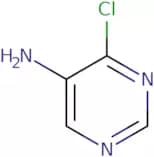
CAS :<p>4-Chloro-5-aminopyrimidine (4CAP) is an inhibitor of the enzyme purine nucleoside phosphorylase, which is involved in the synthesis of purines and pyrimidines. 4CAP has potent inhibitory activity with a Ki value of 0.06 μM, which is comparable to that of zebularine. 4CAP has also been shown to have antiinflammatory properties in lung tissue. The molecular modeling studies show that 4CAP binds to the hydroxyl group on the enzyme and prevents it from forming a covalent bond with its substrate. This causes a decrease in the rate of reaction time for the enzyme, resulting in decreased production of purines and pyrimidines.</p>Formule :C4H4ClN3Degré de pureté :Min. 95%Masse moléculaire :129.55 g/mol4-Amino-6-hydroxy-2-methylpyrimidine
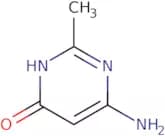
CAS :<p>4-Amino-6-hydroxy-2-methylpyrimidine (4AMMP) is a heterocyclic compound that belongs to the group of pyrimidines. It has been shown to react with morpholine and acrylic acid in an oxidation sequence. The reaction proceeds through an elimination, forming formaldehyde, which condenses with hydrolyzed piperazine to give the final product. 4AMMP can also be alkylated with a variety of reagents such as methyl iodide or dimethyl sulfate.</p>Formule :C5H7N3ODegré de pureté :Min. 95%Couleur et forme :PowderMasse moléculaire :125.13 g/mol3'-Azido-3'-deoxy-5'-O-tritylthymidine
CAS :<p>An intermediate in the production of Zidovudine, the FDA approved medication for treatment of AIDS.</p>Formule :C29H27N5O4Degré de pureté :Min. 98 Area-%Couleur et forme :White PowderMasse moléculaire :509.56 g/mol2',3'-Dideoxyuridine-5'-O-monothiophosphate
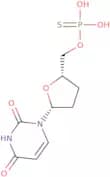
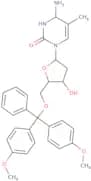
CAS :2',3'-Dideoxyuridine-5'-O-monothiophosphate is an antiviral nucleoside that inhibits viral DNA synthesis. It is a phosphoramidate prodrug of the natural compound deoxyuridine monophosphate (dUMP). 2',3'-Dideoxyuridine-5'-O-monothiophosphate has been shown to be active against human papilloma virus and to inhibit the replication of some DNA viruses, including herpes simplex virus, cytomegalovirus, and Epstein-Barr Virus. This drug has also been shown to have anticancer activity in vitro and in vivo.Formule :C9H13N2O6PSDegré de pureté :Min. 95%Masse moléculaire :308.25 g/mol5'-O-DMT-thymidine-3'-lcaa-CPG
5'-O-DMT-thymidine-3'-lcaa-CPG is a nucleoside, ribonucleoside, and diphosphate that inhibits viral DNA synthesis. It is a novel compound with antiviral properties that has been shown to inhibit the replication of human cytomegalovirus (HCMV) and herpes simplex type 1 virus. 5'-O-DMT-thymidine-3'-lcaa-CPG also functions as an anticancer agent by inhibiting DNA synthesis in tumor cells. This nucleoside analog is phosphoramidite, which can be used for the preparation of modified oligonucleotides. 5'-O-DMT-thymidine-3'-lcaa-CPG has high purity and high quality.Degré de pureté :Min. 95%Couleur et forme :Powder8-Amino-2'-deoxy-N6,N8-di-DMF-5'-O-DMT-adenosine 3'-CE phosphoramidite
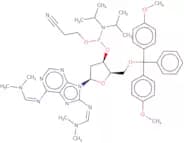
CAS :8-Amino-2'-deoxy-N6,N8-di-DMF-5'-O-DMT-adenosine 3'-CE phosphoramidite is a novel nucleoside analog with antiviral and anticancer properties. It is synthesized by reacting 8-aminoimidazo[2,1-b]thiazole 1,3(2H)-dione (AITD) with N6,N8-diisopropyl dATP to form the aminothiazole phosphate intermediate. This intermediate is then reacted with 5'-O-(4,4'-dimethoxytrityl)-2',3',5' triphosphate (DMTrP) to produce the desired product. The synthesis of 8AAODMTAP has been shown to be more efficient than other synthesized nucleosides due to its high purity and lack of impurities.Formule :C46H59N10O6PDegré de pureté :Min. 95%Masse moléculaire :879 g/mol2',3'-Dideoxyguanosine-5'-O-(1-thiotriphosphate)
CAS :<p>2',3'-Dideoxyguanosine-5'-O-(1-thiotriphosphate) (2,3'-ddGTP) is a nucleoside that is synthesized using phosphoramidite chemistry. It has antiviral and anticancer activity, as well as the ability to activate cellular transcription. 2,3'-Dideoxyguanosine-5'-O-(1-thiotriphosphate) can be used in the synthesis of modified nucleosides or in the synthesis of novel nucleosides. The compound was found to inhibit DNA replication by binding to the enzyme ribonucleotide reductase. 2,3'-Dideoxyguanosine-5'-O-(1-thiotriphosphate) can also be used for DNA sequencing and as a cytotoxic agent in cancer chemotherapy.</p>Formule :C10H16N5O11P3SDegré de pureté :Min. 95%Masse moléculaire :507.25 g/mol8-Bromo-N6-(dimethylaminomethylidene)-2'-deoxyadenosine
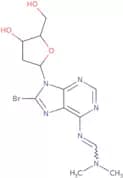
CAS :8-Bromo-N6-(dimethylaminomethylidene)-2'-deoxyadenosine is a phosphoramidite that is used in the preparation of antiviral nucleosides and monophosphate. It has been shown to have anticancer activity. 8-Bromo-N6-(dimethylaminomethylidene)-2'-deoxyadenosine is synthesized by reacting an acid halide with a 2'-deoxyribonucleotide. This reaction produces a 2'-bromo adenosine derivative, which is then reacted with dimethylamine to produce the desired product. The synthesis of 8-bromo-N6-(dimethylaminomethylidene)-2'-deoxyadenosine can be performed on a large scale using an automated process.Formule :C13H17BrN6O3Degré de pureté :Min. 95%Masse moléculaire :385.22 g/mol2-Methylthio-6-chloropurine
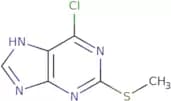
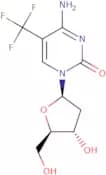
CAS :<p>2-Methylthio-6-chloropurine riboside is a nucleotide analog that is used as a substrate to study the enzymatic modification of RNA. The compound has been synthesized by reacting 2-methylthio-6-chloropurine with ribose and purine bases in a postsynthetic modification. To detect the product, 2-methylthio-6-chloropurine riboside was labeled with 32P and then detected using mass spectrometry. In order to identify the structure of this compound, it was subjected to chromatography and spectroscopy. This process allowed for the identification of 2-methylthio-6-chloropurine riboside as an analog of N6 methyladenosine.</p>Formule :C6H5CIN4SDegré de pureté :Min. 95%Masse moléculaire :304.11 g/mol2'-Deoxy-5-(trifluoromethyl)cytidine
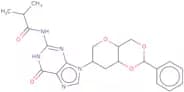
CAS :<p>2'-Deoxy-5-(trifluoromethyl)cytidine is a synthetic nucleoside analogue that inhibits the cytidine deaminase enzyme. It is used in the treatment of some types of leukemia and other cancers. The compound, which has a trifluoromethyl group on the 2' position, binds to the active site of cytidine deaminase and prevents it from functioning. This leads to an accumulation of thymidylate, which is required for DNA synthesis. The tumor tissue also contains high concentrations of this drug and its metabolites, making it more effective against cancer cells than normal cells. 2'-Deoxy-5-(trifluoromethyl)cytidine has been shown to inhibit anabolism in tumor tissue in the presence of high concentrations of phosphorylases, which are enzymes that catalyze reactions that break down carbohydrates and proteins into smaller molecules such as glucose or amino acids.</p>Formule :C10H12F3N3O4Degré de pureté :Min. 95%Masse moléculaire :295.22 g/mol1,5-Anhydro-4,6-O-benzylidene-2,3-dideoxy-2-(N2-isobutyrylguanidin-1-yl)-D-glucitol
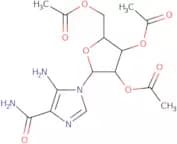
1,5-Anhydro-4,6-O-benzylidene-2,3-dideoxy-2-(N2-isobutyrylguanidin-1-yl)-D-glucitol is an activator that can be used in the synthesis of DNA and RNA. It is a novel compound with antiviral properties and anticancer effects. It has been shown to have high purity and quality. This activator is a phosphoramidite that can be used in the synthesis of DNA or RNA and has been modified to have antiviral properties. It is synthesized using deoxyribonucleosides as starting materials, which are obtained from natural sources such as yeast extract or tryptophan.Formule :C22H25N5O5Degré de pureté :Min. 95%Masse moléculaire :439.48 g/mol5-Amino-1-(2',3',5'-tri-O-acetyl-b-D-ribofuranosyl)-imidazole-4-carboxamide
CAS :<p>5-Amino-1-(2',3',5'-tri-O-acetyl-b-D-ribofuranosyl)-imidazole-4-carboxamide (AICAR) is a high purity novel nucleotide analog that has been shown to be an activator of AMPK. AICAR can act as a substitute for ATP, the molecule that drives cellular energy production. AICAR has been shown to inhibit tumor growth and induce apoptosis in cancer cells. This compound also inhibits viral RNA replication by competitively binding to the enzyme polymerase, which is essential for viral replication.</p>Formule :C15H20N4O8Degré de pureté :Min. 95%Masse moléculaire :384.34 g/mol5-Fluoro-1-(2'-deoxy-2'-fluoro-5'-O-trityl-b-L-lyxofuranosyl)-uracil
5-Fluoro-1-(2'-deoxy-2'-fluoro-5'-O-trityl-b-L-lyxofuranosyl)-uracil is a phosphoramidite, activator, and synthetic nucleoside that has been modified to contain fluorine atoms. 5-Fluoro-1-(2'-deoxy-2'-fluoro-5'-O-trityl-b-L-lyxofuranosyl)-uracil is an antiviral agent that was developed for the treatment of HIV/AIDS and cancer. It inhibits the synthesis of DNA by inhibiting the enzyme ribonucleotide reductase. This drug also has anticancer properties because it inhibits the synthesis of DNA in tumor cells and activates apoptosis, causing cell death.Degré de pureté :Min. 95%Chemical phosphorylating reagent (cpr)
CAS :Chemical phosphorylating reagent (CPR) is a powerful tool for the study of kinases, which are enzymes that regulate cellular processes such as cell division and apoptosis. CPR has been shown to be effective in inhibiting the activity of certain kinases that are involved in tumor growth and progression. It has also been used as an anticancer agent, inducing apoptosis in cancer cells. CPR is an analog of toxaphene and labetalol, two compounds with known kinase inhibitor activity. This reagent has been tested on human urine samples and Chinese hamster ovary cells, demonstrating its potential as a valuable research tool for studying kinase signaling pathways and developing new cancer therapies.Formule :C5H10O5Degré de pureté :Min. 95%Masse moléculaire :150.13 g/mol1-(2'-Deoxy-5'-O-DMT-2'-fluoro-b-D-arabinofuranosyl)uracil 3'-CE phosphoramidite
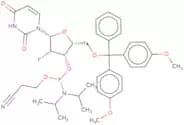
CAS :<p>1-(2'-Deoxy-5'-O-DMT-2'-fluoro-b-D-arabinofuranosyl)uracil 3'-CE phosphoramidite is a novel nucleoside monophosphate that has been modified with fluorine at the 2' position and a deoxyribose sugar. 1-(2'-Deoxy-5'-O-DMT-2'-fluoro-b-D-arabinofuranosyl)uracil 3'-CE phosphoramidite may be useful for antiviral treatment, as it can inhibit human immunodeficiency virus type 1 (HIV1) replication in vitro by inhibiting HIV1 reverse transcriptase. This drug also has anticancer properties, which may be due to its ability to inhibit DNA synthesis or promote apoptosis.</p>Formule :C39H46FN4O8PDegré de pureté :Min. 95%Couleur et forme :White To Off-White SolidMasse moléculaire :748.8 g/mol1-(2',3'-Dideoxy-2',3'-didehydro-2'-fluoro-5'-O-trityl-b-L-ribofuranosyl)-uracil
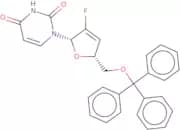
<p>1-(2',3'-Dideoxy-2',3'-didehydro-2'-fluoro-5'-O-trityl-b-L-ribofuranosyl)-uracil is a synthetic nucleoside that is activated by phosphorylation. This nucleoside is an antiviral and anticancer agent, and has been shown to be active against HIV, cytomegalovirus, herpes simplex virus type 1, and lymphocytic leukemia cells. It has also been shown to have anti-inflammatory properties. The compound is a monophosphate and diphosphate, which are more potent than the corresponding ribonucleosides. 1-(2',3'-Dideoxy-2',3'-didehydro-2'-fluoro-5'-O-trityl-b-L-ribofuranosyl)-uracil has CAS number 26582, high purity, high quality.</p>Formule :C28H23FN2O4Degré de pureté :Min. 95%Masse moléculaire :470.49 g/mol2,6-Diamino-9-(2'-deoxy-2'-fluoro-b-D-arabinofuranosyl)purine
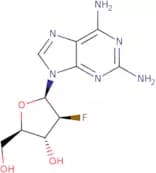
CAS :<p>2,6-Diamino-9-(2'-deoxy-2'-fluoro-b-D-arabinofuranosyl)purine is a synthetic purine nucleoside analog. The fluorine substitution and sugar modification allow it to mimic natural nucleosides but disrupt DNA or RNA synthesis when incorporated. The fluorine makes the molecule more chemically stable and can influence how enzymes interact with it. Like other nucleoside analogs, it has the potential to act as a chain terminator or inhibit key enzymes like polymerases or reverse transcriptases.</p>Formule :C10H13FN6O3Degré de pureté :Min. 95%Couleur et forme :White PowderMasse moléculaire :284.25 g/molAcetoacetyl coenzyme A trisodium salt tetrahydrate
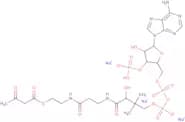
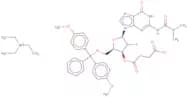
CAS :<p>Acetoacetyl coenzyme A trisodium salt tetrahydrate is a novel antiviral agent that inhibits the synthesis of viral DNA and RNA. Acetoacetyl CoA has been shown to inhibit the replication of HIV, HSV-1 and HSV-2, influenza virus, and cytomegalovirus (CMV). The mechanism of action is not yet known but may be related to its ability to activate cellular DNA polymerase β. Acetoacetyl CoA also has a high purity and quality, as well as being modified for use in phosphoramidites.</p>Formule :C25H37N7Na3O18P3S·4H2ODegré de pureté :Min. 96 Area-%Couleur et forme :PowderMasse moléculaire :989.62 g/mol9-(2'-Deoxy-5'-O-DMT-2'-fluoro-b-D-arabinofuranosyl)-N2-isobutyrylguanine 3'-O-succinate triethylammonium salt
<p>9-(2'-Deoxy-5'-O-DMT-2'-fluoro-b-D-arabinofuranosyl)-N2-isobutyrylguanine 3'-O-succinate triethylammonium salt is a modified nucleoside phosphoramidite. It is used as an antiviral and anticancer agent, as well as an activator in DNA synthesis. 9-(2'-Deoxy-5'-O-DMT-2'-fluoro-b-D-arabinofuranosyl)-N2-isobutyrylguanine 3'-O-succinate triethylammonium salt has been shown to be active against HIV, herpes simplex virus type 1, herpes simplex virus type 2, cytomegalovirus, influenza A virus, and human papillomavirus types 16 and 18.</p>Formule :C39H39FN5O10·C6H16NDegré de pureté :Min. 95%Masse moléculaire :858.97 g/mol