Nucléosides
Les nucléosides sont des building blocks fondamentaux des acides nucléiques, composés d'une base azotée attachée à une molécule de sucre. Dans cette section, vous trouverez une large gamme de nucléosides essentiels pour la recherche en biologie moléculaire, biochimie et pharmacologie. Ces composés jouent des rôles cruciaux dans la synthèse de l'ADN et de l'ARN, et sont également vitaux dans divers processus métaboliques. Les nucléosides sont utilisés pour étudier le matériel génétique, développer des thérapies antivirales et anticancéreuses, et comprendre les mécanismes cellulaires. Chez CymitQuimica, nous proposons des nucléosides de haute qualité pour soutenir vos besoins en recherche et développement, garantissant pureté et fiabilité pour vos applications expérimentales.
3569 produits trouvés pour "Nucléosides"
Trier par
Degré de pureté (%)
0
100
|
0
|
50
|
90
|
95
|
100
3',5'-O-(1,1,3,3-Tetraisopropyl-1,3-disiloxanediyl)-5-methyluridine
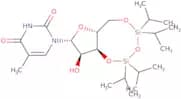
CAS :<p>3',5'-O-(1,1,3,3-Tetraisopropyl-1,3-disiloxanediyl)-5-methyluridine is a novel nucleoside that is used for the synthesis of DNA and RNA. It is a modified nucleoside with antiviral and anticancer properties. 3',5'-O-(1,1,3,3-Tetraisopropyl-1,3-disiloxanediyl)-5-methyluridine has been shown to inhibit human immunodeficiency virus type 1 (HIV) replication in cultured cells. In addition to its antiviral activity against HIV type 1 (HIV-1), 3',5'-O-(1,1,3,3-Tetraisopropyl-1,3-disiloxanediyl)-5-methyluridine also inhibits the growth of cancerous cells by acting as an inhibitor of DNA</p>Formule :C22H40N2O7Si2Degré de pureté :Min. 95%Masse moléculaire :500.73 g/mol2-Amino-4-(4-methoxyphenyl)pyrimidine
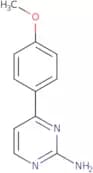
CAS :<p>2-Amino-4-(4-methoxyphenyl)pyrimidine (AMP) is a synthetic nucleoside analog. It has antiviral activity and is used for the treatment of hepatitis B virus infection. AMP inhibits viral DNA polymerase and prevents the synthesis of viral DNA and RNA. It has been modified to include a methoxy group at the 4 position, which provides additional stability against the enzyme ribonuclease. AMP is also an activator of ribonucleotide reductase and can be used as a substrate to synthesize deoxyribonucleosides, phosphoramidites, diphosphate, or monophosphate nucleotides for DNA synthesis.<br>AMP has CAS number 99844-02-7 and is available in high purity.</p>Formule :C11H11N3ODegré de pureté :Min. 95%Masse moléculaire :201.22 g/mol2',3',5'-Tri-O-acetyl-N2-dimethylguanosine
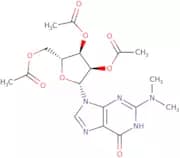
CAS :2',3',5'-Tri-O-acetyl-N2-dimethylguanosine is a novel modified nucleoside. It is a monophosphate that has been shown to be an activator of DNA and RNA synthesis, which can lead to the production of cancer cells. 2',3',5'-Tri-O-acetyl-N2-dimethylguanosine also has antiviral and antibacterial properties, as well as anticancer activity. This compound is used as a phosphoramidite in the synthesis of oligonucleotides for use in research and therapeutic applications.Formule :C18H23N5O8Degré de pureté :Min. 95%Masse moléculaire :437.4 g/molN6-Benzoyl-7-deaza-2'-deoxyadenosine
CAS :<p>N6-Benzoyl-7-deaza-2'-deoxyadenosine is a novel synthetic monophosphate activator that can be used to induce cell death in cancer cells. It is structurally similar to the natural nucleotide adenosine, and it binds to the same receptors on cells as adenosine. N6-Benzoyl-7-deaza-2'-deoxyadenosine has been shown to inhibit viral replication by interfering with DNA synthesis and RNA transcription, which are essential for viral reproduction.</p>Formule :C18H18N4O4Degré de pureté :Min. 95%Masse moléculaire :354.36 g/mol2’-O,4’-C-Methylenecytidine
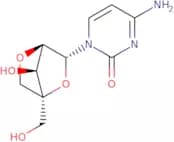
CAS :<p>2’-O,4’-C-Methylenecytidine is a nucleoside that has been used to synthesize oligonucleotides. It has been shown to form duplexes with complementary DNA and RNA strands. 2’-O,4’-C-Methylenecytidine forms bicyclic analogues with high efficiency and can be used as an n-type structural probe.</p>Degré de pureté :Min. 95%3'-O-Azidomethyl 2'-deoxyguanosine 5'-O-triphosphate sodium salt
<p>3'-O-Azidomethyl 2'-deoxyguanosine 5'-O-triphosphate sodium salt is an antiviral and anticancer agent used in the treatment of HIV, hepatitis B, hepatitis C, herpes simplex virus type 1, herpes simplex virus type 2, varicella zoster virus, cytomegalovirus, Epstein-Barr virus, and Kaposi's sarcoma. It is a nucleotide analog that inhibits viral replication by inhibiting DNA synthesis. The phosphate group on this compound is modified with an azide group to inhibit deamination by phosphodiesterases. This product has been shown to be effective against leukemia cells.</p>Degré de pureté :Min. 95%2'-Deoxy-5'-O-FDMT-N2-isobutyryl-guanosine 3'-CE phosphoramidite
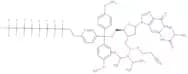
CAS :Produit contrôlé2'-Deoxy-5'-O-FDMT-N2-isobutyryl-guanosine 3'-CE phosphoramidite is a modified nucleoside that is used as an antiviral agent. It is synthesized by modifying the 2'-deoxyribose sugar with a 2'-deoxy-5'-O-(4,4'-dimethoxytrityl)-N2-isobutyrylguanosine 3' phosphate. This compound has shown anticancer activity in vitro and has been studied in animal models. The synthesis of this compound can be accomplished through the use of diphosphate, which gives it an advantage over natural nucleosides because it does not require ribonucleotides.Formule :C54H57F17N7O8PDegré de pureté :Min. 95%Masse moléculaire :1,286.02 g/mol(5'S)-8,5'-Cyclodeoxyadenosine CE phosphoramidite
CAS :(5'S)-8,5'-Cyclodeoxyadenosine CE phosphoramidite is a nucleoside that is used in the synthesis of DNA. It is an analog of adenosine and has antiviral and anticancer properties. It also has been shown to inhibit the growth of certain types of cancer cells by inhibiting the production of deoxyribonucleosides. (5'S)-8,5'-Cyclodeoxyadenosine CE phosphoramidite can be used as a monophosphate or as a diphosphate for incorporation into DNA strands. This compound belongs to the group of modified nucleosides, which are synthetically produced compounds that are different from naturally occurring nucleosides found in DNA. (5'S)-8,5'-Cyclodeoxyadenosine CE phosphoramidite is purified and has high purity when purchased from us.Formule :C47H50N7O7PDegré de pureté :Min. 95%Masse moléculaire :855.92 g/molN5-Benzoyl-2'-deoxy-5'-O-DMT-adenosine 3'-succinyl CPG 500 Å
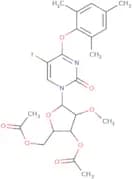
N5-Benzoyl-2'-deoxy-5'-O-DMT-adenosine 3'-succinyl CPG 500 Å is a modified nucleoside that is used for the synthesis of DNA and RNA. It is an activator of antiviral and anticancer drugs. N5-Benzoyl-2'-deoxy-5'-O-DMT-adenosine 3'-succinyl CPG 500 Å has been shown to be an effective cancer treatment agent in vivo, as well as an inhibitor of viral replication. It can also be used in the synthesis of nucleosides and phosphoramidites.Degré de pureté :Min. 95%Couleur et forme :Powder3',5'-Di-o-acetyl-5-fluoro-O4-(2,4,6-trimethylphenyl)-2'-o-methyluridine
CAS :<p>3',5'-Di-O-acetyl-5-fluoro-O4-(2,4,6-trimethylphenyl)-2'-O-methyluridine is a novel monophosphate nucleoside analog that is activated by T4 polynucleotide kinase. It is synthesized from the corresponding phosphoramidite and reacts with the 5'-OH group of a ribonucleoside to form a 3',5'-di-O-acetylribonucleoside. The diacetyl group confers increased stability to the molecule and also provides an acetyl group for incorporation into DNA. This compound has antiviral activity against herpes simplex virus type 1 (HSV1) in cell culture and has shown anticancer properties in animal studies.</p>Formule :C23H27FN2O8Degré de pureté :Min. 95%Masse moléculaire :478.5 g/mol3’-O-tert-Butyldiphenylsilylthymidine
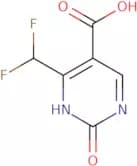
CAS :Used as a protected thymidine nucleoside in chemical synthesis, specifically as an intermediate in the preparation of other thymidine derivatives, particularly 5'-modified nucleosides and oligonucleotides. The tert-butyldiphenylsilyl (TBDPS) group is a silyl protecting group selectively attached to the 3' hydroxyl group of thymidine.Formule :C26H32N2O5SiDegré de pureté :Min. 95%Couleur et forme :White PowderMasse moléculaire :480.63 g/mol4-(difluoromethyl)-2-hydroxy-pyrimidine-5-carboxylic acid
CAS :4-(difluoromethyl)-2-hydroxy-pyrimidine-5-carboxylic acid is a novel monophosphate and nucleotide analogue, which can activate the HIV reverse transcriptase. It has been shown to be cytotoxic to cancer cells in vitro. 4-(difluoromethyl)-2-hydroxy-pyrimidine-5-carboxylic acid has been used for the synthesis of phosphoramidites and DNA and RNA analogues.Formule :C6H4F2N2O3Degré de pureté :Min. 95%Masse moléculaire :190.1 g/mol2'-Deoxy-5'-S-DMT-5'-thioinosine 3'-CE phosphoramidite
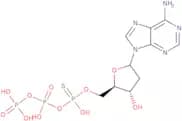
<p>2'-Deoxy-5'-S-DMT-5'-thioinosine 3'-CE phosphoramidite is a novel nucleoside analogue that has antiviral activity. It can be synthesized from 2'-deoxyribonucleosides and 5'-thioinosine monophosphate. This compound inhibits viral replication by inhibiting the synthesis of viral diphosphate, which is required for DNA synthesis. The compound also has anticancer properties and can inhibit the growth of tumor cells by blocking the process of DNA synthesis.</p>Degré de pureté :Min. 95%2'-Deoxyadenosine-5'-O-(1-thiotriphosphate) lithium salt - 100 mM aqueous solution
CAS :<p>2'-Deoxyadenosine-5'-O-(1-thiotriphosphate) lithium salt is a circularization agent that can be used in the efficient method for the synthesis of DNA. It inhibits the growth of bacteria by binding to their DNA and preventing transcription. 2'-Deoxyadenosine-5'-O-(1-thiotriphosphate) lithium salt has shown inhibitory effects against tuberculosis and other infectious diseases, including diphtheria, tetanus, typhoid fever, and malaria. This drug also prevents the replication of viral RNA. The inhibition occurs through an analog mechanism at the level of nucleic acid synthesis or polymerase chain reaction (PCR). The thiophosphate group is cleaved from the triphosphate moiety in the presence of metal ions such as Zn2+, Mg2+, Mn2+, or Ca2+. The active form is enzymatically hydrolyzed by covalent enzyme activity to</p>Formule :C10H16N5O11P3S·xLiDegré de pureté :Min. 95%Masse moléculaire :507.25 g/molGuanosine 5'-[beta,gamma-imido]triphosphate tetralithium hydrate
CAS :<p>Guanosine 5'-[beta,gamma-imido]triphosphate tetralithium hydrate (GTP) is a nucleotide that is synthesized from guanosine 5'-diphosphate. GTP is an effector molecule that regulates the cytosolic protein synthesis and transport pathways. It binds to a number of proteins, including the guanine nucleotide-binding protein, which regulates the metabolic processes in cells. GTP has been shown to be beneficial in treating cancer by inducing apoptosis and inhibiting tumor growth. In addition, Guanosine 5'-[beta,gamma-imido]triphosphate tetralithium hydrate has been shown to inhibit congestive heart failure by reducing free radical production and increasing intracellular adenosine levels.</p>Formule :C10H13Li4N6O13P3Degré de pureté :Min. 95%Masse moléculaire :546 g/molAristeromycin
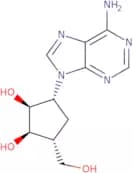
CAS :<p>Carbocyclic nucleoside antibiotic</p>Formule :C11H15N5O3Degré de pureté :Min. 95%Masse moléculaire :265.27 g/mol2',3',5'-Tri-O-acetyl-5-methyluridine
<p>2',3',5'-Tri-O-acetyl-5-methyluridine is a nucleoside that is used as a substrate for the enzyme, methylmagnesium (MeMg) nucleotides. It has been shown to have a high basicity and is a good substrate for the enzyme, MeMg nucleotides. 2',3',5'-Tri-O-acetyl-5-methyluridine also has stereoselectivity and can be synthesized with high purity.</p>Degré de pureté :Min. 95%6-Amino-1-methyluracil
CAS :<p>6-Amino-1-methyluracil is a synthetic drug that is used in the treatment of inflammatory diseases, including rheumatoid arthritis and psoriasis. It is also used to treat cancer, such as leukemia and in the treatment of bacterial infections. 6-Amino-1-methyluracil inhibits the synthesis of DNA by inhibiting the enzyme thymidylate synthetase. This inhibition prevents DNA replication and transcription, which leads to cell death. 6-Amino-1-methyluracil binds to cellular proteins through its amino group and hydroxyl group, which are not involved in its chemical reactions. 6-Amino-1-methyluracil has shown great promise as a template molecule for the synthesis of new drugs.</p>Degré de pureté :Min. 95%2'-O-tert-Butyldimethylsilyl-5-methyluridine
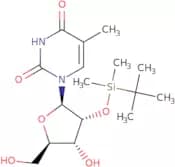
CAS :2'-O-tert-Butyldimethylsilyl-5-methyluridine is a monophosphate of 5-methyluridine. It is an analog of uracil and has been used as an antiviral agent, as well as for the prevention of colorectal cancer. 2'-O-tert-Butyldimethylsilyl-5-methyluridine is also known to be a potent activator of the ribonucleotide reductase enzyme, which may contribute to its anticancer effects. This compound has a high purity and quality, making it easy to use in various applications.Formule :C16H28N2O6SiDegré de pureté :Min. 95%Masse moléculaire :372.49 g/molBiotin-11-deoxyuridine-5'-triphosphate, triethylammonium salt - 1 mM aqueous solution
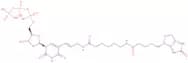
CAS :<p>Biotin-11-deoxyuridine-5'-triphosphate, triethylammonium salt (Biotin-11-dUTP) is a nucleotide analog that is used as a fluorescent substrate for detection of DNA. It is nonradioactive and can be detected in aqueous solution. Biotin-11-dUTP binds to the 3' end of a DNA strand and becomes incorporated into the newly synthesized DNA strand during DNA replication. The incorporation of Biotin-11-dUTP into the newly synthesized strand causes an increase in fluorescence intensity, which can be detected by chemiluminescence. This nucleotide analog has been shown to have high sensitivity for detecting low levels of dsDNA in diploid cells and can be used for detection of bacterial strain, such as Salmonella enterica serovar Typhimurium.</p>Formule :C34H56N7O18P3SDegré de pureté :Min. 95%Masse moléculaire :975.83 g/mol







![Guanosine 5'-[beta,gamma-imido]triphosphate tetralithium hydrate](/_next/image/?url=https%3A%2Fstatic.cymitquimica.com%2Fproducts%2F3D%2Fthumb-webp%2FPCA56403.webp&w=3840&q=75)