Nucléosides
Les nucléosides sont des building blocks fondamentaux des acides nucléiques, composés d'une base azotée attachée à une molécule de sucre. Dans cette section, vous trouverez une large gamme de nucléosides essentiels pour la recherche en biologie moléculaire, biochimie et pharmacologie. Ces composés jouent des rôles cruciaux dans la synthèse de l'ADN et de l'ARN, et sont également vitaux dans divers processus métaboliques. Les nucléosides sont utilisés pour étudier le matériel génétique, développer des thérapies antivirales et anticancéreuses, et comprendre les mécanismes cellulaires. Chez CymitQuimica, nous proposons des nucléosides de haute qualité pour soutenir vos besoins en recherche et développement, garantissant pureté et fiabilité pour vos applications expérimentales.
3569 produits trouvés pour "Nucléosides"
Trier par
Degré de pureté (%)
0
100
|
0
|
50
|
90
|
95
|
100
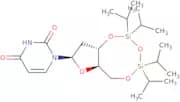
2'-Deoxy-3',5'-O-(1,1,3,3-tetraisopropyl-1,3-disiloxanediyl)uridine
CAS :<p>2'-Deoxy-3',5'-O-(1,1,3,3-tetraisopropyl-1,3-disiloxanediyl)uridine is a novel and synthetic nucleoside analog with antiviral activity. It inhibits the synthesis of DNA by binding to the enzyme ribonucleotide reductase. This compound has been shown to be an activator of PPARs in vitro.</p>Formule :C21H38N2O6Si2Degré de pureté :Min. 95%Masse moléculaire :470.72 g/mol2-Chloroadenosine
CAS :2-Chloroinosine is an adenosine receptor agonist; metabolically stable analog of adenosineFormule :C10H12ClN5O4Degré de pureté :Min. 95%Couleur et forme :PowderMasse moléculaire :301.69 g/molSpacer-c3 cep
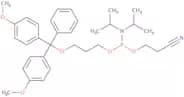
CAS :<p>Spacer-C3 Cep is a novel modified nucleoside phosphoramidite. It has been chemically modified with a spacer arm and 3-Cep (1,2-diaminoethane). Spacer-C3 Cep is an activator for DNA polymerases, which are enzymes that synthesize DNA from deoxyribonucleosides. The modified nucleoside phosphoramidite has antiviral and anticancer activities. It can be used in the synthesis of oligodeoxyribonucleotides for gene therapy or as a monophosphate for the preparation of DNA probes. Spacer-C3 Cep can also be used to synthesize ribonucleotide analogs that inhibit viral replication by inhibiting RNA synthesis.</p>Formule :C33H43N2O5PDegré de pureté :Min. 95%Masse moléculaire :578.7 g/mol2-Deoxy-5'-O-DMT-N2-isobutyryl-8-oxoguanosine 3'-CE phosphoramidite
CAS :<p>2-Deoxy-5'-O-DMT-N2-isobutyryl-8-oxoguanosine 3'-CE phosphoramidite is an 8-oxo modified amidite. The 8-oxo modification is caused naturally in DNA by oxidation so is significant in mutagenesis and ultimately carcinogenesis.</p>Formule :C44H54N7O9PDegré de pureté :Min. 95%Masse moléculaire :855.94 g/molALS-8176
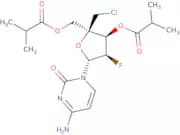
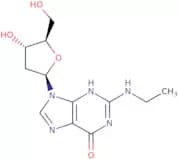
CAS :<p>ALS-8176 is a benzimidazole compound that has been shown to be effective against both wild-type and syncytial viruses. It is also active against the hepatitis B virus, which causes fulminant hepatitis in humans and death in 30% of cases. The antiviral activity of ALS-8176 was demonstrated by its ability to inhibit viral DNA synthesis and to prevent the release of new viral particles. ALS-8176 has also been shown to have a broad spectrum of activity against paramyxoviruses, including mumps, measles, and respiratory syncytial virus (RSV). This drug can be used for the treatment of influenza A and B when administered during the early stages of infection. ALS-8176 blocks the antibody response to influenza virus infection as well as monoclonal antibody binding sites on the hemagglutinin protein, preventing fusion between infected cells.</p>Formule :C18H25ClFN3O6Degré de pureté :Min. 95%Couleur et forme :PowderMasse moléculaire :433.86 g/molN2-Ethyl-2′-deoxyguanosine - 98 % HPLC
CAS :<p>N2-Ethyl-2′-deoxyguanosine is an important metabolite of N2-ethyl-3′,5′-dideoxyadenosine (NEDA) and has been detected in urine samples from Sprague-Dawley rats. The biological properties of this metabolite are not well understood, but it has been shown to have genotoxic effects in mammalian cells and to be carcinogenic in a rat model. N2-Ethyl-2′-deoxyguanosine is also able to enhance the repair of damaged DNA and has functional groups that are similar to those found in cancer cells.</p>Formule :C12H17N5O4Degré de pureté :Min. 98 Area-%Couleur et forme :White PowderMasse moléculaire :295.29 g/molN6-Benzyladenosine 5'-diphosphate sodium salt - 10 mM aqueous solution
CAS :<p>N6-Benzyladenosine 5'-diphosphate sodium salt is a modified nucleoside that has a high purity, which is suitable for synthesis of DNA or RNA. It can be used in the modification of deoxyribonucleosides, ribonucleosides, and phosphoramidites. N6-Benzyladenosine 5'-diphosphate sodium salt has been shown to have anticancer effects and antiviral effects. This drug also has novel properties such as an ability to inhibit the proliferation of cancer cells.</p>Formule :C17H21N5O10P2Degré de pureté :Min. 95%Couleur et forme :Colorless PowderMasse moléculaire :517.32 g/molAdenosine 5'-monophosphate sodium
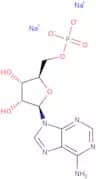
CAS :<p>Adenosine 5'-monophosphate sodium is a nucleotide that is involved in the energy metabolism of cells. It has been shown to inhibit oxidative injury and to activate signal pathways in response to external stimuli, such as glucose deprivation. Adenosine 5'-monophosphate sodium can be synthesized from ATP by the enzyme adenosine kinase.</p>Formule :C10H13N5O7P·NaDegré de pureté :Min. 98 Area-%Couleur et forme :White PowderMasse moléculaire :369.2 g/mol2-Fluoroadenosine
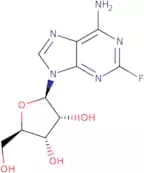
CAS :<p>2-Fluoroadenosine is a nucleoside that has shown high resistance to the enzyme cyclase. This property may be due to its structural and conformational properties, which are different from those of adenosine. 2-Fluoroadenosine has been shown to inhibit the synthesis of ATP in ventricular myocardium and fat cells, as well as increase levels of adenylate kinase in blood. It has also been shown to have potential as a drug target for autoimmune diseases, such as multiple sclerosis. 2-Fluoroadenosine can be used for biochemical and pharmacokinetic studies because it is rapidly metabolized by the liver and excreted in urine.<br>2-Fluoroadenosine can also be used to measure changes in the ratio of adenylate kinase:adenylate kinase reductase (AKAR) in blood plasma.</p>Formule :C10H12FN5O4Degré de pureté :Min. 95%Couleur et forme :White Slightly Yellow PowderMasse moléculaire :285.23 g/mol5'-Biotin phosphoramidite
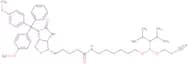
CAS :<p>Biotin phosphoramidite is a biotin-containing compound that is used as an extracellular probe for bacterial cells. It can be used to permeabilize cells, and it has been shown to have cytosolic uptake in various cell types. Biotin phosphoramidite binds to peptidoglycan in the cytosol of bacterial cells, and this binding induces internalization. This compound also has the ability to bind to peptidoglycan in the cytosol of eukaryotic cells, but does not induce internalization. Experiments with vibrio parahaemolyticus suggest that biotin phosphoramidite is a marginally effective inhibitor of this organism's uptake of unmodified peptidoglycan.</p>Formule :C46H64N5O6PSDegré de pureté :Min. 95%Masse moléculaire :846.07 g/mol5-Bromo-2'-deoxycytidine
CAS :<p>5-Bromo-2'-deoxycytidine is a synthetic nucleoside analogue that is used to treat diabetic neuropathy. It is structurally similar to cytidine, and inhibits the enzyme DNA polymerase by intramolecular catalysis. This causes deamination of the 5-bromo group, which prevents further synthesis of DNA. 5-Bromo-2'-deoxycytidine has been shown to be effective in vivo in a mouse model for inflammatory bowel diseases, including colitis and eosinophilic enteritis. The drug was also found to inhibit the production of Eosinophil peroxidase from HL-60 cells in vitro.</p>Formule :C9H12BrN3O4Degré de pureté :Min. 95%Couleur et forme :Off-White PowderMasse moléculaire :306.11 g/molGuanosine 5'-diphosphate sodium
CAS :<p>Pyruvate kinase substrate</p>Formule :C10H15N5O11P2•Na2Degré de pureté :Min. 95%Couleur et forme :PowderMasse moléculaire :466.19 g/mol2-Phenylaminoadenosine
CAS :<p>2-Phenylaminoadenosine (2-PA) is a potent and selective inhibitor of the P2Y receptor. 2-PA has been shown to reduce myocardial infarct size in vivo in mice, which may be due to its ability to inhibit the release of dopamine from the brain. In addition, 2-PA binds to LPS receptors on endothelial cells, reducing the production of proinflammatory cytokines and preventing platelet aggregation. 2-PA also inhibits the activation of toll-like receptor 4 (TLR4) in human monocytes, leading to reduced expression of proinflammatory cytokines and increased expression of anti-inflammatory cytokines.<br>2-PA is an agonist that binds with high affinity to P2Y receptors on erythrocytes. This binding results in decreased adenosine triphosphate (ATP) production by adenosine deaminase, which leads to decreased intracellular calcium levels and inhibition of neutroph</p>Formule :C16H18N6O4Degré de pureté :Min. 95%Couleur et forme :PowderMasse moléculaire :358.35 g/mol2-O-Ethylthymidine
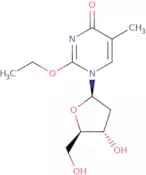
CAS :<p>2-O-Ethylthymidine is a nucleoside that is used to study the structure and dynamics of DNA. It can be synthesized by reacting 1-β-D-arabinofuranosylbenzene with ethylmercury acetate. 2-O-Ethylthymidine can be used in kinetic studies as it is specific for dna. It has been shown to have a conformational change, which is stabilized by the presence of an aromatic ring such as phenanthrene. This compound was also found to inhibit neuroblastoma cell growth in vitro.</p>Formule :C12H18N2O5Degré de pureté :Min. 95%Couleur et forme :PowderMasse moléculaire :270.28 g/mol8-Amino-2’-deoxyadenosine
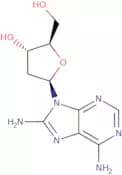
CAS :<p>8-Amino-2’-deoxyadenosine (8AAD) is a nucleoside that is used in the laboratory for the analysis of dna duplexes. It stabilizes dna duplexes in an acidic environment, and it can be used to analyze the stability of dna duplexes at neutral pH. 8AAD can also stabilize triplex structures formed by 8AAD, amines, and purines. The orientation of these bases in the triplex structure is important because they can determine which strands are cleaved during hydrolysis.</p>Formule :C10H14N6O3Degré de pureté :Min. 95%Masse moléculaire :266.26 g/molN6-Dibenzoyl-3-deaza-2'-deoxy-5'-O-DMT-3-methyladenosine 3'-CE phosphoramidite
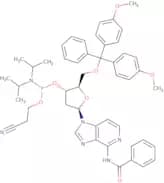
CAS :N6-Benzoyl-3-deaza-2'-deoxy-5'-O-DMT-3-methyladenosine 3' is a nucleoside that has been modified to be resistant to the enzymatic degradation by ribonucleases. The phosphoramidite is used in the synthesis of DNA and can be used as an antiviral or anticancer drug. It also acts as a competitive inhibitor of adenosine deaminase, which is an enzyme involved in the metabolism of purines. N6-Benzoyl-3-deaza-2'-deoxy-5'-O-DMT-3 methyladenosine 3' can inhibit viral replication by inhibiting RNA polymerase activity, and it has been shown to have antifungal properties.Formule :C56H59N6O8PDegré de pureté :Min. 95%Masse moléculaire :870.99 g/mol5-Aminoallyl uridine 5'-triphosphate sodium salt
CAS :<p>5-Aminoallyl uridine 5'-triphosphate sodium salt is used in Nucleic Acid Sequence Based Amplification or RNA labelling.</p>Formule :C12H20N3O15P3·xNaDegré de pureté :Min. 95%Masse moléculaire :539.22 g/molATP-acetyl-desthiobiotin
<p>ATP-acetyl-desthiobiotin is a small molecule that inhibits the activity of tyrosine kinases. It has been shown to inhibit tumor growth in cultured cells and in mouse models, and is currently being evaluated in clinical trials for cancer treatment. ATP-acetyl-desthiobiotin is a competitive inhibitor of bosutinib (BST), an inhibitor of Bcr-Abl tyrosine kinase, which is associated with chronic myeloid leukemia. ATP-acetyl-desthiobiotin has also been shown to induce autophagy and inhibit cell proliferation, making it a potential anticancer drug.</p>Formule :C20H32N7O15P3Degré de pureté :Min. 95%Masse moléculaire :703.43 g/molMorpholino A monomer
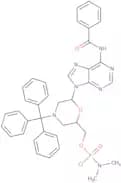
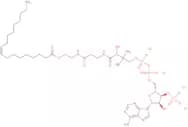
CAS :Morpholino A is a modified nucleoside amidite used to prepare morpholino oligomersFormule :C38H37ClN7O4PDegré de pureté :Min. 98 Area-%Couleur et forme :White PowderMasse moléculaire :722.17 g/molOleoyl coenzyme A lithium salt
CAS :Oleoyl coenzyme A lithium salt is a fatty acid that belongs to the class of organic compounds known as aliphatic acyl-coenzyme A. It is synthesized by the enzyme synthetase and can be used to diagnose cascading, linear response, and aldehyde synthesis in carbon nanotubes. Oleoyl coenzyme A lithium salt has been shown to bind to sephadex G-100 and immobilize it on a surface. This immobilization process aids in the diagnosis of various diseases such as diabetes mellitus, cancer, and cardiovascular problems. The chloride anion present in oleoyl coenzyme A lithium salt buffers and stabilizes the pH levels during this process. Oleoyl coenzyme A lithium salt also binds to multi-walled carbon nanotubes (MWNTs) due to its hydrophobic nature, which aids in the detection of markers such as lipids or proteins using immunological techniques.Formule :C39H68N7O17P3S·xLiDegré de pureté :Min. 95%Masse moléculaire :1,031.98 g/mol