Nucléosides
Les nucléosides sont des building blocks fondamentaux des acides nucléiques, composés d'une base azotée attachée à une molécule de sucre. Dans cette section, vous trouverez une large gamme de nucléosides essentiels pour la recherche en biologie moléculaire, biochimie et pharmacologie. Ces composés jouent des rôles cruciaux dans la synthèse de l'ADN et de l'ARN, et sont également vitaux dans divers processus métaboliques. Les nucléosides sont utilisés pour étudier le matériel génétique, développer des thérapies antivirales et anticancéreuses, et comprendre les mécanismes cellulaires. Chez CymitQuimica, nous proposons des nucléosides de haute qualité pour soutenir vos besoins en recherche et développement, garantissant pureté et fiabilité pour vos applications expérimentales.
3569 produits trouvés pour "Nucléosides"
Trier par
Degré de pureté (%)
0
100
|
0
|
50
|
90
|
95
|
100
5'-O-DMT-2'-O-methyl-N6-phenoxyacetyladenosine 3'-CE phosphoramidite
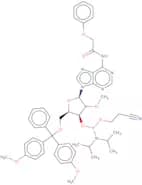
5'-O-DMT-2'-O-methyl-N6-phenoxyacetyladenosine 3'-CE phosphoramidite is a monophosphate, which is a phosphate group that is attached to the 5' carbon on the ribose ring of RNA. This monophosphate has been modified with a 2'-O-methyl group at the 6 position of the adenosine moiety. It has also been modified with a phenoxyacetyl group at the 2 position of the adenosine moiety. The phosphoramidite backbone is an ester bond between phosphorus and nitrogen atoms, and it can be used to make DNA or RNA in vitro. This compound has anticancer properties and antiviral activities against HIV, HSV, and HBV. 5'-O-DMT-2'-O-methyl-N6-phenoxyacetyladenosine 3'-CE phosphoramidite has novel properties that have notFormule :C49H56N7O9PDegré de pureté :Min. 95%Couleur et forme :White PowderMasse moléculaire :918.01 g/mol2'-C-Methylguanosine 5'-diphosphate triethylammonium salt
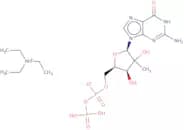
<p>2'-C-Methylguanosine 5'-diphosphate triethylammonium salt is a synthetic nucleotide analog for use in research</p>Formule :C11H16N5O11P2·C18H45N3Degré de pureté :Min. 95%Couleur et forme :PowderMasse moléculaire :759.79 g/mol2'-Deoxy-N6-methyladenosine
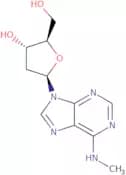
CAS :<p>2'-Deoxy-N6-methyladenosine (2DMA) is a nucleoside that has been found to inhibit the phosphorylation of p2y receptors in rat kidney cells. 2DMA inhibits the production of collagen, which may have a matrix effect on cells. Studies have shown that 2DMA can be used as a sample preparation reagent for nuclear DNA. It has also been shown to be effective at inhibiting transcription and replication of human mitochondrial DNA.</p>Formule :C11H15N5O3Degré de pureté :Min. 95%Couleur et forme :White PowderMasse moléculaire :265.27 g/mol7-Deaza-2'-deoxy-7-iodoguanosine
CAS :<p>The phosphoramidite 7-Deaza-2'-deoxy-7-iodoguanosine is a modified nucleotide that is used in the synthesis of DNA. This compound has antiviral and anticancer properties, as it inhibits viral replication by preventing the synthesis of viral RNA or DNA. It also prevents the production of cancer cells by inhibiting ribonucleotide reductase, an enzyme that reduces ribonucleotides to deoxyribonucleotides for DNA synthesis. The purity of this product is high and the novel nature of this product makes it a valuable reagent for research.</p>Formule :C11H13IN4O4Degré de pureté :Min. 97 Area-%Masse moléculaire :392.16 g/molRef: 3D-W-201559
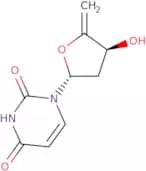
1gÀ demander5gÀ demander250mgÀ demander500mgÀ demander2500mgÀ demander-Unit-ggÀ demander4’,5’-Didehydro-2’,5’-dideoxyuridine
CAS :<p>4’,5’-Didehydro-2’,5’-dideoxyuridine (ddU) is a monophosphate of deoxyribonucleosides. It is an antiviral drug that was originally synthesized in the 1960s to combat viral infections. It has been used as a potential anticancer agent and as an activator for complex DNA synthesis. ddU has also been used in synthesis of phosphoramidites for DNA and RNA analogues.</p>Degré de pureté :Min. 95%2'-O-(2-Methoxyethyl)guanosine
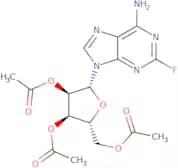
CAS :2'-O-(2-Methoxyethyl)guanosine is a guanosine derivative isolated from the reaction of 2-aminoadenosine with methylsulfonyl chloride. This compound has been shown to react with aromatic hydrocarbons to form a reagent that is useful for the alkylation of nucleophilic groups in organic synthesis.Formule :C13H19N5O6Degré de pureté :Min. 95%Couleur et forme :PowderMasse moléculaire :341.32 g/mol2',3',5'-Tri-O-acetyl-2-fluoroadenosine
CAS :<p>2',3',5'-Tri-O-acetyl-2-fluoroadenosine is nucleoside analog of adenosine for use in research. The addition of a fluorine to an adenosine can change adenosine's properties such as its hydrogen bonding ability and how it interacts with water and other biological molecules. It can also increase the stability of adenosine and increase its half-life in biological systems.</p>Formule :C16H18FN5O7Degré de pureté :Min. 95%Couleur et forme :White To Off-White SolidMasse moléculaire :411.34 g/molN1,N2,N2-Trimethyl-psi-isocytidine
<p>N1,N2,N2-Trimethylpsi-isocytidine is a novel nucleoside analog that has antiviral, anticancer, and immunosuppressive activities. It is an activator of diphosphate kinase and inhibits the formation of deoxyribonucleotides in DNA synthesis. N1,N2,N2-Trimethylpsi-isocytidine is a modified form of cytidine that contains three methyl groups. This agent has been shown to be active against human leukemic cells and can be used for the treatment of cancer and HIV infections.</p>Degré de pureté :Min. 95%3',5'-Diamino-3',5'-dideoxy-3'-Fmoc-thymidine hydrochloride
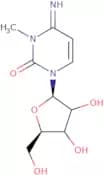
<p>3',5'-Diamino-3',5'-dideoxy-3'-Fmoc-thymidine hydrochloride is a novel nucleoside that inhibits the synthesis of viral DNA. It has antiviral activity against human herpes virus type 1 (HHV-1) and HIV, and is an anticancer agent. 3',5'-Diamino-3',5'-dideoxy-3'-Fmoc-thymidine hydrochloride is synthesized by reacting a diaminopyrimidine with a 3',5'-dideoxyribonucleoside 5' phosphate in the presence of a coupling reagent such as HATU. This synthetic nucleoside has been shown to inhibit the replication of viruses, including human herpes virus type 1 (HHV-1), HIV, and Hepatitis C virus.</p>Degré de pureté :Min. 95%N3-Methylcytidine
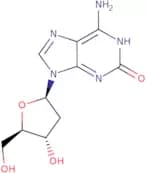
CAS :<p>N3-Methylcytidine is a synthetic analog of uridine. It is used for the treatment of syncytial virus infection, which is a group of diseases caused by viruses that have an RNA genome and replicate by forming syncytia—large groups of infected cells. N3-Methylcytidine inhibits the synthesis of proteins in cells and inhibits the growth of bacteria. This drug has been shown to inhibit actin polymerization and prevents cell spreading. N3-Methylcytidine also binds to RNA polymerase II and blocks its interaction with DNA, inhibiting protein synthesis at the ribosome level. N3-Methylcytidine is metabolized in vivo into methylated cytidine, which can be detected in urine samples using chemical biology methods or fluorescence resonance energy transfer (FRET) analysis. Synonyms: N3-methyluridine; 3-methyluridine</p>Formule :C10H15N3O5Degré de pureté :Min. 95%Couleur et forme :White PowderMasse moléculaire :257.24 g/mol2’-Deoxyisoguanosine
CAS :<p>Incorporated in DNA/RNA hybrids and mismatch pairs to analyse helix stability</p>Formule :C10H13N5O4Degré de pureté :Min. 95%Couleur et forme :PowderMasse moléculaire :267.24 g/mol5'-O-[Bis(4-methoxyphenyl)(phenyl)methyl]-2'-deoxy-N-isobutyrylguanosine
CAS :5'-O-[Bis(4-methoxyphenyl)(phenyl)methyl]-2'-deoxy-N-isobutyrylguanosine is a synthetic nucleoside that is used as a building block in the synthesis of oligonucleotides. This chemical has an electronegativity value of 1.7, which means that it is more electronegative than guanine (1.0). It also has a conjugated system and is stable under a range of conditions. 5'-O-[Bis(4-methoxyphenyl)(phenyl)methyl]-2'-deoxy-N-isobutyrylguanosine reacts with tetrazole in the presence of phosphoramidite, yielding the corresponding 5'-O-(4,4'-dimethoxytrityl)-2'-deoxy-N-isobutyrylguanosine, which can then be used toFormule :C35H37N5O7Degré de pureté :Min. 98 Area-%Couleur et forme :White PowderMasse moléculaire :639.71 g/molN3-Cyanoethyl-5’-O-DMT-2’-O-methyluridine
<p>N3-Cyanoethyl-5’-O-DMT-2’-O-methyluridine is a nucleoside that is synthesized from 5'-O-DMT-2’-O-methyluridine. It has antiviral and anticancer properties, as well as an inhibitory effect on DNA synthesis. N3-Cyanoethyl-5’-O-DMT-2’-O methyluridine is a novel nucleoside with DMT and methylated uracil at the 3' position of the sugar moiety. Synthesis may be achieved by using phosphoramidites or modified nucleosides such as N3-(cyanoethyl)-5'-0-(dimethoxytrityl)thymidine. This product meets high purity standards, with a CAS number of 68719–77–8.</p>Degré de pureté :Min. 95%3’-deoxy-3’-fluorotoyocamycin
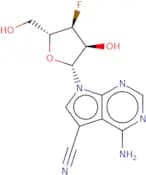
CAS :<p>3’-deoxy-3’-fluorotoyocamycin is a nucleoside, ribonucleoside and antiviral agent. It inhibits the replication of DNA viruses by inhibiting the viral enzyme RNA polymerase. This drug also has anticancer activity and can be used to treat leukemia and other cancers. 3’-deoxy-3’-fluorotoyocamycin can be used as a monophosphate or diphosphate activator for phosphoramidites in the synthesis of modified DNA. It is also a novel drug that has been modified to contain an additional phosphate group at position 3' on the sugar moiety. The CAS number for this compound is 847649-44-9.</p>Degré de pureté :Min. 95%5'-O-DMT-2'-O-methyl-N6-phenoxyacetyladenosine
CAS :<p>5'-O-DMT-2'-O-methyl-N6-phenoxyacetyladenosine is a novel synthetic nucleoside with antiviral and anticancer activities. It is a phosphoramidite that can be used to synthesize oligonucleotides of any sequence. It is a nucleoside analogue that has been shown to inhibit the activity of DNA gyrase and topoisomerase IV, which are enzymes that maintain the integrity of bacterial DNA. 5'-O-DMT-2'-O-methyl-N6-phenoxyacetyladenosine is also an activator of viral transcription and replication.<br>5'-O-DMT-2'-O-methyl-N6-phenoxyacetyladenosine has been shown to be active against methicillin resistant Staphylococcus aureus (MRSA) and Clostridium perfringens, although it is not active against acid fast bacteria such</p>Formule :C40H39N5O8Degré de pureté :Min. 95 Area-%Couleur et forme :PowderMasse moléculaire :717.77 g/mol3'-Deoxy-3'-fluoro-isocytidine
<p>3'-Deoxy-3'-fluoro-isocytidine is a nucleoside that belongs to the class of Deoxyribonucleosides. It is a novel nucleoside that has antiviral and anticancer properties. 3'-Deoxy-3'-fluoro-isocytidine inhibits viral replication by inhibiting the action of DNA polymerase. It also inhibits cancer cell proliferation through inhibition of DNA synthesis and protein synthesis, as well as induction of apoptosis. 3'-Deoxy-3'-fluoro-isocytidine is phosphorylated by ribonucleotide reductase in the erythrocyte to yield its active form, deoxycytidine monophosphate (dCMP).</p>Degré de pureté :Min. 95%2'-Deoxy-5'-O-DMT-cytidine
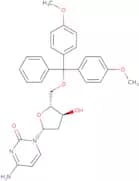
CAS :<p>2'-Deoxy-5'-O-DMT-cytidine is an organic compound. It is a synthetic, combinational and amine nitrogen containing heterocyclic compound that is used in organic synthesis. This chemical is also used as a building block for the synthesis of heterocyclic compounds with other functional groups such as thionyl, formulae, chlorides and hydrogen atoms.</p>Formule :C30H31N3O6Degré de pureté :Min. 95 Area-%Couleur et forme :White PowderMasse moléculaire :529.58 g/molAcetyl coenzyme A sodium salt
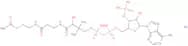
CAS :<p>Acetyl-coenzyme A is an important intermediate in the metabolism of carbohydrates, fats, and proteins. It is a cytosolic molecule that is synthesized from Acetyl-CoA and ATP. The Michaelis–Menten kinetics describe the relationship between the concentration of acetyl-coenzyme A and the rate of its consumption. Acetyl co-enzyme A is found in many different tissues, including plants, animals, and humans. It has an important role in regulating cellular growth and differentiation by activating various enzymes involved in metabolic pathways. Acetyl CoA can be acetylated to form acetyl CoA carboxylic acid (ACC) which then turns into malonyl CoA through a series of reactions. Malonyl CoA then enters the Krebs cycle as a key intermediate for generating energy from fatty acids.</p>Formule :C23H38N7O17P3S·xNaDegré de pureté :Min. 95%Couleur et forme :PowderMasse moléculaire :809.57 g/molN6-Benzoyl-2'-O-(2-methoxyethyl)adenosine
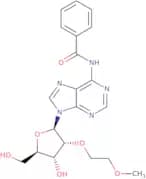
CAS :<p>N6-Benzoyl-2'-O-(2-methoxyethyl)adenosine is a novel nucleoside that can be used as an antiviral agent. It is an activator of viral polymerase and inhibits the proliferation of cells infected with HIV. This compound has been synthesized from 2'-deoxyadenosine monophosphate, which is a precursor to RNA and DNA synthesis. N6-Benzoyl-2'-O-(2-methoxyethyl)adenosine has also been shown to inhibit the growth of experimental tumors in mice. The synthesis of this compound is reliable and reproducible, making it a high quality product.</p>Formule :C20H23N5O6Degré de pureté :Min. 95%Masse moléculaire :429.43 g/mol3'-O-Methyl-5-methylcytidine
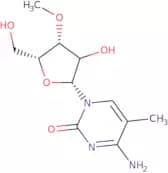
CAS :<p>3'-O-Methyl-5-methylcytidine is a nucleoside with antiviral and anticancer properties. It has been shown to be an activator of RNA polymerase, the enzyme that catalyzes the transcription of DNA into RNA. 3'-O-Methyl-5-methylcytidine binds to the active site of RNA polymerase and is able to stimulate transcription in vitro. This drug has also been shown to have high purity and high quality.</p>Formule :C11H17N3O5Degré de pureté :Min. 95%Couleur et forme :PowderMasse moléculaire :271.27 g/mol





![5'-O-[Bis(4-methoxyphenyl)(phenyl)methyl]-2'-deoxy-N-isobutyrylguanosine](/_next/image/?url=https%3A%2Fstatic.cymitquimica.com%2Fproducts%2F3D%2Fthumb-webp%2FND02998.webp&w=3840&q=75)