Nucléosides
3569 produits trouvés pour "Nucléosides"
2-Chloro-N,N-dimethyl-2’C-methyladenosine
CAS :2-Chloro-N,N-dimethyl-2’C-methyladenosine is a synthetic nucleoside that inhibits viral DNA synthesis. It is a modified deoxyribonucleoside that contains a chloro group at the 2’ position of the sugar ring and a methyl group at the 3’ position. This drug has antiviral activity against herpes simplex virus type 1 (HSV-1) and herpes simplex virus type 2 (HSV-2), respiratory syncytial virus (RSV), and influenza A virus. It also displays anticancer activity in vitro. This drug inhibits cancer cell growth by interfering with DNA replication and triggering apoptosis through inhibition of protein kinase C and activation of caspases.Degré de pureté :Min. 95%3’C-Methylguanosine
CAS :3’C-Methylguanosine is a nucleoside that inhibits viral replication by acting as an antiviral agent. It is also used in anticancer treatments, and has been shown to be a novel phosphoramidite activator of DNA synthesis. 3’C-Methylguanosine has a CAS number of 115303-89-4, and the molecular weight is 277.3 g/mol. This chemical compound has not been modified or reacted with any other substances, and is suitable for use in research and development.
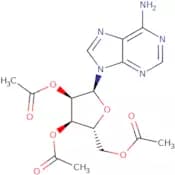
Degré de pureté :Min. 95%2,3,5-Tri-O-acetyl α-adenosine
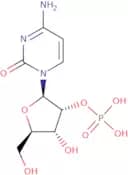
CAS :2,3,5-Tri-O-acetyl α-adenosine is a nucleoside analog of adenosine that has been tri-acetylated. This molecule can be used in research.Formule :C16H19N5O7Degré de pureté :Min. 95%Couleur et forme :PowderMasse moléculaire :393.35 g/molCytidine-2'-monophosphate sodium
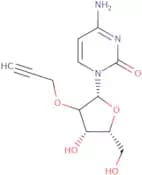
CAS :Cytidine-2'-monophosphate sodium (CMP) is a nucleotide that is used as a monophosphate or diphosphate. It can be used to synthesize DNA and RNA. CMP also has antiviral, anticancer, and high purity properties. CMP is an activator of DNA polymerases and helps in the synthesis of DNA. It has novel properties that make it different from other nucleotides, such as its modified sugar moiety.Formule :C9H12Na2N3O8PDegré de pureté :Min. 90%Couleur et forme :PowderMasse moléculaire :367.18 g/mol2'-O-Propargylcytidine
CAS :2'-O-Propargylcytidine is a novel nucleoside that has been modified from cytidine. It is designed to inhibit the activity of RNA polymerase and to be used in anticancer therapy. The synthesis of 2'-O-propargylcytidine has been achieved by modifying the nucleotide with propargylic chloride, which is then reacted with sodium cyanide. The resulting product is purified by column chromatography and recrystallization.
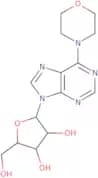
2'-O-Propargylcytidine is a phosphoramidite that can be used for DNA synthesis or as a monophosphate in RNA synthesis. This high purity product has a CAS number of 206552-85-4 and it can be used as an activator for ribonucleosides, such as adenosine, guanosine, uridine, cytidine, and thymidine.Formule :C12H15N3O5Degré de pureté :Min. 95%Couleur et forme :PowderMasse moléculaire :281.26 g/mol6-(4-Morpholino)-9-(β-D-ribofuranosyl)-9H-purine
CAS :6-(4-Morpholino)-9-(β-D-ribofuranosyl)-9H-purine is a modified monophosphate analog of adenosine. It is an antiviral agent that inhibits the synthesis of nucleic acids in virus-infected cells, preventing viral replication and spread. 6-(4-Morpholino)-9-(β-D-ribofuranosyl)-9H-purine is also used as a radiosensitizer to treat cancer. This drug is synthesized by high purity, high quality and reliable suppliers.Formule :C14H19N5O5Degré de pureté :Min. 95%Couleur et forme :PowderMasse moléculaire :337.33 g/mol6-Amino-1-(2'-deoxy-a-D-ribofuranosyl)-4-methoxy-1H- pyrazolo[3,4-d]pyrimidine
6-Amino-1-(2'-deoxy-a-D-ribofuranosyl)-4-methoxy-1H- pyrazolo[3,4-d]pyrimidine is a modified nucleoside that is an antiviral agent and anticancer drug. It inhibits viral replication by inhibiting the activity of DNA polymerase. 6-[Amino(2'-deoxyribofuranosyl)]-1-(2'-deoxyribofuranosyl)-4-methoxypyrazolo[3,4-d]pyrimidine has been shown to inhibit the growth of cancer cells without affecting healthy cells.Degré de pureté :Min. 95%6-O-Methylinosine
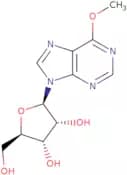
CAS :6-O-Methylinosine is a modified nucleoside that is used in the synthesis of recombinant proteins. It is synthesized from the reaction of methylphosphate and 6-O-methylguanosine. The phosphate group of the 6-O-methylguanosine molecule reacts with methylphosphate in an acid or neutral environment, while it reacts with phosphoric acid in a basic environment. This reaction can be monitored by measuring the amount of free phosphate groups present after the reaction. The rate of this reaction can be increased by increasing temperature and pH. 6-O-Methylinosine has been shown to have anticancer activity, which may be due to its ability to inhibit enzyme catalysis and modify DNA structure.Formule :C11H14N4O5Degré de pureté :Min. 95%Couleur et forme :White PowderMasse moléculaire :282.25 g/mol6-Amino-3-iodo-4-methoxy-1-(b-D-ribofuranosyl)-1H-pyrazolo[3,4-d]pyrimidine
CAS :6-Amino-3-iodo-4-methoxy-1-(beta-D-ribofuranosyl)-1H-pyrazolo[3,4-d]pyrimidine is a synthetic nucleoside that has antiviral activity. It is an activator of DNA polymerase and can be used to synthesize DNA and RNA. 6AIOMP binds to the ribonucleotide reductases in cells and inhibits their activity. This prevents the conversion of ribonucleotides into deoxyribonucleotides, which are essential for DNA synthesis.Degré de pureté :Min. 95%6-Amino-4-methoxy-2-(b-D-ribofuranosyl)-2H-pyrazolo[3,4-d]pyrimidine
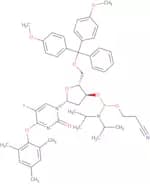
6-Amino-4-methoxy-2-(b-D-ribofuranosyl)-2H-pyrazolo[3,4-d]pyrimidine is a novel antiviral monophosphate nucleoside. It has been shown to be an activator of the transcription factor NFAT and to inhibit the replication of human immunodeficiency virus (HIV). 6-Amino-4-methoxy-2-(b-D-ribofuranosyl)-2H-pyrazolo[3,4-d]pyrimidine is synthesized from 2,6 dihydroxybenzaldehyde and 3,5 dibenzyloxybenzaldehyde using phosphoramidites. The product is purified by HPLC.Degré de pureté :Min. 95%2'-Deoxy-5'-O-DMT-5-fluoro-O4-(2,4,6-trimethylphenyl)uridine 3'-CE phosphoramidite
CAS :2'-Deoxy-5'-O-DMT-5-fluoro-O4-(2,4,6-trimethylphenyl)uridine 3'-CE phosphoramidite is a nucleoside that has high purity and high quality. It is an anti cancer agent that inhibits the growth of cells by preventing DNA synthesis and RNA synthesis. This product is also used as an antiviral agent for influenza A virus and herpes simplex virus type 1 (HSV1). 2'-Deoxy-5'-O-DMT-5-fluoro-O4-(2,4,6-trimethylphenyl)uridine 3'-CE phosphoramidite is synthesized from ribonucleosides and deoxyribonucleosides. It can be modified to produce monophosphate, diphosphate or triphosphate forms of the nucleotide.Formule :C48H56FN4O8PDegré de pureté :Min. 95%Masse moléculaire :866.95 g/mol5’-O-DMT-2’-b-C-methyladenosine
5’-O-DMT-2’-b-C-methyladenosine is a modified nucleoside with antiviral and anticancer activity. It is an activator of DNA synthesis, and can be used as a precursor for phosphoramidites for the synthesis of oligonucleotides. The 5’-O-DMT group in this compound may be replaced with other activating groups to synthesize different modified nucleosides.
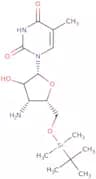
Degré de pureté :Min. 95%3'-Amino-5'-O-tert-butyldimethylsilyl-3'-deoxythymidine
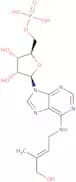
CAS :3'-Amino-5'-O-tert-butyldimethylsilyl-3'-deoxythymidine is a novel synthetic nucleoside that has been shown to have anticancer and antiviral activities. The compound is an activator of the immune system, which may be due to its ability to stimulate the production of interferon and other cytokines. 3'-Amino-5'-O-tert-butyldimethylsilyl-3'-deoxythymidine can also inhibit viral DNA polymerases. This nucleoside has been shown to inhibit the growth of leukemia cells in culture by inhibiting ribonucleotide reductase activity.Formule :C16H29N3O5SiDegré de pureté :Min. 95%Masse moléculaire :371.51 g/moltrans-Zeatin riboside-5'-monophosphate sodium salt
CAS :Trans-zeatin riboside-5'-monophosphate sodium salt is a growth rate inhibitor that inhibits protein synthesis by binding to the 30S subunit of the ribosome. This compound has been shown to inhibit cell growth and proliferation in vitro when applied to tissue cultures of tabacum l. and other plants. Trans-zeatin riboside-5'-monophosphate sodium salt is not active against plant tissues grown in vivo, which may be due to its inability to cross the plasma membrane or cell wall.Formule :C15H20N5O8PNa2Degré de pureté :Min. 95 Area-%Couleur et forme :PowderMasse moléculaire :475.3 g/molN4-Benzoyl-3'-O-tert-butyldimethylsilyl-5'-O-DMT-N4-methylcytidine
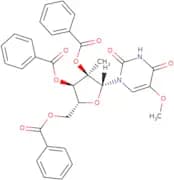
N4-Benzoyl-3'-O-tert-butyldimethylsilyl-5'-O-DMT-N4-methylcytidine is a nucleoside that is chemically modified by the addition of a benzoyl group. It has antiviral, anticancer and antiretroviral activities. N4-Benzoyl-3'-O-tert-butyldimethylsilyl-5'-O-DMT-N4-methylcytidine inhibits viral DNA synthesis by inhibiting both viral DNA polymerase and reverse transcriptase, which are enzymes required for the production of viral DNA. It also inhibits cancer cell growth by forming covalent bonds with deoxyribonucleic acid (DNA) in the cancer cells and initiating apoptosis. This nucleoside has been shown to be active against HIV, Herpes Simplex Virus Type 1 (HSV1), and Human CytomegalovDegré de pureté :Min. 95%2’,3’,5’-Tri-O-benzoyl-2’C-methyl-5-methoxyuridine
CAS :2’,3’,5’-Tri-O-benzoyl-2’C-methyl-5-methoxyuridine is a modified nucleoside that is used as an anticancer drug. It is synthesized from 2’,3’,5’triphosphate and 2’C-methyl-5-methoxyuridine. This compound is used to treat leukemia and other cancers by inhibiting the synthesis of DNA. Inhibiting DNA synthesis prevents the reproduction of cancer cells. The chemical structure of this compound was first published in 2007.Degré de pureté :Min. 95%Adenosine - Endotoxin level below 1000 EU/g
CAS :Adenosine is a naturally-occurring organic solvent found in the human body. It has been shown to inhibit fibroid growth and to have an anti-inflammatory effect on the uterus. Adenosine is also a potent endogenous vasodilator, which may be due to its ability to activate adenosine receptors. In addition, it has been demonstrated that adenosine inhibits the synthesis of target enzymes such as collagenase and hyaluronidase. The uptake of adenosine by cells is inhibited by nevirapine, which is an HIV protease inhibitor. This inhibition leads to increased extracellular levels of adenosine, which stimulates phosphorylation of extracellular-regulated kinases (ERKs) and decreases histamine release from mast cells. The ERKs are activated in response to many stimuli including cytokines, growth factors, and stressors such as UV light or heat shock.BR> In vitro studies using human tissue have shown that adFormule :C10H13N5O4Degré de pureté :(Titration) 99.0 To 101.0%Couleur et forme :White Off-White PowderMasse moléculaire :267.24 g/mol2’-O-Acetyl-8-bromo-7-cyano-7-deaza-3’-deoxy-3’-fluoro-5’-O-toluoyladenosine
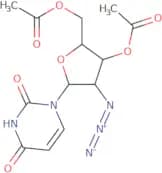
2'-O-Acetyl-8-bromo-7-cyano-7-deaza-3'-deoxy-3'-fluoro-5'-O-[toluoyl]adenosine (ABT) is a modified nucleoside that has anticancer and antiviral properties. ABT is a monophosphate nucleotide with an acetyl group at the 2' position of the ribose and a toluoyl group on the 7 position of the adenine moiety. In vitro, ABT inhibits tumor proliferation in breast cancer cells and suppresses viral replication in herpes simplex virus type 1 (HSV1) infected cells. ABT also has potential as a novel therapeutic agent for treating cancers and other diseases caused by HSV1 infection.Degré de pureté :Min. 95%3’,5’-Di-O-acetyl-2’-azido-2’-deoxyuridine
CAS :Please enquire for more information about 3’,5’-Di-O-acetyl-2’-azido-2’-deoxyuridine including the price, delivery time and more detailed product information at the technical inquiry form on this pageDegré de pureté :Min. 95%7-Deaza-4-Cl-2'-deoxyguanosine
CAS :7-Deaza-4-Cl-2'-deoxyguanosine is a novel antiviral drug that has been synthesized in the laboratory. It is an analogue of deoxyguanosine, a nucleoside that is found in DNA and RNA. 7-Deaza-4-Cl-2'-deoxyguanosine has anti cancer properties because it inhibits the synthesis of DNA by inhibiting the activity of ribonucleoside reductase, an enzyme that converts ribonucleosides to deoxyribonucleosides. This drug has been shown to have potent anticancer activity against human lung cancer cells and mouse leukemia cells.Formule :C11H13ClN4O3Degré de pureté :Min. 95%Couleur et forme :PowderMasse moléculaire :284.7 g/mol



![6-Amino-1-(2'-deoxy-a-D-ribofuranosyl)-4-methoxy-1H- pyrazolo[3,4-d]pyrimidine](/_next/image/?url=https%3A%2Fstatic.cymitquimica.com%2Fproducts%2F3D%2Fthumb-webp%2FNA162964.webp&w=3840&q=75)
![6-Amino-3-iodo-4-methoxy-1-(b-D-ribofuranosyl)-1H-pyrazolo[3,4-d]pyrimidine](/_next/image/?url=https%3A%2Fstatic.cymitquimica.com%2Fproducts%2F3D%2Fthumb-webp%2FNA162944.webp&w=3840&q=75)
![6-Amino-4-methoxy-2-(b-D-ribofuranosyl)-2H-pyrazolo[3,4-d]pyrimidine](/_next/image/?url=https%3A%2Fstatic.cymitquimica.com%2Fproducts%2F3D%2Fthumb-webp%2FNA162978.webp&w=3840&q=75)