Nucléosides
3570 produits trouvés pour "Nucléosides"
m-Topolin riboside-5'-monophosphate salt
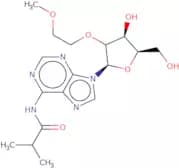
CAS :m-Topolin riboside-5'-monophosphate salt is a novel nucleoside that has been modified with a nitrogenous base and a phosphate group. It is an antiviral and anticancer agent, which may be due to its ability to inhibit the synthesis of DNA. m-Topolin riboside-5'-monophosphate salt inhibits viral replication by inhibiting viral diphosphate kinase or deoxyribonucleotide triphosphate reductase, preventing the production of DNA. This product is also an inhibitor of cellular proliferation, which may be due to its ability to inhibit DNA synthesis and repair.Formule :C17H18N5Na2O8P·H2ODegré de pureté :Min. 95%Masse moléculaire :515.32 g/molN2-Isobutyryl-2'-(2-methoxyethyl)guanosine
CAS :N2-Isobutyryl-2'-(2-methoxyethyl)guanosine is a nucleoside that is structurally related to guanosine. It is used as an activator for RNA synthesis and as a novel antiviral agent. This compound has been shown to have high purity, high quality, and excellent solubility. N2-Isobutyryl-2'-(2-methoxyethyl)guanosine has also been found to be active against HIV in vitro by inhibiting reverse transcriptase activity.
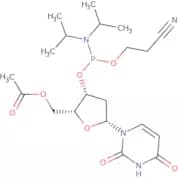
Degré de pureté :Min. 95%5'-O-Acetyl-2'-deoxyuridine 3'-CE phosphoramidite
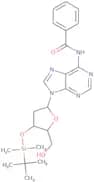
5'-O-Acetyl-2'-deoxyuridine 3'-CE phosphoramidite is a novel nucleoside which is prepared by reacting 5'-O-acetyl-2'-deoxyuridine with bis(p-nitrophenyl)phosphoramidite. It has been shown to have antiviral and anticancer activities.Formule :C20H31N4O7PDegré de pureté :Min. 95%Masse moléculaire :470.46 g/molN6-Benzoyl-3'-O-tert-butyldimethylsilyl-2'-deoxyadenosine
CAS :N6-Benzoyl-3'-O-tert-butyldimethylsilyl-2'-deoxyadenosine is an antiviral, monophosphate nucleoside that has been shown to inhibit the proliferation of human leukemia cells. The compound is a novel synthetic nucleoside that inhibits the viral reverse transcriptase enzyme and prevents RNA synthesis. N6-Benzoyl-3'-O-tert-butyldimethylsilyl-2'-deoxyadenosine also inhibits DNA synthesis by inhibiting the activity of DNA polymerases and can be used for the treatment of cancer.Degré de pureté :Min. 95%2-Amino-9-(b-D-ribofuranosyl)purine 5'-O-triphosphate - 10mM aq. solution
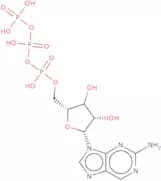
CAS :2-Amino-9-(b-D-ribofuranosyl)purine 5'-O-triphosphate is a synthetic nucleoside that is modified by phosphoramidite chemistry. This compound is an antiviral agent that inhibits viral DNA synthesis and replication. It has also been shown to have anticancer properties. 2-Amino-9-(b-D-ribofuranosyl)purine 5'-O-triphosphate inhibits the enzymatic activity of the enzyme ribonucleotide reductase, which converts ribonucleotides into deoxyribonucleotides. The resulting monophosphate form of this compound accumulates in cells, which leads to cell death.Formule :C10H16N5O13P3Degré de pureté :Min. 95%Couleur et forme :PowderMasse moléculaire :507.18 g/mol4-Amino-1-[(2R,3R,4R,5R)-3-ethoxy-4-hydroxy-5-(hydroxymethyl)oxolan-2-yl]pyrimidin-2-one
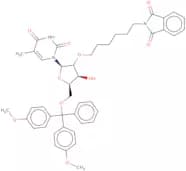
CAS :4-Amino-1-[(2R,3R,4R,5R)-3-ethoxy-4-hydroxy-5-(hydroxymethyl)oxolan-2-yl]pyrimidin-2-one is a novel compound that is an anticancer agent and antiviral. It inhibits the proliferation of cells by modifying the nucleotide structure of DNA. The 4'-amino group makes it a nucleoside analogue that can be modified to inhibit bacterial replication and virus production. 4'-Amino-1-[(2R,3R,4R,5R)-3-ethoxy-4-hydroxy-5-(hydroxymethyl)oxolan-2-yl]pyrimidin-- 2 one may also cause cell death by inhibiting DNA synthesis and RNA synthesis.Formule :C11H17N3O5Degré de pureté :Min. 95%Masse moléculaire :271.27 g/mol5'-O-DMT-2'-O-hexylphthalimido-5-methyluridine
5'-O-DMT-2'-O-hexylphthalimido-5-methyluridine is a synthetic nucleoside phosphoramidite. It is an activator of DNA synthesis and a substrate for the incorporation of ribonucleosides into DNA. 5'-O-DMT-2'-O-hexylphthalimido-5-methyluridine is a novel, high purity, and high quality nucleotide. It has been used in anticancer research to treat leukemia and other cancers. 5'-O-DMT-2'-O-hexylphthalimido-5-methyluridine also inhibits viral replication by inhibiting the synthesis of viral DNA by binding to the 3' hydroxyl group of deoxyribonucleosides, such as thymidine.Formule :C45H47N3O10Degré de pureté :Min. 95%Masse moléculaire :789.89 g/molN4-Benzoyl-1-(2'-deoxy-5'-O-DMT-2'-fluoro-b-D-arabinofuranosyl)cytosine-3'-O-succinate triethylammonium salt
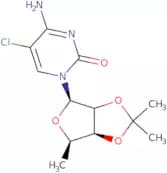
N4-Benzoyl-1-(2'-deoxy-5'-O-DMT-2'-fluoro-b-D-arabinofuranosyl)cytosine is a novel nucleoside that is synthesized from the corresponding deoxyribonucleoside and succinic acid. N4-Benzoyl-1-(2'-deoxy-5'-O-DMT-2'-fluoro-b-D-arabinofuranosyl)cytosine has antiviral activity against DNA viruses and anticancer activity against tumor cells. It has been shown to inhibit the replication of HIV, influenza A virus, and herpes simplex virus type 1 (HSV1).Degré de pureté :Min. 95%5-Chloro-5'-deoxy-2',3'-O-isopropylidenecytidine
5-Chloro-5'-deoxy-2',3'-O-isopropylidenecytidine is a synthetic nucleoside that has antiviral and anticancer properties. It binds to the DNA of viruses and inhibits their replication, as well as the synthesis of DNA in cancer cells. This nucleoside also activates ribonucleotide reductase, which is an enzyme that converts ribonucleotides into deoxyribonucleotides. 5-Chloro-5'-deoxy-2',3'-O-isopropylidenecytidine is a novel nucleoside analog that can be phosphoramidite or monophosphate.Formule :C12H16ClN3O4Degré de pureté :Min. 95%Masse moléculaire :301.73 g/molE-5-(2-Carboxyvinyl)-2'-deoxyuridine hydroxysuccinimide ester
CAS :E-5-(2-Carboxyvinyl)-2'-deoxyuridine hydroxysuccinimide ester is a nucleoside analog that inhibits the growth of cells by inhibiting DNA synthesis. It is an antiviral and anticancer agent, as well as a potential therapeutic for human immunodeficiency virus (HIV) and herpes simplex virus (HSV). This compound also has high purity and high quality, which makes it suitable for research purposes. E-5-(2-Carboxyvinyl)-2'-deoxyuridine hydroxysuccinimide ester is novel and has been modified from the natural nucleoside uridine. It can be used in the synthesis of phosphoramidites for DNA synthesis, which are used to synthesize DNA probes for use in diagnostic medicine.Formule :C16H17N3O9Degré de pureté :Min. 95%Masse moléculaire :395.32 g/mol2'-O-tert-Butyldimethylsilyl-5'-O-DMT-3-methyluridine 3'-CE phosphoramidite
CAS :2'-O-tert-Butyldimethylsilyl-5'-O-DMT-3-methyluridine 3'-CE phosphoramidite is a modified nucleoside that has antiviral and anticancer properties. It is synthesized by the reaction of 2'-O-tert-butyldimethylsilyl-5'-O-DMT (2,6-dimethoxytrityl) with 3 methyluridine. The compound has been shown to be an activator for DNA polymerase, ribonucleases and deoxyribonucleases in vitro. It also inhibits tumor cell proliferation and induces apoptosis in cultured cells. This compound is a high quality product with CAS number 179762-50-6 and is available at high purity.Formule :C46H63N4O9PSiDegré de pureté :Min. 95%Masse moléculaire :875.07 g/mol3'-O-Acetyl-5-benzylaminocarbonyl-2'-O-methyl-5'-O-DMT-uridine
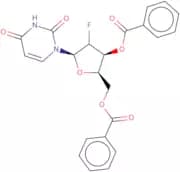
3'-O-Acetyl-5-benzylaminocarbonyl-2'-O-methyl-5'-O-DMT-uridine is a novel, modified nucleoside. This product is an activator of the ribonucleotide reductase enzyme and is used as a precursor in the synthesis of deoxyribonucleosides. It has antiviral activity against herpes simplex virus type 1 and cytomegalovirus. It has also been shown to have anticancer properties, as it inhibits DNA synthesis and tumor cell proliferation without affecting healthy cells. 3'-O-Acetyl-5-benzylaminocarbonyl-2'-O-methyl-5'-O-DMT uridine is synthesized from 5-(3,4,5)-trimethoxybenzaldehyde, 2′(2,6 dichloro)amino]methyl]benzeneacetic acid methyl ester and 5Degré de pureté :Min. 95%3',5'-Di-O-benzoyl-2'-deoxy-2'-fluorouridine
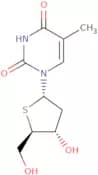
3',5'-Di-O-benzoyl-2'-deoxy-2'-fluorouridine is a novel nucleoside analog that has been shown to have anticancer activity in vitro. The compound is a monophosphate, which is synthesized from 2'-deoxyuridine and benzoyl chloride. 3',5'-Di-O-benzoyl-2'-deoxy-2'-fluorouridine was found to have antiviral activity against herpes simplex virus type 1 (HSV1) and cytomegalovirus (CMV). It also inhibited the production of HIV in human lymphocytes. This nucleoside analog can be activated by phosphorylation at the 5' position to form a diphosphate, which inhibits DNA synthesis by incorporating into the growing DNA chain and preventing the movement of RNA polymerase along the template strand.Formule :C23H19FN2O7Degré de pureté :Min. 95%Masse moléculaire :454.42 g/mol4'-Thiothymidine
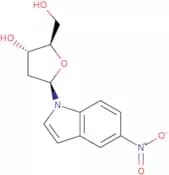
CAS :4'-Thiothymidine is a nucleoside analog that is used in antiviral therapy against herpes simplex virus. It inhibits the viral DNA polymerase, which prevents the virus from duplicating its genetic material. 4'-Thiothymidine has been shown to inhibit the uptake of 4-thiouracil by cells and to have anti-inflammatory properties. The drug has been found to be effective in inhibiting human adenocarcinoma cell lines in vitro and in vivo.Formule :C10H14N2O4SDegré de pureté :Min. 95%Masse moléculaire :258.30 g/mol1-(2-Deoxy-b-D-ribofuranosyl)-5-nitroindole
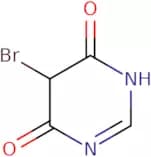
CAS :1-(2-Deoxy-b-D-ribofuranosyl)-5-nitroindole is an important compound in the field of nucleotide chemistry and has potential applications in researchFormule :C13H14N2O5Degré de pureté :Min. 95%Couleur et forme :Yellow PowderMasse moléculaire :278.26 g/mol5-Bromopyrimidine-4,6(1H,5H)-dione
CAS :5-Bromopyrimidine-4,6(1H,5H)-dione is a novel nucleoside analogue. It can be used as an antiviral agent and an anticancer drug. It inhibits viral DNA replication by competitively binding to the viral DNA polymerase, thereby blocking the incorporation of deoxyribonucleotides into the growing DNA chain. 5-Bromopyrimidine-4,6(1H,5H)-dione also has antitumour activity. It has been shown to inhibit the growth of human cancer cells in vitro and in vivo.
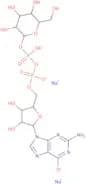
Degré de pureté :Min. 95%GDP-D-mannose disodium salt from saccharomyces cerevisiae
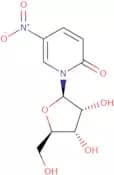
CAS :GDP-D-mannose disodium salt from Saccharomyces Cerevisiae is a nucleoside that is synthetically modified. It has antiviral and anticancer activities, as well as the ability to activate DNA synthesis. This product is suitable for use as a novel activator of DNA and RNA synthesis, in the treatment of viral infections, or cancer.Formule :C16H23N5Na2O16P2Degré de pureté :Min. 95%Masse moléculaire :649.3 g/mol1-(b-D-Ribofuranosyl)-5-nitropyridine-2-one
CAS :1-(b-D-Ribofuranosyl)-5-nitropyridine-2-one is a nucleoside that has been modified to have anticancer properties. The drug is an activator of the enzyme ribonucleotide reductase, which is responsible for making deoxyribonucleotides from ribonuclesides. 1-(b-D-Ribofuranosyl)-5-nitropyridine-2-one inhibits viral replication by inhibiting the activity of DNA polymerase and preventing RNA synthesis. This drug also inhibits human immunodeficiency virus type 1 (HIV) reverse transcriptase and is used as an antiviral agent.Formule :C10H12N2O7Degré de pureté :Min. 95%Masse moléculaire :272.21 g/molRiboflavin 5'-(trihydrogen diphosphate) P'5'-ester with N-(2-Aminoethyl)adenosine
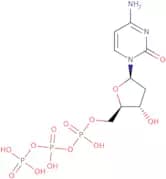
CAS :Riboflavin 5'-(trihydrogen diphosphate) P'5'-ester with N-(2-Aminoethyl)adenosine is a nucleoside that is an active form of riboflavin. It is a monophosphate that is synthesized from riboflavin and adenosine. Riboflavin 5'-(trihydrogen diphosphate) P'5'-ester with N-(2-Aminoethyl)adenosine has been shown to have anticancer, antiviral, and antitumor properties in vitro and in vivo. In addition, this compound has been shown to inhibit the growth of various tumor cells by inhibiting DNA synthesis.Formule :C29H38N10O15P2Degré de pureté :Min. 95%Masse moléculaire :828.62 g/moldCTP - 100mmol solution
CAS :dCTP is a nucleotide that is an important component of the DNA molecule. It is used in biochemical research and as a drug for treatment of certain cancers. The biochemical properties of dCTP are similar to those of other nucleotides, including ATP and GTP. The main difference is that dCTP has a low solubility in water, while ATP and GTP are soluble in water. This property makes it difficult to study the use of dCTP in biosensors. Another difference is that dCTP does not have a signal peptide sequence, which may be due to its chemical structure or biological function. In addition, dCTP does not interfere with the polymerase chain reaction (PCR) process because it does not possess reactive groups on its phosphate groups.Formule :C9H16N3O13P3Degré de pureté :Min. 95%Masse moléculaire :467.16 g/mol


![4-Amino-1-[(2R,3R,4R,5R)-3-ethoxy-4-hydroxy-5-(hydroxymethyl)oxolan-2-yl]pyrimidin-2-one](/_next/image/?url=https%3A%2Fstatic.cymitquimica.com%2Fproducts%2F3D%2Fthumb-webp%2FECA42942.webp&w=3840&q=75)