Nucléosides
3571 produits trouvés pour "Nucléosides"
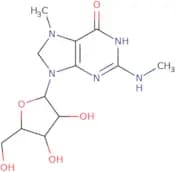
N2,7-Dimethylguanosine
CAS :N2,7-Dimethylguanosine is a modified nucleotide that is an intermediate in the biosynthesis of guanine. This modification is catalyzed by an enzyme called methyltransferase, which transfers a methyl group from S-adenosylmethionine to the guanine base. N2,7-dimethylguanosine has been shown to be involved in epigenetic regulation and translation regulation as well as having a biological function as an acceptor for aminoacylation. N2,7-dimethylguanosine can be detected with mass spectrometry and can also be immobilized onto solid supports for use in biochemical pathways. br> N2,7-dimethylguanosine is synthesized from S-adenosylmethionine (SAM) and 5'-methylthioadenosine (MTA) by a series of reactions involving methyltetrahydrofolate reductase and methyFormule :C12H18N5O5Degré de pureté :Min. 95%Couleur et forme :White PowderMasse moléculaire :312.3 g/mol5-Carboxymethylaminomethyluridine
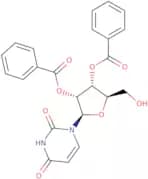
CAS :5-Carboxymethylaminomethyluridine is a nucleoside analogue that is used in molecular modeling studies to investigate the role and interactions of uridine in the mitochondrial ribosome. It has been shown to bind to the mitochondrial ribosome, which may be due to hydrogen bonding interactions with adenine. 5-Carboxymethylaminomethyluridine also inhibits protein synthesis at the level of translation by inhibiting group P2 of eukaryotic cytosolic ribosomes. This inhibition results in decreased production of proteins necessary for mitochondrial biogenesis.Formule :C12H17N3O8Degré de pureté :Min. 95 Area-%Couleur et forme :White Off-White PowderMasse moléculaire :331.28 g/mol2',3'-Di-O-benzoyluridine
CAS :2',3'-Di-O-benzoyluridine is a nucleoside for use in research applications
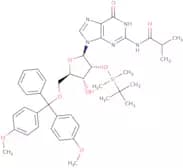
Formule :C23H20N2O8Degré de pureté :Min. 98 Area-%Couleur et forme :PowderMasse moléculaire :452.41 g/mol2'-O-(tert-Butyldimethylsilyl)-5'-O-DMT-N2-isobutyryl-guanosine
CAS :2'-O-(tert-Butyldimethylsilyl)-5'-O-DMT-N2-isobutyryl-guanosine is a synthetic nucleoside that has been modified with a tert-butyldimethylsilyl group. This modification is used to improve the efficiency of coupling reactions between nucleosides and phosphoramidites in oligonucleotide synthesis. The 2'-O-(tert-Butyldimethylsilyl)-5'-O-DMT-N2-isobutyryl guanosine is also used as a chromophore in spectroscopy experiments and as a ligand in metal coordination chemistry.Formule :C41H51N5O8SiDegré de pureté :Min. 98 Area-%Couleur et forme :Off-White PowderMasse moléculaire :769.96 g/mol2',3'-O-Isopropylidenecytidine
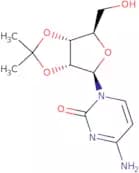
CAS :2',3'-O-Isopropylidenecytidine is a nucleoside for use in research applications
Formule :C12H17N3O5Degré de pureté :Min. 95%Couleur et forme :PowderMasse moléculaire :283.28 g/mol4-Amino-2,6-dihydroxy-5-nitrosopyrimidine
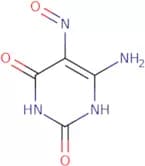
CAS :4-Amino-2,6-dihydroxy-5-nitrosopyrimidine is a molecule that has been shown to be an effective inhibitor of the enzyme tyrosinase in the oxidation of tyrosine to DOPA, which is a precursor of melanin. It is believed that vibrational and structural changes during these reactions are responsible for the inhibitory effects. 4-Amino-2,6-dihydroxy-5-nitrosopyrimidine has also been shown to have anti cancer effects on glioma cells. This molecule binds to copper ions, forming a chelate ring that can stabilize reactive intermediates and terminate free radicals. The chlorine atom on this molecule may be responsible for its cytotoxic effects by reacting with nucleophilic sites on proteins. The functional groups on this molecule react with acid catalysts, such as protonation or dehydration reactions.Formule :C4H4N4O3Degré de pureté :Min. 98 Area-%Couleur et forme :PowderMasse moléculaire :156.1 g/mol5’-O-DMT-LNA-thymidine 3’-O-CE amidite
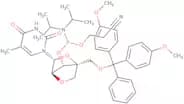
CAS :5'-O-DMT-2'-O,4'-C-methylene-5-methyluridine 3'-CE-phosphoramidite is a high purity, novel DNA monophosphate that is synthesized from 2',4'-diaminotoluene and 5'-O-dimethoxytritylthymidine. It has antiviral and anticancer properties and has shown to be an activator of RNA polymerase II in vitro. This product is used in many applications such as the synthesis of oligonucleotide probes for DNA sequencing, the synthesis of RNA for gene expression studies, and for the production of oligonucleotides for therapeutic purposes.Formule :C41H49N4O9PDegré de pureté :Min. 95%Masse moléculaire :772.82 g/molN¹-Methylpseudouridine-5'-triphosphate sodium,100 mM aqueous solution
N¹-methylpseudouridine-5'-triphosphate sodium, 100 mM aqueous solution (NMP) is an activator of deoxyribonucleosides that is synthesized in the laboratory. It has antiviral and anticancer activity and can be used to treat influenza A virus. NMP has been shown to inhibit the growth of cancer cells by inhibiting DNA synthesis and inducing apoptosis.Formule :C10H17N2O15P3•xNaDegré de pureté :Min. 95%Masse moléculaire :498.17 g/molCytarabine
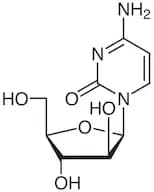
CAS :Formule :C9H13N3O5Degré de pureté :>98.0%(T)(HPLC)Couleur et forme :White to Almost white powder to crystalMasse moléculaire :243.225-(Isopentenylaminomethyl)uridine
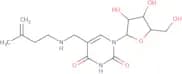
CAS :5-(Isopentenylaminomethyl)uridine is a modified uridine nucleoside that is used in biochemical research. It is the precursor to 5-amino-2'-deoxyuridine, which is converted to 5-iodo-2'-deoxyuridine. This modified uridine nucleoside can be used as a linker molecule for DNA and RNA ligation reactions and for analysis of biological samples. 5-(Isopentenylaminomethyl)uridine has been shown to inhibit the expression of genes in eukaryotes and prokaryotes. It also has been shown to inhibit the ribosome by binding to the peptidyl transferase center (PTC).Formule :C15H23N3O6Degré de pureté :Min. 95%Masse moléculaire :341.36 g/molN3-Methyl-2'-O-methyluridine
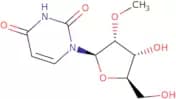
CAS :2'-O-methyluridine is an antiviral nucleoside that is used as a phosphoramidite in the synthesis of oligonucleotides. It has been shown to inhibit viral replication, and has been found to be effective in treating HIV-1 by inhibiting reverse transcriptase. N3-Methyl-2'-O-methyluridine also inhibits DNA synthesis and cell proliferation, and may be useful for the treatment of cancer. This modified nucleoside has been synthesized from uracil and contains a methyl group at the 3' position. The methyl group prevents 2'-O-methyluridine from being activated by cellular thymidylate synthase, which normally converts deoxyribonucleotides into ribonucleotides. This novel nucleotide has not yet been used in clinical trials but it may provide an alternative to other drugs used for cancer treatments.
Formule :C11H16N2O6Degré de pureté :Min. 95 Area-%Couleur et forme :White Off-White PowderMasse moléculaire :272.25 g/molRiboflavin 5'-(trihydrogen diphosphate) P'5'-ester with N-(2-Aminoethyl)adenosine
CAS :Riboflavin 5'-(trihydrogen diphosphate) P'5'-ester with N-(2-Aminoethyl)adenosine is a nucleoside that is an active form of riboflavin. It is a monophosphate that is synthesized from riboflavin and adenosine. Riboflavin 5'-(trihydrogen diphosphate) P'5'-ester with N-(2-Aminoethyl)adenosine has been shown to have anticancer, antiviral, and antitumor properties in vitro and in vivo. In addition, this compound has been shown to inhibit the growth of various tumor cells by inhibiting DNA synthesis.Formule :C29H38N10O15P2Degré de pureté :Min. 95%Masse moléculaire :828.62 g/mol4-Bromo-3,5-dichloropyridine
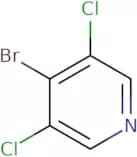
CAS :4-Bromo-3,5-dichloropyridine is a reactive intermediate that is used as a reagent in organic synthesis. It has low basicity and reacts with lithium to form the lithium salt. The salt can be deprotonated to form the bromide anion, which is more reactive than the chloride anion. 4-Bromo-3,5-dichloropyridine can also be used for the selective isomerization of ketones and related compounds. Bromine is added to prevent side reactions with oxygen. The intermediates are generated at the site of reaction by using an excess of diisopropylamide over bromination agent.
Formule :C5H2BrCl2NDegré de pureté :Min. 95%Masse moléculaire :226.89 g/mol2'-O-Methyluridine
CAS :2'-O-Methyluridine is a chemical compound that is used in the synthesis of RNA. It is an analog of uridine and has been shown to have antiviral and anticancer properties. 2'-O-Methyluridine inhibits protein synthesis by competing with uridine for the active site of the enzyme ribonucleotide reductase, which converts ribonucleotides to dNMPs. This compound also inhibits RNA synthesis by disrupting the pairing of adenine and cytosine residues in RNA strands. 2'-O-Methyluridine has been shown to inhibit growth in some types of cancer cells, including colorectal adenocarcinoma cells. It may also be useful as a chemotherapeutic agent against HIV, as it inhibits virus replication by inhibiting reverse transcription and DNA synthesis.
Formule :C10H14N2O6Degré de pureté :Min. 98 Area-%Couleur et forme :White Off-White PowderMasse moléculaire :258.23 g/mol2'-Amino-2'-deoxyadenosine-5'-triphosphate sodium salt - aqueous solution
CAS :2'-Amino-2'-deoxyadenosine-5'-triphosphate sodium salt - aqueous solution is a modified ATP analog, where the ribose has a 2'-amino substitution. This compound has potential research applicationsFormule :C10H17N6O12P3·xNaDegré de pureté :Min. 95 Area-%Couleur et forme :PowderMasse moléculaire :506.2 g/molβ-Nicotinamide adenine dinucleotide, reduced form, disodium
CAS :β-Nicotinamide adenine dinucleotide reduced form, most commonly known as NADH, is a cofactor involved in the electron transport chain, in the metabolism of amino acids and many other cellular processes such as the synthesis of ATP. It is also a substrate for glutathione peroxidase and superoxide dismutase. The reduced form of NADH can be used as an indicator for glutathione peroxidase activity. In addition, it has been shown to have antioxidant properties by reducing reactive oxygen species (ROS) and inhibiting lipid peroxidation. This product has been used in formulations of synthetic drugs for the treatment of women with long-term effects of menopause, such as osteoporosis and cardiovascular disease. It has also been used in the production of alginate gel, which can be used to create scaffolds for tissue engineering applications. Lately, in bioorganic chemistry, NADH has been used as a source of hydride species for reduction reactions.
Formule :C21H29N7O14P2•Na2Degré de pureté :Min. 95%Masse moléculaire :711.42 g/mol5'-O-DMT-N2-isobutyrylguanosine
CAS :5'-O-DMT-N2-isobutyrylguanosine is a novel phosphoramidite monophosphate, which has been modified with an isobutyryl group. This compound was synthesized in order to be used as a nucleoside analogue and antimetabolite for the treatment of cancer. It also has antiviral properties and inhibits the replication of DNA by inhibiting transcription. 5'-O-DMT-N2-isobutyrylguanosine is an anticancer agent that can be used to treat tumors that are resistant to other chemotherapy drugs. It also inhibits the growth of cells by preventing the synthesis of proteins needed for cell division.
Formule :C35H37N5O8Degré de pureté :Min. 95%Couleur et forme :White PowderMasse moléculaire :655.7 g/mol5-Aza-7-deazaguanosine
CAS :5-Aza-7-deazaguanosine is a nucleoside analogue that has antiviral activity against herpes simplex virus, influenza, and other DNA viruses. 5-Aza-7-deazaguanosine is an analog of guanosine with the addition of a 7-deaza group on the nitrogen atom. This drug inhibits viral replication by inhibiting the polymerase function of the viral NS5B protein, which is essential for DNA synthesis. The structure activity relationship studies have shown that this compound has anti-hepatitis B virus activity, but not against hepatitis C virus. 5-Aza-7-deazaguanosine has been shown to be effective in animal models as well as in humans without any significant toxicity issues.Formule :C10H13N5O5Degré de pureté :Min. 95%Couleur et forme :PowderMasse moléculaire :283.24 g/mol2-Chloroadenosine hemihydrate
CAS :2-Chloroadenosine hemihydrate is a synthetic purine nucleoside analog, closely related to adenosine, with a chlorine atom substituted at the 2-position on the adenine ring. This molecule has potential application in research.Formule :C10H12ClN5O4H2ODegré de pureté :Min. 95%Couleur et forme :PowderMasse moléculaire :310.69 g/mol9-(2'-Deoxy-2'-fluoro-β-D-arabinofuranosyl)guanine
CAS :9-(2'-Deoxy-2'-fluoro-b-D-arabinofuranosyl)guanine is a nucleoside phosphorylase inhibitor that is used to treat inflammatory bowel disease. It has been shown to be effective in treating women with inflammatory bowel disease, and has no significant side effects. 9-(2'-Deoxy-2'-fluoro-b-D-arabinofuranosyl)guanine inhibits the bacterial enzyme nucleoside phosphorylase, which is responsible for the conversion of guanosine triphosphate (GTP) to guanosine diphosphate (GDP). This inhibition prevents the synthesis of DNA and RNA by blocking the conversion of GTP and GDP into AMP and GMP. The drug binds to the active site of nucleoside phosphorylase, which is located in the bacterial cytoplasmic membrane. 9-(2'-Deoxy-2'-fluoroFormule :C10H12FN5O4Degré de pureté :Min. 97 Area-%Couleur et forme :PowderMasse moléculaire :285.24 g/mol