Autres
6275 produits trouvés pour "Autres"
Trier par
Degré de pureté (%)
0
100
|
0
|
50
|
90
|
95
|
100
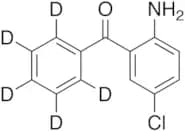
2-Amino-5-chlorobenzophenone-d5
CAS :Produit contrôlé<p>Applications A labelled metabolite of Diazepam; it had a much weaker anticonvulsant effect.<br>References Hara, T., et al.: J. Med. Chem., 21, 263 (1978),<br></p>Formule :C13H5D5ClNOCouleur et forme :NeatMasse moléculaire :236.71Palbociclib-d4
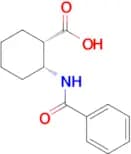
CAS :Produit contrôlé<p>Applications Palbociclib-d4 is an isotope labelled compound of Palbociclib (P139900). Palbociclib (P139900) is an experimental drug for the treatment of breast cancer being developed by Pfizer. It is a selective inhibitor of the cyclin-dependent kinases CDK4 and CDK6.<br>References Finn, R., et al.: Breast Cancer Res., 11, 5 (2009)<br></p>Formule :C24H25D4N7O2Couleur et forme :Light YellowMasse moléculaire :451.56(1S,2R)-2-benzamidocyclohexane-1-carboxylic acid
CAS :Degré de pureté :98+%Masse moléculaire :247.29400634765625Ref: 10-F609857
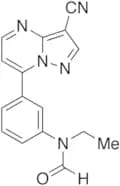
1gÀ demander2gÀ demander5gÀ demander10gÀ demander100mgÀ demander250mgÀ demander500mgÀ demanderZaleplon Formamide
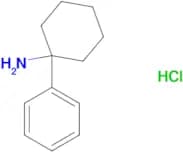
CAS :Produit contrôlé<p>Applications Zaleplon Formide is an impurity of Zaleplon (Z145000), a selective non-benzodiazepine GABAA receptor agonist.<br>References Radl, S., et al.: J. Heterocycl. Chem, 47, 276 (2010); Allen, D., et al.: Eur. J. Clin. Pharmacol., 45, 313 (1993); Beer, B., et al.: J. Clin. Pharmacol., 34, 335 (1994); Rosen, A.S., et al.: Biopharm. Drug Dispos., 20, 171 (1999)<br></p>Formule :C16H13N5OCouleur et forme :NeatMasse moléculaire :291.311-Phenylcyclohexylamine hydrochloride
CAS :Degré de pureté :95.0%Couleur et forme :SolidMasse moléculaire :211.72999572753906MDV 3100 (Enzalutamide)
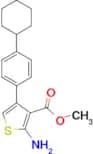
CAS :Produit contrôlé<p>Applications MDV 3100 is an androgen-receptor antagonist that blocks androgens from binding to the androgen receptor and prevents nuclear translocation and co-activator recruitment of the ligand-receptor complex. MDV 3100 has also been shown to induce tumor cell apoptosis, and has no agonist activity. MDV 3100 is a candidate for the treatment of castration-resistant prostate cancer.<br>References Scher, H.I. et al.: Lancet, 375, 1437 (2010); Bellmunt, J. et al.: Ther. Adv. Med. Oncol., 2, 189 (2010); Ryan, C.J. et al.: J. Clin. Oncol., 29, 3651 (2011);<br></p>Formule :C21H16F4N4O2SCouleur et forme :WhiteMasse moléculaire :464.442-Amino-4-(4-cyclohexyl-phenyl)-thiophene-3-carboxylic acid methyl ester
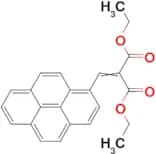
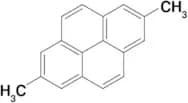
CAS :Formule :C18H21NO2SDegré de pureté :97%Couleur et forme :SolidMasse moléculaire :315.43Pyrene
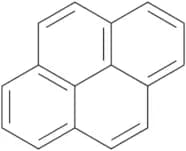
CAS :Produit contrôlé<p>Applications Pyrene occurs in coal tar. Also obtained by the destructive hydrogenation of hard coal. Found in wastewater in aquatic environments, and possesses genotoxic characteristics relating to estrogenic/androgenic, antiestrogenic and antiandrogenic activity. This compound is a contaminant of emerging concern (CECs).<br> Not a dangerous good if item is equal to or less than 1g/ml and there is less than 100g/ml in the package<br>References Winterstein, et al.: Z. Physiol. Chem., 230, 162 (1934), Fang, Y. et al.: Env. Toxicol. Chem., 31, 1273 (2012);<br></p>Formule :C16H10Couleur et forme :Light Brown To Dark BrownMasse moléculaire :202.25Palbociclib N-Aldehyde
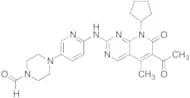
CAS :Produit contrôlé<p>Applications Palbociclib N-Aldehyde is an intermediate in synthesizing Palbociclib N-β-D-Glucuronide Sodium Salt (P139910), a derivative of Palbociclib (P139900) which is an experimental drug for the treatment of breast cancer being developed by Pfizer. It is a selective inhibitor of the cyclin-dependent kinases CDK4 and CDK6.<br>References Finn, R., et al.: Breast Cancer Res., 11, 5 (2009)<br></p>Formule :C25H29N7O3Couleur et forme :NeatMasse moléculaire :475.54MDV 3100-d3
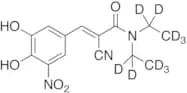
CAS :Produit contrôlé<p>Applications Labelled MDV 3100. MDV 3100 is an androgen-receptor antagonist that blocks androgens from binding to the androgen receptor and prevents nuclear translocation and co-activator recruitment of the ligand-receptor complex. MDV 3100 has also been shown to induce tumor cell apoptosis, and has no agonist activity. MDV 3100 is a candidate for the treatment of castration-resistant prostate cancer.<br>References Scher, H.I. et al.: Lancet, 375, 1437 (2010); Bellmunt, J. et al.: Ther. Adv. Med. Oncol., 2, 189 (2010); Ryan, C.J. et al.: J. Clin. Oncol., 29, 3651 (2011);<br></p>Formule :C21H13D3F4N4O2SCouleur et forme :NeatMasse moléculaire :467.45cis-Entacapone
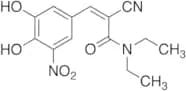
CAS :Produit contrôlé<p>Impurity Entacapone EP Impurity A<br>Applications cis-Entacapone (Entacapone EP Impurity A) is the (Z)-Isomer of Entacapone polymorphic form B. Antiparkinsonian.<br>References Karlsson, M., et al.: J. Pharm. Biomed. Anal., 10, 593 (1992), Nissinen, E., et al.: Arch. Pharmacol., 346, 262 (1992), Wikberg, T., et al.: Eur. J. Drug Metab. Pharmacokinet., 18, 359 (1993),<br></p>Formule :C14H15N3O5Couleur et forme :NeatMasse moléculaire :305.297-Methyl Memantine Hydrochloride
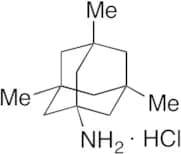
CAS :<p>Stability Hygroscopic<br>Applications 7-Methyl Memantine is an impurity of Memantine (HCl salt, M218000) which is used as an antiparkinsonian and antispasmodic.<br>References Rohde, H., et al.: Fortschr. Med., 100, 2023 (1982), Kornhuber, J., et al.: Eur. J. Pharmacol., 166, 589 (1989), Gortelmeyer, R. and Erbler, H.: Arzneimittel-Forsch., 42, 904 (1992)<br></p>Formule :C13H23N·ClHCouleur et forme :White SolidMasse moléculaire :229.79Cyclopropanecarboxylic Acid
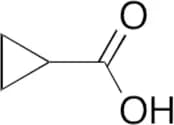
CAS :<p>Applications Cyclopropanecarboxylic Acid is used as a reagent in the synthesis of substituted 4-(thiophen-2-ylmethyl)-2H-phthalazin-1-ones as potent PARP-1 inhibitors. Also used as a reagent in the synthesis of 2-alkyloxazoles as potent and selective PI4KIIIβ inhibitors demonstrating inhibition of HCV replication.<br> Not a dangerous good if item is equal to or less than 1g/ml and there is less than 100g/ml in the package<br>References Wang, L., et al.: Bioorg. Med. Chem. Lett., 24, 3739 (2014); Keaney, E.P., et al.: Bioorg. Med. Chem. Lett., 24, 3714 (2014)<br></p>Formule :C4H6O2Couleur et forme :NeatMasse moléculaire :86.09Dicyclohexylamine
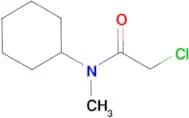
CAS :Degré de pureté :99.0%Couleur et forme :Liquid, ClearMasse moléculaire :181.3229980468752-chloro-N-cyclohexyl-N-methylacetamide
CAS :Degré de pureté :95.0%Couleur et forme :LiquidMasse moléculaire :189.67999267578125Hydroxyatenolol
CAS :Produit contrôlé<p>Impurity Atenolol 2-Hydroxy Impurity<br>Applications Hydroxyatenolol is a metabolite of Atenolol (A790075); a cardioselective β-adrenergic blocker, antihypertensive, antianginal, and antiarrhythmic (class II). Atenolol 2-Hydroxy Impurity<br>References Escher, B., et al.: Environ. Sci. Technol., 40, 7402 (2006); Caplar, V., et al.: Anal. Profiles Drug Subs., 13, 1 (1984)<br></p>Formule :C14H22N2O4Couleur et forme :NeatMasse moléculaire :282.34Fulvestrant-d3
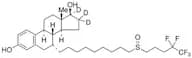
CAS :Produit contrôléFormule :C32H44D3F5O3SCouleur et forme :White To Off-WhiteMasse moléculaire :609.79Zeaxanthin, 65%
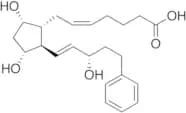
CAS :<p>Stability Light Sensitive, Temperature Sensitive<br>Applications It is one of the two carotenoids contained within the retina.<br>References Karrer, et al.: Helv. Chim. Acta, 13, 268 (1930), Hlubucek, et al.: J. Chem. Soc. Perkin Trans., 1, 848 (1974), Maoka, T., et al.: Comp. Biochem. Physiol., 83B, 121 (1986),<br></p>Formule :C40H56O2Degré de pureté :65%Couleur et forme :NeatMasse moléculaire :568.87Bimatoprost Acid
CAS :Produit contrôlé<p>Applications Bimatoprost Acid is an impurity of the antiglaucoma agent Bimatoprost (B386820).Bimatoprost Acid is a metabolically stable analog of PGF2α (P838625) and is a potent agonist for the FP receptor.<br>References Balapure, A.K. et al.: Biochem. Pharmacol., 38, 2375 (1989); Hellberg, M.R. et al.: J. Ocular Pharmacol. Ther., 19, 97 (2003); Krishna, P.M. et al.: J. Pharm. res., 4, 2381 (2011);<br></p>Formule :C23H32O5Couleur et forme :White To Off-WhiteMasse moléculaire :388.504-Hydroxybenzoic Acid-d4
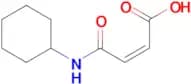
CAS :Produit contrôlé<p>Applications An impurity of labelled Salicylic Acid synthesis<br>References Kovacik, J., et al.: J. Agric. Food Chem., 57, 9848 (2009), Gao, X., et al.: Anal. Biochem., 393, 163 (2009), Rocher, F., et al.: Plant Physiol., 150, 2081 (2009),<br></p>Formule :C72H4H2O3Couleur et forme :NeatMasse moléculaire :142.15(Z)-4-(cyclohexylamino)-4-oxobut-2-enoic acid
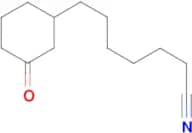
CAS :Degré de pureté :97%Masse moléculaire :197.233993530273447-(3-oxocyclohexyl)heptanenitrile
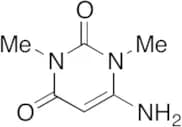
CAS :Degré de pureté :97.0%Couleur et forme :LiquidMasse moléculaire :207.317001342773446-Amino-1,3-dimethyluracil
CAS :Produit contrôlé<p>Applications 6-Amino-1,3-dimethyluracil is used as a reagent in the synthesis of new pyrimidine and caffeine derivatives that display highly potential antitumor activity. It is also used as a starting material in the synthesis of fused pyrido-pyrimidines.<br>References Abu-Hashem, A., et al.: Lett. Drug. Des. Discov., 12, 471 (2015); Azev, Y., et al.: Mendeleev Commun., 25, 310 (2015)<br></p>Formule :C6H9N3O2Couleur et forme :Light YellowMasse moléculaire :155.151,3-Dimethyl Barbituric Acid
CAS :Produit contrôlé<p>Applications 1,3-Dimethyl Barbituric Acid (Urapidil Impurity 4) is a derivative of Barbituric acid (B118650). All of the barbituric acid derivatives which have been reported to have pronounced hypnotic activity are disubstituted in the 5-position.<br>References Gupta, K., et al.: Eur. J. Med. Chem., 17, 448 (1982), Weber, L., et al.: Curr. Med. Chem., 9, 2085 (2002), Skiles, J., et al.: Curr. Med. Chem., 11, 2911 (2004),<br></p>Formule :C6H8N2O3Couleur et forme :NeatMasse moléculaire :156.144-Cyano-3-trifluoromethylphenylisothiocyanate
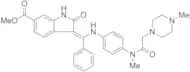
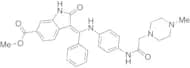
CAS :Produit contrôléFormule :C9H3F3N2SCouleur et forme :NeatMasse moléculaire :228.19Intedanib
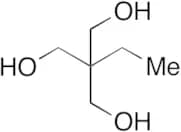
CAS :Produit contrôlé<p>Applications It is an indolinone derivative potently blocking VEGF-, PDGF-, and FGF-receptor kinases; an indolinone as triple angiokinase inhibitors. An antitumor agent.<br>References Sun, L., et al.: J. Med. Chem., 41, 2588 (1998); Xie, H., et al.: J. Med. Chem., 50, 4898 (2007); Hilberg, F., et al.: Cancer Res., 68, 4774 (2008); Roth, G., et al.: J. Med. Chem., 58, 1053 (2015)<br></p>Formule :C31H33N5O4Couleur et forme :NeatMasse moléculaire :539.621,1,1-Tris(hydroxymethyl)propane
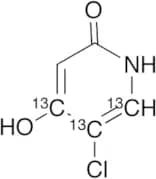
CAS :Produit contrôlé<p>Applications 1,1,1-Tris(hydroxymethyl)propane is a building block often used to make polymers. 1,1,1-Tris(hydroxymethyl)propane has been used as a precursor to prepatre alkyd resins for linseed oil based paint.<br>References Wang, X., et. al.: J. Polym. Res., 18, 721 (2011); Isiri-Caglar, D., et. al.: Rog. Org. Coat., 77, 81 (2014); Heiskanen,N., et. al.: J. Appl. Polym. Sci., 119, 209 (2011)<br></p>Formule :C6H14O3Couleur et forme :White CrystallineMasse moléculaire :134.17Gimeracil-13C3
CAS :Produit contrôlé<p>Applications Antitumor agent. A potent inhibitor of dihydropyrimidine dehydrogenase (DPD).<br>References Shirasaka, T., et al.: Cancer Res., 56, 2602 (1996), Patt, Y., et al.: J. Clin. Oncol., 22, 271 (2004), Shirao, K., et al.: Cancer, 100, 2355 (2004), Kelly, H., et al.: J. Clin. Oncol., 23, 4553 (2005),<br></p>Formule :C213C3H4ClNO2Couleur et forme :NeatMasse moléculaire :148.52Simethicone
CAS :<p>Applications Simethicone is an oral anti-foaming agent used to reduce bloating, discomfort and pain caused by excess gas in the stomach or intestinal tract. Simethicone is a mixture of polydimethylsiloxane and hydrated silica gel.<br>References Grinshpan, D., et al.: Pharmaceut. Chem. J., 42, 400 (2008), Agarwal, D., et al.: J. Pharmac., 20, 206 (1988),<br></p>Formule :(C2H6OSi)n•SiO2Couleur et forme :Clear ColourlessMasse moléculaire :296.622-Cyclohexylpropan-1-ol
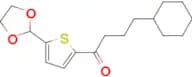
CAS :Degré de pureté :95.0%Couleur et forme :LiquidMasse moléculaire :142.24200439453125(3-Cyclohexyl)propyl 5-(1,3-dioxolan-2-yl)-2-thienyl ketone
CAS :Degré de pureté :97.0%Masse moléculaire :308.44000244140625(trans,trans)-4-Pentylphenyl 4'-propyl-[1,1'-bi(cyclohexane)]-4-carboxylate
CAS :Degré de pureté :97.0%Couleur et forme :Liquid, No data available.Masse moléculaire :398.6310119628906Methyl 2-amino-2-cyclohexylacetate hydrochloride
CAS :Degré de pureté :98%Masse moléculaire :207.69999694824224-[[4-Fluoro-3-(1-piperazinylcarbonyl)phenyl]methyl]-1(2H)-phthalazinone
CAS :Produit contrôléFormule :C20H19FN4O2Couleur et forme :Off-WhiteMasse moléculaire :366.394,4'-[(2-Hydroxy-1,3-propanediyl)bis(oxy)]bis-benzeneacetamide(Atenolol Impurity E)
CAS :Produit contrôlé<p>Impurity Atenolol EP Impurity E<br>Applications 4,4'-[(2-Hydroxy-1,3-propanediyl)bis(oxy)]bis-benzeneacetamide is an impurity of Atenolol (A790075), a cardioselective β-adrenergic blocker. Atenolol EP Impurity E<br>References Caplar, V., et al.: Anal. Profiles Drug Subs., 13, 1 (1984);<br></p>Formule :C19H22N2O5Couleur et forme :Off-White To Light BrownMasse moléculaire :358.39N-Formyl Memantine
CAS :Produit contrôlé<p>Applications N-Formyl Memantine is an impurity of Memantine (M218000). Memantine impurity E per USP.<br>References Gerzon, K., et al.: J. Med. Chem., 6, 760 (1963),<br></p>Formule :C13H21NOCouleur et forme :WhiteMasse moléculaire :207.311-Hydroxypyrene
CAS :Produit contrôléFormule :C16H10OCouleur et forme :Light Yellow To Light BrownMasse moléculaire :218.25Entacapone-d10
CAS :Produit contrôlé<p>Applications (E)-Isomer of labelled Entacapone polymorphic form A. Peripherally acting inhibitor of catechol-O-methyl transferase (COMT), an enzyme involved in the metabolism of catecholamine neurotransmitters and related drugs. Antiparkinsonian.<br>References Karlsson, M., et al.: J. Pharm. Biomed. Anal., 10, 593 (1992), Nissinen, E., et al.: Arch. Pharmacol., 346, 262 (1992), Wikberg, T., et al.: Eur. J. Drug Metab. Pharmacokinet., 18, 359 (1993),<br></p>Formule :C14D10H5N3O5Couleur et forme :Light Yellow To Dark OrangeMasse moléculaire :315.355,6-Dimethylbenzimidazole
CAS :Produit contrôlé<p>Applications 5,6-Dimethylbenzimidazole (cas# 582-60-5) is a useful research chemical.<br></p>Formule :C9H10N2Couleur et forme :NeatMasse moléculaire :146.19N-Nitrosoatenolol
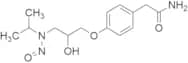
CAS :Produit contrôlé<p>Applications N-Nitrosoatenolol is an N-nitroso derivative of Atenolol (A790075), which is a cardioselective β-adrenergic blocker. Antihypertensive, antianginal, antiarrhythmic (class II). N-Nitrosoatenolol can be used for its genotoxic effect in rat and human hepatocytes.<br>References Caplar, V., et al.: Anal. Profiles Drug Subs., 13, 1 (1984); Robbiano, L., et.al., Cancer Res., 51, 2273-2279, (1991);<br></p>Formule :C14H21N3O4Couleur et forme :White To Off-WhiteMasse moléculaire :295.33Zafirlukast
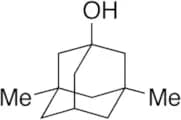
CAS :Produit contrôlé<p>Applications A potent, selective and orally active cysteinyl leukotriene type 1 receptor antagonist. Used as an antiasthmatic.<br> Not a dangerous good if item is equal to or less than 1g/ml and there is less than 100g/ml in the package<br>References Matassa, V.G., et al.: J. Med. Chem., 33, 1781 (1990), Findlay, S.R., et al.: J. Allergy Clin. Immunol., 89, 1040 (1992), Krell, R.D., et al.: Am. Rev. Respir. Dis., 141, 978 (1990), Dunn, C.J., Drugs, 61, 285 (2001),<br></p>Formule :C31H33N3O6SCouleur et forme :Pink Light OrangeMasse moléculaire :575.683,5-Dimethyl-1-adamantanol
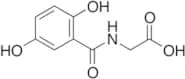
CAS :Produit contrôlé<p>Impurity Memantine USP Related Compound B (3,5-Dimethyladamantane-1-ol)<br>Applications 3,5-Dimethyl-1-adamantanol is an impurity of Memantine (M218000). Memantine impurity B. Memantine USP Related Compound B (3,5-Dimethyladamantane-1-ol).<br>References England, P., et al.: Biochemistry, 43, 11623 (2004), Schousboe, A., et al.: Eur. J. Pharmacol., 500, 281 (2004), Horvat, S., et al.: J. Med. Chem., 49, 3136 (2006),<br></p>Formule :C12H20OCouleur et forme :WhiteMasse moléculaire :180.29Gentisuric Acid
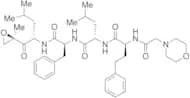
CAS :<p>Applications Gentisuric Acid is a metabolite that was found in hen plasma, tissues, and eggs as a result of the consumption of naturally occurring salicylates.<br>References Protasiuk, E., & Olejnik, M.: Food Addit. Contam. Part A, 37, 946 (2020)<br></p>Formule :C9H9NO5Couleur et forme :NeatMasse moléculaire :211.17Carfilzomib
CAS :Produit contrôlé<p>Applications Carfilzomib is a second-generation proteasome inhibitor that is used as a treatment in relapsed and refractory multiple myeloma.<br>References Fostier, K., et al.: Oncotargets. Therap., 5, 237 (2012); Geurink, P.P., et al.: J. Med. Chem., 56, 1262 (2013); McCormack, P.L., et al.: Drugs., 72, 2023 (2012);<br></p>Formule :C40H57N5O7Couleur et forme :White To Off-WhiteMasse moléculaire :719.91(S)-Atenolol-d7
CAS :Produit contrôlé<p>Applications Labelled (S)-Atenolol (A790080). Cardioselective β-adrenergic blocker. Antihypertensive, antianginal, antiarrhythmic (class II).<br>References Caplar, V., et al.: Anal. Profiles Drug Subs., 13, 1 (1984),<br></p>Formule :C14H15D7N2O3Couleur et forme :NeatMasse moléculaire :273.38Desmethyl Nintedanib
CAS :Produit contrôlé<p>Applications Desmethyl Nintedanib is an impurity of Intedanib (I666650), which is an antitumor agent. Desmethyl Nintedanib was used in the study of synthesizing indolinones as triple angiokinase inhibitors.<br>References Roth, G., et al.: J. Med. Chem., 52, 4466 (2009);<br></p>Formule :C30H31N5O4Couleur et forme :NeatMasse moléculaire :525.6(S)-Atenolol
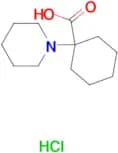
CAS :Produit contrôlé<p>Applications Cardioselective β-adrenergic blocker. Antihypertensive, antianginal, antiarrhythmic (class II).<br>References Caplar, V., et al.: Anal. Profiles Drug Subs., 13, 1 (1984),<br></p>Formule :C14H22N2O3Couleur et forme :NeatMasse moléculaire :266.341-(1-piperidinyl)cyclohexanecarboxylic acid hydrochloride
CAS :Degré de pureté :95.0%Masse moléculaire :247.759994506835944,4'-(Propane-2,2-diyl)dicyclohexanone
CAS :Degré de pureté :95.0%Couleur et forme :Solid, White to slightly pale yellow powderMasse moléculaire :236.354995727539061-((4-(o-tolyloxy)phenyl)sulfonamido)cyclohexane-1-carboxylic acid
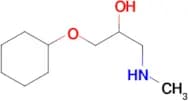
CAS :Degré de pureté :95.0%Masse moléculaire :389.47000122070311-Cyclohexyloxy-3-methylamino-propan-2-ol
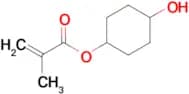
CAS :Formule :C10H21NO2Degré de pureté :98%Couleur et forme :SolidMasse moléculaire :187.2834-Hydroxycyclohexyl methacrylate
CAS :Degré de pureté :97% (stabilized with TBC)Masse moléculaire :184.23500061035156N-methyl-N-[(oxiran-2-yl)methyl]cyclohexanamine
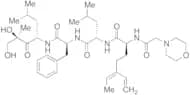
CAS :Degré de pureté :95.0%Masse moléculaire :169.26800537109375Carfilzomib (2R,4S)-Diol
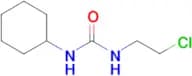
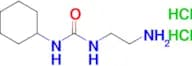
CAS :Produit contrôlé<p>Applications Carfilzomib (2R,4S)-Diol is a derivative of Carflizomib (C183460), a second-generation proteasome inhibitor that is used as a treatment in relapsed and refractory multiple myeloma.<br>References Fostier, K., et al.: Oncotargets. Therap., 5, 237 (2012); Geurink, P.P., et al.: J. Med. Chem., 56, 1262 (2013); McCormack, P.L., et al.: Drugs., 72, 2023 (2012);<br></p>Formule :C40H59N5O8Couleur et forme :NeatMasse moléculaire :737.933-(2-Aminoethyl)-1-cyclohexylurea dihydrochloride
CAS :Degré de pureté :98%Masse moléculaire :258.19000244140625((1S,2S,5R)-2-Isopropyl-5-methylcyclohexyl)diphenylphosphine
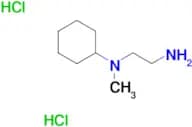
CAS :Formule :C22H29PDegré de pureté :98%Couleur et forme :SolidMasse moléculaire :324.448N1-Cyclohexyl-N1-methylethane-1,2-diamine dihydrochloride
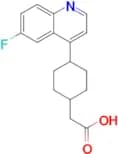
CAS :Degré de pureté :95.0%Masse moléculaire :229.190002441406252-(4-(6-Fluoroquinolin-4-yl)cyclohexyl)acetic acid
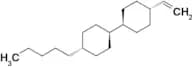
CAS :Degré de pureté :98%Masse moléculaire :287.3340148925781(trans,trans)-4-Pentyl-4'-vinyl-1,1'-bi(cyclohexane)
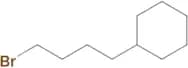
CAS :Degré de pureté :95.0%Couleur et forme :SolidMasse moléculaire :262.4809875488281(4-BROMOBUTYL)CYCLOHEXANE
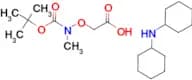
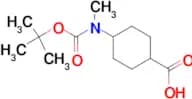
CAS :Degré de pureté :95.0%Couleur et forme :LiquidMasse moléculaire :219.166000366210944-(TERT-BUTOXYCARBONYL-METHYL-AMINO)-CYCLOHEXANECARBOXYLIC ACID
CAS :Degré de pureté :95.0%Masse moléculaire :257.3299865722656N-cyclopentyl-3-methylcyclohexanamine hydrobromide
CAS :Degré de pureté :95.0%Masse moléculaire :262.2349853515625{5-[1-(benzylamino)cyclohexyl]-1H-tetrazol-1-yl}acetic acid
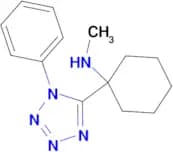
CAS :Degré de pureté :95.0%Masse moléculaire :315.37701416015625N-methyl-1-(1-phenyl-1H-tetrazol-5-yl)cyclohexanamine
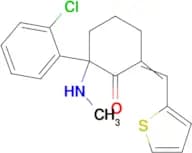
CAS :Degré de pureté :95.0%Masse moléculaire :257.341003417968752-(2-Chlorophenyl)-2-(methylamino)-6-(thiophen-2-ylmethylidene)cyclohexan-1-one
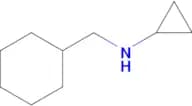
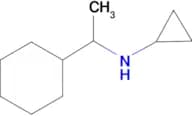
CAS :Degré de pureté :98%Masse moléculaire :331.86N-(1-CYCLOHEXYLETHYL)CYCLOPROPANAMINE
CAS :Degré de pureté :95.0%Masse moléculaire :167.296005249023444-cyclohexyl-3-{[(3-methoxyphenyl)amino]methyl}-4,5-dihydro-1H-1,2,4-triazole-5-thione
Masse moléculaire :318.44000244140625METHYL 4-(1-AMINOETHYL)CYCLOHEXANE-1-CARBOXYLATE
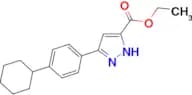
CAS :Degré de pureté :95.0%Masse moléculaire :185.26699829101562Ethyl 5-(4-cyclohexylphenyl)-1H-pyrazole-3-carboxylate
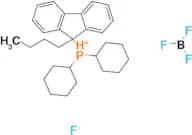
CAS :Degré de pureté :95.0%Masse moléculaire :298.385986328125Dicyclohexyl(9-butylfluoren-9-yl)phosphonium tetrafluoroborate
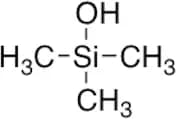
CAS :Degré de pureté :97%Masse moléculaire :506.42Trimethylsilanol
CAS :Produit contrôléFormule :C3H10OSiCouleur et forme :NeatMasse moléculaire :90.1962-(4-Methylcyclohexylidene)acetic acid
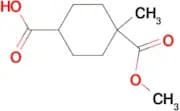
CAS :Formule :C9H14O2Degré de pureté :95.0%Couleur et forme :SolidMasse moléculaire :154.2094-(METHOXYCARBONYL)-4-METHYLCYCLOHEXANECARBOXYLIC ACID
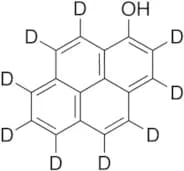
CAS :Degré de pureté :95.0%Masse moléculaire :200.233993530273441-Hydroxypyrene-d9
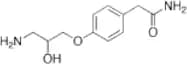
CAS :Produit contrôlé<p>Applications 1-Hydroxypyrene-d9 is found in humane urine after exposure to coal tar and a coal derived product.<br>References Jongeneelen, F.J., et al.: Int. Arch. Occup. Environ. Health, 57, 47 (1985)<br></p>Formule :C162H9HOCouleur et forme :White To BeigeMasse moléculaire :227.314-(3-Amino-2-hydroxypropoxy)phenylacetamide
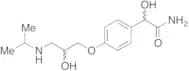
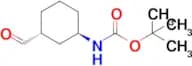
CAS :Produit contrôlé<p>Impurity Atenolol Impurity 3; Atenolol Impurity 1<br>Applications Atenolol Impurity 3. Atenolol Impurity 1.<br> Not a dangerous good if item is equal to or less than 1g/ml and there is less than 100g/ml in the package<br></p>Formule :C11H16N2O3Couleur et forme :NeatMasse moléculaire :224.26Tert-Butyl ((1R,3R)-3-formylcyclohexyl)carbamate
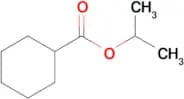
CAS :Degré de pureté :97%Masse moléculaire :227.3040008544922Cyclohexanecarboxylic acid isopropyl ester
CAS :Degré de pureté :98%Masse moléculaire :170.2519989013672Furfural
CAS :<p>Applications Furfural is a compound mainly found in agricultural byproducts, and is produced from the hydrolysis and dehydration of xylan contained in lignocellulose using solid acid catalysts. Furfural is also a potential platform for biofuels and inhibits fermentation in yeast.<br> Not a dangerous good if item is equal to or less than 1g/ml and there is less than 100g/ml in the package<br>References Lange, J., et al.: ChemSusChem, 5, 150 (2012); Mamman, A., et al.: Biofuels, Bioprod. Biorefin., 2, 438 (2008); Navarro, A.: Curr. Microbiol., 29, 87 (1994)<br></p>Formule :C5H4O2Couleur et forme :YellowMasse moléculaire :96.083-[4-(2-Methoxyphenyl)piperazin-1-yl]propan-1-amine
CAS :Produit contrôlé<p>Applications 3-[4-(2-methoxyphenyl)piperazin-1-yl]propan-1-amine (cas# 20529-23-1) is a useful research chemical.<br></p>Formule :C14H23N3OCouleur et forme :NeatMasse moléculaire :249.35Carfilzomib (2R,4R)-Diol
Produit contrôlé<p>Applications Carfilzomib (2R,4R)-Diol is a derivative of Carflizomib (C183460), a second-generation proteasome inhibitor that is used as a treatment in relapsed and refractory multiple myeloma.<br>References Fostier, K., et al.: Oncotargets. Therap., 5, 237 (2012); Geurink, P.P., et al.: J. Med. Chem., 56, 1262 (2013); McCormack, P.L., et al.: Drugs., 72, 2023 (2012);<br></p>Formule :C40H59N5O8Couleur et forme :NeatMasse moléculaire :737.93Azure B (Technical Grade)
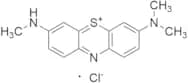
CAS :Produit contrôlé<p>Applications Azure B is a dye used for staining semi-thin sections of plant tissues. Azure B is used for staining semi-thin sections of plant tissue. This dye is also useful in the NCCLS method for blood smears and Lillie's modified Nocht's method for paraffin sections. Dyes and metabolites.<br>References 1. Penney, D.P., et al. 2002. Biotech. Histochem. 77: 237-275. PMID: 12564600<br></p>Formule :C15H16N3S·ClCouleur et forme :Dark GreenMasse moléculaire :305.83Hexamethylcyclotrisiloxane
CAS :Produit contrôlé<p>Applications Hexamethylcyclotrisiloxane is used in the preparation of Silicone coated Celgard-2400 for the adhesion of canine platelets and leucocytes.<br> Not a dangerous good if item is equal to or less than 1g/ml and there is less than 100g/ml in the package<br>References Chawla, A.S.: Biomaterials, 2, 83 (1981)<br></p>Formule :C6H18O3Si3Couleur et forme :NeatMasse moléculaire :222.467-Ketoabiraterone Acetate
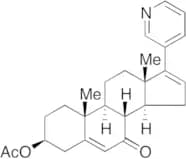
CAS :Produit contrôlé<p>Applications 7-Ketoabiraterone Acetate is an impurity of Abiraterone (A108490), a steroidal cytochrome P 450 17α-hydroxylase-17,20-lyase inhibitor (CYP17), is currently undergoing phase II clinical trials as a potential drug for the treatment of androgen-dependent prostate cancer.<br>References Denis, L., et al.: Cancer, 72, 3888 (1993); Potter, G.A., et al.: J. Med. Chem., 38, 2463 (1995); Denmeade, S., et al.: Nat. Rev., 2, 389(2002); Scher, H., et al.: J. Clin. Oncol., 23, 8253 (2005)<br></p>Formule :C26H31NO3Couleur et forme :NeatMasse moléculaire :405.536-Keto Fulvestrant
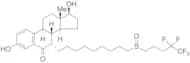
<p>Applications Fulvestrant (F862500) impurity F.<br></p>Formule :C32H45F5O4SCouleur et forme :NeatMasse moléculaire :620.756-HYDROXY-N-(4-METHYLCYCLOHEXYL)HEXANAMIDE
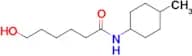
Degré de pureté :95.0%Masse moléculaire :227.348007202148447-(6-(2-Hydroxypropan-2-yl)pyridin-3-yl)-1-(trans-4-methoxycyclohexyl)-3,4-dihydropyrazino[2,3-b]pyrazin-2(1H)-one
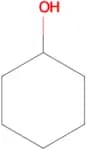
CAS :Degré de pureté :98.0%Masse moléculaire :397.211389724Cyclohexanol
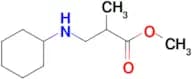
CAS :Formule :C6H12ODegré de pureté :98%Couleur et forme :ClearMasse moléculaire :100.161Methyl 3-(cyclohexylamino)-2-methylpropanoate
CAS :Degré de pureté :95.0%Masse moléculaire :199.294006347656253-Amino-2-oxazolidinone
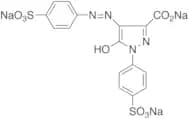
CAS :Produit contrôlé<p>Applications A metabolite of Furazolidone and Nitrofuran.Environmental contaminants; Food contaminants; Heat processing contaminants<br>References Mir, G., et al.: Indian J. Anim. Sci., 54, 888 (1984), Gottschall, D., et al.: J. Agric. Food Chem., 43, 2520 (1995)<br></p>Formule :C3H6N2O2Couleur et forme :Colourless To WhiteMasse moléculaire :102.09Tartrazine
CAS :<p>Applications As a dye for wool and silks; as colorant in food, drugs, and cosmetics. In biochemistry as an adsorption-elution indicator for chloride estimations. Tartrazine (otherwise known as E number E102, C.I. 19140, or FD&C Yellow 5) is a synthetic lemon yellow azo dye used as a food coloring. Tartrazine appears to cause the most allergic and intolerance reactions of all the azo dyes, particularly among asthmatics and those with an aspirin intolerance. Dyes and metabolites, Environmental Testing.A recent report has shown that Tartrazine may be useful in 3D bio-printing of organ-like architectures.<br>References Rowe, K.S., et al.: J. Pedriatics, 125, 691 (1994), Tanaka, T., et al.: Food Chem. Toxicol., 44, 179 (2006); Chem. and Eng News Page 4 May 6, 2019<br></p>Formule :C16H9N4O9S2·3NaCouleur et forme :YellowMasse moléculaire :534.36Cyclohexylmandelic acid
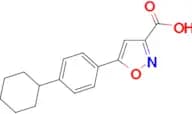
CAS :Formule :C14H18O3Degré de pureté :98%Couleur et forme :SolidMasse moléculaire :234.2955-(4-cyclohexylphenyl)-1,2-oxazole-3-carboxylic acid
CAS :Degré de pureté :95.0%Masse moléculaire :271.31600952148444-[cyclohexyl(methyl)amino]-4-oxobutanoic acid
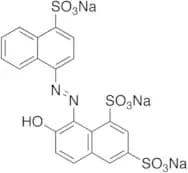
CAS :Degré de pureté :95.0%Masse moléculaire :213.27699279785156Food Red No. 102 (>80%)
CAS :<p>Stability Hygroscopic<br>Applications Food Red No. 102 is an artificial coloring food additive. Dye. Dyes and metabolites, Environmental Testing<br>References McCann, D. et al.: Lancet. 370, 1560 (2007); Kim, Y. et al.: Text. Res. J., 71, 318 (2001);<br></p>Formule :C20H11N2O10S3·3NaDegré de pureté :>80%Couleur et forme :Dark RedMasse moléculaire :604.473-Methoxy-1,2-propanediol
CAS :<p>Applications 3-Methoxy-1,2-propanediol is used to prepare phosphorothioate analogs of sn-2 radyl lysophosphatidic acid as metabolically stabilized LPA receptor agonists. It is also used to synthesize diacylglycerol analogs as potential second-messenger antagonists.<br>References Jiang, G., et al.: Bioorg. Med. Chem. Lett., 23, 1865 (2013); Briggs, J., et al.: Bioorg. Med. Chem. Lett., 2, 127 (1992)<br></p>Formule :C4H10O3Couleur et forme :Colourless LiquidMasse moléculaire :106.120[4-(2-Hydroxy-ethylamino)-cyclohexyl]-methyl-carbamic acid tert-butyl ester
CAS :Masse moléculaire :272.38900756835947,7’-Nonane-1,9-diylbis[estra-1,3,5(10)-triene-3,17β-diol](Mixture of Diastereomers)
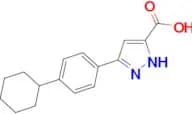
Produit contrôlé<p>Applications Fulvestrant (F862500) impurity D.<br></p>Formule :C45H64O4Couleur et forme :NeatMasse moléculaire :668.995-(4-cyclohexylphenyl)-1H-pyrazole-3-carboxylic acid
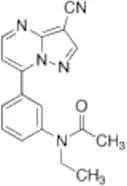
CAS :Degré de pureté :95.0%Masse moléculaire :270.3320007324219Zaleplon
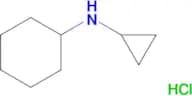
CAS :Produit contrôlé<p>Applications Selective non-benzodiazepine GABAA receptor agonist.<br>References Allen, D., et al.: Eur. J. Clin. Pharmacol., 45, 313 (1993), Beer, B., et al.: J. Clin. Pharmacol., 34, 335 (1994), Rosen, A.S., et al.: Biopharm. Drug Dispos., 20, 171 (1999), Elie, R., et al.: J. Clin. Psychiatry, 60, 536 (1999), Heydorn, W.E., et al.: Expert Opin. Invest. Drugs, 9, 841 (2000)<br></p>Formule :C17H15N5OCouleur et forme :Off-WhiteMasse moléculaire :305.33N-cyclopropylcyclohexanamine hydrochloride
CAS :Degré de pureté :95.0%Couleur et forme :SolidMasse moléculaire :175.6999969482422(2-Cyclohexyl)ethyl 5-(1,3-dioxolan-2-yl)-2-thienyl ketone
CAS :Degré de pureté :97.0%Masse moléculaire :294.4100036621094(trans)-4-Morpholin-4-yl-cyclohexylamine; dihydrochloride
CAS :Degré de pureté :%Masse moléculaire :184.157563264-Chloro-7-cyclohexyl-6,7-dihydro-2-(methylthio)-(5H)-pyrrolo[2,3-d]pyrimidine
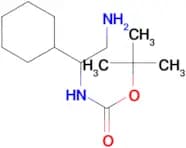
CAS :Formule :C13H18ClN3SDegré de pureté :95.0%Masse moléculaire :283.82Tert-butyl N-(2-amino-1-cyclohexylethyl)carbamate
Degré de pureté :95.0%Masse moléculaire :242.363006591796885-Hydroxymethyl-2-furaldehyde
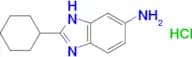
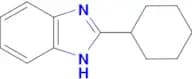
CAS :Produit contrôlé<p>Stability Light Sensitive, Very Hygroscopic<br>Applications An antioxidant for grape and apple juice.<br>References Kim, K., et al.: Agric. Biol. Chem., 38, 53 (1974), Vichi, S., et al.: Food Chem., 102, 1260 (2007),<br></p>Formule :C6H6O3Couleur et forme :White To Dark BrownMasse moléculaire :126.112-Cyclohexyl-1 H -benzoimidazol-5-ylamine hydrochloride
Formule :C13H18ClN3Couleur et forme :SolidMasse moléculaire :251.764-Nitrophenyl-β-D-glucopyranoside
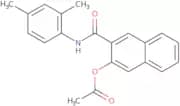
CAS :<p>Chromogenic β-glucosidase substrate yielding a yellow solution upon cleavage.</p>Formule :C12H15NO8Degré de pureté :Min. 99.0 Area-%Masse moléculaire :301.25 g/molNaphthol AS nonanoate
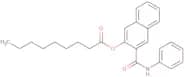
CAS :<p>Modified naphtol AS substrate used in histochemical and cytochemical staining</p>Formule :C26H29NO3Degré de pureté :Min. 95%Couleur et forme :PowderMasse moléculaire :403.51 g/mol2-Nitrophenyl b-D-arabinopyranoside
<p>2-Nitrophenyl b-D-arabinopyranoside is a chemical compound that is used in the detection of ATP by chemiluminescence. It acts as a substrate for enzymes such as luciferase and catalase, which catalyze the oxidation of 2-nitrophenyl b-D-arabinopyranoside to phenol and carbon dioxide with the release of light. This reaction can be used in diagnostic applications such as detecting bacteria in culture media or diagnosing food spoilage. 2-Nitrophenyl b-D-arabinopyranoside can also be used as a conjugate to detect proteins or nucleic acids by fluorescence spectroscopy. The CAS number for this compound is 107772-06-1.</p>Degré de pureté :Min. 95%Masse moléculaire :271.22 g/molAldol® 467 β-D-galactopyranoside, Biosynth Patent: EP 2427431 and US 8940909
CAS :<p>Aldol® 467 beta-D-galactopyranoside is a chromogenic and fluorogenic enzyme substrate used for detection of beta-galactosidase activity. The colorless product is cleaved by lactose-utilizing bacteria grown in liquid or solid media, yielding yellow coloration and green fluorescence. Aldol® 467 beta-D-galactopyranoside can also be used in beta-galactosidase gene reporter assays or immunoassay applications (ELISA). Aldol® 467 beta-D-galactopyranoside can be used under aerobic and anaerobic conditions.</p>Formule :C29H28ClNO9Degré de pureté :Min. 95%Couleur et forme :PowderMasse moléculaire :570 g/mol4-Nitrophenyl α-D-glucuronide
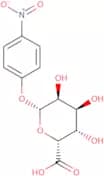
CAS :<p>4-Nitrophenyl alpha-D-glucuronide is a chromogenic substrate widely used for detecting and quantifying the activity of alpha glucuronidase enzyme. Upon cleavage by the enzyme, it releases the yellow-colored 4-nitrophenol, whose absorbance can be monitored spectrophotometrically. This substrate is routinely employed in biochemistry and molecular biology applications, such as enzyme assays, enzyme kinetics studies, and characterization of recombinant enzymes. As a non-toxic and easy-to-use reagent, 4-Nitrophenyl alpha-D-glucuronide provides a convenient and sensitive method for studying alpha-glucuronidase activity in various biological samples, including cell extracts, tissue homogenates, and purified enzyme preparations.</p>Formule :C12H13NO9Degré de pureté :Min. 97 Area-%Couleur et forme :Off-White PowderMasse moléculaire :315.23 g/mol4-Nitrophenyl-N-acetyl-β-D-glucosaminide
CAS :<p>Chromogenic β-glucosaminidase substrate yielding a yellow solution upon cleavage, used particularly in yeasts and molds.</p>Formule :C14H18N2O8Degré de pureté :Min. 99.0 Area-%Masse moléculaire :342.31 g/mol5-Nitro-3-indoxyl-β-D-galactopyranoside
<p>For the detection of beta-galactosidase activity</p>Formule :C14H16N2O8Masse moléculaire :340.29 g/mol5-Bromo-4-chloro-3-indoxyl-α-D-fucopyranoside
CAS :<p>5-Bromo-4-chloro-3-indoxyl-alpha-D-fucopyranoside is a photosynthetic agent that belongs to the class of fucopyranosides. It is a non-proteinogenic amino acid that has been shown to be encoded in chloroplasts and mitochondria in photosynthetic organisms. 5B4C3IF has also been found to be involved in the synthesis of polynucleotides and polypeptides, as well as the regulation of biomass.</p>Formule :C14H15BrClNO5Masse moléculaire :392.64 g/molRef: 3D-B-7134
1gÀ demander5gÀ demander250mgÀ demander500mgÀ demander2500mgÀ demander-Unit-ggÀ demanderAldol® 458 phosphate, disodium salt, Biosynth Patent: EP 2427431 and US 8940909
CAS :<p>Aldol® 458 phosphate is a chromogenic and fluorogenic enzyme substrate used for detection of phosphatase activity. The colorless enzyme substrate is cleaved by phosphatases secreted by bacteria grown in liquid media, yielding yellow color and green fluorescence. Aldol® 458 phosphate can also be used in assays involving phosphatase-coupled antibodies in immunoassay applications (ELISA). Aldol® 458 phosphate can be used under aerobic and anaerobic conditions.</p>Formule :C16H12NNa2O6PDegré de pureté :Min. 95%Couleur et forme :PowderMasse moléculaire :391.22 g/mol5-Iodo-3-indoxyl-β-D-galactopyranoside
CAS :<p>5-Iodo-3-indoxyl-beta-D-galactopyranoside is a chromogenic substrate for beta-galactosidase.</p>Formule :C14H16INO6Degré de pureté :Min. 99 Area-%Masse moléculaire :421.19 g/molNaphthol AS-MX acetate
CAS :<p>Modified naphtol AS substrate used in histochemical and cytochemical staining</p>Formule :C21H19NO3Degré de pureté :Min. 80%Couleur et forme :White Off-White PowderMasse moléculaire :333.38 g/mol3-Indoxyl choline phosphate
CAS :<p>Please enquire for more information about 3-Indoxyl choline phosphate including the price, delivery time and more detailed product information at the technical inquiry form on this page</p>Formule :C13H19N2O4PDegré de pureté :Min. 99 Area-%Masse moléculaire :298.28 g/molRef: 3D-I-5696
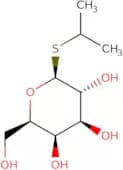
1gÀ demander5gÀ demander10gÀ demander500mgÀ demander2500mgÀ demander-Unit-ggÀ demanderIPTG
CAS :<p>Isopropyl-beta-D-thiogalactopyranoside (IPTG) is a non-metabolizable allolactose analogue, widely used in molecular biology for overexpression of recombinant proteins from inducible systems under the control of lac promoter. IPTG binds to the LacI repressor and causes its release from the lac operator, allowing gene expression of lac operon to take place. IPTG is present in vectors of pGEX, pGEM-T, pET, pRSET, pMAL class and others.</p>Formule :C9H18O5SDegré de pureté :Min. 99 Area-%Couleur et forme :White PowderMasse moléculaire :238.3 g/molN,N,N',N'-Tetramethyl-p-phenylenediamine dihydrochloride
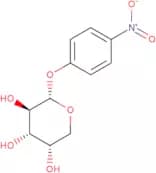
CAS :<p>Reducing co-substrate for heme peroxidases; test reagent in microbiology</p>Formule :C10H16N2·2HClDegré de pureté :Min. 95%Couleur et forme :White PowderMasse moléculaire :237.17 g/mol4-Nitrophenyl a-L-arabinopyranoside
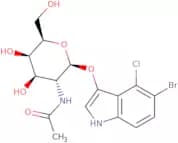
CAS :<p>Substrate for a-L-arabinopyranosidase</p>Formule :C11H13NO7Degré de pureté :Min. 98 Area-%Couleur et forme :White PowderMasse moléculaire :271.22 g/mol5-Bromo-4-chloro-3-indoxyl-N-acetyl-β-D-galactosaminide
CAS :<p>5-Bromo-4-Chloro-3-Indoxyl-N-Acetyl-Beta-D-Galactosaminide is a chromogenic substrate for detecting beta-galactosidase and GalNAc-transferase enzymes. Upon hydrolysis by the enzyme, it produces a blue-green colored compound that can be detected visually or measured spectrophotometrically. This substrate is useful in characterizing the activity of Beta-Galactosidase and GalNAc-transferase enzymes involved in glycobiology research and diagnostic applications.</p>Formule :C16H18BrClN2O6Degré de pureté :Min. 98 Area-%Couleur et forme :Crystalline PowderMasse moléculaire :449.68 g/mol6-Bromo-2-naphthyl-2-acetamido-2-deoxy-β-D-glucopyranoside
CAS :<p>6-Bromo-2-naphthyl 2-acetamido-2-deoxy-beta-D-glucopyranoside is a chromogenic substrate used for the detection of chitinase activity. Upon hydrolysis by chitinase, it releases a yellow-brown color, which is easily detected by spectrophotometry. This substrate has been used to study chitinases in various organisms, including bacteria, fungi, and insects. It can also be used to quantitate chitinase activity in various biological samples.</p>Formule :C18H20BrNO6Masse moléculaire :426.26 g/mol4-Nitrophenyl palmitate
CAS :<p>4-Nitrophenyl palmitate is a lipase-sensitive chromogenic substrate commonly used in the study of lipase and esterase activity. Its hydrolysis by lipases produces a yellow 4-nitrophenol, which can be easily detected spectrophotometrically, offering a quantitative measure of enzyme activity. This substrate is widely utilized in the screening of lipase-producing microorganisms and the optimization of enzyme-catalyzed reactions in various fields, including biotechnology and pharmaceutical research.</p>Formule :C22H35NO4Degré de pureté :Min. 95%Couleur et forme :Off-White PowderMasse moléculaire :377.52 g/mol6-Chloro-3-indoxyl-N-acetyl-β-D-galactosaminide
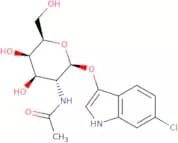
CAS :<p>Chromogenic substrate for N-Acetyl-β-D-galactosaminidase yielding a salmon-colored precipitate.</p>Formule :C16H19ClN2O6Degré de pureté :Min. 98.0 Area-%Masse moléculaire :370.79 g/mol4-Nitrophenyl-α-D-maltohexaoside
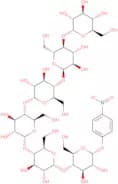
CAS :<p>Chromogenic substrate for α-amylase yielding a yellow solution upon cleavage.</p>Formule :C42H65NO33Degré de pureté :Min. 97.0 Area-%Masse moléculaire :1,111.97 g/mol2-Nitrophenyl b-D-glucopyranoside
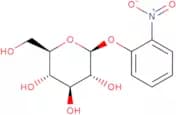
CAS :<p>Chromogenic substrate for beta-glucosidase</p>Formule :C12H15NO8Degré de pureté :Min. 99 Area-%Couleur et forme :Off-White Yellow PowderMasse moléculaire :301.25 g/mol1-Naphthyl β-D-mannopyranoside
CAS :<p>1-Naphthyl β-D-mannopyranoside is a chromogenic (also fluorogenic) substrate. After cleavage, 1-naphthol is released and is used to quantify beta-mannosidase activity.</p>Formule :C16H18O6Degré de pureté :Min. 95%Couleur et forme :PowderMasse moléculaire :306.31 g/mol6-Chloro-3-indoxyl-α-D-mannopyranoside
CAS :<p>Chromogenic substrate for α-mannosidase yielding a salmon colored precipitate upon cleavage.</p>Formule :C14H16ClNO6Degré de pureté :Min. 98.0 Area-%Masse moléculaire :329.74 g/mol2-Chloro-4-nitrophenyl a-D-glucopyranoside
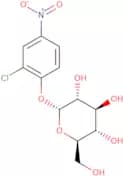
CAS :<p>2-Chloro-4-nitrophenyl a-D-glucopyranoside is an an enzyme-activated irreversible inhibitor of alpha-glucosidase. The substrate 2-Chloro-4-nitrophenyl a-D-glucopyranoside is covalently attached to the enzyme enabling mechanistic studies of glycosidase activity, especificallyt in carbohydrate metabolism studies.</p>Degré de pureté :Max. 97 Area-%Couleur et forme :White Off-White PowderMasse moléculaire :335.69 g/molNaphthol AS-TR phosphate
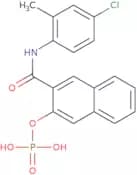
CAS :<p>Modified naphtol AS substrate used in histochemical and cytochemical staining</p>Formule :C18H15ClNO5PDegré de pureté :Min. 95%Couleur et forme :Off-White PowderMasse moléculaire :391.74 g/mol4-Nitrophenyl 2-acetamido-2-deoxy-4-O-(β-D-galactopyranosyl)-β-D-glucopyranoside
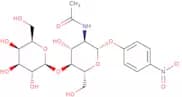
CAS :<p>4-Nitrophenyl 2-acetamido-2-deoxy-4-O-(b-D-galactopyranosyl)-b-D-glucopyranoside is an efficient chromogenic pNP enzyme substrate ideal for monitoring enzyme activity and understanding carbohydrate metabolism. This galacto-glucoside compound is designed specifically for use with glycosidases such as hexosaminidases and delivers unparalleled performance in your enzymatic assays.</p>Formule :C20H28N2O13Degré de pureté :Min. 95%Couleur et forme :White PowderMasse moléculaire :504.44 g/molPhenolphthalein b-D-glucuronide sodium salt monohydrate
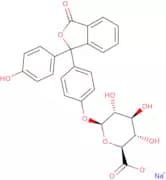
CAS :<p>Monohydrate; beta-glucuronidase substrate; yellow/pink color<br>Beta-glucuronidase activity can be measured in a colorimetric assay with phenolphthalein beta-D-glucuronide as substrate. Starting assay conditions can include 30 µg of enzyme-containing material, 0.6 mM phenolphthalein beta-D-glucuronide in 100 mM sodium phosphate buffer in a total volume of 100 µL and monitoring absorbance changes at 540 nm. Temperature incubation can be used to promote the enzymatic activity (Galindo, 2012).</p>Formule :C26H23NaO11Degré de pureté :Min. 95%Couleur et forme :Off-White PowderMasse moléculaire :534.45 g/mol4-Nitrophenyl 2,3,4,6-tetra-O-acetyl-a-D-thiomannopyranoside
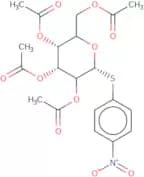
CAS :<p>4-Nitrophenyl 2,3,4,6-tetra-O-acetyl-a-D-thiomannopyranoside is a pNP substrate that serves as a chromogenic substrate for enzyme assays. It has been tested for the detection of a-D-mannosidase activity in a variety of biological samples, including cell lysates, body fluids, and tissue homogenates.</p>Degré de pureté :Min. 95%Masse moléculaire :485.47 g/mol2-Naphthyl caprylate
CAS :<p>Chromogenic substrate for carboxylesterase and lipase. 2-naphthol is released upon hydrolyzation. By simultaneous coupling with a diazonium salt, the corresponding azo-dye is formed. Naphthols can also be detected by fluorescence analysis. Used in an colorimetric assay for the extracellular lipase of Pseudomonas fluorescens B52.</p>Formule :C18H22O2Degré de pureté :Min. 98.0 Area-%Masse moléculaire :270.37 g/molRef: 3D-N-2220
1gÀ demander5gÀ demander250mgÀ demander500mgÀ demander2500mgÀ demander-Unit-ggÀ demanderAldol® 518 β-D-glucuronic acid, Biosynth Patent: EP 2427431 and US 8940909
CAS :<p>Aldol® 518 beta-D-glucuronic acid is a chromogenic and fluorogenic enzyme substrate used for detection of beta-glucuronidase activity, yielding red colour and red fluorescence. Living cells of Escherichia coli can be reliably detected with Aldol® 518 beta-D-glucuronic acid-containing media. Aldol® 518 beta-D-glucuronic acid can be also used in GUS reporter assays, e.g. in plant biotechnology. Aldol® 518 beta-D-glucuronic acid is suitable for use in liquid and solid media, under aerobic as well as anaerobic conditions.</p>Formule :C29H27ClN2O8Degré de pureté :Min. 95 Area-%Masse moléculaire :566.99 g/molAldol® 495 inositol-phosphate, ammonium salt, Biosynth Patent: EP 2427431 and US 8940909
CAS :<p>Aldol® 495 inositol-phosphate is a chromogenic and fluorogenic enzyme substrate used for detection of phosphatidylinositol specific phospholipase C activity (PI-PLC, EC 4.6.1.13). The colorless enzyme substrate is cleaved by PI-PLC or PI-PLC-positive microorganisms in liquid or solid media, yielding orange color. In addition, green fluorescence is generated when a suitable matrix is present, e.g. PE-Pellets or cellulose acetate filter. Aldol® 495 inositol-phosphate is suitable for use in liquid and solid media, under aerobic as well as anaerobic conditions.</p>Formule :C26H29ClN3O10PDegré de pureté :Min. 95.0 Area-%Masse moléculaire :609.95 g/mol3,4-Cyclohexenoesculetine-N-acetyl-glucosamine
<p>Please enquire for more information about 3,4-Cyclohexenoesculetine-N-acetyl-glucosamine including the price, delivery time and more detailed product information at the technical inquiry form on this page</p>Degré de pureté :Min. 95%2-Naphthyl butyrate
CAS :<p>2-Naphthyl butyrate is used as a chromogenic substrate in hematological studies via measuring esterase activity. This type of assays are important as it can help in distinguishing acute leukemias with monocytic or granulocytic differentiation. After hydrolysis of 2-naphthyl butyrate by the esterase (for example acylase), b-napthol is released that can be quantified spectrophotometrically (Exc 320 nm; Em 410 nm).</p>Formule :C14H14O2Degré de pureté :Min. 98 Area-%Couleur et forme :Colorless Clear LiquidMasse moléculaire :214.26 g/mol5-Bromo-6-chloro-3-indolyl a-D-galactopyranoside
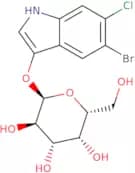
CAS :<p>5-Bromo-6-chloro-3-indolyl a-D-galactopyranoside is a chromogenic substrate that yields a magenta-colored product after cleavage. The chromophore 5-bromo-6-chloro-indoxyl is released, generating the observable color. It is used in glycolipid metabolism studies.</p>Formule :C14H15BrClNO6Couleur et forme :White to off-white solid.Masse moléculaire :408.63 g/mol2-Nitrophenyl b-L-fucopyranoside
CAS :<p>2-Nitrophenyl beta-L-fucopyranoside is a chromogenic substrate used to detect the enzymatic activity of beta-L-fucosidase. After cleavage, the nitrophenyl moiety is released exhibiting a light yellowish color. 2-Nitrophenyl beta-L-fucopyranoside is used in bacterial fucose metabolism studies to identify and quantify the enzymatic activity in, for example, Bacteroides spp..</p>Degré de pureté :Min. 98 Area-%Couleur et forme :PowderMasse moléculaire :285.25 g/mol2,4-Dinitrophenyl β-D-glucopyranoside
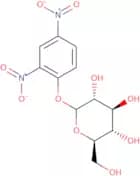
CAS :<p>2,4-Dinitrophenyl-beta-D-glucopyranoside is a chromogenic substrate used to assay enzymes, such as glucosidases. These enzymes catalyze the hydrolysis of glycosidic bonds in sugars.</p>Formule :C12H14N2O10Degré de pureté :Min. 95%Couleur et forme :PowderMasse moléculaire :346.25 g/molAldol® 495 acetate, Biosynth Patent: EP 2427431 and US 8940909
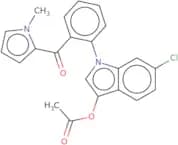
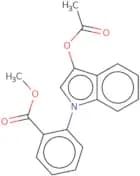
CAS :Produit contrôlé<p>Aldol 495 is a chemiluminescent substrate for the detection of aldehyde reductase (ALR) activity. It is an acetate ester that reacts with ALR to form an aldehyde product, which then reacts with luminol in the presence of hydrogen peroxide to produce light. Aldol 495 is used in the diagnosis of ALR deficiency, which can cause acute intermittent porphyria and other diseases. Aldol 495 has been shown to be non-toxic and non-mutagenic.</p>Formule :C22H17ClN2O3Degré de pureté :Min. 95%Couleur et forme :PowderMasse moléculaire :392.83 g/mol4-Nitrophenyl 2-acetamido-3-O-(2-acetamido-2-deoxy-b-D-glucopyranosyl)-2-deoxy-a-D-galactopyranoside
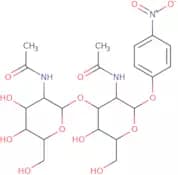
CAS :<p>4-Nitrophenyl 2-acetamido-3-O-(2-acetamido-2-deoxy-beta-D-glucopyranosyl)-2-deoxy-alpha-D-galactopyranoside is a chromogenic substrate for alpha-galactosidase. Upon hydrolysis, para-nitrophenol is released yielding a yellowish colour. 4-Nitrophenyl 2-acetamido-3-O-(2-acetamido-2-deoxy-beta-D-glucopyranosyl)-2-deoxy-alpha-D-galactopyranoside is used in different applications such as the Fabry disease diagnosis, glycolipid metabolism studies</p>Degré de pureté :Min. 98 Area-%Couleur et forme :White PowderMasse moléculaire :545.49 g/mol5-Bromo-6-chloro-3-indoxylphosphat, disodium salt trihydrate
<p>5-Bromo-6-chloro-3-indoxylphosphate, disodium salt trihydrate is a bioluminescent substrate that can be used in a variety of diagnostic applications. This compound reacts with luciferase to yield light and can serve as an indicator for various enzymes and chemical reactions. 5-Bromo-6-chloro-3-indoxylphosphate, disodium salt trihydrate has been shown to be compatible with both culture media and food testing.</p>Degré de pureté :Min. 95%5-Bromo-4-chloro-3-indolyl 5-O-feruloyl a-L-arabinofuranoside
<p>5-Bromo-4-chloro-3-indolyl 5-O-feruloyl a-L-arabinofuranoside is a chemiluminescent ligand that is used in the detection of DNA, RNA, and proteins. It has been shown to be an efficient fluorescence substrate for DNA and RNA polymerases. 5-Bromo-4-chloro-3-indolyl 5-O-feruloyl a-L-arabinofuranoside is suitable for use in diagnostic tests for bacteria, fungi, viruses, parasites, and toxins. This compound has been extensively tested for toxicity and carcinogenicity.</p>Degré de pureté :Min. 95%5-Bromo-6-chloro-3-indoxyl-N-acetyl-β-D-glucosaminide
CAS :<p>Chromogenic substrate for N-Acetyl-β-D-glucosaminidase yielding a magenta precipitate.</p>Formule :C16H18BrClN2O6Degré de pureté :Min. 99 Area-%Masse moléculaire :449.69 g/molRef: 3D-B-7020
1gÀ demander5gÀ demander10gÀ demander500mgÀ demander2500mgÀ demander-Unit-ggÀ demander3,4-Cyclohexenoesculetine-N-acetyl-glucosamine
<p>Please enquire for more information about 3,4-Cyclohexenoesculetine-N-acetyl-glucosamine including the price, delivery time and more detailed product information at the technical inquiry form on this page</p>2-Chloro-4-nitrophenyl α-D-mannopyranoside
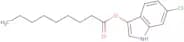
CAS :<p>2-Chloro-4-nitrophenyl alpha-D-mannopyranoside is a substrate used to measure the alpha-mannosidase activity. This enzyme plays a crucial role in the lysosomal degradation of asparagine-linked carbohydrate cores of glycoproteinsis. The use of 2-Chloro-4-nitrophenyl alpha-D-mannopyranoside in diagnostic assays is important as a deficiency in alpha-mannosidase leads to the accumulation of mannose-rich oligosaccharides in lysosomes, causing a range of health problems collectively known as alpha-mannosidosis.</p>Formule :C12H14ClNO8Degré de pureté :Min. 98 Area-%Couleur et forme :White PowderMasse moléculaire :335.69 g/mol6-Chloro-3-indoxyl nonanoate
CAS :<p>6-Chloro-3-indoxyl nonanoate is a fluorescent substrate that is used in the detection of beta-galactosidase activity. It has been used to detect the enzyme levels in various culture media and as a high quality, food testing, and environmental testing. The product is also used as a ligand for enzyme inhibition studies. 6-Chloro-3-indoxyl nonanoate has shown to be an excellent fluoroquinolone substrate for chemiluminescence assays. This product is CAS No. 133950-72-8 and is of high purity and high quality.</p>Degré de pureté :Min. 95%Masse moléculaire :307.81 g/mol5-Bromo-3-indoxyl myo-inositol-1-phosphate, ammonium salt
<p>Please enquire for more information about 5-Bromo-3-indoxyl myo-inositol-1-phosphate, ammonium salt including the price, delivery time and more detailed product information at the technical inquiry form on this page</p>Formule :C14H20BrN2O9PMasse moléculaire :471.2 g/molAldol® 518 ammonium myo-inositol-1-phosphate, Biosynth Patent: EP 2427431 and US 8940909
CAS :<p>Aldol® 518 myo-inositol phosphate is a chromogenic and fluorogenic enzyme substrate used for detection of phosphatidylinositol specific phospholipase C (PI-PLC, EC 4.6.1.13) activity. The colorless enzyme substrate is cleaved by PI-PLC positive microorganisms grown in liquid or solid media, yielding intense red color. In combination with Aldol® 355 fluorescence enhancer, red fluorescence can also be obtained. Aldol® 518 myo-inositol phosphate thus enables the detection and identification of various bacteria, such as, pathogenic strains of Listeria, Clostridium, Bacillus, and Staphylococcus species. Aldol® 518 myo-inositol phosphate is suitable for use under aerobic and anaerobic conditions.</p>Formule :C29H33ClN3O10PDegré de pureté :Min. 95.0 Area-%Masse moléculaire :650.02 g/mol5-Bromo-4-chloro-3-indolyl myristate
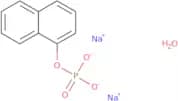
CAS :<p>5-Bromo-4-chloro-3-indolyl myristate is a chromogenic substrate used to detect the specific enzymatic activity of lipase or esterase. After cleavage, 5-bromo-4-chloro-indoxyl is released, resulting in a blue to blue-green color change in bacterial colonies or media. 5-Bromo-4-chloro-3-indolyl myristate is used in screening assays for pancreatic lipase deficiency and lipid metabolism studies.</p>Formule :C22H31BrClNO2Degré de pureté :Min. 95%Couleur et forme :PowderMasse moléculaire :456.84 g/mola-Naphthyl phosphate disodium salt hydrate
CAS :<p>a-Naphthyl phosphate disodium salt hydrate is a highly water-soluble chromogenic substrate used to determine phosphatase activity in research and analytical applications, particularly for staining and differentiating acid and alkaline phosphatases.</p>Degré de pureté :Min. 95%Couleur et forme :White PowderMasse moléculaire :268.11 g/mol2-Nitrophenyl a-D-galactopyranoside
CAS :<p>2-Nitrophenyl alpha-D-galactopyranoside is a chromogenic substrate used to detect the enzymatic activity of alpha-galactosidase. After cleavage, the nitrophenyl moiety is released exhibiting a light yellowish color. 2-Nitrophenyl alpha-D-galactopyranoside is used in Fabry disease screening.</p>Formule :C12H15NO8Degré de pureté :Min. 95%Couleur et forme :White Off-White PowderMasse moléculaire :301.25 g/molAldol® 455 α-D-glucopyranoside, Biosynth Patent: EP 2427431 and US 8940909
<p>Aldol® 455 alpha-D-glucopyranoside is a synthetic fluorescent sugar that has been used in the diagnosis of bacterial infections. It has been used as a substrate for the enzyme beta-galactosidase and as a conjugate with anti-bacterial antibodies, which can be used to detect bacteria in urine and blood samples. Aldol® 455 alpha-D-glucopyranoside is also commonly used in the detection of bacteria in food and environmental samples. The product has a high purity level and quality.</p>Formule :C27H24ClNO7Degré de pureté :Min. 95.0 Area-%Masse moléculaire :509.93 g/molSalmon-pal
CAS :<p>6-Chloro-1H-indol-3-yl hexadecanoate is a chromogenic substrate for an enzyme that oxidizes it to produce a blue color. It can be used in the diagnosis of bacterial infections, such as tuberculosis and leprosy. 6CHIH is a ligand for various enzymes, including lactate dehydrogenase, which catalyzes the conversion of pyruvate to lactic acid. This compound reacts with oxygen to produce light in the presence of a catalyst. 6CHIH is also used as a fluorescent tag for protein labeling and detection.<br>6CHIH has been shown to be effective in detecting bacteria in food products and water samples using bioluminescence techniques. The high purity and quality of this compound make it suitable for use in diagnostics, culture media, and environmental testing.</p>Degré de pureté :Min. 95%Masse moléculaire :406 g/mol4-Nitrophenyl b-D-ribofuranoside
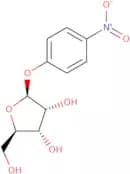
CAS :<p>4-Nitrophenyl β-D-ribofuranoside is a synthetic chromogenic molecule designed to profile phosphorolytic enzyme activity, specifically ribonucleoside-hydrolyzing enzymes. Upon hydrolysis by these enzymes, it releases a 4-nitrophenolic compound, which can be monitored spectrophotometrically at 405-410 nm as a quantitative indicator of enzyme activity. This substrate is suitable for studying ribonucleoside-hydrolyzing enzymes, such as ribo- and deoxyribonucleases, in various biological systems and, in turn, could help advance our understanding of nucleic acid metabolism, gene function, and regulatory processes.</p>Formule :C11H13NO7Degré de pureté :Min. 97 Area-%Couleur et forme :White PowderMasse moléculaire :271.22 g/molAldol® 458 β-D-galactopyranoside, Biosynth Patent: EP 2427431 and US 8940909
CAS :<p>Aldol® 458 beta-D-galactopyranoside is a chromogenic and fluorogenic enzyme substrate used for detection of ?-galactosidase activity. The colorless enzyme substrate is cleaved by lactose utilizing bacteria grown in liquid or solid media, yielding yellow coloration and green fluorescence. Aldol® 458 beta-D-galactopyranoside can also be used in ?-galactosidase gene reporter assays or immunoassay applications (ELISA). Aldol® 458 beta-D-galactopyranoside can be used under aerobic and anaerobic conditions.</p>Formule :C22H23NO8Degré de pureté :Min. 95.0 Area-%Masse moléculaire :429.42 g/mol5-Bromo-4-chloro-3-indoxyl-α-L-arabinofuranoside
<p>5-Bromo-4-chloro-3-indoxyl-alpha-L-arabinofuranoside is a fluorogenic substrate. It is also used as a ligand to detect the presence of an enzyme in a sample. 5BCIAF may be used as an enzyme substrate to measure the activity of enzymes such as beta-galactosidase, alpha-glucuronidase, and esterases. It is also used for diagnostic purposes, with the most common use being for the detection of Mycobacterium tuberculosis in clinical specimens. 5BCIAF can be conjugated to other compounds to form fluorescent probes for detecting specific compounds or cells within a sample. This compound has been shown to have activity against bacteria, fungi, and viruses when tested in culture media and food samples. The chemical structure of 5BCIAF is similar to that of fluorescein, which has been shown to have chemiluminescent properties</p>Formule :C13H13BrClNO5Degré de pureté :Min. 99.0 Area-%Masse moléculaire :378.61 g/molChlorophenol red-b-D-galactopyranoside sodium salt
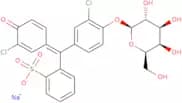
CAS :<p>Chlorophenol red-b-D-galactopyranoside sodium salt is the salt from of CPRG (chlorophenol red-b-D-galactopyranoside), that has a higher solubility. It is a chromogenic substrate for beta-galactosidases that, after enzymatic cleavage, releases chlorophenol red, a dark red compound quantified by absorbance at 570 nm.</p>Formule :C25H21Cl2O10SNaDegré de pureté :Min. 96 Area-%Couleur et forme :PowderMasse moléculaire :607.4 g/mol6-Chloro-3-indoxyl phosphate, p-toluidine salt
CAS :<p>A substrate for visualising alkaline phosphatase activity. Produces a red colored insoluble end product that is detected visually, when used together with nitroblue tetrazolium. The substrate system is versatile and functions in a variety of applications, including Northern, Southern, and Western blotting, in situ hybridization, ELISAs and immunohistochemistry. DMF soluble.</p>Formule :C15H16ClN2O4PDegré de pureté :Min. 98.0 Area-%Masse moléculaire :354.73 g/mol5-Bromo-4-chloro-3-indoxyl myo-inositol-1-phosphate, ammonium salt
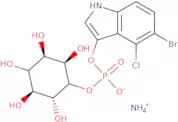
CAS :<p>This product is designed for the sensitive color detection andidentification of various bacteria, such as pathogenic strains of Listeria, Clostridium, Bacillus and Staphylococcus. 5-Bromo-4-chloro-3-indoxyl myo-inositol-1-phosphate (X-phos-inositol; X-IP) is a chromogenic indicator for phosphatidyl-inositol specific phospholipase C(PI-PLC, EC 4.6.1.13). The colorless product is cleaved by PI-PLC positive microorganisms in liquid media or on solid culture media and yields a blue-green color precipitate.</p>Formule :C14H19BrClN2O9PDegré de pureté :Min. 90.0 Area-%Masse moléculaire :505.64 g/molLipase substrate
CAS :<p>Synthetic chromogenic substrate for detection of lipase enzyme activity that produces a red coloured product, Suitable for use in serum of plasma matrices. This lipase substrate is commonly used in veterinary diagnostics for monitoring and detecting canine pancreatitis,</p>Formule :C45H69NO8Masse moléculaire :752.03 g/mol4-Nitrophenyl-α-D-maltopyranoside
CAS :<p>Chromogenic α-maltosidase substrate yielding a yellow solution upon cleavage.</p>Formule :C18H25NO13Degré de pureté :Min. 98.0 Area-%Masse moléculaire :463.40 g/molAldol® 458 acetate, Biosynth Patent: EP 2427431 and US 8940909
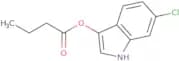
CAS :Produit contrôlé<p>Aldol 458 acetate is a fluoroquinolone antibiotic. It is an enzyme substrate that can be used in the detection of β-galactosidase, alkaline phosphatase, and other enzymes. Aldol 458 acetate can be used for the detection of β-galactosidase by chemiluminescence or bioluminescence. It has been shown to have high purity and high quality as well as being a ligand that can be conjugated with a fluorescent dye to provide a fluorescent substrate. Aldol 458 acetate can also be used in culture media for the growth of bacteria. It has been shown to have strong inhibitory effects on Escherichia coli, Bacillus subtilis, Pseudomonas aeruginosa, and Staphylococcus aureus.</p>Formule :C18H15NO4Degré de pureté :Min. 95%Couleur et forme :PowderMasse moléculaire :309.32 g/mol6-Chloro-3-indolyl butyrate
CAS :<p>6-Chloro-3-indolyl butyrate is a chromogenic substrate for lipases. Use in lipid digestion and metabolism studies, it produces a salmon-pink color when 6-chloro-3-indolyl is released after enzymatic cleavage.</p>Formule :C12H12ClNO2Degré de pureté :Min. 95%Couleur et forme :PowderMasse moléculaire :237.68 g/molAldol® 518 β-D-galactopyranoside, Biosynth Patent: EP 2427431 and US 8940909
CAS :<p>Aldol® 518 beta-D-galactopyranoside is a chromogenic and fluorogenic enzyme substrate used for detection of beta-galactosidase activity. The colorless enzyme substrate is cleaved by lactose-utilizing bacteria in liquid or solid media, yielding intense red color as well as red fluorescence when a fluorescence enhancer or a suitable matrix is present. Aldol® 518 beta-D-galactopyranoside can also be used in beta-gal reporter gene assays or for identification of beta-gal positive transformants on agar plates. Aldol® 518 beta-D-galactopyranoside can be used under aerobic and anaerobic conditions.</p>Formule :C29H29ClN2O7Degré de pureté :Min. 95 Area-%Masse moléculaire :553.01 g/molAldol® 470 β-D-galactopyranoside, Biosynth Patent: EP 2427431 and US 8940909
CAS :<p>Aldol® 470 beta-D-galactopyranoside is a chromogenic and fluorogenic enzyme substrate used for detection of ?-galactosidase activity. The colorless enzyme substrate is cleaved by lactose-utilizing bacteria grown in liquid or solid media, yielding yellow coloration and green fluorescence. Aldol® 470 beta-D-galactopyranoside can also be used in ?-galactosidase gene reporter assays or immunoassay applications (ELISA). Aldol® 470 beta-D-galactopyranoside can be used under aerobic and anaerobic conditions.</p>Formule :C29H29NO9Degré de pureté :Min. 95.0 Area-%Masse moléculaire :535.54 g/molBCM® Histamine-producing bacteria Broth
<p>Growth medium for the detection of histamine-producing bacteria in food and water samples. The medium contains an indicator that turns orange/red (absorbance at 555 nm) due to metabolites released by histidine decarboxylase. The BCM® Histamine-producing bacteria Broth contains tryptone (FT09555) and yeast extract, together with the chromogenic agent. High-level histamine-producing bacteria yield orange to red coloration in less than 2 days and even after 24 hours, while cultures of other bacteria remain yellow.</p>Degré de pureté :Min. 95%2,4-Dinitrophenyl 2-deoxy-2-fluoro-b-D-glucopyranoside
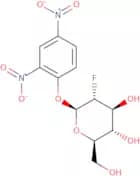
CAS :<p>2,4-Dinitrophenyl 2-deoxy-2-fluoro-β-D-glucopyranoside, sometimes referred as 2F-DNPG, is an enzyme substrate for measuring beta-glucosidase activity. It is a mechanism-based inactivator of glycosidases, including beta-glucocerebrosidase (Gcase), a lysosomal enzyme encoded by the GBA1 gene responsible for breaking down glucosylceramide into ceramide and glucose. The use of 2,4-dinitrophenyl 2-deoxy-2-fluoro-β-D-glucopyranoside as an enzyme substrate permits the study of the catalytic mechanism and reaction intermediate of these enzymes.</p>Formule :C12H13FN2O9Degré de pureté :Min. 98 Area-%Couleur et forme :PowderMasse moléculaire :348.24 g/mol5-Bromo-4-chloro-3-indolyl palmitate
CAS :<p>5-Bromo-4-chloro-3-indolyl palmitate is a chromogenic substrate used to detect the specific enzymatic activity of lipase. After cleavage, 5-bromo-4-chloro-indoxyl is released, resulting in a blue to blue-green color change in bacterial colonies or media. 5-Bromo-4-chloro-3-indolyl palmitate is used in lipase activity assays or cystic fibrosis diagnostics.</p>Degré de pureté :Min. 95%Couleur et forme :PowderMasse moléculaire :484.9 g/mol5-Bromo-6-chloro-3-indoxyl phosphate, disodium salt monohydrate
CAS :<p>5-Bromo-6-chloro-3-indoxyl phosphate, disodium salt monohydrate is a substrate used to visualize phosphatase activity via showing magenta colored end product when used with Nitroblue Tetrazolium.</p>Formule :C8H6BrClNNa2O5PDegré de pureté :Min. 99.0 Area-%Masse moléculaire :388.45 g/mol2-Naphthyl-α-L-fucopyranoside
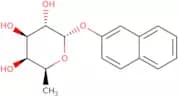
CAS :<p>Chromogenic substrate for α-L-Fucosidase. 2-naphthol is released upon hydrolyzation. By simultaneous coupling with a suitable staining reagent, such as hexazonium p-rosaniline, the corresponding azo-dye is formed. Naphthols can also be detected by fluorescence analysis.</p>Formule :C16H18O5Degré de pureté :Min. 98 Area-%Masse moléculaire :290.32 g/mol5-Bromo-3-indoxyl phosphate, p-toluidine salt
CAS :<p>Used as substrate for chemiluminescent assay of alkaline phosphatase (ALP) to produce a blue colour precipitate when cleaved.</p>Formule :C15H16BrN2O4PDegré de pureté :Min. 98.0 Area-%Masse moléculaire :399.19 g/mol2-Nitrophenyl 2-acetamido-2-deoxy-a-D-glucopyranoside
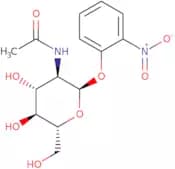
CAS :<p>2-Nitrophenyl 2-acetamido-2-deoxy-alpha-D-glucopyranoside is a chromogenic substrate used to assay the activity of enzymes that cleave N-acetyl-alpha-D-glucosaminide, such as chitinases and lysozymes. Upon cleavage by the enzyme of interest, the substrate releases a yellow-colored 2-nitrophenol that can be measured spectrophotometrically. This substrate is widely used in the food industry to monitor the activity of lysozyme in cheese, as well as in biomedical research for studying cellular and molecular mechanisms involved in conditions such as inflammation and cancer.</p>Degré de pureté :Min. 95%Couleur et forme :PowderMasse moléculaire :342.3 g/mol













![(trans,trans)-4-Pentylphenyl 4'-propyl-[1,1'-bi(cyclohexane)]-4-carboxylate](/_next/image/?url=https%3A%2Fstatic.cymitquimica.com%2Fproducts%2F10%2Fthumb-webp%2FF519493.webp&w=3840&q=75)

![4-[[4-Fluoro-3-(1-piperazinylcarbonyl)phenyl]methyl]-1(2H)-phthalazinone](/_next/image/?url=https%3A%2Fstatic.cymitquimica.com%2Fproducts%2FTR%2Fthumb-webp%2FF594442.webp&w=3840&q=75)
![4,4'-[(2-Hydroxy-1,3-propanediyl)bis(oxy)]bis-benzeneacetamide(Atenolol Impurity E)](/_next/image/?url=https%3A%2Fstatic.cymitquimica.com%2Fproducts%2FTR%2Fthumb-webp%2FH948995.webp&w=3840&q=75)








![N-methyl-N-[(oxiran-2-yl)methyl]cyclohexanamine](/_next/image/?url=https%3A%2Fstatic.cymitquimica.com%2Fproducts%2F10%2Fthumb-webp%2FF522624.webp&w=3840&q=75)


![{5-[1-(benzylamino)cyclohexyl]-1H-tetrazol-1-yl}acetic acid](/_next/image/?url=https%3A%2Fstatic.cymitquimica.com%2Fproducts%2F10%2Fthumb-webp%2FF313669.webp&w=3840&q=75)
![4-cyclohexyl-3-{[(3-methoxyphenyl)amino]methyl}-4,5-dihydro-1H-1,2,4-triazole-5-thione](/_next/image/?url=https%3A%2Fstatic.cymitquimica.com%2Fproducts%2F10%2Fthumb-webp%2FF912523.webp&w=3840&q=75)




![3-[4-(2-Methoxyphenyl)piperazin-1-yl]propan-1-amine](/_next/image/?url=https%3A%2Fstatic.cymitquimica.com%2Fproducts%2FTR%2Fthumb-webp%2FM229390.webp&w=3840&q=75)



![7-(6-(2-Hydroxypropan-2-yl)pyridin-3-yl)-1-(trans-4-methoxycyclohexyl)-3,4-dihydropyrazino[2,3-b]p…](/_next/image/?url=https%3A%2Fstatic.cymitquimica.com%2Fproducts%2F10%2Fthumb-webp%2FF547754.webp&w=3840&q=75)



![4-[cyclohexyl(methyl)amino]-4-oxobutanoic acid](/_next/image/?url=https%3A%2Fstatic.cymitquimica.com%2Fproducts%2F10%2Fthumb-webp%2FF315589.webp&w=3840&q=75)

![[4-(2-Hydroxy-ethylamino)-cyclohexyl]-methyl-carbamic acid tert-butyl ester](/_next/image/?url=https%3A%2Fstatic.cymitquimica.com%2Fproducts%2F10%2Fthumb-webp%2FF083071.webp&w=3840&q=75)
](/_next/image/?url=https%3A%2Fstatic.cymitquimica.com%2Fproducts%2FTR%2Fthumb-webp%2FN649350.webp&w=3840&q=75)


![4-Chloro-7-cyclohexyl-6,7-dihydro-2-(methylthio)-(5H)-pyrrolo[2,3-d]pyrimidine](/_next/image/?url=https%3A%2Fstatic.cymitquimica.com%2Fproducts%2F10%2Fthumb-webp%2FF047962.webp&w=3840&q=75)