Autres
6277 produits trouvés pour "Autres"
1-Naphthyl b-D-glucuronide sodium salt
CAS :1-Naphthyl b-D-glucuronide sodium salt is a chromogenic substrate commonly used to assay the activity of beta-glucuronidase enzymes. It is hydrolyzed by beta-glucuronidase to yield a yellow-colored product, 1-naphthol, which can be quantified spectrophotometrically. This substrate is widely used in diagnostic tests for detection of beta-glucuronidase activity, particularly in clinical microbiology for the identification of E. coli and other enteric bacteria. With its sodium salt form, it boasts increased solubility in aqueous solutions, ensuring seamless integration into various experimental settings.
Formule :C16H15NaO7Degré de pureté :Min. 95%Couleur et forme :PowderMasse moléculaire :342.28 g/molAldol® 518 alpha-D-glucopyranoside, Biosynth Patent: EP 2427431 and US 8940909
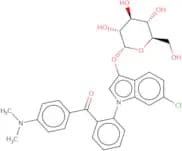
CAS :Aldol® 518 alpha-D-glucopyranoside is a fluorogenic enzyme substrate used for detection of alpha-D-glucosidase activity. The colorless enzyme substrate is cleaved by alpha-D-glucosidase, generating red fluorescent signal and in some conditions, an orange colour in the visible spectrum can get formed, staining bacterial colonies in faint orange coloration. Aldol® 518 alpha-D-glucopyranoside can be used under aerobic and anaerobic conditions.
Formule :C29H29ClN2O7Degré de pureté :Min. 95%Couleur et forme :PowderMasse moléculaire :553 g/molMemantine impurity IV
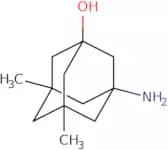
CAS :Memantine impurity IV is a hydrolysis product of memantine. It appears as a white to off-white powder and has a molecular weight of 198.1 g/mol. Memantine impurity IV is an intermediate in the production of memantine and is therefore not used for any other purpose. The compound contains hydroxy groups, hydroxy, alcohols, and bridgehead groups which are efficient at hydrolyzing to form amino acids.
Formule :C12H21NO·HClDegré de pureté :Min. 95%Couleur et forme :White PowderMasse moléculaire :231.76 g/mol6-Chloro-3-indolyl phosphate disodium salt
CAS :6-Chloro-3-indolyl phosphate disodium salt is a chromogenic substrate that is used in food testing, diagnostics, and environmental testing. It can be used to detect the presence of the enzyme phosphatase by adding it to a sample containing glucose, which will produce an orange color. The ligand 6-chloro-3-indolyl phosphate disodium salt can also be used as a bioluminescence probe for detecting ATP or ADP using luciferase. This product has high purity and quality, and is available at a competitive price.
Formule :C8H5ClNNa2O4PDegré de pureté :Min. 98 Area-%Masse moléculaire :291.54 g/molAldol® 518 α-D-galactopyranoside, Biosynth Patent: EP 2427431 and US 8940909
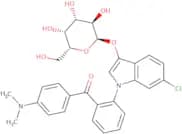
CAS :Aldol® 518 alpha-D-galactopyranoside is a chromogenic and fluorogenic enzyme substrate used for detection of alpha-galactosidase activity. The enzyme substrate is cleaved by alpha-galactosidase positive bacteria and yeasts in liquid or solid media, yielding red color and red fluorescence signal. Aldol® 518 alpha-D-galactopyranoside can also be used to detect alpha-galactosidase (encoded by the Mel1 gene) in yeast gene reporter assays or for identification of alpha-gal positive transformants on agar plates. Aldol® 518 alpha-D-galactopyranoside can be used under aerobic and anaerobic conditions.
Formule :C29H29ClN2O7Degré de pureté :Min. 95%Couleur et forme :PowderMasse moléculaire :553.01 g/molAldol® 455 β-D-glucopyranoside, Biosynth Patent: EP 2427431 and US 8940909
CAS :Aldol® 455 beta-D-glucopyranoside is a chromogenic and fluorogenic enzyme substrate used for detection of beta-glucosidase activity. The colorless enzyme substrate is cleaved by beta-glucosidase producing bacteria grown in liquid or solid media, yielding a yellow color and green to orange fluorescence. Aldol® 455 beta-D-glucopyranoside can be used under aerobic and anaerobic conditions.
Formule :C27H24ClNO7Degré de pureté :Min. 92.0 Area-%Masse moléculaire :509.94 g/mol5-Bromo-4-chloro-3-indoxyl choline phosphate
CAS :5-Bromo-4-chloro-3-indoxyl choline phosphate is a synthetic enzyme substrate for detecting phosphatidylcholine-specific phospholipase C.
Formule :C13H17BrClN2O4PDegré de pureté :Min. 99 Area-%Masse moléculaire :411.63 g/molIPTG
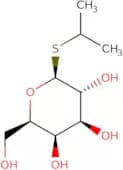
CAS :Isopropyl-beta-D-thiogalactopyranoside (IPTG) is a non-metabolizable allolactose analogue, widely used in molecular biology for overexpression of recombinant proteins from inducible systems under the control of lac promoter. IPTG binds to the LacI repressor and causes its release from the lac operator, allowing gene expression of lac operon to take place. IPTG is present in vectors of pGEX, pGEM-T, pET, pRSET, pMAL class and others.
Formule :C9H18O5SDegré de pureté :Min. 99 Area-%Couleur et forme :White PowderMasse moléculaire :238.3 g/mol4-Nitrophenyl-β-D-glucopyranoside
CAS :4-Nitrophenyl-beta-D-glucopyranoside is a fluorescent probe that can be used in the study of the biochemical properties of enzymes. This compound binds to the enzyme's active site, which allows for transfer reactions to occur. 4-Nitrophenyl-beta-D-glucopyranoside is an artificial substrate that is biochemically inert and has a similar physical structure to natural substrates. It can be used as a model system to study enzymatic reactions and has been shown to have pharmacokinetic properties and a pH optimum. The detection sensitivity of this compound is high, making it ideal for use in biochemical studies.
Formule :C12H15NO8Degré de pureté :Min. 99.0 Area-%Masse moléculaire :301.25 g/molRef: 3D-N-4401
Produit arrêtéBronze-Gal
Bronze-Gal (Bronze-beta-D-galactopyranoside) is a chromogenic indicator for beta-galactosidase activity. The colorless product is cleaved by lactose-utilizing bacteria in liquid media or on agar plates and yields a bronze colored precipitate. Bronze-Gal can also be used as detecting agent for beta-galactosidase activity in reporter gene assays or for identification of positive transformants on agar plates when using the α-complementation approach. Read more in the Application Notes.
Degré de pureté :Min. 95%Masse moléculaire :443.57Alizarin-2-β-D-galactopyranoside
CAS :Chromogenic substrate targeting beta- galactosidase and whose color is dependent on the metal chelating.Alizarin-2-beta-D-galactopyranoside is a chromogenic substrate for enzymes based on alizarin and has been reported for the detection of bacterial beta-galactosidase by researchers at the University of Northumbria and the Freeman Hospital, Newcastle upon Tyne in the UK (James, 2000).
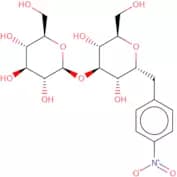
Formule :C20H18O9Degré de pureté :Min. 98.0 Area-%Masse moléculaire :402.36 g/mol4-Nitrophenyl 3-O-(β-D-glucopyranosyl)-α-D-glucopyranoside
4-Nitrophenyl 3-O-(beta-D-glucopyranosyl)-alpha-D-glucopyranoside is a chromogenic substrate for alpha-glucosidase. Upon hydrolysis, para-nitrophenol is released yielding a yellowish colour. 4-Nitrophenyl 3-O-(beta-D-glucopyranosyl)-alpha-D-glucopyranoside is used in different applications such as the Gaucher disease screening, carbohydrate metabolism studies
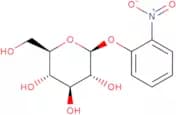
Formule :C18H25NO13Degré de pureté :Min. 95%Masse moléculaire :463.39 g/mol2-Nitrophenyl b-D-glucopyranoside
CAS :Chromogenic substrate for beta-glucosidase
Formule :C12H15NO8Degré de pureté :Min. 99 Area-%Couleur et forme :Off-White Yellow PowderMasse moléculaire :301.25 g/molAldol® 515 phosphate, disodium salt, Biosynth Patent: EP 2427431 and US 8940909
CAS :Aldol® 515 phosphate is a chromogenic and fluorogenic enzyme substrate used for detection of phosphatase activity. The colorless enzyme substrate is cleaved by acid and alkaline phosphatases secreted by bacteria in liquid or solid media, yielding intense red color and red fluorescence. Aldol® 515 phosphate can also be used in Western blots and other immunoassay applications with phosphatase-coupled secondary antibodies. Aldol® 515 phosphate can be used under aerobic and anaerobic conditions.Formule :C23H19N2Na2O5PDegré de pureté :Min. 95 Area-%Masse moléculaire :480.36 g/mol3,4-Cyclohexenoesculetine β-D-glucopyranoside
CAS :Chromogenic substrate for beta-glucosidase
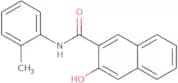
Formule :C19H22O9Degré de pureté :Min. 95%Couleur et forme :PowderMasse moléculaire :394.37 g/molNaphthol AS-D
CAS :Naphthol AS-D is a diagnostic chemical for phosphatase enzymes and is used to stain cells, tissues, and body fluids for diagnosis. The chemical reacts with the amino groups of proteins in cells and produces a brown color. Naphthol AS-D is not toxic to living cells in concentrations below 5%. It stains basophilic leukemia cells as well as brain cells. This chemical can be used to diagnose cutaneous lesions, such as psoriasis or melanoma, which are difficult to diagnose by standard methods. present in these lesions and produce a brown color.
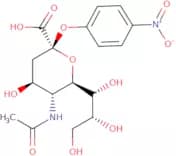
Formule :C18H15NO2Degré de pureté :Min. 95%Couleur et forme :PowderMasse moléculaire :277.32 g/mol2-O-(4-Nitrophenyl)-a-D-N-acetylneuraminic acid
CAS :2-O-(4-Nitrophenyl)-a-D-N-acetylneuraminic acid, also known as p-nitrophenyl N-acetylneuraminic acid, is a chromogenic substrate specifically designed for the detection and quantification of neuraminidase (sialidase) activity. Upon cleavage by neuraminidase, it releases a yellow-colored product, 4-nitrophenol, which can be easily monitored spectrophotometrically at 405 nm. This substrate is widely used in various applications, including enzyme kinetics studies, inhibitor screening, and the determination of neuraminidase activity in biological samples such as viruses, bacteria, and cell lysates. It is particularly useful for studying the enzymatic properties of neuraminidases from different sources and for the development of novel antiviral and antibacterial agents targeting neuraminidase activity.
Formule :C17H22N2O11Degré de pureté :Min. 90 Area-%Couleur et forme :White PowderMasse moléculaire :430.36 g/molRef: 3D-EN29246
Produit arrêté4-Nitrophenyl decanoate
CAS :4-Nitrophenyl decanoate is a chromogenic substrate for lipase. Upon hydrolysis, para-nitrophenol is released yielding a yellowish colour. 4-Nitrophenyl decanoate is used in different applications such as the Pancreatic insufficiency diagnosis, lipid metabolism studies
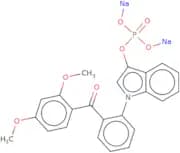
Formule :C16H23NO4Degré de pureté :Min. 97 Area-%Couleur et forme :PowderMasse moléculaire :293.36 g/molAldol® 470 phosphate, disodium salt, Biosynth Patent: EP 2427431 and US 8940909
CAS :Aldol® 470 phosphate, disodium salt is a fluorogenic substrate that is used in the detection of enzyme activity. It can be used to detect the presence of an enzyme by measuring the light emitted from the substrate after it has been converted to fluorescent product. Aldol® 470 phosphate, disodium salt is a chromogenic substrate that is used for detecting and measuring enzyme activity. The product of this reaction can be measured by absorbance or fluorescence spectroscopy, making it useful for many different types of diagnostic tests. This product can be conjugated with a variety of ligands for use in diagnostic assays and research. Aldol® 470 phosphate, disodium salt can also be used in culture media as a bioluminescent substrate for bacterial growth and metabolism studies. This product can also be used as an environmental testing reagent or as a staining agent in microscopy applications.
Formule :C23H18NNa2O7PDegré de pureté :Min. 95%Couleur et forme :PowderMasse moléculaire :497.34 g/mol4-Nitrophenyl-beta-D-fucopyranoside
CAS :A chromogenic substrate for β-galactosidase.
Formule :C12H15NO7Degré de pureté :Min. 99 Area-%Masse moléculaire :285.26 g/molRef: 3D-N-4150
Produit arrêté