Source botanique
La catégorie des Sources Botaniques englobe une large gamme de composés et d'extraits dérivés de plantes utilisés dans la recherche et le développement de produits. Ces sources botaniques incluent diverses herbes, arbres et arbustes qui fournissent des composés bioactifs pour une utilisation dans les produits pharmaceutiques, cosmétiques et compléments nutritionnels. Chez CymitQuimica, nous offrons une sélection complète de sources botaniques pour soutenir la recherche en chimie des produits naturels, pharmacologie et médecine traditionnelle.
1459 produits trouvés pour "Source botanique"
Trier par
Degré de pureté (%)
0
100
|
0
|
50
|
90
|
95
|
100
Gypenoside I
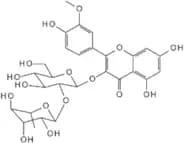
CAS :<p>Gypenoside I is a saponin compound, which is a natural product sourced from the medicinal plant Gynostemma pentaphyllum, also known as Jiaogulan. This plant is native to Asia and has been used in traditional medicine due to its wide range of purported health benefits.</p>Formule :C46H78O18Degré de pureté :Min. 95%Masse moléculaire :919.1 g/molIsorhamnetin-3-O-robinobioside
CAS :<p>Isorhamnetin-3-O-robinobioside is a flavonoid glycoside, classified as a secondary plant metabolite. This compound is primarily sourced from various medicinal plants, where it is naturally present as a bioactive constituent. Its mode of action is predominantly based on its antioxidative properties. By scavenging free radicals and inhibiting oxidative stress, it may contribute to the stabilization of cellular environments and reduction of oxidative damage within biological systems.</p>Formule :C28H32O16Degré de pureté :Min. 95%Masse moléculaire :624.54 g/molp-Vinylphenyl O-[b-D-apiofuranosyl-(1-6)]-b-D-glucopyranoside
CAS :<p>p-Vinylphenyl O-[b-D-apiofuranosyl-(1-6)]-b-D-glucopyranoside is a glycoside compound, which is typically derived from plant sources. It is characterized by its unique structure, comprising a phenolic moiety linked to a disaccharide sugar chain. Glycosides like this one are commonly found in nature and are known for their diverse roles in plant metabolism and potential biological activities.</p>Degré de pureté :Min. 95%7,4'-Di-O-methylapigenin 5-O-xylosylglucoside
CAS :<p>7,4'-Di-O-methylapigenin 5-O-xylosylglucoside is a flavonoid glycoside, which is a naturally occurring compound derived from certain plants. It belongs to the class of flavonoids, known for their diverse biological activities. The compound is structured with a flavone core and carries xylose and glucose sugar moieties, contributing to its solubility and bioavailability.</p>Degré de pureté :Min. 95%Apigenin 7-O-(2G-rhamnosyl)gentiobioside
CAS :<p>Apigenin 7-O-(2G-rhamnosyl)gentiobioside is a flavonoid glycoside, which is a compound comprised of the flavonoid apigenin linked to a sugar moiety. This compound is typically sourced from various plants, where it occurs naturally as part of the plant's secondary metabolites. The glycoside form enhances the solubility and stability of the apigenin molecule, which is essential for its biological activities.</p>Formule :C33H40O19Degré de pureté :Min. 95%Couleur et forme :SolidMasse moléculaire :740.66 g/moltrans-Zeatin-9-glucoside-o-glucoside
CAS :<p>trans-Zeatin-9-glucoside-o-glucoside is a cytokinin derivative, which is a type of plant hormone involved in various growth and developmental processes. This compound is sourced from the metabolic conversion of natural cytokinins in plants. It is formed through the glycosylation of zeatin, a naturally occurring cytokinin, adding two glucose molecules.</p>Formule :C22H33N5O11Degré de pureté :Min. 95%Masse moléculaire :543.52 g/molMomordicoside K
CAS :<p>Momordicoside K is a triterpenoid saponin, which is derived from the bitter melon plant, scientifically known as *Momordica charantia*. This compound predominantly occurs in the fruit and leaves of the plant. As a phytochemical, Momordicoside K contributes to the plant’s defense mechanisms against pests and environmental stress.</p>Formule :C37H60O9Degré de pureté :Min. 95%Masse moléculaire :648.9 g/molIsorebaudioside A
CAS :<p>Isorebaudioside A is a type of steviol glycoside sweetener, which is extracted from the leaves of the Stevia rebaudiana plant. As a product of natural origin, it functions as a high-intensity sweetener by mimicking the taste of sucrose without the caloric content. Isorebaudioside A interacts with the taste receptors on the tongue, activating the sweet taste pathways. This mode of action allows it to provide a sugar-like sweetness, often considered favorable due to its clean taste profile and lack of caloric contributions.</p>Formule :C44H70O23Degré de pureté :Min. 95%Masse moléculaire :967.01 g/mol(-)-Syringaresinol-4''-O-b-D-monoglucopyranoside
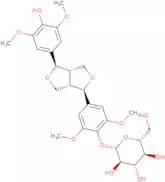
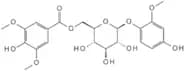
CAS :<p>(-)-Syringaresinol-4''-O-b-D-monoglucopyranoside is a lignan compound, which is a type of phenolic derivative found in plants. It is typically isolated from various plant species, where it plays a role in plant defense and structural integrity. The compound possesses a complex chemical structure, characterized by the presence of a glucose moiety linked to the syringaresinol core.</p>Formule :C28H36O13Degré de pureté :Min. 95%Masse moléculaire :580.58 g/mol4-Hydroxy-2-methoxyphenol 1-O-(6-O-syringoyl)glucoside
CAS :<p>4-Hydroxy-2-methoxyphenol 1-O-(6-O-syringoyl)glucoside is a phenolic glycoside, which is derived from plant sources, particularly in certain tree barks and leaves known for their rich polyphenolic content. This compound is a conjugate of glucoside and syringoyl moieties, contributing to its unique structural and functional properties. The mode of action of this compound involves its ability to act as an antioxidant, likely through electron donation that neutralizes free radicals, thereby mitigating oxidative stress within biological systems.</p>Formule :C22H26O12Degré de pureté :Min. 95%Masse moléculaire :482.43 g/molGinsenoside Rh4
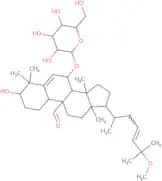
CAS :<p>Ginsenoside Rh4 is a bioactive compound, which is a type of saponin. It is derived from Panax ginseng, a plant that has been used traditionally in herbal medicine. The mode of action of Ginsenoside Rh4 involves modulating various biochemical pathways, including anti-inflammatory and antioxidant activities. This compound influences the expression of cytokines and reactive oxygen species, contributing to its potential therapeutic effects.</p>Formule :C36H60O8Degré de pureté :Min. 95%Couleur et forme :PowderMasse moléculaire :620.86 g/molClinodiside A
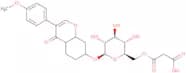
CAS :<p>Clinodiside A is a triterpenoid saponin, which is a type of secondary metabolite found in certain marine sponges. The source of this compound is primarily marine organisms, particularly sponges in the genus Cliona. Clinodiside A operates through various biochemical pathways, including disrupting cell membrane integrity and inducing apoptosis in certain cell types. This mode of action is particularly relevant in the context of inhibiting cancer cell proliferation and providing antitumor activities.</p>Formule :C48H78O19Degré de pureté :Min. 95%Masse moléculaire :959.12 g/molFormononetin 7-O-glucoside-6''-O-malonate
CAS :<p>Formononetin 7-O-glucoside-6''-O-malonate is a naturally occurring flavonoid compound, which is often derived from various plant sources, particularly those in the legume family. It is a malonylated glucoside derivative of formononetin, a well-known isoflavone. This compound plays a significant role in the plants' defense mechanisms and contributes to their physiological processes.</p>Formule :C25H24O12Degré de pureté :Min. 95%Couleur et forme :PowderMasse moléculaire :516.45 g/molLuteolin-7-O-neohesperidoside
CAS :<p>Luteolin-7-O-neohesperidoside is a flavonoid glycoside, which is predominantly derived from various plant sources, particularly those belonging to the families Rosaceae and Lamiaceae. It is structurally characterized by the attachment of luteolin to a neohesperidose sugar moiety, which alters its solubility and bioavailability properties. The mode of action of Luteolin-7-O-neohesperidoside involves its capacity to act as a potent antioxidant, scavenging free radicals and protecting cells from oxidative stress. It also demonstrates anti-inflammatory properties by inhibiting key enzymes and signaling pathways involved in inflammatory responses.</p>Formule :C27H30O15Degré de pureté :Min. 95%Masse moléculaire :594.5 g/molRebaudioside B
CAS :<p>Rebaudioside B is a type of steviol glycoside, which is a naturally occurring compound extracted from the leaves of the Stevia rebaudiana plant. This plant, native to Paraguay, is known for its intensely sweet leaves, which have been utilized for centuries by indigenous peoples for sweetening purposes.</p>Formule :C38H60O18Degré de pureté :Min. 95%Masse moléculaire :804.87 g/molRebaudioside J
CAS :<p>Rebaudioside J is a non-caloric sweetener, which is a purified glycoside derived from the Stevia rebaudiana plant. The Stevia plant, native to South America, is well known for its sweet-tasting compounds, mainly the steviol glycosides. Rebaudioside J is one of these glycosides, specifically noted for its high sweetness intensity and favorable taste profile compared to other steviol glycosides.</p>Formule :C50H80O27Degré de pureté :Min. 95%Masse moléculaire :1,113.16 g/molCalendoflavoside
CAS :<p>Calendoflavoside is a flavonoid-based compound, which is an extract derived from the calendula plant, known for its rich flavonoid content. It functions primarily through the modulation of inflammatory pathways, acting on specific signaling molecules to reduce inflammation and oxidative stress. This mode of action is particularly valuable in therapeutic contexts, as it allows Calendoflavoside to target and mitigate inflammation at the cellular level.</p>Formule :C28H32O16Degré de pureté :Min. 95%Couleur et forme :SolidMasse moléculaire :624.54 g/molZiziphin
CAS :<p>Ziziphin is a triterpene glycoside which exhibits taste-modifying properties and derives from the leaves of Ziziphus jujuba (Rhamnaceae). In a study, Ziziphin was up to 4 times more active in suppressing the sweet taste of sucrose than other anti-sweet constituents (Suttisri, 1995). Ziziphin suppressed the sweetness induced by D-glucose, D-fructose, stevioside, glycine, sodium saccharin, aspartame and naringin dihydrochalcone. Ziziphin however showed no uppressive effect on the sour taste of hydrochloric acid and the bitter taste of quinine, indicating that ziziphin is highly specific to the sweet taste (Kurihara, 1992). Ziziphin was found to inhibit the sweet taste receptors in humans (Smith, 1983) by a mechanism known as taste modification. In comparison with known gymnemic acids, effects suggest that net dissociation of ziziphins from taste receptor membranes and/or inactivation in the membrane may be much faster than with gymnemic acids (Mahajan, 2009).</p>Formule :C51H80O18Degré de pureté :Min. 95%Masse moléculaire :981.17 g/molEsculeoside A
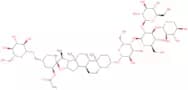
CAS :<p>Spirosolane-type steroidal alkaloid glycoside found in ripe cherry tomato</p>Formule :C58H95NO29Degré de pureté :Min. 95%Couleur et forme :PowderMasse moléculaire :1,270.37 g/mol


![p-Vinylphenyl O-[b-D-apiofuranosyl-(1-6)]-b-D-glucopyranoside](/_next/image/?url=https%3A%2Fstatic.cymitquimica.com%2Fproducts%2F3D%2Fthumb-webp%2FOV44158.webp&w=3840&q=75)