Source botanique
La catégorie des Sources Botaniques englobe une large gamme de composés et d'extraits dérivés de plantes utilisés dans la recherche et le développement de produits. Ces sources botaniques incluent diverses herbes, arbres et arbustes qui fournissent des composés bioactifs pour une utilisation dans les produits pharmaceutiques, cosmétiques et compléments nutritionnels. Chez CymitQuimica, nous offrons une sélection complète de sources botaniques pour soutenir la recherche en chimie des produits naturels, pharmacologie et médecine traditionnelle.
1459 produits trouvés pour "Source botanique"
Trier par
Degré de pureté (%)
0
100
|
0
|
50
|
90
|
95
|
100
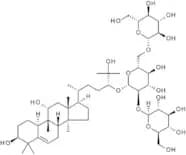
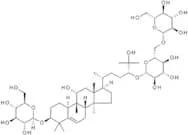
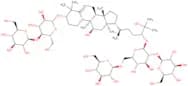
Mogroside III A1
CAS :<p>Mogroside III A1 is a triterpene glycoside, which is derived from the fruit of Siraitia grosvenorii, commonly known as monk fruit. This compound is a significant component of the sweet profile associated with the fruit and is extracted through carefully controlled processes to maintain its structural integrity.</p>Formule :C48H82O19Degré de pureté :Min. 95%Couleur et forme :White PowderMasse moléculaire :963.15 g/molRebaudioside F
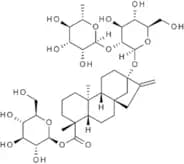
CAS :<p>Rebaudioside F is a non-caloric sweetener, which is a glycoside isolated from the leaves of Stevia rebaudiana. This compound is categorized as a steviol glycoside, where the steviol backbone is modified through glycosylation, contributing to its sweetening properties. Rebaudioside F shares a similar structure with other steviol glycosides, including rebaudioside A, but exhibits slight differences in its glycosylation pattern, which can influence its taste profile and solubility.</p>Formule :C43H68O22Degré de pureté :Min. 95%Couleur et forme :PowderMasse moléculaire :936.99 g/molGinsenoside Ro
CAS :<p>Ginsenoside Ro is a triterpenoid saponin, which is a secondary metabolite found primarily in Panax ginseng. This compound is isolated from the roots of the ginseng plant, a source well-documented for its rich array of bioactive constituents. Ginsenoside Ro functions through various biochemical pathways, including modulating inflammatory signaling cascades and exhibiting antioxidant activity. It interacts with molecular targets such as enzymes and receptors involved in the inflammatory response, thereby exerting its effects on cellular processes.</p>Formule :C48H76O19Degré de pureté :Min. 95%Couleur et forme :PowderMasse moléculaire :957.13 g/molTroxerutin
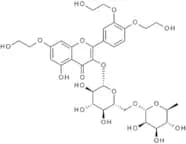
CAS :<p>Troxerutin is a flavonoid compound, which is derived from the natural bioflavonoid rutin, typically sourced from plants such as Sophora japonica. Its mode of action is primarily through its vasoprotective, antioxidant, and anti-inflammatory properties. Troxerutin acts by stabilizing vascular endothelial cells, reducing capillary permeability, and enhancing microcirculation. It also scavenges free radicals and inhibits lipid peroxidation, which helps in mitigating oxidative stress.</p>Formule :C33H42O19Degré de pureté :Min. 95%Couleur et forme :Yellow PowderMasse moléculaire :742.68 g/molTyphaneoside
CAS :<p>Typhaneoside is a flavonoid glycoside, which is a type of naturally occurring compound found primarily in plants such as those belonging to the genus Typha. Its structure includes a flavonoid backbone linked to one or more sugar molecules, which is typical of glycosides. The source of typhaneoside is generally botanical, deriving from specific plant extracts, particularly those used in traditional medicine.</p>Formule :C34H42O20Degré de pureté :Min. 95%Couleur et forme :PowderMasse moléculaire :770.69 g/molKaempferol 3-O-gentiobioside
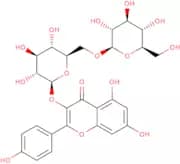
CAS :<p>Kaempferol 3-O-gentiobioside is a flavonoid glycoside, which is a naturally occurring compound commonly found in a variety of plant sources, including fruits, vegetables, and herbs. It is specifically derived from plants such as the Ginkgo biloba and other botanical sources that synthesize kaempferol derivatives as secondary metabolites.</p>Formule :C27H30O16Degré de pureté :Min. 95%Couleur et forme :SolidMasse moléculaire :610.52 g/molDulcoside A
CAS :<p>Dulcoside A is a natural sweetening agent, which is a type of steviol glycoside. It is derived from the leaves of the Stevia rebaudiana plant, a perennial shrub native to regions in Paraguay and Brazil. The mode of action of Dulcoside A involves its interaction with taste receptors on the human tongue, particularly the T1R2/T1R3 sweet taste receptor, to produce a sensation of sweetness.</p>Formule :C38H60O17Degré de pureté :Min. 93 Area-%Couleur et forme :PowderMasse moléculaire :788.87 g/molMogroside III
CAS :<p>Mogroside III is a natural sweetener, which is derived from the fruit of Siraitia grosvenorii, commonly known as monk fruit. This compound belongs to the mogrosides, a group of triterpene glycosides that are primarily responsible for the fruit's intense sweetness.</p>Formule :C48H82O19Degré de pureté :Min. 95%Couleur et forme :Colorless PowderMasse moléculaire :963.15 g/molMycothiol - Stabilised with trifluoroacetic acid ammonium salt
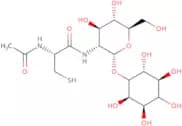
CAS :<p>Mycothiol (MSH or AcCys-GlcN-Ins) is an unusual thiol compound found in the Actinobacteria. It is composed of a cysteine residue with an acetylated amino group linked to glucosamine, which is then linked to inositol. The oxidized, disulfide form of mycothiol (MSSM) is called mycothione, and is reduced to mycothiol by the flavoprotein mycothione reductase. Mycothiol biosynthesis and mycothiol-dependent enzymes such as mycothiol-dependent formaldehyde dehydrogenase and mycothione reductase have been proposed to be good drug targets for the development of treatments for tuberculosis.<br>This material is provided as a solid in dried buffer improve stability. MSH can readily be prepared from MSSM. Due to the rapid oxidation of MSH to MSSM, only MSSM can be shipped.</p>Formule :C34H58N4O24S2Degré de pureté :Min. 95%Couleur et forme :Colorless PowderMasse moléculaire :970.97 g/molSteviol glycosides
CAS :<p>Steviol glycosides are natural sweeteners, which are extracted from the leaves of the Stevia rebaudiana plant with glycosidic compounds as their principal components. These compounds interact with taste receptors on the tongue, specifically the T1R2 and T1R3 proteins, to produce a sweet sensation via non-caloric pathways, as they do not undergo the metabolic processes typical of carbohydrates. Steviol glycosides' primary use is in the food and beverage industry as a non-caloric sugar alternative, facilitating reduced sugar formulations while maintaining sweetness. They are also employed in pharmaceuticals and dietary supplements, where reduced caloric intake is desired. Due to their high-intensity sweetness and stability under heat and pH variations, steviol glycosides are preferred in various formulations, including baked goods and carbonated beverages. Their natural origin and metabolic neutrality offer advantages for developing health-conscious products.</p>Degré de pureté :Min. 95%Couleur et forme :PowderSalireposide
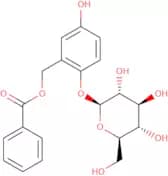
CAS :<p>Salireposide is a phytochemical compound, specifically classified as a glucoside. It is derived from Salix species, commonly known as willows. This compound has been identified in the bark and other parts of these plants, where it occurs naturally.</p>Formule :C20H22O9Degré de pureté :Min. 95%Couleur et forme :PowderMasse moléculaire :406.38 g/molDelphinidin 3-sambubioside chloride
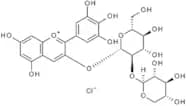
CAS :<p>Delphinidin 3-sambubioside chloride is a natural anthocyanin, which is a type of plant-derived flavonoid pigment. It is commonly sourced from various fruits and flowers, contributing to their vivid coloration. The mode of action of this compound primarily involves its antioxidant capabilities. It stabilizes free radicals, thus reducing oxidative stress within cells.</p>Formule :C26H29O16·ClDegré de pureté :(Hplc) Min. 90%Couleur et forme :PowderMasse moléculaire :632.95 g/molIsomogroside V
CAS :<p>Isomogroside V is a natural non-caloric sweetener, which is extracted from the fruit of Siraitia grosvenorii, commonly known as monk fruit or luo han guo. This compound belongs to the family of mogrosides, which are glycosylated triterpenoids. The mode of action of Isomogroside V is primarily through its interaction with the sweet taste receptors on the human tongue, specifically the TAS1R2/TAS1R3 receptor complex, where it induces a perception of sweetness with a potency significantly higher than sucrose.</p>Formule :C60H102O29Degré de pureté :Min. 95%Masse moléculaire :1,287.45 g/mola-Acetyl digoxin
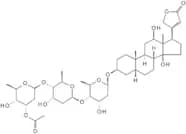
CAS :<p>a-Acetyl digoxin is a metabolite of digoxin, a type of cardiac glycoside. It is derived from the parent compound digoxin, which is sourced from the leaves of the Digitalis plant. The modification at the acetyl position renders this metabolite with altered biological properties compared to the original compound. a-Acetyl digoxin acts through inhibition of the Na⁺/K⁺-ATPase pump, similar to digoxin, but does so with significantly reduced activity.</p>Formule :C43H66O15Degré de pureté :Min. 95%Masse moléculaire :822.98 g/molQuinovic acid 3-O-(6-deoxy-b-D-glucopyranoside) 28-O-b-D-glucopyranosyl ester
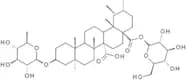
CAS :<p>Quinovic acid 3-O-(6-deoxy-b-D-glucopyranoside) 28-O-b-D-glucopyranosyl ester is a natural triterpenoid glycoside, which is derived from plants belonging to the Rubiaceae family. This compound is primarily extracted from the bark of certain species, such as those from the genus *Uncaria*. With its complex glycoside structure, it acts by modulating various biochemical pathways, including anti-inflammatory and antiviral mechanisms, possibly through the inhibition of viral replication or interference with inflammatory cytokine production.</p>Degré de pureté :Min. 95%4-O-(α-D-Glucopyranosyl) moranoline
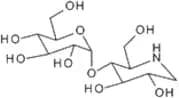
CAS :<p>4-O-(α-D-Glucopyranosyl) moranoline is an iminosugar that functions as an effective glycosidase inhibitor, specifically targeting enzymes involved in carbohydrate metabolism. It is derived from natural sources such as mulberry leaves, where it is produced as a defense compound against herbivores. This substance interferes with the activity of α-glucosidases by mimicking the transition state of the glycosidic bond cleavage, thereby preventing the breakdown of complex carbohydrates into glucose.</p>Formule :C12H23NO9Degré de pureté :Min. 95%Couleur et forme :PowderMasse moléculaire :325.32 g/molMomordicoside L
CAS :<p>Momordicoside L is a triterpenoid saponin, which is a class of chemical compounds predominantly found in plants. It is derived from Momordica charantia, commonly known as bitter melon, a plant which has been traditionally utilized in various medicinal practices. The mode of action of Momordicoside L involves its capacity to influence cellular pathways, particularly through the modulation of glucose metabolism and potential anti-inflammatory effects. This is achieved via the interaction with specific cellular receptors, thereby impacting signal transduction processes.</p>Formule :C36H58O9Degré de pureté :Min. 95%Masse moléculaire :634.8 g/molEpimedin B
CAS :<p>Epimedin B is a flavonoid glycoside, which is a bioactive compound extracted from the plant Epimedium, commonly known as "Horny Goat Weed." This compound belongs to a group of naturally occurring molecules that are known for their diverse pharmacological properties. The primary mode of action of Epimedin B involves interaction with various signaling pathways in the body, notably influencing nitric oxide synthesis, which plays a critical role in vasodilation and blood flow regulation.</p>Formule :C38H48O19Degré de pureté :Min. 95%Couleur et forme :Yellow SolidMasse moléculaire :808.78 g/molDehydroadynerigenin glucosyldigitaloside
CAS :<p>Dehydroadynerigenin glucosyldigitaloside is a cardiac glycoside, which is derived from specific plant sources, particularly found in species of the Digitalis genus. These compounds have a strong affinity for cardiac tissues. The primary mode of action involves the inhibition of the sodium-potassium ATPase enzyme. This inhibition increases intracellular sodium levels, which subsequently leads to an elevated intracellular calcium concentration via the sodium-calcium exchange mechanism. The increased calcium availability enhances cardiac muscle contractility, resulting in improved cardiac output.</p>Degré de pureté :Min. 95%Aescin monosodium salt
CAS :<p>Aescin monosodium salt is a semisynthetic, anti-inflammatory product derived from escin, which is a mixture of saponins extracted from horse chestnut seeds (Aesculus hippocastanum). It functions primarily by enhancing the integrity of venous walls and decreasing vascular permeability. This is achieved through the stabilization of lysosomal membranes and the inhibition of enzymes that contribute to the breakdown of the vascular endothelium, as well as promoting the release of prostaglandins with vasoprotective properties.</p>Formule :C55H86NaO24Degré de pureté :Min. 95%Masse moléculaire :1,154.25 g/mol