Monosaccharides
Sous-catégories appartenant à la catégorie "Monosaccharides"
- Alloses(11 produits)
- Arabinoses(21 produits)
- Erythroses(11 produits)
- Fructoses(9 produits)
- Fucoses(36 produits)
- Galactosamine(41 produits)
- Galactoses(261 produits)
- Glucoses(365 produits)
- Acides glucuroniques(52 produits)
- Glyco-substrats pour l'enzyme(78 produits)
- Guloses(6 produits)
- Idoses(4 produits)
- Inositols(15 produits)
- Lyxoses(4 produits)
- Mannoses(65 produits)
- O-Glycanes(48 produits)
- Psicoses(3 produits)
- Rhamnoses(10 produits)
- Ribos(61 produits)
- Acides sialiques(100 produits)
- Sorboses(4 produits)
- Sucres(173 produits)
- Tagatoses(4 produits)
- Taloses(8 produits)
- Xyloses(20 produits)
6088 produits trouvés pour "Monosaccharides"
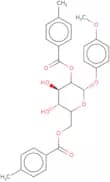
4-Methoxyphenyl 2,6-di-O-toluoyl-b-D-galactopyranoside
CAS :4-Methoxyphenyl 2,6-di-O-toluoyl-b-D-galactopyranoside is a fluorinated saccharide with an acetate ester group at the reducing end. It is a custom synthesis and can be used for glycosylation or methylation of saccharides. This compound has high purity and can be custom synthesized to customer specifications. It is also a synthetic compound, which means that it does not occur naturally in nature. The CAS number for this compound is 1820570-59-9.Formule :C29H30O9Degré de pureté :Min. 95%Masse moléculaire :522.56 g/molEthyl 3-deoxy-2,5-di-O-toluoyl-L-threo-pentofuranoside
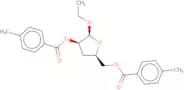
Ethyl 3-deoxy-2,5-di-O-toluoyl-L-threo-pentofuranoside is a custom synthesis that can be modified to fluorinate and methylate the sugar. It is an oligosaccharide that is synthesized from a monosaccharide. The saccharide has been glycosylated to form a complex carbohydrate.Formule :C23H26O6Degré de pureté :Min. 95%Masse moléculaire :398.45 g/molFructose-isoleucine
CAS :Fructose-isoleucine is a flavoring agent that is used in the food industry. It has an acrid taste and a sweet aftertaste. Fructose-isoleucine is typically used in the production of chewing gum, candy, and baked goods. This product can be found in two forms: as a white powder or as a clear liquid. The flavoring agent reacts with acetonitrile to form reaction products that are chromatographically separated by reversed phase HPLC. The desired product can then be isolated by elution from the column with methanol and characterized using various analytical methods. In addition to this use, fructose-isoleucine has been shown to have anti-inflammatory properties due to its ability to inhibit prostaglandin synthesis. Fructose-isoleucine can also be found in tobacco leaves where it serves as an amide precursor for 5-hydroxymethylfurfural (HMF). HMF is aFormule :C12H23NO7Degré de pureté :Min. 95%Masse moléculaire :293.31 g/mol1,2,3,4,6-Penta-O-acetyl-5-thio-b-D-galactopyranoside
The 1,2,3,4,6-Penta-O-acetyl-5-thio-b-D-galactopyranoside is a custom synthesis. The compound is a complex carbohydrate that belongs to the group of Oligosaccharides. It is a saccharide with six hydroxyl groups and one acetate ester group. The CAS number for this compound is CID:270145-25-0. This compound has been modified by methylation and glycosylation. The 1,2,3,4,6-Penta-O-acetyl-5-thio-b-D-galactopyranoside can be used as an intermediate in the synthesis of other compounds with similar structures.Degré de pureté :Min. 95%Methyl 2-deoxy-2-fluoro-D-ribofuranoside
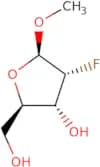
CAS :Methyl 2-deoxy-2-fluoro-D-ribofuranoside is a crystalline compound that contains a methoxyl group and benzoyloxy. It is used as an intermediate for the synthesis of nucleosides, pyranoside, and glycosides. Methyl 2-deoxy-2-fluoro-D-ribofuranoside has been shown to have antibacterial activity against Mycobacterium tuberculosis in the amorphous form. This compound is also debenzoylated by alkali to give methyl 2,3,4,5,6-pentafluoropentanoate.Degré de pureté :Min. 95%Curcumin b-D-glucuronide
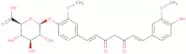
CAS :Curcumin b-D-glucuronide is a glucuronide conjugate of the curcumin molecule. It has been shown to have anticancer activity in mouse tumor models and human metastatic colorectal cancer cell lines by inducing apoptosis. Curcumin b-D-glucuronide is metabolized by the liver microsomes of rats, and thus may be useful for the prevention of colon cancer. Curcumin b-D-glucuronide also has anti-inflammatory properties that are due to its inhibition of prostaglandin E2 (PGE2) levels in humans.Formule :C27H28O12Degré de pureté :85%MinMasse moléculaire :544.158082-Octyldodecyl-D-xylopyranoside
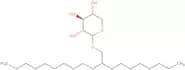
CAS :2-Octyldodecyl-D-xylopyranoside is a synthetic, fluorinated glycosylated monosaccharide. The chemical name for this compound is 2-octyldodecyl-D-xylopyranoside and the CAS number is 423772-95-6. It is a white to off white solid that has Glycosylation and Methylation. This compound can be modified with Click modification and Polysaccharide. It has a molecular weight of 400.25 g/mol and it's molecular formula is C32H62O14F2N2O8S2. 2-Octyldodecyl-D-xylopyranoside can be used as a methyl donor in the synthesis of glycoproteins, glycolipids, glycopeptides, polysaccharides, oligosaccharides, or other complex carbohydrates. It is also used in fluorFormule :C25H50O5Degré de pureté :Min. 95%Couleur et forme :White solid.Masse moléculaire :430.66 g/moltrans-Cinnamoyl b-D-glucoside
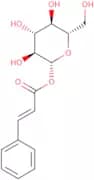
CAS :Trans-Cinnamoyl b-D-glucoside is a plant tissue that can be used as a natural chemical transformation agent. Trans-Cinnamoyl b-D-glucoside is also a chemical catalyst in the synthesis of medicines. The structure of trans-Cinnamoyl b-D-glucoside has been shown to have a high degree of stereoselectivity and sensitivity to tissue culture conditions, which are due to its aldehydic group. This molecule is also able to form gels when combined with other molecules and exhibits endogenous activity.
Formule :C15H18O7Degré de pureté :Min. 95%Masse moléculaire :310.3 g/mol2-Chloro-2-deoxy-D-mannose
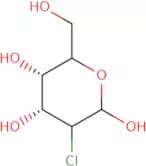
CAS :2-Chloro-2-deoxy-D-mannose is a synthetic sugar that can be used as a fluoride substrate. It has been shown to bind to the active site of bacterial enzymes and inhibit them. 2-Chloro-2-deoxy-D-mannose is a conformationally constrained analogue of 3-deoxyglucose, which binds to the same active site on bacterial enzymes. This sugar also inhibits nitrate reductase, an enzyme involved in the reductive dehalogenation of nitrates. 2-Chloro-2-deoxy-D-mannose has been shown to inhibit the growth of Mycobacterium tuberculosis and Mycobacterium avium complex by binding with high affinity to the ligand binding site on these bacteria's glycolytic enzymes.Formule :C6H11ClO5Degré de pureté :Min. 95%Couleur et forme :White PowderMasse moléculaire :198.6 g/mol3-Deoxy-1,2:5,6-di-O-isopropylidene-a-D-glucofuranose
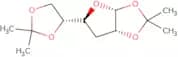
CAS :3-Deoxy-1,2:5,6-di-O-isopropylidene-a-D-glucofuranose is an oligosaccharide that belongs to the group of polysaccharides. It is a methylated saccharide with a high degree of purity and can be custom synthesized for use as a carbohydrate in pharmaceuticals. 3-Deoxy-1,2:5,6-di-O-isopropylidene-a-D-glucofuranose is used in the synthesis of glycosylations and has been shown to have antiviral activity against Epstein Barr virus by inhibiting viral protein synthesis.Formule :C12H20O5Degré de pureté :Min. 95%Masse moléculaire :244.29 g/mol6-O-Benzoylphlorigidoside B
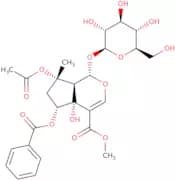
CAS :6-O-Benzoylphlorigidoside B is a natural product that belongs to the class of iridoid glycosides. It is found in plants such as callicarpa, which are members of the asterid clade. 6-O-Benzoylphlorigidoside B was isolated from iridoid glycosides in leaves of Formosana, a plant family native to Taiwan. This compound has been shown to have anti-inflammatory and anti-ulcer activities, as well as potential antiviral activity against herpes simplex virus type 1 (HSV1) and Epstein-Barr virus (EBV).Degré de pureté :Min. 95%N-(trans-3-Hydroxycotinine)-b-D-glucuronide
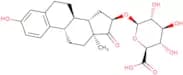
CAS :N-(trans-3-Hydroxycotinine)-b-D-glucuronide is a hydroxy metabolite of trans-3-hydroxycotinine, which is a pyridine derivative and an endogenous metabolite of nicotine. It is formed by conjugation with glucuronate in the liver and excreted in the urine. It has been detected in human urine after oral administration of nicotine. N-(trans-3-Hydroxycotinine)-b-D-glucuronide can be used as an indicator for tobacco exposure or use.Formule :C16H20N2O8Degré de pureté :Min. 95%Masse moléculaire :368.34 g/mol16a-Hydroxyestrone 16-b-D-glucuronide
CAS :16a-Hydroxyestrone 16-b-D-glucuronide is a conjugate of the hydroxyestrone and glucuronic acid. It is a metabolite of estradiol, which is the most potent estrogen produced by the human body. The compound has been found in urine, saliva, and breast milk. 16a-Hydroxyestrone 16-b-D-glucuronide is an inactive steroid that can be conjugated with glucuronic acid to form a water soluble molecule that can be excreted in the urine or bile.Formule :C24H30O9Degré de pureté :Min. 95%Masse moléculaire :462.49 g/mol2-Acetamido-N',N-cbz-epsilon-aminocaproyl-2-deoxy-b-D-glucopyranosyl amine
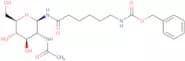
CAS :2-Acetamido-N',N-cbz-epsilon-aminocaproyl-2-deoxy-b-D-glucopyranosyl amine is a high purity, fluoroquinolone resistant, custom synthesis that is an Oligosaccharide. This compound has been modified with methylation and glycosylation. Click modification has been used to modify the sugar at the terminal position. It is a carbohydrate that can be used in Polysaccharides and Modification.Formule :C22H33N3O8Degré de pureté :Min. 95%Masse moléculaire :467.51 g/molN-Valeryl-D-glucosamine
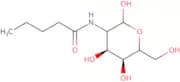
CAS :N-Valeryl-D-glucosamine is an aldol product of the condensation of acetone and formaldehyde. N-Valeryl-D-glucosamine is a bioactive molecule that has been shown to be synthesized by the c-glycosidic linkage of D-glucose molecules in bacteria and fungi. It is also found in plants, such as sugar cane and sugar beet. The synthesis of this molecule occurs through the aldol reaction, which involves the unactivated ketones (acetone). This compound can also be found in biomolecular chemistry, where it is used as a substrate for condensation reactions.
Formule :C11H21NO6Degré de pureté :Min. 95%Couleur et forme :White PowderMasse moléculaire :263.29 g/molL-Threitol
CAS :L-threitol is a white crystalline powder that is soluble in water and alcohol. It is a natural carbohydrate that is found in many plants and animals. The chemical formula for L-threitol is C4H10O4. This molecule consists of four carbon atoms, ten hydrogen atoms, and four oxygen atoms. L-threitol has been used as a sweetener and an excipient in the pharmaceutical industry. L-threitol can be modified by fluorination or saccharide modification to create other compounds. L-Threitol has been shown to have high purity and is used as a starting material for the synthesis of other carbohydrates such as oligosaccharides and polysaccharides.Degré de pureté :Min. 95%Methyl (methyl 5-acetamido-4,7,8,9-tetra-O-acetyl-3,5-dideoxy-2-thio-D-glycero-D-galacto-2-nonulopyranosid)onate
CAS :Methyl (methyl 5-acetamido-4,7,8,9-tetra-O-acetyl-3,5-dideoxy-2-thio-D-glycero-D-galacto-2-nonulopyranosid)onate is a sugar that is used in the synthesis of complex carbohydrates. It can be synthesized by modification of the glycosylation of monosaccharides or oligosaccharides. Methyl (methyl 5-acetamido-4,7,8,9--tetra--O--acetyl--3,5--dideoxy--2--thio--D---glycero---D---galacto---2--nonulopyranosid)onate has CAS No. 1442403688 and molecular weight of 486.Formule :C23H31NO12SDegré de pureté :Min. 95%Masse moléculaire :545.56 g/molMethyl 4,6-O-(4-nitrophenyl)methylene-a-D-galactopyranoside
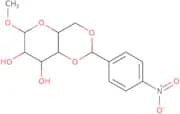
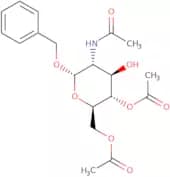
CAS :Methyl 4,6-O-(4-nitrophenyl)methylene-a-D-galactopyranoside is a custom synthesis of a complex carbohydrate. This glycosylation can be modified by methylation and fluorination. The product is available in high purity and has CAS No. 849366-08-1.Degré de pureté :Min. 95%Benzyl 2-acetamido-4,6-di-O-acetyl-2-deoxy-a-D-glucopyranoside
CAS :Benzyl 2-acetamido-4,6-di-O-acetyl-2-deoxy-a-D-glucopyranoside is a custom synthesis that has been modified with fluorination. This product is a white crystalline solid and can be used as an Oligosaccharide, Polysaccharide and saccharide. It has been shown to have high purity and can be used for Carbohydrate Modification.Formule :C19H25NO8Degré de pureté :Min. 95%Masse moléculaire :395.41 g/molBenzyl b-D-galactopyranoside
CAS :Benzyl b-D-galactopyranoside is a synthetic compound that can be used in the synthesis of complex carbohydrates. This compound has been modified with fluorination, methylation and click chemistry. The monosaccharide benzyl b-D-galactopyranoside is an important building block for the glycosylation of saccharides and polysaccharides. This compound can also be used as a fluorescent probe for complementary DNA hybridization in microarrays.Degré de pureté :Min. 95%D-Glucoheptono-1,4-lactone
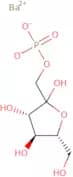
CAS :Please enquire for more information about D-Glucoheptono-1,4-lactone including the price, delivery time and more detailed product information at the technical inquiry form on this pageFormule :C7H12O7Degré de pureté :Min. 95%Masse moléculaire :208.17 g/molD-Fructose 1-phosphate barium salt trihydrate
CAS :D-Fructose 1-phosphate barium salt trihydrate is a custom synthesis, high purity sugar. It has been modified with fluorination, glycosylation, and methylation. D-Fructose 1-phosphate barium salt trihydrate is made from the modification of various sugars such as oligosaccharides and monosaccharides to form complex carbohydrates. It can be used for Click modification or in the synthesis of glycoconjugates. D-Fructose 1-phosphate barium salt trihydrate is also known as saccharide.Formule :C6H11BaO9P·3H2ODegré de pureté :Min. 95%Couleur et forme :Yellow PowderMasse moléculaire :449.49 g/mol1,2,3-Tri-O-methyl-D-glucopyranoside
CAS :1,2,3-Tri-O-methyl-D-glucopyranoside is a custom synthesis and modification of the natural product 1,2,3-tri-O-methyl-D-mannopyranoside. The compound was synthesized by fluorination of the 3' hydroxyl group followed by methylation of the 2', 3' hydroxyl groups to form a triol. This sugar was then glycosylated with D-glucose to produce an oligosaccharide. 1,2,3 - Tri -O - methyl - D - glucopyranoside is a natural product that can be found in plants such as barley and wheat. It has been shown to have antiinflammatory properties.Formule :C9H18O6Degré de pureté :Min. 95%Masse moléculaire :222.24 g/molBacillithiol trifluoroacetic acid salt
CAS :Bacillithiol (BSH) is a low molecular weight thiol molecule produced in Bacilli, which is also found in Firmicutes bacteria. It plays an important role in maintaining the balance of reactive oxygen species within cells and detoxifying certain harmful compounds. It is the α-anomeric glycoside of L-cysteinyl-D-glucosamine with L-malic acid and it seems to have antioxidant properties. Bacillithiol plays an important role in bacterial redox homeostasis and plays an important role in the detoxification of electrophiles as it is a cofactor for FosB (thiol transferase). This is the salt form (trifluoroacetic acid salt, TFA) of Bacillithiol.Formule :C13H22N2O10S·CF3CO2HDegré de pureté :Min. 95 Area-%Couleur et forme :Colorless Clear LiquidMasse moléculaire :512.41 g/molGlycosylceramide - from plant origin
CAS :Glucosylceramide (Glc-Cer) is the common precursor in the biosynthesis of most glycosphingolipids, with exception of some Gal-Cer derivatives, such as, GM4. Glucosylceramide consists of a glucosyl moiety which is β-O-glycosydically linked to ceramide, which itself, consists of the long-chain aminoalcohol sphingosine and a fatty acid. Glucosylceramide (also called glucocerebroside) is synthesised enzymatically, by the glucosylceramide synthase-catalysed with the addition of a glucose residue to ceramide. Glucosylceramide is involved in the regulation of various cellular events and also serves as a main constituent in liposome formulations.Formule :C40H75NO9Degré de pureté :Min. 95%Masse moléculaire :714.02 g/mol2-Benzamido-2-deoxy-D-glucopyranose
CAS :2-Benzamido-2-deoxy-D-glucopyranose is a synthetic, inexpensive, and non-toxic compound that has antibiotic properties. It is used as a reagent for the sulfonylating of aromatic rings and as an intermediate in the synthesis of other compounds. 2-Benzamido-2-deoxy-D-glucopyranose can be radiolabeled with carbon or fluorine atoms to form a resonance labeled probe that can be used in magnetic resonance spectroscopy.Formule :C13H17NO6Degré de pureté :Min. 95%Couleur et forme :White PowderMasse moléculaire :283.28 g/molD-Glucose-6-phosphate dipotassium salt hydrate
CAS :Glucose 6-phosphatase substrate
Formule :C6H11O9PK2·H2ODegré de pureté :Min. 95%Masse moléculaire :354.33 g/mol2-Acetamido-6-azido-2,6-dideoxy-D-galactopyranose
CAS :2-Acetamido-6-azido-2,6-dideoxy-D-galactopyranose is a synthetic, unnatural monosaccharide bearing an azido biorthogonal reaction group. This compound can enter the cell and is processed by biosynthetic enzymes, in a manner similar to the natural O-linked N-acetyl-β-D-glucosamine. The glycans produced bear the azido functional group which can be chemically tagged with fluorescent dyes or biotin for visualisation or affinity.
Formule :C8H14N4O5Degré de pureté :Min. 95%Masse moléculaire :246.22 g/molD-Fructose-1,6-diphosphate trisodium
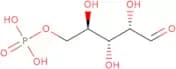
CAS :D-Fructose-1,6-diphosphate trisodium salt (D-FDP) is an ATP precursor that is used to study the effects of D-FDP on energy metabolism in rat cardiomyocytes. The results from this study showed that D-FDP increased ATP levels and inhibited the accumulation of intracellular lactate. This compound also inhibits ventricular myocardial hypertrophy induced by pressure overload in animal experiments. In addition, D-FDP has been shown to inhibit the polymerase chain reaction (PCR) process and to be active at a concentration of 25 mM.Formule :C6H14O12P2•Na3Degré de pureté :Min. 99 Area-%Couleur et forme :PowderMasse moléculaire :409.09 g/molD-Arabinose-5-phosphate
CAS :D-Arabinose-5-phosphate is an intermediate in the pentose phosphate pathway. It is synthesized from D-xylulose-5-phosphate by xylitol dehydrogenase. D-Arabinose-5-phosphate inhibits the enzyme xylitol dehydrogenase, which converts xylulose to d-xylulose, and thus prevents the formation of 5-hydroxyisoxazole phosphate, a precursor to the synthesis of NADPH. In this way, it blocks the synthesis of NADPH, which is essential for aerobic metabolism. This inhibition leads to a decrease in ATP production and consequently cell death.Formule :C5H11O8PDegré de pureté :Min. 95%Masse moléculaire :230.11 g/molMethyl 1-C-[4-chloro-3-[[4-[[(3S)-tetrahydro-3-furanyl]oxy]phenyl]methyl]phenyl]-a-D-glucopyranoside
CAS :Intermediate in the synthesis of empagliflozinFormule :C24H29ClO8Degré de pureté :Min. 95%Masse moléculaire :480.94 g/mol3,6’-Disinapoyl sucrose
CAS :3,6’-Disinapoyl sucrose is a saponin that has been shown to be neuroprotective and antidepressant. It is also able to increase the absorption of drugs in the gastrointestinal tract. 3,6’-Disinapoyl sucrose was found to have neurotrophic effects on neurons and inhibit glutamate-induced excitotoxicity. 3,6’-Disinapoyl sucrose has been shown to inhibit the mineralocorticoid receptor in vitro and may be useful as an antihypertensive agent. 3,6’-Disinapoyl sucrose can be used for clinical use in the treatment of depression and other neurological disorders such as Alzheimer's disease.Formule :C34H42O19Degré de pureté :Min. 95%Couleur et forme :PowderMasse moléculaire :754.69 g/mol3,4,6-Tri-O-acetyl-1,2-O-ethoxyethylidene-β-D-mannopyranose
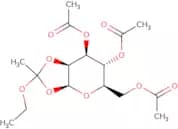
CAS :3,4,6-Tri-O-acetyl-1,2-O-ethoxyethylidene-b-D-mannopyranose is a synthetic monosaccharide that is used as a substrate for the production of various oligosaccharides and polysaccharides. This substance can be fluorinated to produce 3,4,6-tri-O-(3′,5′ -difluoro) acetyl-1,2:5′,6′ -di(O—ethoxyethylidene)-b-D mannopyranose. It has been shown that methylation of the C1 position in this compound results in a variety of different compounds with different properties. In addition to its use as a substrate in organic synthesis, 3,4,6 triacetyl 1,2:5', 6'-di(O—ethoxyethylidene)-b D mannopyranose is alsoFormule :C16H24O10Degré de pureté :Min. 95%Masse moléculaire :376.36 g/mol2,3-O-Isopropylidene-L-glyceraldehyde - 50% DCM solution
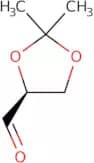
CAS :2,3-O-Isopropylidene-L-glyceraldehyde (2,3-OIPA) is a synthetic compound that was developed as an alternative to paraformaldehyde for the synthesis of enantiopure compounds. It has been used in metathesis reactions and catalysed the conversion of β-unsaturated ketones to enantiopure products. 2,3-OIPA also has significant cytotoxic activity against a range of human cancer cell lines. This compound can be used in asymmetric syntheses to produce chiral molecules with a high degree of optical purity.Formule :C6H10O3Degré de pureté :Min. 95%Couleur et forme :Colorless PowderMasse moléculaire :130.14 g/mol6-Chloro-6-deoxy-D-mannose
CAS :6-Chloro-6-deoxy-D-mannose is a naturally occurring sugar that is found in the spermatozoa of many animals. It is a mannose derivative that has been shown to be an inhibitor of the enzyme glyceraldehyde 3-phosphate dehydrogenase, which plays an important role in energy metabolism and isomerization of 6-phosphate to glucose-1 phosphate. This property may be responsible for its contraceptive effects. The drug also inhibits phosphoglucomutase and enhances the transfer of glucose from the liver to other tissues, increasing blood glucose concentrations. 6-Chloro-6 deoxy mannose also has antifertility effects in rats by inhibiting transfer of spermatozoa through the female reproductive tract.Formule :C6H11ClO5Degré de pureté :Min. 95%Couleur et forme :White Off-White PowderMasse moléculaire :198.6 g/molN-Acetyl-2,7-anhydro-α-neuraminic acid
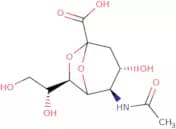
CAS :N-Acetyl-2,7-anhydro-a-neuraminic acid is a synthetic derivative of a naturally occurring sugar that is found in the human brain and other tissues. It has been proposed as a potential drug for the treatment of inflammatory bowel disease due to its ability to inhibit the growth of cells in the colon and prevent inflammation. N-Acetyl-2,7-anhydro-a-neuraminic acid has been shown to have antiinflammatory properties by inhibiting the synthesis of proinflammatory cytokines. This compound binds to an enzyme called galactosamine kinase, which is involved in making certain proteins that are necessary for inflammation. The chemical structure of N-Acetyl-2,7-anhydro-a-neuraminic acid was determined through structural analysis and carbon source titration calorimetry. Magnetic resonance spectroscopy showed that this compound reacts with water molecules and chemical ionization revealed that itFormule :C11H17NO8Degré de pureté :Min. 95%Masse moléculaire :291.25 g/molN-(Formylamidino)-N-b-D-ribofuranosylurea
CAS :Please enquire for more information about N-(Formylamidino)-N-b-D-ribofuranosylurea including the price, delivery time and more detailed product information at the technical inquiry form on this page
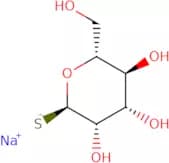
Formule :C8H14N4O6Degré de pureté :Min. 95%Masse moléculaire :262.22 g/molα-D-Thiomannose sodium
CAS :A thio-sugarFormule :C6H11O5SNaDegré de pureté :Min. 95 Area-%Couleur et forme :White PowderMasse moléculaire :218.21 g/mol2,3,4,6-Tetra-O-acetyl-a-D-mannopyranosyl azide
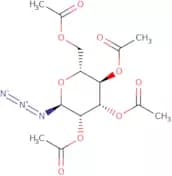
CAS :2,3,4,6-Tetra-O-acetyl-a-D-mannopyranosyl azide is a crystalline solid that can be obtained by heating 2,3,4,6-tetra-O-acetyl-a-D-mannopyranose with sodium azide. This compound has been used in the x-ray crystallographic technique for obtaining electron density maps. The x ray data collected from this compound showed the distinct difference between the electron density of the atoms and their surroundings.Formule :C14H19N3O9Couleur et forme :PowderMasse moléculaire :373.32 g/mol5-Deoxy-D-ribose
CAS :5-Deoxy-D-ribose is a molecule that is an intermediate in the shikimate pathway, which produces the aromatic amino acids. 5-Deoxy-D-ribose can be synthesized from D-ribose and shikimic acid. The biosynthesis of 5-deoxy-D-ribose is catalyzed by the enzyme ribose 5'-phosphate kinase, which converts ribose 5'-phosphate to 5-deoxy--D--ribose phosphate. This reaction requires ATP as a source of energy, and it is inhibited by phosphoribosyl pyrophosphate (PRPP). The asymmetric synthesis of 5-deoxy--D--ribose has been achieved with a chiral Lewis acid catalyst. The molecular structure of 5-deoxy--D--ribose has been determined by NMR spectroscopy. Shikimate pathways are present in mammalian cells, but not in plants or bacteria.Formule :C5H10O4Degré de pureté :Min. 95 Area-%Couleur et forme :Orange Clear LiquidMasse moléculaire :134.13 g/molb-D-Galactopyranosyl nitromethane
CAS :b-D-Galactopyranosyl nitromethane is a high purity sugar with various modifications. It is custom synthesized to order and is available in various purity grades. This sugar can be modified by fluorination, glycosylation, methylation, or modification with oligosaccharides or monosaccharides. The CAS number for this sugar is 81846-64-2. b-D-Galactopyranosyl nitromethane High purity, Custom synthesis, sugar, Click modification, Fluorination, Glycosylation, Synthetic, Methylation, Modification, Oligosaccharide, Monosaccharide CAS No. 81846-64-2
Formule :C7H13NO7Degré de pureté :Min. 95%Masse moléculaire :223.2 g/molβ-Rutinose
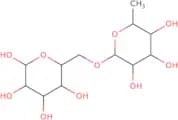
CAS :Beta-rutinose is a potent kinase inhibitor that has shown anti-tumor activity in Chinese hamster ovary (CHO) cells. It inhibits the activity of cyclin-dependent kinases, which are essential for cell division and proliferation. Beta-rutinose has been shown to induce apoptosis in human cancer cells, making it a promising candidate for anticancer therapy. This compound is an analog of rutin, a flavonoid found in many plants, and has been shown to have potent anticancer effects in vitro and in vivo. Beta-rutinose inhibits the growth of cancer cells by blocking the activity of specific kinases involved in tumor progression, making it an attractive target for developing new cancer therapies. Additionally, this compound has been found to be effective at reducing protein levels associated with cancer cell growth and proliferation.Formule :C12H22O10Degré de pureté :Min. 95%Masse moléculaire :326.3 g/molα-D-Mannopyranosyl amine
CAS :a-D-Mannopyranosyl amine is a synthetic product that is used as a sugar donor in glycosylation reactions. It can be custom synthesized to suit the needs of the customer. The chemical structure contains a methyl group and an oxygen atom, which are both in their highest oxidation state. This product is not intended for use as a food additive or dietary supplement.Formule :C6H13NO5Degré de pureté :Min. 95%Masse moléculaire :179.17 g/mol2-Aminophenyl β-D-glucuronide hydrochloride
CAS :2-Aminophenyl b-D-glucuronide HCl is a custom synthesis chemical. It is a white to pale yellow crystalline powder. This compound has a molecular weight of 363.2 and it's chemical formula is C8H10N2O7Glucuronic acid. 2-Aminophenyl b-D-glucuronide HCl is used in the modification of oligosaccharides, polysaccharides, saccharides, carbohydrates, fluorination and complex carbohydrate. The purity of this chemical is high and it can be modified with monosaccharide or sugar.
Formule :C12H15NO7•HClDegré de pureté :Min. 95%Masse moléculaire :321.71 g/molMefenamic acid-acyl-b-D-glucuronide
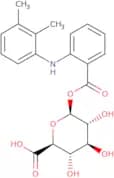
CAS :Mefenamic acid-acyl-b-D-glucuronide is a synthetic drug that binds to albumin and human serum albumin. It has been shown to irreversibly inhibit human UDP-glucuronosyltransferase, an enzyme in the human liver that catalyzes the addition of glucuronic acid to drugs and other xenobiotics. Mefenamic acid-acyl-b-D-glucuronide has also been shown to inhibit the activity of a wide range of enzymes in humans, including isoenzyme UGT1A6, which is found in the liver and kidney. This drug has been studied as a potential treatment for pain and inflammation in humans.Formule :C21H23NO8Degré de pureté :Min. 95%Couleur et forme :White To Off-White SolidMasse moléculaire :417.41 g/molN-5-Carboxypentyl-1-deoxygalactonojirimycin
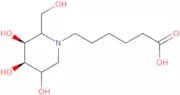
CAS :N-5-Carboxypentyl-1-deoxygalactonojirimycin is an inhibitor of glycolipid hydrolase and a potential drug for the treatment of lysosomal storage disorders. N-5-Carboxypentyl-1-deoxygalactonojirimycin is derived from the natural product galactonojirimycin, which has been shown to inhibit glycolipid hydrolase in vitro. The compound was developed by modifying the peptide sequence to increase its affinity for the enzyme. N-5-Carboxypentyl-1-deoxygalactonojirimycin displays a higher affinity for glycolipid hydrolase than galactonojirimycin, and it also has a greater inhibitory effect on this enzyme. N-5-Carboxypentyl-1-deoxygalactonojirimycin isFormule :C12H23NO6Degré de pureté :Min. 95%Couleur et forme :White PowderMasse moléculaire :277.31 g/molD-Gluconic acid sodium salt
CAS :D-Gluconic acid sodium salt is a glycol ether that is used as an injection solution. It has been shown to have antibacterial efficacy against wild-type strains of bacteria such as Escherichia coli, Pseudomonas aeruginosa, and Staphylococcus aureus. The in vitro antimicrobial action of D-gluconic acid sodium salt was found to be due to its ability to inhibit bacterial growth by interfering with the synthesis of DNA. D-Gluconic acid sodium salt also has been shown to have antihypertensive effects in rats through the inhibition of angiotensin II type 1 receptor (AT1) signaling pathway and erythrocyte proliferation. This drug also has been shown to bind benzalkonium chloride and x-ray diffraction data show that it is crystalline in nature. The analytical method for determining the concentration of D-gluconic acid sodium salt is by electrochemical impedance
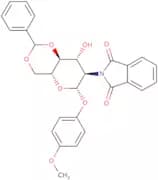
Formule :C6H11NaO7Degré de pureté :Min. 95%Couleur et forme :White PowderMasse moléculaire :218.14 g/mol4-Methoxyphenyl 4,6-O-benzylidene-2-deoxy-2-phthalimido-β-D-glucopyranoside
CAS :4-Methoxyphenyl 4,6-O-benzylidene-2-deoxy-2-phthalimido-b-D-glucopyranoside is an organic compound with the formula C13H14N4O8. It is a white solid that is soluble in water, methanol and ethanol. The compound has been synthesized using Click chemistry, fluorination, glycosylation, and methylation of the sugar. It has also been modified with an oligosaccharide and monosaccharide to form a complex carbohydrate.Formule :C28H25NO8Degré de pureté :Min. 98 Area-%Couleur et forme :PowderMasse moléculaire :503.51 g/mol1,2,3-Tri-O-benzoyl-α-L-fucopyranose
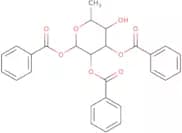
CAS :1,2,3-Tri-O-benzoyl-a-L-fucopyranose is a synthetic, fluorinated monosaccharide that can be synthesized from D-glucose in two steps. It is a useful building block for the synthesis of oligosaccharides and polysaccharides with different glycosylation patterns. This compound has been shown to react with methyl iodide to form 1,2,3-triiodo-a-L-fucopyranose. It has also been used as a click modification reagent for carbohydrates.Formule :C27H24O8Degré de pureté :Min. 95%Masse moléculaire :476.47 g/mol1,3,4,6-Tetra-O-galloyl glucose
CAS :Tetra-O-galloyl glucose is a pentagalloyl glucose that is found in the Chinese herb Paeonia lactiflora. It has been shown to inhibit the replication of hepatitis B virus, and can be used for the treatment of hepatitis B infection. Tetra-O-galloyl glucose also has anti-inflammatory activities, which may be due to its ability to inhibit prostaglandin synthesis.Formule :C34H28O22Degré de pureté :Min. 95%Masse moléculaire :788.57 g/mol










![Methyl 1-C-[4-chloro-3-[[4-[[(3S)-tetrahydro-3-furanyl]oxy]phenyl]methyl]phenyl]-a-D-glucopyranosi…](/_next/image/?url=https%3A%2Fstatic.cymitquimica.com%2Fproducts%2F3D%2Fthumb-webp%2FMM137435.webp&w=3840&q=75)