Monosaccharides
Les monosaccharides sont la forme la plus simple des glucides et servent de building blocks fondamentaux pour les sucres plus complexes et les polysaccharides. Ces molécules de sucre unique jouent des rôles critiques dans le métabolisme énergétique, la communication cellulaire et les composants structuraux des cellules. Dans cette section, vous trouverez une large gamme de monosaccharides essentiels pour la recherche en biochimie, biologie moléculaire et glycosciences. Ces composés sont cruciaux pour étudier les voies métaboliques, les processus de glycosylation et le développement d'agents thérapeutiques. Chez CymitQuimica, nous proposons des monosaccharides de haute qualité pour répondre à vos besoins de recherche, garantissant précision et fiabilité dans vos investigations scientifiques.
Sous-catégories appartenant à la catégorie "Monosaccharides"
- Alloses(11 produits)
- Arabinoses(21 produits)
- Erythroses(11 produits)
- Fructoses(9 produits)
- Fucoses(36 produits)
- Galactosamine(41 produits)
- Galactoses(260 produits)
- Glucoses(365 produits)
- Acides glucuroniques(51 produits)
- Glyco-substrats pour l'enzyme(77 produits)
- Guloses(6 produits)
- Idoses(4 produits)
- Inositols(15 produits)
- Lyxoses(4 produits)
- Mannoses(65 produits)
- O-Glycanes(48 produits)
- Psicoses(3 produits)
- Rhamnoses(10 produits)
- Ribos(61 produits)
- Acides sialiques(100 produits)
- Sorboses(4 produits)
- Sucres(173 produits)
- Tagatoses(4 produits)
- Taloses(8 produits)
- Xyloses(20 produits)
Affichez 17 plus de sous-catégories
6088 produits trouvés pour "Monosaccharides"
Trier par
Degré de pureté (%)
0
100
|
0
|
50
|
90
|
95
|
100
2,3,4,6-Tetra-O-allyl-D-glucopyranose
CAS :<p>2,3,4,6-Tetra-O-allyl-D-glucopyranose is a synthetic oligosaccharide that is used in the synthesis of glycoproteins and other complex carbohydrates. The sugar has been fluorinated to produce 2,3,4,6-Tetra-O-fluoro-D-glucopyranose. This sugar can be custom synthesized with methylation or click modification. It is a high purity product with no impurities detected.</p>Degré de pureté :Min. 95%2-C-Methyl-L-ribono-1,4-lactone
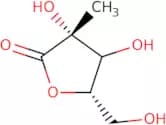
CAS :<p>2-C-Methyl-L-ribono-1,4-lactone is a crystallized carbohydrate that contains the enantiomers L and D. It is a chiral molecule with two asymmetric carbon atoms. The L form has a higher yield than the D form and can be synthesized from l-arabinose, dimethylamine, and isomerisation. This compound is also present in ketoses such as d-xylose and 1-deoxy-d-ribulose. 2CMLR1L4L acts as an inhibitor of the enzyme d-galactose dehydrogenase, which catalyzes the conversion of d-galactose to d-glucose. Cyanide can bind to this compound to form cyanohydrin adducts, which are toxic to cells.</p>Formule :C5H10O5Degré de pureté :Min. 95%Masse moléculaire :150.13 g/mol3,4-Di-O-acetyl-L-arabinal
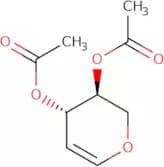
CAS :<p>3,4-Di-O-acetyl-L-arabinal is a synthetic compound that belongs to the class of monofluorides. It has been synthesized from l-arabinose by a stereoselective process, with triflic acid as the catalyst and propargylation as the key step. The synthetic pathway starts from an acid hydrolysis of L-arabinose to yield 3,4-di-O-acetyl-L-arabinonic acid. This acid is then converted to 3,4 diacetyl L arabinonic acid with acetic anhydride and acetic acid in the presence of triethylamine. The final product is then obtained by reacting this intermediate with 1 equivalent of sodium fluoride in tetrahydrofuran (THF) using catalytic reduction with sodium borohydride at 0 °C. The major advantage of this synthetic process is that it provides two stereoisomers: (</p>Formule :C9H12O5Degré de pureté :Min. 95%Couleur et forme :Yellow Clear LiquidMasse moléculaire :200.19 g/mol4,6-O-Benzylidene-D-glucose
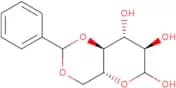
CAS :<p>4,6-O-Benzylidene-D-glucose is a potent inhibitor of the enzyme dibutyltin oxide, which is involved in the synthesis of energy. It has been shown to have clinical activity in rat cardiomyocytes and has been tested in clinical studies. 4,6-O-Benzylidene-D-glucose inhibits enzymes by forming hydrogen bonds with their substrates. This compound also interacts with hydrochloric acid to form a stable complex that prevents it from interacting with other molecules. 4,6-O-Benzylidene-D-glucose is rapidly broken down into glucose and benzaldehyde when it reacts with carbonyl groups or amines. The asymmetric synthesis of this compound can be achieved using an intramolecular hydrogen transfer reaction. <br>4,6-O-Benzylidene glucose is derived from D-mannose derivatives and contains a hydroxyl group on the central carbon</p>Formule :C13H16O6Degré de pureté :Min. 98 Area-%Couleur et forme :White PowderMasse moléculaire :268.26 g/molD-Rhamnose
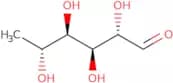
CAS :<p>Chiral-pool sugar used to mirror syntheses based on natural L-Rha</p>Formule :C6H12O5Degré de pureté :Min. 97 Area-%Couleur et forme :White PowderMasse moléculaire :164.16 g/molSalicylic acid-acyl-b-D-glucuronide
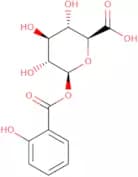
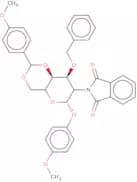
CAS :<p>Salicylic acid-acyl-b-D-glucuronide is an anti-inflammatory compound that is found in the urine of diabetic patients. It has been shown to inhibit the production of a number of proinflammatory compounds, including prostaglandin E2 (PGE2), in human serum. Salicylic acid-acyl-b-D-glucuronide is formed by the reaction of salicylic acid with acetylsalicylic acid. The rate of formation is dependent on the concentration of salicylic acid and pH. The reactive product can form covalent adducts with tyrosinase and other proteins, leading to inhibition of tyrosinase activity and melanin synthesis.</p>Formule :C13H14O9Degré de pureté :Min. 95%Couleur et forme :White PowderMasse moléculaire :314.24 g/mol4-Methoxyphenyl 2-deoxy-3-benzyl-4,6-O-(4-methoxybenzylidene)-2-phthalimido-β-D-glucopyranoside
<p>4-Methoxyphenyl 2-deoxy-3-benzyl-4,6-O-(4-methoxybenzylidene)-2-phthalimido-b-D-glucopyranoside is a custom synthesis that has been modified with fluorination and carbamoylation. This product is an oligosaccharide that belongs to the group of polysaccharides. It is a complex carbohydrate that has been synthesized from monosaccharides and sugar. 4MPBGP is soluble in water and has high purity levels.<br>*The following content was automatically generated by eCommerce software:</p>Formule :C36H33NO9Degré de pureté :Min. 95%Masse moléculaire :623.65 g/mol3-o-Benzyl-diacetonide-d-glucose
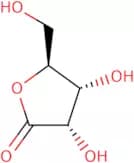
<p>3-O-benzyl-diacetonide-d-glucose is a synthetic monosaccharide that can be used as a building block for oligosaccharides and polysaccharides. It is custom synthesized to meet your specific needs and can be modified with fluorination, methylation, or glycosylation. 3-O-benzyl-diacetonide-d-glucose has been shown to have high purity and is available in small quantities for custom synthesis.</p>Degré de pureté :Min. 95%L-Ribonic acid-1,4-lactone
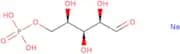
CAS :<p>L-Ribonic acid-1,4-lactone is a synthetic process that is used as an antiviral agent. It is a sugar reactant in the production of riboflavin. L-Ribonic acid-1,4-lactone has been shown to inhibit the synthesis of viral RNA and DNA, which prevents replication of the virus. The mechanism of L-ribonic acid lactone's antiviral activity is not currently known.</p>Formule :C5H8O5Degré de pureté :(%) Min. 90%Couleur et forme :PowderMasse moléculaire :148.12 g/molD-Xylose-5-phosphate disodium
CAS :<p>D-Xylose-5-phosphate disodium salt is a Custom synthesis that has been fluorinated, methylated, and modified with a click reaction. D-Xylose-5-phosphate disodium salt is also an oligosaccharide and polysaccharide. The CAS No. for this compound is 1083083-57-1.</p>Formule :C5H11O8P•Na2Degré de pureté :(%) Min. 80%Couleur et forme :White/Off-White SolidMasse moléculaire :276.09 g/mol1,4-Anhydro-D-erythritol
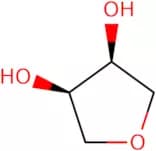
CAS :<p>1,4-Anhydro-D-erythritol is a sugar alcohol that can be found in various plants and fruits. It is a reaction product of D-erythrose and glycerol, with an average formation rate of 10%. The hydroxyl group on the 1,4-anhydro-D-erythritol molecule reacts with methyl glycosides to produce an ester. Trifluoromethanesulfonic acid is used as a catalyst in this process, which activates the hydroxyl group on the molecule. The reaction mechanism for this process involves three steps: elimination of water, dehydration of the hydroxyl group, and addition of methyl glycoside. This process results in a new molecule called 1,4-anhydro-D-erythritol methyl ester (AEME). AEME has been shown to have conformational properties that are different from those of its parent compound. The conformational</p>Formule :C4H8O3Degré de pureté :Min. 95%Couleur et forme :Clear LiquidMasse moléculaire :104.1 g/molMethyl 2-acetamido-2-deoxy-b-D-glucopyranoside
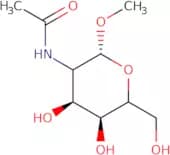
CAS :<p>Methyl 2-acetamido-2-deoxy-b-D-glucopyranoside is a xylose sugar that is found in the leaves of Nepeta cataria. It has shown to inhibit bacterial growth by binding to DNA and RNA, as well as inhibit transcription, translation, and replication. Methyl 2-acetamido-2-deoxy-b-D-glucopyranoside also binds to cardiac channels and inhibits their activity. This compound has been shown to have anti cancer effects on prostate cancer cells in mice. Furthermore, it inhibits microbial metabolism in vitro by inhibiting the enzyme acetolactate synthase. Methyl 2-acetamido-2-deoxy-b-D -glucopyranoside has also been shown to be an effective treatment for autoimmune diseases such as multiple sclerosis and rheumatoid arthritis in mice.</p>Formule :C9H17NO6Degré de pureté :Min. 95%Couleur et forme :White Off-White PowderMasse moléculaire :235.24 g/mol2-Deoxy-2-(4-methoxybenzyliden)imino-D-glucose
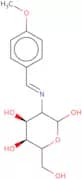
CAS :<p>2-Deoxy-2-(4-methoxybenzyliden)imino-D-glucose is a modified carbohydrate that is used for the synthesis of oligosaccharides, polysaccharides, and glycosaminoglycans. This compound is also used as a substrate for methylation reactions. It can be synthesized from D-glucose by the addition of a 2-(4-methoxybenzylidene) group to the 2′ position of the carbon atom on the anomeric carbon. The structure of this compound has been determined by X-ray crystallography.</p>Formule :C14H19NO6Degré de pureté :Min. 95%Couleur et forme :White to off-white solid.Masse moléculaire :297.3 g/mol1,3,4,6-Tetra-O-acetyl-2-deoxy-2-fluoro-D-galactopyranose
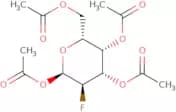
CAS :<p>1,3,4,6-Tetra-O-acetyl-2-deoxy-2-fluoro-D-galactopyranose is a fluorinated sugar that is used in the synthesis of glycosides. It is a synthetic compound that is prepared by reacting 1,3,4,6-tetraacetyl galactose with potassium bifluoride and diethyl oxalate in presence of anhydrous sodium sulfate. The product obtained has the following structural formula: The chemical name for this compound is 1,3,4,6-Tetraacetyl -2-[(1R)-1-(ethoxycarbonyl)propyl]-2-(fluorooxymethyl) -D-galactopyranose. The CAS number for this compound is 83697–45–4.</p>Formule :C14H19FO9Degré de pureté :(As Sum Of Anomers) Min. 98 Area-%Couleur et forme :White PowderMasse moléculaire :350.3 g/molPhenyl-β-D-thioglucuronic acid
CAS :<p>Phenyl-beta-D-thioglucuronic acid is a drug that is used to treat inflammatory diseases and autoimmune diseases. It is a basic structure that has been shown to have anti-estrogenic effects in vitro, although the mechanism of action is not well understood. Phenyl-beta-D-thioglucuronic acid can be crosslinked with proteins to form a matrix for wound healing. This drug has also been shown to be a potent inhibitor of proteases, and may inhibit other enzymes such as matrix metalloproteinases and serine proteases.</p>Formule :C12H14O6SMasse moléculaire :286.31 g/molRef: 3D-P-4300
1gÀ demander5gÀ demander10gÀ demander500mgÀ demander2500mgÀ demander-Unit-ggÀ demander2,3,5-Tri-O-benzyl-L-xylofuranose
CAS :<p>2,3,5-Tri-O-benzyl-L-xylofuranose is a sugar molecule that has been modified to inhibit glycosidases. 2,3,5-Tri-O-benzyl-L-xylofuranose is an iminosugar that inhibits the enzyme β-glucosidase and α-galactosidase. The compound is not metabolized and it binds to the enzyme's active site. 2,3,5-Tri-O-benzyl L xylofuranose has been shown to be effective at inhibiting all of the glycosidases tested in this study with inhibition potencies ranging from 0.1 mM to 10 mM. This compound also inhibits epoxides and cyclic enzymes such as azido reductase and dihydropyrimidine dehydrogenase.</p>Formule :C26H28O5Degré de pureté :Min. 95%Couleur et forme :PowderMasse moléculaire :420.5 g/molD-Glucose - anhydrous
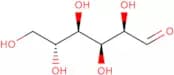
CAS :<p>Glucose (Glu) is the most common carbohydrate on the planet, found in all living organisms and is the major source of metabolic energy for plants and animals. Glucose is a building block in numerous oligosaccharides and polysaccharides. It is present in blood and milk, in gangliosides and in N- and O-linked glycans (Collins, 2006). Glucose is wrongly called a simple sugar because in solution it exists in five forms: two six membered rings (α/β), two five membered rings (α/β) and a straight chain form, a system known as mutarotation (Robyt, 2012). The proportions of different glucose forms are dictated by temperature and pH. D-Glucose is optically active (dextrorotary) and L-Glucose is its enantiomer (Levorotary). Its hydroxyl groups are all equatorial, providing maximum stability, according to Hudsons rules (Hudson, 1948).</p>Formule :C6H12O6Degré de pureté :Min. 96 Area-%Couleur et forme :White PowderMasse moléculaire :180.16 g/mol2,3,5-Tri-O-benzoyl-β-D-ribofuranosyl cyanide
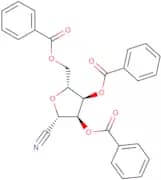
CAS :<p>Building block for C-nucleoside synthesis</p>Formule :C27H21NO7Degré de pureté :Min. 98 Area-%Couleur et forme :White PowderMasse moléculaire :471.46 g/molD-Glucopyranosyl thiosemicarbazide
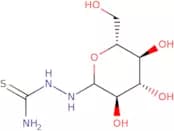
CAS :<p>D-Glucopyranosyl thiosemicarbazide is a synthetic molecule that reacts with halides to produce regiospecifically substituted aldehydes. It has been used in the synthesis of glycosylated heterocycles and for the conversion of amines into reactive intermediates. D-Glucopyranosyl thiosemicarbazide can be prepared by reacting 2,3-dichloro-5,6-dicyanobenzoquinone with sodium nitrite in methanol followed by hydrolysis with water. This reaction produces an intermediate that reacts with sulfur dioxide to form the desired product. The structure of this molecule was determined using X-ray crystallography on crystals obtained from aspergillus mold.</p>Formule :C7H15N3O5SDegré de pureté :Min. 95%Couleur et forme :White to off-white powder.Masse moléculaire :253.28 g/mola-D-Glucopyranosyl fluoride
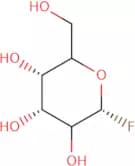
CAS :<p>a-D-Glucopyranosyl fluoride is an irreversible inhibitor of the enzyme glycosidase. This product has been used to study the kinetic and mechanism of human serum alpha-glucosidase, which is a key enzyme in the digestion of carbohydrates. Kinetic studies have shown that 4-hydroxycinnamic acid and glucose are competitive inhibitors of the enzyme. The reaction mechanism for this product involves hydrogen fluoride cleavage of the glycosidic bond. The optimum pH for this product is 7.</p>Formule :C6H11FO5Degré de pureté :Min. 95%Couleur et forme :White PowderMasse moléculaire :182.15 g/molD-Xylose-1-phosphate triethylammonium
CAS :<p>D-Xylose-1-phosphate triethylammonium is a synthetic compound that is used as an intermediate in the synthesis of oligosaccharides and polysaccharides. It has been shown to be a substrate for glycosylation reactions, with the potential to form glycosidic bonds with a variety of monosaccharides and polysaccharides. This product can also be fluorinated or methylated, and can undergo click modification or other modifications to make it suitable for use in various applications. D-Xylose-1-phosphate triethylammonium is available in high purity and can be custom synthesized according to customer specifications.</p>Formule :C5H11O8PDegré de pureté :Min. 95%Couleur et forme :PowderMasse moléculaire :230.11 g/molVoglibose
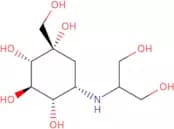
CAS :<p>Voglibose is a competitive inhibitor of α-glucosidase used for the control of blood sugar levels in patients with type 2 diabetes mellitus. The compound binds reversibly to intestinal carbohydrate-active digestive enzymes with α-glucosidase activity, inhibits breakdown of complex sugars and consequently delays the absorption of glucose into blood.</p>Formule :C10H21NO7Couleur et forme :White PowderMasse moléculaire :267.28 g/mol1,2,3,4-Tetra-O-acetyl-β-D-mannopyranose
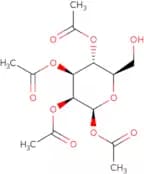
CAS :<p>1,2,3,4-Tetra-O-acetyl-β-D-mannopyranose is a fluorinated monosaccharide that has been synthesized. It is a complex carbohydrate with the molecular formula C12H24O8 and a molecular weight of 256.24 g/mol. 1,2,3,4-Tetra-O-acetyl-β-D-mannopyranose has been modified with glycosylation and polysaccharides to create a click modification. It can be used in custom synthesis and provides high purity.</p>Formule :C14H20O10Degré de pureté :Min. 95%Couleur et forme :White Off-White PowderMasse moléculaire :348.3 g/molMethyl b-D-thiogalactopyranoside
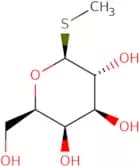
CAS :<p>Methyl b-D-thiogalactopyranoside (MTGP) is a cell lysis agent that can be used for diagnostic purposes to measure enzyme activities in cells. It is also used to determine the kinetic of an enzyme reaction, as well as its acid formation. MTGP has been shown to inhibit sugar transport and metabolism by binding to the sugar molecule and preventing it from passing through cellular membranes. This inhibition prevents the accumulation of proton gradients across the membrane, which disrupts ATP production and leads to cell death. MTGP is also an inhibitor of glucose-6-phosphate dehydrogenase (G6PDH), which converts glucose into sorbitol. Sorbitol accumulates intracellularly and leads to cell death by osmotic lysis.</p>Formule :C7H14O5SDegré de pureté :Min. 98 Area-%Couleur et forme :PowderMasse moléculaire :210.25 g/mol1,5-Anhydro-2,3,4-tri-O-benzoyl-6-deoxy-D-arabino-hex-1-enitol
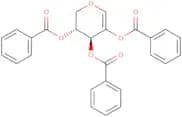
CAS :<p>1,5-Anhydro-2,3,4-tri-O-benzoyl-6-deoxy-D-arabino-hex-1-enitol is a high purity sugar with a click modification. It is a synthetic monosaccharide that is an important building block for complex carbohydrates. This compound can be modified through methylation, glycosylation, and custom synthesis to produce desired compounds. The 1,5 Anhydro 2,3,4 tri O benzoyl 6 deoxy D arabino hex 1 enitol has shown activity against the fluoroquinolone resistant bacteria Staphylococcus aureus and Mycobacterium tuberculosis. It has also been shown to inhibit the growth of cancer cells in vitro and in vivo.</p>Formule :C27H22O7Degré de pureté :Min. 95%Couleur et forme :PowderMasse moléculaire :458.46 g/molGDP-L-fucose disodium salt
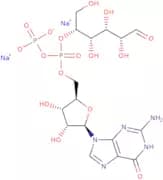
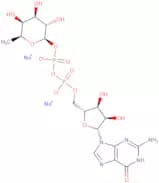
CAS :<p>GDP-L-fucose is a natural fucosyl donor and substrate for fucosyltransferases (FUT) that catalyses the fucosylation of, for example, human milk oligosaccharides or glycoproteins. GDP-L-fucose is widely used in (chemo)enzymatic synthesis of glycans. Cymit Quimicaesis of GDP-L-fucose, a nucleotide sugar consisting of an L-fucose that is β-glycosidically linked to the nucleotide guanosine diphosphate (GDP), is achieved either through de novo synthesis via GDP-mannose or through a salvage pathway from free fucose. Fucosylation is catalysed by fucosyltransferases (~ 13 FUT genes have been identified in the human genome to date) to generate α-1,2, α-1,3, α-1-4 and α-1-6 linkages of fucose to other sugars, as well as direct linkages to peptides, with release of GDP (Lairson, 2008).</p>Formule :C16H23N5O15P2Na2Degré de pureté :Min. 90 Area-%Couleur et forme :White Off-White PowderMasse moléculaire :633.31 g/molRaspberry ketone glucoside
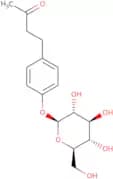
CAS :<p>Raspberry ketone glucoside is a hydrogenated, isopropyl palmitate fatty acid. It is a dietary supplement that has been shown to inhibit the activity of matrix metalloproteinases, which are enzymes that break down collagen in the skin and lead to wrinkles. Raspberry ketone glucoside also inhibits tyrosinase, an enzyme involved in the production of melanin. As a result, raspberry ketone glucoside has been shown to reduce pigmentation and inhibit UV-induced skin damage. Raspberry ketone glucoside may have an inhibitory effect on fatty acids by inhibiting the synthesis of fatty acids and reducing the number of fat cells in adipose tissue. This compound is also used as a crystallization aid for cellulose and as an organic solvent for food composition.</p>Formule :C16H22O7Degré de pureté :Min. 95%Couleur et forme :White PowderMasse moléculaire :326.34 g/molCanagliflozin hemihydrate
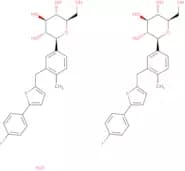
CAS :<p>Canagliflozin is an oral diabetes drug that belongs to the class of sodium-glucose cotransporter 2 (SGLT2) inhibitors. It works by blocking reabsorption of glucose in the kidney, thereby lowering blood sugar levels. Canagliflozin has been shown to be a potent inhibitor of insulin resistance and has been used clinically in combination with metformin hydrochloride. The chemical stability of canagliflozin is dependent on its particle size, which can range from 10 micrometres to 100 micrometres. A number of analytical methods have been developed for canagliflozin, including high performance liquid chromatography with ultraviolet detection, gas chromatography with mass spectrometry detection, and dihedral angle analysis. Canagliflozin is an example of a polymorphic compound: it exists as two enantiomers due to chiral symmetry.</p>Formule :(C24H25FO5S)2•H2ODegré de pureté :Min. 95%Couleur et forme :PowderMasse moléculaire :907.05 g/molD-Glucose-13C6
CAS :<p>D-Glucose-13C6 is a complex carbohydrate, which is composed of a glucose molecule with one carbon atom labeled as C6. It is used to study the structure of carbohydrates and their interactions with proteins. D-Glucose-13C6 also has applications in the study of diseases such as Alzheimer's disease, Parkinson's disease, diabetes mellitus type 2, and cancer. In addition, this molecule can be used to measure plasma glucose concentrations in humans or animals. D-Glucose-13C6 is not active against bacteria such as Pseudomonas aeruginosa or Escherichia coli. The synthesis of D-glucose-13C6 requires anhydrous dextrose and unlabeled glucose.</p>Formule :C6H12O6Degré de pureté :Min. 98 Area-%Couleur et forme :White PowderMasse moléculaire :186.11 g/molEthyl 4,6-O-benzylidene-2-O-levulinoyl-b-D-thioglucopyranoside
<p>Ethyl 4,6-O-benzylidene-2-O-levulinoyl-b-D-thioglucopyranoside is a highly functionalized glycoside that is synthesized from levulinic acid as the starting material. It is an important chemical intermediate for various applications in biotechnology and medicine. Ethyl 4,6-O-benzylidene-2-O-levulinoyl-b-D-thioglucopyranoside can be used to modify saccharides, oligosaccharides, and polysaccharides with fluorine or methyl groups. This product has been custom synthesized to specifications and is of high purity.</p>Formule :C20H26O7SDegré de pureté :Min. 95%Masse moléculaire :410.48 g/mol(1S) -1- [(2S, 3S,4R) -4-Hydroxymethyl-3- hydroxy-1- azetidinyl] -1, 2- ethanediol hydrochloride
<p>This is a modification of an oligosaccharide, a carbohydrate that is composed of more than one sugar. This custom synthesis can be synthesized with high purity and in large quantities. The CAS number is 67767-44-0 and the molecular weight is 528.</p>Degré de pureté :Min. 95%1,2-Di-O-acetyl-3-azido-3-deoxy-5-O-toluoyl-D-ribofuranose
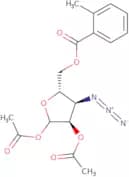
CAS :<p>1,2-Di-O-acetyl-3-azido-3-deoxy-5-O-toluoyl-D-ribofuranose is a synthetic sugar that can be modified to produce oligosaccharides or polysaccharides. It has a CAS number of 120143-22-8 and is composed of a sugar molecule with an acetyl group on the 2' position and toluene sulfonyl group on the 3' position. This modification can be used for glycosylation or methylation reactions. 1,2-Di-O-acetyl -3,4,6,-triaminopyrimidine is also known as fluorinated ribofuranose.</p>Formule :C17H19N3O7Degré de pureté :Min. 95%Masse moléculaire :377.35 g/molMethyl β-D-maltopyranoside
CAS :<p>Methyl β-D-maltopyranoside is a disaccharide that is an aglycon of maltosides. It has been shown to bind to the active site of alpha-d-glucopyranosidases, which are enzymes that hydrolyze alpha-d-glucopyranosides. Methyl β-D-maltopyranoside has also been shown to interact with dihedral angles and hydroxyl groups in the enzyme binding region, which may be due to conformational changes in the enzyme's active site. The kinetic constants for methyl β-D-maltopyranoside have been calculated by using an algorithm.</p>Formule :C13H24O11Degré de pureté :(%) Min. 98%Couleur et forme :PowderMasse moléculaire :356.32 g/mol4-Pentenyl 3,6-di-O-benzyl-a-D-mannopyranoside
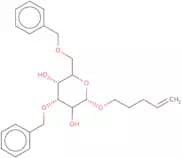
CAS :<p>4-Pentenyl 3,6-di-O-benzyl-a-D-mannopyranoside is a synthetic oligosaccharide containing a single monosaccharide. It is fluorinated at the C4 position and methylated at the C6 position. This product is available for custom synthesis and modification to meet specific customer needs. It has not been evaluated by the FDA and should be used only in research settings.</p>Formule :C25H32O6Degré de pureté :Min. 95%Masse moléculaire :428.52 g/molN-Acetyl-D-glucosamine
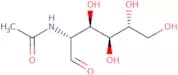
CAS :<p>N-acetyl D-glucosamine (GlcNAc) is an aldohexose (2-acetamido-2-deoxyglucose) in which the hydroxyl group at position 2 is replaced by NHAc (Collins, 2006). N-acetyl D-glucosamine forms the exoskeletons of molluscs and insects as the building block of the polysaccharide chitin (Rudrapatnam, 2003). N-acetyl D-glucosamine is a key component of N- and O-linked glycans, present in glycolipids and the glycosaminoglycan hyaluronic acid (Fallacara, 2018). A recent study has suggested that N-acetyl D-glucosamine may have therapeutic potential for COVID-19 as it affects the spike protein-ACE2 receptor interaction during the infection with SARS-CoV-2 virus (Baysal, 2021).</p>Formule :C8H15NO6Degré de pureté :Min. 98 Area-%Couleur et forme :PowderMasse moléculaire :221.21 g/mol4-Methoxyphenyl 2-azido-4,6-O-benzylidene-2-deoxy-β-D-glucopyranoside
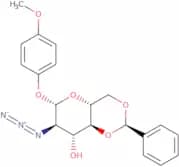
CAS :<p>The objective of this study is to investigate the efficacy of 4-methoxyphenyl 2-azido-4,6-O-benzylidene-2-deoxy-b-D-glucopyranoside (MPAB) as a vaccine adjuvant for the prevention of esophageal candidiasis. MPAB was shown to induce antigen specific immune responses in vitro and in vivo. In addition, MPAB enhanced the protective efficacy of Covid® 19 pandemic influenza vaccine against gastrointestinal infection by Candida albicans. The results from this study provide proof of concept that MPAB can be used as a vaccine adjuvant for the prevention of esophageal candidiasis.</p>Formule :C20H21N3O6Degré de pureté :Min. 95%Couleur et forme :PowderMasse moléculaire :399.41 g/mol6-Phosphogluconic acid, trisodium salt dihydrate
CAS :<p>6-Phosphogluconic acid, trisodium salt dihydrate is a custom synthesis that has been made to order. It is a complex carbohydrate that can be modified with methylation, glycosylation and other modifications. 6-Phosphogluconic acid, trisodium salt dihydrate is an Oligosaccharide and Polysaccharide of Modification saccharides. It can be made as an Methylated Glycosylated Carbohydrate or a Click Modified Sugar. It can be Fluorinated or Synthetically made for high purity.</p>Formule :C6H14Na3O12PMasse moléculaire :378.11 g/mola-D-Arabinopyranosyl azide
CAS :<p>a-D-Arabinopyranosyl azide is a new modified sugar that has been synthesized by the Click chemistry method. It is a complex carbohydrate with different substituents at the C2, C4, and C6 positions. This compound can be used for methylation, saccharide, polysaccharide, glycosylation or other custom synthesis. The CAS No. for this product is 138892-04-3, and it has a purity of >99%.</p>Formule :C5H9N3O4Degré de pureté :Min. 95%Masse moléculaire :175.14 g/mol2-Iodoethyl 2,3,4,6-tetra-O-acetyl-α-D-mannopyranoside
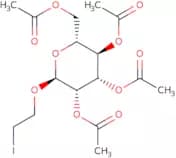
CAS :<p>2-Iodoethyl 2,3,4,6-tetra-O-acetyl-a-D-mannopyranoside is a high purity custom synthesis that can be modified with Click chemistry. It can be synthesized by modification of methylated glycosides and saccharides. This product has been shown to have a wide range of applications in the areas of fluorination, glycosylation, and methylation. The sugar moiety is an oligosaccharide made up of one or more monosaccharides (simple sugars) joined together by glycosidic bonds. This product is often found in complex carbohydrates such as glycogen and starch.</p>Formule :C16H23IO10Degré de pureté :Min. 95%Couleur et forme :White to off-white solid.Masse moléculaire :502.25 g/molGDP-D-glucose sodium salt
CAS :<p>Substrate for glucosyltransferase</p>Formule :C16H25N5O16P2·2NaDegré de pureté :Min. 95 Area-%Couleur et forme :White Off-White PowderMasse moléculaire :651.34 g/molN-Acetyl-L-lyxosamine
<p>N-Acetyl-L-lyxosamine is a glycosylation that is used in the synthesis of complex carbohydrates. It can be modified with methyl groups, fluorine atoms, and other substances to produce desired products. N-Acetyl-L-lyxosamine can be used in the synthesis of saccharides such as oligosaccharides and polysaccharides. It is also used in the modification of sugars and monosaccharides. This compound has been synthesized from various sources, including natural glycerol or plant oils. The purity of this chemical is greater than 99%.</p>Formule :C7H13NO5Degré de pureté :Min. 95%Masse moléculaire :191.18 g/mol6-O-Malonylglycitin
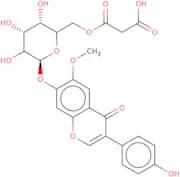
CAS :<p>6-O-Malonylglycitin is a glycosylated flavonoid that belongs to the group of isoflavones. It is found in a variety of plants, including soybeans and fava beans. 6-O-Malonylglycitin has been shown to be an effective inhibitor of β-glucosidase activity at temperatures below 37°C, which overlaps with the range of temperatures where it inhibits glycitein production. This inhibition may be due to its pleiotropic effects on various treatments, such as its ability to inhibit cancer cell growth by inhibiting protein synthesis and inducing apoptosis. 6-O-Malonylglycitin also has synergistic effects when used concomitantly with chromatographic markers, such as high performance liquid chromatography (HPLC), which can be used to analyze the levels of endogenous compounds in human blood samples.</p>Formule :C25H24O13Degré de pureté :Min. 95%Couleur et forme :PowderMasse moléculaire :532.45 g/mol2,3,4,6-Tetra-O-acetyl-a-D-glucopyranosyl trichloroacetimidate
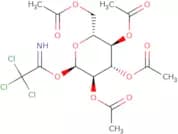
CAS :<p>2,3,4,6-Tetra-O-acetyl-a-D-glucopyranosyl trichloroacetimidate (2TG) is a mannose targeting agent that can be used to target specific cells in the body. This compound has been shown to inhibit the growth of cancer cells and induce photodynamic therapy. 2TG is a conjugate that consists of a 6-phosphate group attached to an acetylated mannose molecule. The 6-phosphate group is an important feature for tumor targeting, as it allows for the attachment of other molecules such as monoclonal antibodies and drugs. 2TG functions by binding with high affinity to glycoproteins on the surface of cancer cells and animal tissues. These glycoproteins are found in large quantities on the surface of cancer cells and animal tissue, which makes them good targets for anti-cancer drug development.</p>Formule :C16H20Cl3NO10Degré de pureté :Min. 95%Couleur et forme :PowderMasse moléculaire :492.69 g/molIsosorbide dinitrate - 60% lactose and 40% Isosorbide dinitrate
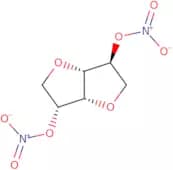
CAS :<p>Isosorbide dinitrate is used to treat chronic bronchitis and congestive heart failure. It dilates blood vessels, allowing more oxygen-rich blood to reach the heart. Isosorbide dinitrate is also used to relieve chest pain (angina) and reduce complications after a heart attack. Isosorbide dinitrate is a prodrug that is converted in vivo to its active form, isosorbide mononitrate, by the enzyme nitric oxide synthase in response to hypoxia. In addition, it has been shown that this drug reduces levels of low-density lipoprotein cholesterol (LDL-C) and may be useful for the treatment of high cholesterol.<br>The mechanism of action for reducing LDL-C levels is not known but may be due to increased clearance of LDL-C from plasma or decreased production of very low density lipoproteins (VLDL). This medication does not affect triglycerides or high density lip</p>Formule :C6H8N2O8Degré de pureté :Min. 95%Couleur et forme :White PowderMasse moléculaire :236.14 g/mol4-O-Benzyl-D-mannose
<p>4-O-Benzyl-D-mannose is a high purity, custom synthesis sugar with Click modification, fluorination and glycosylation. The CAS No. for this compound is 108611-67-0. 4-O-Benzyl-D-mannose is an oligosaccharide monosaccharide saccharide carbohydrate complex carbohydrate with the chemical formula C5H6O5 that has a molecular weight of 174.11 g/mol. This compound can be used to synthesize polysaccharides, which are carbohydrates that contain more than ten monosaccharides and are found in plant cell walls and other biological polymers such as chitin, cellulose, and glycogen. 4-O-Benzyl-D-mannose is also used in the synthesis of saccharides that are found in glycoproteins or proteoglycans.</p>Formule :C13H18O6Degré de pureté :Min. 95%Masse moléculaire :270.28 g/mol2,5-Anhydro-1-O-trityl-D-mannitol
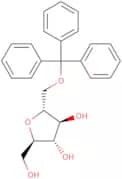
CAS :<p>2,5-Anhydro-1-O-trityl-D-mannitol is a complex carbohydrate with the molecular formula C6H14O6 that has been modified for use in glycosylation reactions. It is a type of sugar that can be modified to create desired properties and can be used as an alternative to other sugars such as glucose. 2,5-Anhydro-1-O-trityl-D-mannitol can be used in the synthesis of oligosaccharides and monosaccharides. This product is available in high purity and has a CAS number of 68774-48-1.</p>Formule :C25H26O5Degré de pureté :Min. 95%Masse moléculaire :406.48 g/mol1,5-Anhydro-2,3,4-tri-O-benzoyl-D-threo-pent-1-enitol
CAS :<p>1,5-Anhydro-2,3,4-tri-O-benzoyl-D-threo-pent-1-enitol is a high purity compound that is synthesized from D-threo pent 1 enitol. It is a sugar that belongs to the category of complex carbohydrates. This product can be custom synthesized and modified according to customer requirements.</p>Formule :C26H207Degré de pureté :Min. 95%Couleur et forme :PowderMasse moléculaire :444.43 g/mol2-Keto-L-galactonic acid
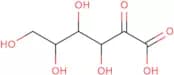
CAS :<p>2-Keto-L-galactonic acid is a chemical compound that belongs to the group of fatty acids. It is produced by the degradation of polyunsaturated fatty acids and has been shown to be a potential control agent for hepatic steatosis. 2-Keto-L-galactonic acid also inhibits the synthesis of dinucleotide phosphate in rat liver cells, leading to an accumulation of intracellular potassium ion. This compound inhibits the uptake of glucose by activating ATPase, which leads to an increase in intracellular pH. The uptake of 2-keto-L-galactonic acid into cells has been shown using cell culture experiments with wild type and mutant strains.</p>Formule :C6H10O7Degré de pureté :Min. 95%Masse moléculaire :194.14 g/mol1,6-Anhydro-b-D-galactopyranose
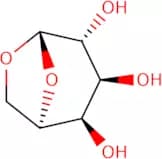
CAS :<p>Used for preparation of biologically active compounds</p>Formule :C6H10O5Degré de pureté :Min. 97 Area-%Couleur et forme :White Off-White PowderMasse moléculaire :162.14 g/molPolysucrose 400
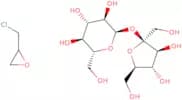
CAS :<p>Water-soluble, nontoxic, enzyme-resistant polymer for biological applications</p>Couleur et forme :White PowderMasse moléculaire :400.0








![(1S) -1- [(2S, 3S,4R) -4-Hydroxymethyl-3- hydroxy-1- azetidinyl] -1, 2- ethanediol hydrochloride](/_next/image/?url=https%3A%2Fstatic.cymitquimica.com%2Fproducts%2F3D%2Fthumb-webp%2FMH163375.webp&w=3840&q=75)