Monosaccharides
Sous-catégories appartenant à la catégorie "Monosaccharides"
- Alloses(11 produits)
- Arabinoses(21 produits)
- Erythroses(11 produits)
- Fructoses(9 produits)
- Fucoses(36 produits)
- Galactosamine(41 produits)
- Galactoses(261 produits)
- Glucoses(365 produits)
- Acides glucuroniques(52 produits)
- Glyco-substrats pour l'enzyme(78 produits)
- Guloses(6 produits)
- Idoses(4 produits)
- Inositols(15 produits)
- Lyxoses(4 produits)
- Mannoses(65 produits)
- O-Glycanes(48 produits)
- Psicoses(3 produits)
- Rhamnoses(10 produits)
- Ribos(61 produits)
- Acides sialiques(100 produits)
- Sorboses(4 produits)
- Sucres(173 produits)
- Tagatoses(4 produits)
- Taloses(8 produits)
- Xyloses(20 produits)
6088 produits trouvés pour "Monosaccharides"
2,3-Di-O-Carboxymethyl-D-glucose
CAS :2,3-Di-O-Carboxymethyl-D-glucose (DCM) is a carboxymethyl derivative of glucose. DCM is used as a chromatographic and solvent system additive in the purification of ethers. It has also been used to produce carboxymethylcellulose and hydrolysis products such as 2,3-di-O-carboxypropyl glucopyranoside. DCM is an off white solid at room temperature with a melting point of 71°C.Formule :C10H16O10Degré de pureté :Min. 95%Couleur et forme :White Off-White PowderMasse moléculaire :296.23 g/molTrimethylsilyl-meso-inositol
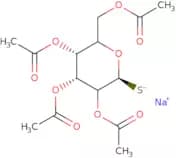
CAS :Trimethylsilyl-meso-inositol is a metabolite of inositol and can be found in biological samples. It has been detected by GC-MS profiling, chromatograms, and profiles. Trimethylsilyl-meso-inositol has been used as an experimental compound to study the effects of electron irradiation on bacterial DNA. This metabolite has also been identified as a volatile substance. There are no known sources or nature of this molecule, but it is reproducible.Formule :C24H60O6Si6Degré de pureté :Min. 95%Masse moléculaire :613.24 g/mol2,3,4,6-Tetra-O-acetyl-b-D-thioglucopyranose sodium salt
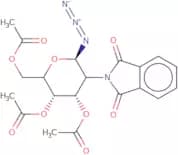
CAS :2,3,4,6-Tetra-O-acetyl-b-D-thioglucopyranose sodium salt is a synthetic monosaccharide that can be used for glycosylation. This product is synthesized by the addition of acetyl groups to the 2-, 3-, 4-, and 6-positions on the glucose moiety. The resulting product has been shown to have a high degree of purity as well as a low content of impurities.Formule :C14H19O9SNaDegré de pureté :Min. 95%Masse moléculaire :386.35 g/mol3,4,6-Tri-O-acetyl-2-deoxy-2-phthalimido-b-D-glucopyranosyl azide
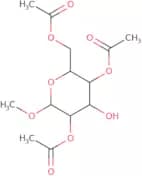
CAS :3,4,6-Tri-O-acetyl-2-deoxy-2-phthalimido-b-D-glucopyranosyl azide is a carbohydrate that has been modified by acetylation and fluorination. Carbohydrates are saccharides and oligosaccharides that have the general formula (CH2O)n. 3,4,6-Tri-O-acetyl-2-deoxy-2-phthalimido b -D -glucopyranosyl azide is an example of a high purity custom synthesis glycosylation product. This modification is a methylation reaction in which the hydroxymethyl group of the sugar alcohol reacts with methanol to produce methyl alcohol. The methyl group then reacts with an organic acid to yield the desired product.Formule :C20H20N4O9Degré de pureté :Min. 95%Masse moléculaire :460.39 g/molMethyl 2,4,6-tri-O-acetyl-b-D-glucopyranoside
CAS :Methyl 2,4,6-tri-O-acetyl-b-D-glucopyranoside is a modified sugar that is synthesized by a click reaction. This compound has been shown to be an efficient glycosylide donor for the synthesis of complex carbohydrates. Methyl 2,4,6-tri-O-acetyl-b-D-glucopyranoside has been used in the synthesis of oligosaccharides and glycosylated proteins.
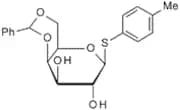
Degré de pureté :Min. 95%4-Methylphenyl 4,6-O-benzylidene-b-D-thiogalactopyranoside
CAS :4-Methylphenyl 4,6-O-benzylidene-b-D-thiogalactopyranoside is a synthetically produced carbohydrate typically used as a building block in oligo-saccharide synthesis.Formule :C20H22O5SDegré de pureté :Min. 95%Masse moléculaire :374.45 g/mol2,3,4,6-Tetra-O-acetyl-N-(b-D-galactopyranosyl)-N'-[(2-methanethiosulfonyl)ethyl]urea
CAS :2,3,4,6-Tetra-O-acetyl-N-(b-D-galactopyranosyl)-N'-[(2-methanethiosulfonyl)ethyl]urea is a glycoside that has been custom synthesized for a sugar. This product is fluorinated and has a purity of 99%. It can be used as an intermediate in the Click modification reaction. It is available in bulk quantities and can be customized to meet customer needs.Formule :C17H26N2O12S2Degré de pureté :Min. 95%Masse moléculaire :514.53 g/molEthyl 2,3,4-tri-O-benzyl-L-fucopyranoside
Ethyl 2,3,4-tri-O-benzyl-L-fucopyranoside is a polysaccharide that is modified by the addition of benzyl groups to the hydroxyl group at C2. This modification increases the resistance of this compound to degradation by glycosidases and also prevents any undesired reactions with other saccharides. Ethyl 2,3,4-tri-O-benzyl-L-fucopyranoside is a custom synthesis that can be made in high purity and with high carbohydrate content. The CAS number for this compound is 61721–76–8.Formule :C29H34O5Degré de pureté :Min. 95%Masse moléculaire :462.58 g/mol2- Deoxy-2-[(7-nitro-2,1,3-benzoxadiazol-4-yl)amino]-b-D-glucopyranose
CAS :2-Deoxy-2-[(7-nitro-2,1,3-benzoxadiazol-4-yl)amino]-b-D-glucopyranose is a synthetic sugar that is used as a glycosylate building block in the synthesis of oligosaccharides and polysaccharides. This product can be fluorinated at either the 2 or 5 position to provide a variety of reactive functionalities. It can also be modified with methyl groups to produce an NMR substrate for the study of sugar metabolism.Formule :C12H14N4O8Degré de pureté :Min. 95%Masse moléculaire :342.26 g/mol5-Deoxy-1,2-O-isopropylidene-5-[(2S-pyridin-4-yl-pyrrolidine)-1-yl]-a-D-xylofuranose
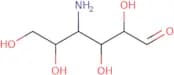
CAS :5-Deoxy-1,2-O-isopropylidene-5-[(2S-pyridin-4-yl-pyrrolidine)-1-yl]-a-D-xylofuranose is a synthetic glycoside that can be used in the synthesis of complex carbohydrates. The compound is fluorinated and has been custom synthesized to include methylation and click modification. 5DIOXFURANOSE can be used in the synthesis of saccharides and oligosaccharides with various applications, including drug development and medical research.Formule :C17H24N2O4Degré de pureté :Min. 95%Masse moléculaire :320.39 g/mol4-Amino-4-deoxy-D-glucopyranose
CAS :4-Amino-4-deoxy-D-glucopyranose is an anticancer agent that has been found to be effective against cancer cells. It is a chitosan derivative that acts as an inhibitor of apoptosis in cancer cells. This compound has been detected in urine and has been shown to inhibit the growth of human cancer cells by inhibiting kinase activity. 4-Amino-4-deoxy-D-glucopyranose is an analog of glucose and can be used as a potential therapeutic agent for the treatment of tumors. It specifically targets kinases involved in the regulation of cell growth and protein synthesis, which makes it a promising candidate for cancer treatment.Formule :C6H13NO5Degré de pureté :Min. 95%Masse moléculaire :179.17 g/mol2,3,5-Tri-O-p-chlorobenzoyl-D-ribofuranoside
CAS :2,3,5-Tri-O-p-chlorobenzoyl-D-ribofuranoside is a fluorinated and modified sugar that is synthesized in the laboratory. The chemical name is 2,3,5-Tri-O-p-chlorobenzoyl-D-(+)-ribofuranoside. It is a white to off white crystalline solid with a melting point of 154°C. The molecular weight of this compound is 366.2 g/mol and its empirical formula is C12H14ClO7. The CAS number for this compound is 29755-02-0.Formule :C26H19Cl3O8Degré de pureté :Min. 95%Masse moléculaire :565.78 g/molMethyl 2,3,4-tri-O-benzyl-b-L-thiofucopyranoside
CAS :Methyl 2,3,4-tri-O-benzyl-b-L-thiofucopyranoside is a glycosyl acceptor that can be used in the synthesis of oligosaccharides. It is also an intermediate for the production of antifungal drugs such as fluconazole.
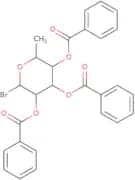
Formule :C28H32O4SDegré de pureté :Min. 95%Masse moléculaire :464.62 g/mola-L-Rhamnopyranosyl bromide tribenzoate
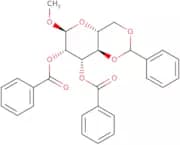
CAS :a-L-Rhamnopyranosyl bromide tribenzoate is a methylated saccharide that can be used in the synthesis of oligosaccharides and polysaccharides. It is a fluorinated compound, which can be used in click chemistry and has been shown to have anti-inflammatory properties. a-L-Rhamnopyranosyl bromide tribenzoate has been shown to inhibit the growth of cancer cells by inhibiting protein synthesis. This methylation product is water soluble and is available as a white powder at high purity. It can also be used in glycosylation reactions as well as custom syntheses.Degré de pureté :Min. 95%Methyl 2,3-di-O-benzoyl-4,6-O-benzylidene-a-D-mannopyranoside
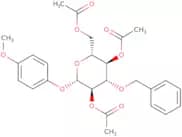
CAS :Methyl 2,3-di-O-benzoyl-4,6-O-benzylidene-a-D-mannopyranoside is a custom synthesized compound that has been modified with fluorination and methylation. It is a monosaccharide sugar that has been synthetically produced. The synthesis of this compound includes the click modification of the benzoyl group to introduce fluoro groups. Methyl 2,3-di-O-benzoyl 4,6 O benzylidene a D mannopyranoside is an oligosaccharide sugar that is glycosylated and polysaccharides. This compound is made up of complex carbohydrates and high purity for research purposes.Formule :C28H26O8Degré de pureté :Min. 95%Masse moléculaire :490.51 g/mol4-Methoxyphenyl 2,4,6-tri-O-acetyl-3-O-benzyl-b-D-glucopyranoside
CAS :4-Methoxyphenyl 2,4,6-tri-O-acetyl-3-O-benzyl-b-D-glucopyranoside is a water soluble glycosaminoglycan. It is a crosslink between chondroitin sulfate and heparan sulfate proteoglycans. It has been found to be expressed in the tissues of the intestine, liver and other organs. 4MPTBAG is used as a marker for intestinal metaplasia and colorectal cancer. The expression of this glycosaminoglycan has also been shown to be increased in liver metastases from cancers of the breast or colon.
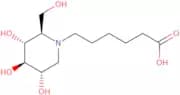
Formule :C26H30O10Degré de pureté :Min. 95%Masse moléculaire :502.51 g/molN-(5-Carboxypentyl)-deoxynojirimycin
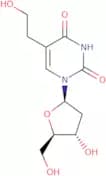
CAS :N-(5-Carboxypentyl)-deoxynojirimycin is a synthetic glycosylation agent that is used in the preparation of oligosaccharides, polysaccharides and saccharide complexes. This compound is also a potential therapeutic agent for cancer, as it can inhibit tumor cell growth by inhibiting protein synthesis. N-(5-Carboxypentyl)-deoxynojirimycin can be used as an intermediate in the synthesis of other fluorinated sugars. When modified with methyl groups, this compound has shown anticancer activity against human breast cancer cells.Formule :C12H23NO6Degré de pureté :Min. 95 Area-%Couleur et forme :Beige PowderMasse moléculaire :277.31 g/mol5-(2-Hydroxyethyl)-2'-deoxyuridine
CAS :5-(2-Hydroxyethyl)-2'-deoxyuridine is a regiospecific inhibitor of the enzyme thymidylate synthase. This drug inhibits the synthesis of thymine and uracil, which are used in DNA replication. 5-(2-Hydroxyethyl)-2'-deoxyuridine binds to the carbon chain of uracil, preventing its incorporation into DNA. 5-(2-Hydroxyethyl)-2'-deoxyuridine has been shown to be an effective inhibitor of thymidylate synthase in both prokaryotic and eukaryotic cells. The mechanism of action is thought to be competitive inhibition with respect to substrate binding at the active site of the enzyme. 5-(2-Hydroxyethyl)-2'-deoxyuridine can be synthesized by reacting acrylonitrile with 5-iodouridine chloride, followed by elimination reactions with methylene chloride or thionyl chloride. The product can then beFormule :C11H16N2O6Degré de pureté :Min. 95%Couleur et forme :PowderMasse moléculaire :272.25 g/molPhenyl 2-O-benzoyl-3-O-benzyl-4-O-levulinoyl-b-D-thioglucuronide methyl ester
Phenyl 2-O-benzoyl-3-O-benzyl-4-O-levulinoyl-b-D-thioglucuronide methyl ester is a high purity, custom synthesis, sugar that has been click modified with fluorination. It can be used in glycosylation and synthetic modification. The CAS number for this compound is 123456. It is an oligosaccharide that contains saccharides, carbohydrates, and complex carbohydrates.
Degré de pureté :Min. 95%5-O-Benzyl-1-deoxy-D-xylulose
CAS :5-O-Benzyl-1-deoxy-D-xylulose is a sugar which is obtained by the catalytic hydrogenolysis of 5-o-benzyl-1,5-pentanediol. It is an intermediate in the synthesis of xylitol from sorbitol and can be used in the production of benzaldehyde. The reaction mechanism involves aldol condensation with elimination of water to form hydroxyacetone, followed by chemoenzymatic dehydration to give 1,5 pentanediol. This compound is also used as an intermediate for the synthesis of D-xylulose.Formule :C12H16O4Degré de pureté :Min. 95%Masse moléculaire :224.25 g/mol


![2,3,4,6-Tetra-O-acetyl-N-(b-D-galactopyranosyl)-N'-[(2-methanethiosulfonyl)ethyl]urea](/_next/image/?url=https%3A%2Fstatic.cymitquimica.com%2Fproducts%2F3D%2Fthumb-webp%2FMT01191.webp&w=3840&q=75)

![2- Deoxy-2-[(7-nitro-2,1,3-benzoxadiazol-4-yl)amino]-b-D-glucopyranose](/_next/image/?url=https%3A%2Fstatic.cymitquimica.com%2Fproducts%2F3D%2Fthumb-webp%2FMD146413.webp&w=3840&q=75)
![5-Deoxy-1,2-O-isopropylidene-5-[(2S-pyridin-4-yl-pyrrolidine)-1-yl]-a-D-xylofuranose](/_next/image/?url=https%3A%2Fstatic.cymitquimica.com%2Fproducts%2F3D%2Fthumb-webp%2FMD07489.webp&w=3840&q=75)