Monosaccharides
Sous-catégories appartenant à la catégorie "Monosaccharides"
- Alloses(11 produits)
- Arabinoses(21 produits)
- Erythroses(11 produits)
- Fructoses(9 produits)
- Fucoses(36 produits)
- Galactosamine(41 produits)
- Galactoses(261 produits)
- Glucoses(365 produits)
- Acides glucuroniques(52 produits)
- Glyco-substrats pour l'enzyme(78 produits)
- Guloses(6 produits)
- Idoses(4 produits)
- Inositols(15 produits)
- Lyxoses(4 produits)
- Mannoses(65 produits)
- O-Glycanes(48 produits)
- Psicoses(3 produits)
- Rhamnoses(10 produits)
- Ribos(61 produits)
- Acides sialiques(100 produits)
- Sorboses(4 produits)
- Sucres(173 produits)
- Tagatoses(4 produits)
- Taloses(8 produits)
- Xyloses(20 produits)
6088 produits trouvés pour "Monosaccharides"
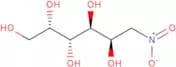
1-Deoxy-1-nitro-L-galactitol
CAS :1-Deoxy-1-nitro-L-galactitol is a compound that has been shown to inhibit serine protease and glutaminyl cyclase activity. It is commonly used in laboratory settings as a potassium substitute in media formulations. This compound belongs to the class of monosaccharides known as glutaminyl derivatives. It has been studied for its potential as an inhibitor of nafamostat, a serine protease inhibitor used in the treatment of pancreatitis and disseminated intravascular coagulation (DIC). Additionally, 1-Deoxy-1-nitro-L-galactitol has been investigated for its potential as a disinfectant and as an adrenergic receptor agonist. Preliminary studies have also suggested antiviral properties against certain viruses. Further research is needed to fully understand the potential applications of this compound.
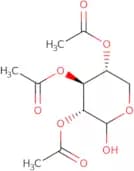
Formule :C6H13NO7Degré de pureté :Min. 95%Masse moléculaire :211.17 g/mol2,3,4-Tri-O-acetyl-D-xylopyranose
CAS :2,3,4-Tri-O-acetyl-D-xylopyranose is a lactide sugar that is found in the cell walls of many plants. It is synthesized from D-xylose by enzymatic condensation with acetylated L-malic acid and has been shown to be biodegradable. 2,3,4-Tri-O-acetyl-D-xylopyranose has been shown to have physical properties that are similar to those of cellulose, such as crystallization and solubility in water. The compound also has an NMR spectrum that contains peaks at δ = 0.8 (triplet), 1.1 (singlet) and 1.5 ppm (doublet). The hydrophobic group on the molecule is thought to contribute to its hydrophilicity.Formule :C11H16O8Degré de pureté :Min. 95%Masse moléculaire :276.24 g/mol9,10-Dimethoxy-pterocarpane-3-O-b-D-glucoside
9,10-Dimethoxy-pterocarpane-3-O-b-D-glucoside is a custom synthesis that is a polysaccharide with a complex carbohydrate structure. The chemical name for this compound is 9,10-dimethoxy-pterocarpane-3-O-[4′″-(1″″′′)-b′″'-D-glucopyranosyl]-3′′′,4′″’,6′"’] bibenzyl. This compound has been modified by methylation and glycosylation. It can be used in the treatment of cancer and diabetes due to its high purity and fluorination. 9,10-Dimethoxy pterocarpane 3β O glucoside is a sugar or saccharide that can be found in plants such as the roots of tobacco plants. The modification of this sugar by methylation and glycosylation makes it more
Degré de pureté :Min. 95%2,3,6-Tri-O-carboxymethyl-D-glucose
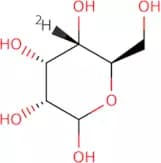
CAS :2,3,6-Tri-O-carboxymethyl-D-glucose (TCMG) is a potent polyelectrolyte that can be used as an additive to cellulose. TCMG is synthesized by the reaction of 2,3,6-tri-O-carboxymethylcellulose with potassium bitartrate in acidic medium. TCMG has been shown to interact with cellulose and form a gel matrix. This reaction is due to the ionic interactions between the carboxyl groups in TCMG and the hydroxyl groups in cellulose. The conductimetric titration measurement shows that TCMGs have a constant value at pH 5.5, indicating that they are anionic polyelectrolytes. Potentiometric titration indicates that TCMGs are nonionic polyelectrolytes and the interaction between these two polymers is due to electrostatic forces.Formule :C12H18O12Degré de pureté :Min. 95%Couleur et forme :White To Off-White SolidMasse moléculaire :354.26 g/molD-Glucose-4-D
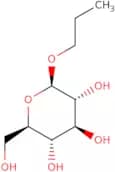
CAS :Produit contrôléD-Glucose-4-D is a deuterated form of glucose. It is a halophilic sugar that is used in the biosynthesis of lipids. D-Glucose-4-D can be synthesized chemically or by isotope effect by using d-glucose as the starting material. This compound can be used to study lipid synthesis and lipid metabolism in bacteria, such as E. coli, because it has been shown to inhibit the enzyme glycerol dehydratase, which catalyzes the conversion of glycerol to dihydroxyacetone phosphate, an intermediate in lipid biosynthesis. D-Glucose-4-D also inhibits the enzyme phosphatidate phosphohydrolase, which converts phosphatidic acid to diacylglycerol. These compounds are important for membrane lipid formation and are involved in cellular signalling pathways.Formule :C6H11DO6Degré de pureté :Min. 95%Masse moléculaire :181.16 g/molPropylbeta-D-glucopyranoside
CAS :Propylbeta-D-glucopyranoside is a sugar transport inhibitor that is used to inhibit bacterial growth. It has been shown to bind to the glucose transporter and quench tryptophan fluorescence in plant cells. This active form of Propylbeta-D-glucopyranoside also inhibits bacterial growth by binding to fatty acid esters and cytochalasin, modifiers of cell membrane permeability, which inhibit the synthesis of fatty acids. Microcapsules containing this drug have been shown to be effective against staphylococci and other bacteria. The activity of Propylbeta-D-glucopyranoside can be increased by hydrochloric acid or sodium hydroxide, which increase the solubility of its salts.
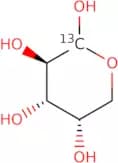
Formule :C9H18O6Degré de pureté :Min. 95%Masse moléculaire :222.24 g/mol1-13C-L-Arabinose
CAS :1-13C-L-Arabinose is a metabolite of the sugar, L-arabinose. This compound is formed by escherichia bacteria and can be found in the urine of mice. 1-13C-L-Arabinose has been shown to inhibit the growth of escherichia coli and has a six membered ring structure.Formule :CC4H10O5Degré de pureté :Min. 95%Couleur et forme :White PowderMasse moléculaire :151.13 g/molGlycerone phosphate lithium salt
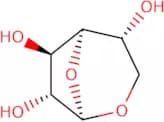
CAS :Glycerone phosphate lithium salt is a reactive molecule that serves as an intermediate in the synthesis of rapamycin, a complex of glycerone phosphate and rapamycin. Glycerone phosphate lithium salt is used to detect the presence of glutamate dehydrogenase and to purify monoclonal antibodies. Glycerone phosphate lithium salt has been shown to react with platinum-based chemotherapy, which may be due to its ability to bind to active sites on cancer cells. This molecule also has been shown to reduce high cholesterol levels in mice and inhibit skin cancer tumor growth. Glycerone phosphate lithium salt's physiological effects have not been fully determined, but it may have some anticancer activity.Formule :C3H7O6P·xLiDegré de pureté :Min. 95%Masse moléculaire :170.06 g/mol1,6-Anhydro-b-D-glucofuranose
CAS :B-D-glucofuranose is a natural compound with the molecular formula C6H12O6. It is found in plants, specifically in the seeds of the granatum tree. The calibration of this compound can be done using anions and ion chromatography. B-D-glucofuranose has antibacterial activity against Gram-positive bacteria, but not against Gram-negative bacteria or fungi. It also inhibits fatty acid synthesis and may have nutritional value for humans as a source of 5-hydroxymethylfurfural (HMF). HMF has been shown to inhibit the growth of cancer cells in vitro and induce apoptosis in cancer cells by uv irradiation. Mass spectrometric analysis and spectrometric methods are used to identify this compound.Formule :C6H10O5Degré de pureté :Min. 95%Couleur et forme :White PowderMasse moléculaire :162.14 g/mol4-Deoxy-4-fluoro-D-galactopyranose
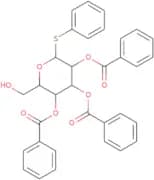
CAS :4-Deoxy-4-fluoro-D-galactopyranose is a custom synthesis that is an oligosaccharide, polysaccharide, saccharide, and carbohydrate. It is fluorinated with a methyl group on the 4th carbon atom and has been modified to include a fluoro group at the 4th position of the molecule. 4-Deoxy-4-fluoro-D-galactopyranose can be used in research as it is high purity and has been modified into a monosaccharide sugar.Degré de pureté :Min. 95%Phenyl 2,3,4-tri-O-benzoyl-b-D-thiogalactopyranoside
CAS :Phenyl 2,3,4-tri-O-benzoyl-b-D-thiogalactopyranoside is a methylation product of b-D-thiogalactopyranoside. It has CAS No. 139608-11-0 and a molecular weight of 536.2. This compound is an Oligosaccharide with a molecular formula of C8H8O7 and a molecular weight of 432.1. Phenyl 2,3,4-tri-O-benzoyl-b-D-thiogalactopyranoside is also known as Methyl 3,4-(Benzoyloxy)galactoside or Methyl 3,4-(Benzoic acid)galactoside. This compound is soluble in water and ethanol and has the appearance of a white to off white powder at room temperature.Degré de pureté :Min. 95%Colitose
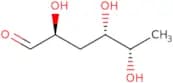
CAS :Colitose is a sugar that has antimicrobial properties. It is a monosaccharide, which means it contains six carbon molecules. Colitose has been shown to inhibit bacterial growth and to prevent the development of resistant mutants in human serum. Colitose has also been shown to have therapeutic potential for infectious diseases such as bowel disease and other inflammatory bowel diseases. The structural analysis of colitose revealed that it contains terminal residues at the end of each chain, which are composed of glucose, galactose, and mannose. The glycan chains are linked together by alpha-1,6-glycosidic bonds. These terminal residues serve as a receptor for Toll-like receptors (TLRs), which are found on cells in the bowel wall and help regulate inflammation.
Formule :C6H12O4Degré de pureté :Min. 95%Couleur et forme :PowderMasse moléculaire :148.16 g/molα-D-Glucosamine 1-phosphate
CAS :α-D-Glucosamine 1-phosphate is a methylated and glycosylated carbohydrate that is synthesized from glucose. It can be used as a building block for the synthesis of polysaccharides, such as chitin and cellulose. α-D-Glucosamine 1-phosphate can also be modified by fluorination to produce an active form with potent anticancer activity.Formule :C6H14NO8PDegré de pureté :Min. 95%Masse moléculaire :259.15 g/molTopiramate dimer impurity
CAS :Topiramate dimer impurity is a Glycosylation, Oligosaccharide, sugar, Synthetic, Fluorination, Custom synthesis, Methylation, Monosaccharide that is custom synthesized and is available as a high purity and complex carbohydrate. It has a CAS No. 35405-70-0 and is available in Click modification. This product is used to modify polysaccharides or saccharides by click chemistry reactions.Formule :C24H39NO13SDegré de pureté :Min. 95%Masse moléculaire :581.63 g/molN-Valinyl-1-deoxy-D-glucitol
CAS :N-Valinyl-1-deoxy-D-glucitol is an inhibitor of protein glycosylation. It prevents the formation of N-glycans on proteins by inhibiting the addition of glucose from UDP-glucose to proteins. This leads to a reduction in the total carbohydrate content of cell membranes and other glycoconjugates. N-Valinyl-1-deoxy-D-glucitol has been shown to be useful for reducing blood sugar levels in diabetic patients, as well as decreasing serum concentrations of hemoglobins and serum albumin in these patients. The use of N-Valinyl-1-deoxy-D-glucitol has also been shown to reduce glycosylation of human albumin, leading to an increase in its solubility. This drug can be used as a control substance for antihuman IgG polyclonal antibody assays.Formule :C11H23NO7Degré de pureté :Min. 95%Masse moléculaire :281.3 g/molCaffeoyl L-arabinofuranoside
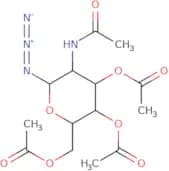
Caffeoyl L-arabinofuranoside is a methylated saccharide that has been modified with fluorine and is used as a synthetic sugar. It can be used in the synthesis of complex carbohydrates. Caffeoyl L-arabinofuranoside has CAS No. 748-04-6 and can be custom synthesized to your specifications. It is available in high purity at 98% or higher and can be synthesized with a variety of modifications, including Click modification, Modification, Oligosaccharide, Glycosylation, Carbohydrate, Synthetic, and Fluorination.Degré de pureté :Min. 95%Azido 2-acetamido-2-deoxy-3,4,6-tri-o-acetyl-β-D-galactopyranosyl
CAS :Azido 2-acetamido-2-deoxy-3,4,6-tri-O-acetyl-β-D-galactopyranosyl is a high purity and custom synthesis sugar. Azido 2-acetamido-2-deoxy-3,4,6-triO acetyl βD galactopyranosyl can be fluorinated, glycosylated, modified with methylation and other methods. It can also be used to synthesize oligosaccharides or monosaccharides. This carbohydrate is used in complex carbohydrates.Formule :C14H20N4O8Degré de pureté :Min. 95%Masse moléculaire :372.33 g/molD-Ribonolactone 2,3-cyclohexyl ketal
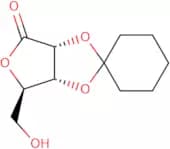
CAS :D-Ribonolactone 2,3-cyclohexyl ketal is a custom synthesis. It is a synthetic modification of the natural D-ribose sugar molecule. It has been modified by methylation and glycosylation to yield a complex carbohydrate with a high degree of purity. The fluorination process has been used to introduce fluorine atoms into the molecule.Formule :C11H16O5Degré de pureté :Min. 95%Masse moléculaire :228.24 g/molD-Glucaro-1,5-lactam potassium salt
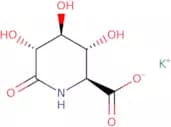
CAS :D-Glucaro-1,5-lactam potassium salt is a synthetic compound that can be used as a building block for the synthesis of glycosylated carbohydrates. It is fluorinated to prevent hydrolysis and methylated to protect against oxidation. This product is also suitable for click modification, polysaccharide synthesis, and glycosylation reactions. D-Glucaro-1,5-lactam potassium salt has CAS No. 53834-55-2 and can be custom synthesized in high purity.Formule :C6H9NO6·xKDegré de pureté :Min. 95%Couleur et forme :PowderMasse moléculaire :191.14 g/mol6-O-Benzoyl-3-O-triisopropylsilyl-D-galactal
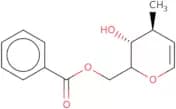
This is a synthetic sugar that can be custom synthesized based on the customer's specifications. 6-O-Benzoyl-3-O-triisopropylsilyl-D-galactal is a monosaccharide and an oligosaccharide that can be modified with a click modification, methylation, and glycosylation. It is a complex carbohydrate that has been shown to have anti-inflammatory properties. The glycosylation of this sugar can also be customized for specific purposes. This product has CAS number 132702-24-2 and is available at 95% purity or higher.Formule :C22H34O5SiDegré de pureté :Min. 95%Masse moléculaire :406.59 g/mol