Monosaccharides
Les monosaccharides sont la forme la plus simple des glucides et servent de building blocks fondamentaux pour les sucres plus complexes et les polysaccharides. Ces molécules de sucre unique jouent des rôles critiques dans le métabolisme énergétique, la communication cellulaire et les composants structuraux des cellules. Dans cette section, vous trouverez une large gamme de monosaccharides essentiels pour la recherche en biochimie, biologie moléculaire et glycosciences. Ces composés sont cruciaux pour étudier les voies métaboliques, les processus de glycosylation et le développement d'agents thérapeutiques. Chez CymitQuimica, nous proposons des monosaccharides de haute qualité pour répondre à vos besoins de recherche, garantissant précision et fiabilité dans vos investigations scientifiques.
Sous-catégories appartenant à la catégorie "Monosaccharides"
- Alloses(11 produits)
- Arabinoses(21 produits)
- Erythroses(11 produits)
- Fructoses(9 produits)
- Fucoses(36 produits)
- Galactosamine(41 produits)
- Galactoses(261 produits)
- Glucoses(365 produits)
- Acides glucuroniques(51 produits)
- Glyco-substrats pour l'enzyme(77 produits)
- Guloses(6 produits)
- Idoses(4 produits)
- Inositols(15 produits)
- Lyxoses(4 produits)
- Mannoses(65 produits)
- O-Glycanes(48 produits)
- Psicoses(3 produits)
- Rhamnoses(10 produits)
- Ribos(61 produits)
- Acides sialiques(100 produits)
- Sorboses(4 produits)
- Sucres(173 produits)
- Tagatoses(4 produits)
- Taloses(8 produits)
- Xyloses(20 produits)
Affichez 17 plus de sous-catégories
6090 produits trouvés pour "Monosaccharides"
Trier par
Degré de pureté (%)
0
100
|
0
|
50
|
90
|
95
|
100
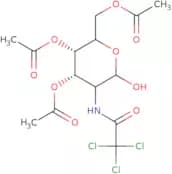
3,4,6-Tri-O-acetyl-2-deoxy-2-trichloroacetamido-D-glucopyranose
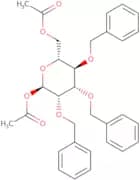
<p>3,4,6-Tri-O-acetyl-2-deoxy-2-trichloroacetamido-D-glucopyranose is an oligosaccharide that can be synthesized with a high purity. It is used as an intermediate in the synthesis of saccharides and complex carbohydrates. 3,4,6-Tri-O-acetyl-2-deoxy-2-trichloroacetamido-D-glucopyranose can also be fluorinated, glycosylated and methylated to generate new compounds. The CAS number for this compound is 4953–59–3. This compound is made up of three sugars: a hexose, a pentose and a triose. The carbohydrate that is produced from this compound has the following formula: C6H12O6 • H2O • O4CCH(OH)CH(OH)CH(OH)COO</p>Formule :C14H18Cl3NO9Degré de pureté :Min. 95%Masse moléculaire :450.66 g/mol1,6-Di-O-acetyl-2,3,4-tri-O-benzyl-α-D-mannopyranose
CAS :1,6-Di-O-acetyl-2,3,4-tri-O-benzyl-a-D-mannopyranose is a carbohydrate that has been synthetically prepared. The sugar was synthesized by the solid phase synthesis of an acetate derivative of 2,3,4-tri-O-benzylglucal and 1,6 diacetate benzil. The conformation of the sugar was determined from X-ray crystallography to be anomeric. The structure consists of a six membered ring with two oxygen atoms on opposite sides. This hexagonal ring is composed of four methylene groups and two oxygens. One oxygen atom is bonded to one carbon atom in the adjacent six membered ring with a single bond and the other oxygens are bonded to carbons in the adjacent six membered rings with double bonds. This results in three rings that are not fully interlocked as they have different degrees of freedomFormule :C31H34O8Degré de pureté :Min. 95%Masse moléculaire :534.6 g/molD-Fuculose
CAS :<p>D-Fuculose is a sugar that is used as a sweetener. It is produced by microbial fermentation of l-arabinose, which is an intermediate in the pentose phosphate pathway. D-Fuculose can be synthesized from glucose and fucose using enzymes such as sucrose isomerase or mutarotase. The conversion of glucose to D-fuculose proceeds at temperatures between 50 and 70 degrees Celsius, with optimal activity occurring at 60 degrees Celsius. D-Fuculose has been shown to have high catalytic activity and stability under acidic conditions, making it ideal for use as a food additive in acidic drinks or foods. It also has the highest sweetness intensity of all sugars tested to date.</p>Formule :C6H12O5Degré de pureté :Min. 95%Masse moléculaire :164.16 g/mol3,6-Dideoxy-L-arabino-hexose
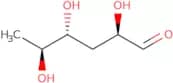
CAS :3,6-Dideoxy-L-arabino-hexose (3,6-D) is a natural compound that has been shown to inhibit the growth of bacteria by binding to their ribosomes. It is an active inhibitor of tyvelose, which is a drug used in the treatment of infectious diseases. 3,6-D binds reversibly to the terminal residues on the bacterial ribosome and blocks the entry of tyvelose into the ribosome. The conformational properties of 3,6-D have been studied using hybridoma cell lines and methyl glycosides. Structural analysis has shown that 3,6-D may be synthesized from glucose in a series of enzymatic reactions involving glycan synthesis.Degré de pureté :Min. 95%1,3,4,6-Tetra-O-acetyl-2-amino-2-deoxy-D-galactopyranose HCl
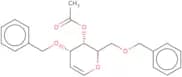
CAS :<p>1,3,4,6-Tetra-O-acetyl-2-amino-2-deoxy-D-galactopyranose HCl is a synthetic compound that is used as a reagent for the synthesis of oligosaccharides and polysaccharides. Its fluoroquinolone modification makes it useful in the synthesis of complex carbohydrate structures. 1,3,4,6-Tetra-O-acetyl-2-amino-2-deoxy -D -galactopyranose HCl is an intermediate in the preparation of 1,3,4,6 tetra acetamido 2 amino 2 deoxy D galactopyranose HCL. It has high purity and can be custom synthesized to meet your needs.</p>Formule :C14H21NO9·HClDegré de pureté :Min. 95%Couleur et forme :SolidMasse moléculaire :383.78 g/mol4-O-Acetyl-3,6-di-O-benzyl-D-glucal
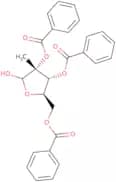
CAS :<p>4-O-Acetyl-3,6-di-O-benzyl-D-glucal is a custom synthesized compound with high purity. This product is a complex carbohydrate that can be used as a monosaccharide or sugar. It has been modified with fluorination and methylation to produce a compound that is resistant to degradation by enzymes and oxidation. The CAS number for this product is 165524-87-8.</p>Formule :C22H24O5Degré de pureté :Min. 95%Masse moléculaire :368.43 g/mol2,3,5-Tri-O-benzoyl-2-C-methyl-D-ribofuranose
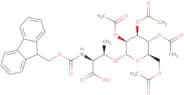
CAS :<p>2,3,5-Tri-O-benzoyl-2-C-methyl-D-ribofuranose is a custom synthesis of a complex carbohydrate. This product is an Oligosaccharide with CAS No. 30361-17-2 and Polysaccharide with Modification and Methylation. It is a saccharide with Methylation and Glycosylation. 2,3,5-Tri-O-benzoyl-2-C-methyl-D-ribofuranose is a Carbohydrate with Click modification and Fluorination. This product has High purity and Synthetic properties.</p>Formule :C27H24O8Degré de pureté :Min. 95%Masse moléculaire :476.47 g/mol2,3,4,6-Tetra-O-acetyl-a-D-mannopyranosyl-(N2-Fmoc)-L-threonine
CAS :<p>2,3,4,6-Tetra-O-acetyl-a-D-mannopyranosyl-(N2-Fmoc)-L-threonine is a glucosinolate that is derived from the amino acid L-threonine. It has been used in tissue culture and tumor treatment experiments to study the role of glucoraphanin in cancer cell proliferation. 2,3,4,6-Tetra-O-acetyl-a-D-mannopyranosyl-(N2-Fmoc)-L-threonine has been shown to inhibit cardiac and atrial growth in vivo. The biosynthesis of 2,3,4,6 - Tetra - O - acetyl - a - D - mannopyranosyl ( N2 - Fmoc) - L - threonine starts with the conversion of L - threonine to glucoraphanin by an enzyme called</p>Formule :C33H37NO14Degré de pureté :Min. 95%Masse moléculaire :671.66 g/mol1-Amino-1,5-dideoxy-L-erythro-2-pentulose
CAS :<p>1-Amino-1,5-dideoxy-L-erythro-2-pentulose is a glycoconjugate that contains an amino sugar. It is also a complex carbohydrate that is methylated and fluorinated. 1-Amino-1,5-dideoxy-L-erythro-2-pentulose is a polysaccharide made up of saccharides and oligosaccharides. The saccharides in this compound are modified with the addition of sugars (e.g., glycosylation). This product has been custom synthesized to order and can be ordered as a high purity product.</p>Formule :C5H11NO3Degré de pureté :Min. 95%Masse moléculaire :133.15 g/mol2,3,4,6-Tetra-O-benzyl-a-D-talopyranose
<p>2,3,4,6-Tetra-O-benzyl-a-D-talopyranose is a glycoside that has been modified with methyl groups at C2 and C6. It also has been fluorinated at the C1 position and saccharified with 2,3,4,6 trihydroxypentane. This product is a custom synthesis for research purposes only.</p>Degré de pureté :Min. 95%Phenyl-α-D-glucopyranoside
CAS :<p>Phenyl-alpha-D-glucopyranoside is a molecule that is found in the β-cell of the pancreas. It is thought to be involved in the biosynthesis of oligosaccharides and interacts with other molecules to form glycosidic bonds. The interaction between phenyl-alpha-D-glucopyranoside and other molecules has been analysed by gas chromatography, which showed that it was hydrophobic, but also interacted with carbohydrates. Phenyl-alpha-D-glucopyranoside has also been shown to inhibit gram negative bacteria, such as Escherichia coli or Salmonella enterica.</p>Formule :C12H16O6Masse moléculaire :256.25 g/mol2,6-Deoxyfructosazine
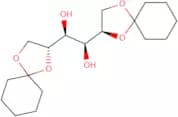
CAS :<p>2,6-Deoxyfructosazine is a type of fructosamine that is derived from inulin. It is used as a matrix for chromatography. The 2,6-deoxyfructosazine molecule has a low molecular weight and can be easily separated from the other components of the plant material by means of chromatography. This compound can also be extracted with ether and then concentrated to produce a product with an analytical yield of up to 98%. The product can then be purified by recrystallization or sublimation. The reaction time required for this process varies depending on the type of solvent used and whether or not it is heated. For example, when using ether as the solvent, the reaction time ranges between 30 minutes to 1 hour at 45 degrees Celsius. However, when using chloroform as the solvent, the reaction time ranges between 3 hours to 5 hours at 40 degrees Celsius.</p>Formule :C12H20N2O7Degré de pureté :Min. 95%Couleur et forme :PowderMasse moléculaire :304.3 g/mol1,2:5,6-Di-O-cyclohexylidene-D-mannitol
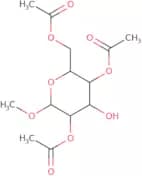
CAS :1,2:5,6-Di-O-cyclohexylidene-D-mannitol is a ligand that binds to metal ions. It forms a complex with nitro groups, which has been shown to have synergistic effects in transfer reactions. The structure of 1,2:5,6-Di-O-cyclohexylidene-D-mannitol was determined by x-ray diffraction and the crystal structure was confirmed by single crystal x-ray diffraction. This ligand can be used for the synthesis of alkenes and it reacts with magnesium chloride to form a grignard reagent. As a ligand, this compound has anticancer activity and can be used as an antiangiogenic agent.Formule :C18H30O6Degré de pureté :Min. 95%Masse moléculaire :342.43 g/molMethyl 2,4,6-tri-O-acetyl-b-D-glucopyranoside
CAS :<p>Methyl 2,4,6-tri-O-acetyl-b-D-glucopyranoside is a modified sugar that is synthesized by a click reaction. This compound has been shown to be an efficient glycosylide donor for the synthesis of complex carbohydrates. Methyl 2,4,6-tri-O-acetyl-b-D-glucopyranoside has been used in the synthesis of oligosaccharides and glycosylated proteins.</p>Degré de pureté :Min. 95%3-O-Triisopropylsilyl-D-glucal
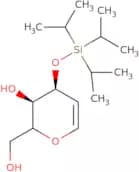
<p>3-O-Triisopropylsilyl-D-glucal is a modified carbohydrate, which is a saccharide that has been modified by the addition of three isopropyl groups. This modification can be used to synthesize oligosaccharides and polysaccharides in order to obtain desired properties. 3-O-Triisopropylsilyl-D-glucal can also be used as a fluorinating agent in synthesis reactions. The compound is also custom synthesized and can be synthesized with high purity (>98%) or with methylation or glycosylation. 3-O-Triisopropylsilyl-D-glucal will react with nucleophiles like amines and alcohols to form adducts, which are then hydrolyzed to release the product.</p>Formule :C15H30O4SiDegré de pureté :Min. 95%Masse moléculaire :302.48 g/mol1-O-(2R)-Glycerol-b-D-galactopyranoside
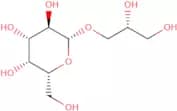
CAS :<p>1-O-(2R)-Glycerol-b-D-galactopyranoside is a biochemical that is produced by the hydrolysis of glycerol. It is found in fatty acid esterification and degradation processes, as well as in the synthesis of glycerin. It is also present in the skin tumor of cryptococcus neoformans. 1-O-(2R)-Glycerol-b-D-galactopyranoside may be used to diagnose or monitor diseases that affect the metabolism of lipids and carbohydrates, such as diabetes mellitus, obesity, or cardiovascular disease. This compound is also used in plant physiology to measure constant rates of photosynthesis.</p>Formule :C9H18O8Degré de pureté :Min. 95%Couleur et forme :Off-White PowderMasse moléculaire :254.23 g/mol3,4,6-Tri-O-benzyl-D-glucofuranose
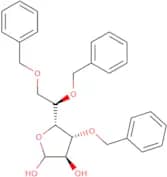
CAS :<p>3,4,6-Tri-O-benzyl-D-glucofuranose is a modification of the natural sugar D-glucose. This modification has been found to be stable against hydrolysis by esterases and other enzymes. It is synthesized in a custom synthesis. 3,4,6-Tri-O-benzyl-D-glucofuranose has been shown to be an effective inhibitor of glycosylation and polysaccharide formation in vitro. It can be used for the preparation of high purity sugars for use in research or as a polymer precursor or monosaccharide. 3,4,6-Tri-O-benzyl-D-glucofuranose is found on the CAS registry with the number 35958-64-6.</p>Degré de pureté :Min. 95%2,3,4,5-Tetra-O-acetyl-1,6-dibromo-1,6-dideoxy-D-mannitol
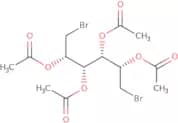
CAS :<p>2,3,4,5-Tetra-O-acetyl-1,6-dibromo-1,6-dideoxy-D-mannitol is a methylated oligosaccharide obtained by the chemical modification of mannitol. This product has a CAS number of 15410-49-8 and can be used as a saccharide in pharmaceuticals. It is also used as a reagent in the synthesis of polysaccharides. This product is also known to have high purity and can be modified to suit specific needs. 2,3,4,5-Tetra-O-acetyl-1,6-dibromo-1,6-dideoxy--D--mannitol may be useful for the treatment of diabetes mellitus type 2 and hyperglycemia.</p>Formule :C14H20Br2O8Degré de pureté :Min. 95%Masse moléculaire :476.11 g/molMoxifloxacin acyl D-glucuronide
<p>Moxifloxacin acyl D-glucuronide is a fluorinated, synthetic compound that inhibits bacterial growth by binding to the 16S ribosomal RNA. This drug has been shown to have a broad spectrum of activity against Gram-positive and Gram-negative bacteria. Moxifloxacin acyl D-glucuronide is not active against acid-fast bacteria such as Mycobacterium tuberculosis or Mycobacterium avium complex. The most common adverse effect associated with this drug is nausea.</p>Degré de pureté :Min. 95%1,2,3,4,5,6-Hexa-O-acetyl-L-iditol
CAS :<p>1,2,3,4,5,6-Hexa-O-acetyl-L-iditol is a synthetic compound that is used as a reagent in the synthesis of oligosaccharides and polysaccharides. It is also used to modify the saccharide chains of complex carbohydrates. 1,2,3,4,5,6-Hexa-O-acetyl-L-iditol has been shown to react with both DNA and RNA. The methylation reaction can be achieved by treatment with formaldehyde or sodium cyanoborohydride. This compound has been modified by fluorination to create monosaccharides such as fluorohexitol and fluoroarabitol.</p>Formule :C18H26O12Degré de pureté :Min. 95%Masse moléculaire :434.4 g/mol