Monosaccharides
Les monosaccharides sont la forme la plus simple des glucides et servent de building blocks fondamentaux pour les sucres plus complexes et les polysaccharides. Ces molécules de sucre unique jouent des rôles critiques dans le métabolisme énergétique, la communication cellulaire et les composants structuraux des cellules. Dans cette section, vous trouverez une large gamme de monosaccharides essentiels pour la recherche en biochimie, biologie moléculaire et glycosciences. Ces composés sont cruciaux pour étudier les voies métaboliques, les processus de glycosylation et le développement d'agents thérapeutiques. Chez CymitQuimica, nous proposons des monosaccharides de haute qualité pour répondre à vos besoins de recherche, garantissant précision et fiabilité dans vos investigations scientifiques.
Sous-catégories appartenant à la catégorie "Monosaccharides"
- Alloses(11 produits)
- Arabinoses(21 produits)
- Erythroses(11 produits)
- Fructoses(9 produits)
- Fucoses(36 produits)
- Galactosamine(41 produits)
- Galactoses(261 produits)
- Glucoses(365 produits)
- Acides glucuroniques(51 produits)
- Glyco-substrats pour l'enzyme(77 produits)
- Guloses(6 produits)
- Idoses(4 produits)
- Inositols(15 produits)
- Lyxoses(4 produits)
- Mannoses(65 produits)
- O-Glycanes(48 produits)
- Psicoses(3 produits)
- Rhamnoses(10 produits)
- Ribos(61 produits)
- Acides sialiques(100 produits)
- Sorboses(4 produits)
- Sucres(173 produits)
- Tagatoses(4 produits)
- Taloses(8 produits)
- Xyloses(20 produits)
Affichez 17 plus de sous-catégories
6090 produits trouvés pour "Monosaccharides"
Trier par
Degré de pureté (%)
0
100
|
0
|
50
|
90
|
95
|
100
N-Methyl-b-D-glucopyranosylamine (hydrochloride or other salt)
CAS :<p>Methylation of saccharides is a chemical process that adds methyl groups to the hydroxyl groups of sugars. The most common form of this reaction is the conversion of glucose to mannose. Methylation can be achieved by reacting the sugar with sodium cyanoborohydride, which converts the sugar into a reactive form that can be used in other reactions. This product is a synthetic compound and an intermediate for various glycosylations or modifications. It is a high-purity, white powder with molecular formula C6H17NO5 and molecular weight 191.22 g/mol and CAS Number 114761-39-6 (hydrochloride).</p>Formule :C7H15NO5·HClDegré de pureté :Min. 95%Masse moléculaire :229.7 g/molRaltegravir b-D-glucuronide
CAS :<p>Raltegravir b-D-glucuronide is a synthetic, fluorinated analog of raltegravir. It is a potent HIV-1 integrase inhibitor that has been shown to be active against the majority of HIV-1 strains. Raltegravir b-D-glucuronide is less potent than the parent compound and exhibits reduced antiviral activity in vitro. Raltegravir b-D-glucuronide is metabolized to raltegravir and eliminated in urine as the glucuronide conjugate.</p>Formule :C26H29FN6O11Degré de pureté :Min. 95%Couleur et forme :White PowderMasse moléculaire :620.54 g/mol1-13C-L-Arabinose
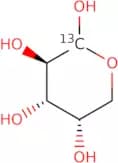
CAS :1-13C-L-Arabinose is a metabolite of the sugar, L-arabinose. This compound is formed by escherichia bacteria and can be found in the urine of mice. 1-13C-L-Arabinose has been shown to inhibit the growth of escherichia coli and has a six membered ring structure.Formule :CC4H10O5Degré de pureté :Min. 95%Couleur et forme :White PowderMasse moléculaire :151.13 g/molGlycerone phosphate lithium salt
CAS :<p>Glycerone phosphate lithium salt is a reactive molecule that serves as an intermediate in the synthesis of rapamycin, a complex of glycerone phosphate and rapamycin. Glycerone phosphate lithium salt is used to detect the presence of glutamate dehydrogenase and to purify monoclonal antibodies. Glycerone phosphate lithium salt has been shown to react with platinum-based chemotherapy, which may be due to its ability to bind to active sites on cancer cells. This molecule also has been shown to reduce high cholesterol levels in mice and inhibit skin cancer tumor growth. Glycerone phosphate lithium salt's physiological effects have not been fully determined, but it may have some anticancer activity.</p>Formule :C3H7O6P·xLiDegré de pureté :Min. 95%Masse moléculaire :170.06 g/mol1,6-Anhydro-b-D-glucofuranose
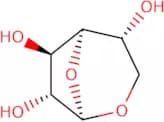
CAS :<p>B-D-glucofuranose is a natural compound with the molecular formula C6H12O6. It is found in plants, specifically in the seeds of the granatum tree. The calibration of this compound can be done using anions and ion chromatography. B-D-glucofuranose has antibacterial activity against Gram-positive bacteria, but not against Gram-negative bacteria or fungi. It also inhibits fatty acid synthesis and may have nutritional value for humans as a source of 5-hydroxymethylfurfural (HMF). HMF has been shown to inhibit the growth of cancer cells in vitro and induce apoptosis in cancer cells by uv irradiation. Mass spectrometric analysis and spectrometric methods are used to identify this compound.</p>Formule :C6H10O5Degré de pureté :Min. 95%Couleur et forme :White PowderMasse moléculaire :162.14 g/mol1,2,3,4-Tetra-O-acetyl-6-O-(tert-butyldimethylsilyl)-a-D-mannopyranose
<p>1,2,3,4-Tetra-O-acetyl-6-O-(tert-butyldimethylsilyl)-a-D-mannopyranose is a synthetic sugar that is used in the synthesis of glycosylations. It has been shown to be a substrate for methylation and click modification. This product is also useful in the synthesis of oligosaccharides and polysaccharides. 1,2,3,4-Tetra-O-acetyl-6-O-(tert-butyldimethylsilyl)-a-D-mannopyranose is a high purity carbohydrate with a CAS number.</p>Formule :C20H34O10SiDegré de pureté :Min. 95%Masse moléculaire :462.57 g/mol4-Methylphenyl 2-O-acetyl-3-O-benzyl-4-O-Fmoc-b-D-glucopyranuronic acid methyl ester
4-Methylphenyl 2-O-acetyl-3-O-benzyl-4-O-Fmoc-b-D-glucopyranuronic acid methyl ester (4MPBA) is a custom synthesis of a sugar that belongs to the group of polysaccharides. It is a complex carbohydrate, which is an important component in living organisms. The modification of this sugar includes methylation and glycosylation. This product is available in high purity and has been fluorinated to increase its stability.Degré de pureté :Min. 95%R-Phenyleprine-3-D-glucuronide
<p>R-Phenyleprine-3-D-glucuronide is a synthetic compound that is used for the modification of saccharides. It has fluoro groups and has been shown to be active in glycosylation reactions. R-Phenyleprine-3-D-glucuronide can also be used as a methylating agent, or as an intermediate in the synthesis of oligosaccharides and monosaccharides. The molecular weight of this compound is 594.</p>Degré de pureté :Min. 95%2,3,5-Tri-O-benzoyl-b-D-ribofuranose
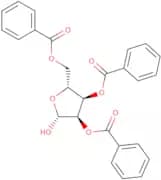
CAS :<p>2,3,5-Tri-O-benzoyl-b-D-ribofuranose is a custom synthesis of an oligosaccharide. It has been modified with fluorination and methylation. This is a synthetic carbohydrate that belongs to the class of saccharides. It has been synthesized from a monosaccharide and has glycosylation. The chemical formula for 2,3,5-Tri-O-benzoyl-b-D-ribofuranose is C10H14O7.</p>Formule :C26H22O8Degré de pureté :Min. 95%Masse moléculaire :462.45 g/mol1,2-O-Isopropylidene-3-O-benzyl-5-deoxy-5-C-(2-pyridyl)-D-xylofuranose
1,2-O-Isopropylidene-3-O-benzyl-5-deoxy-5-C-(2-pyridyl)-D-xylofuranose is a fluorinated sugar. This compound has been synthesized by modifying the glycosylation site of N4,N4'-diisopropylidene-1,2,3,5,5'-pentaacetamido-[1,6]hexanedioic acid methyl ester to 1,2-O-isopropylidene. The structure of this compound consists of a C(2) pyridine moiety and an O(1) protonated methyl group on the terminal carbon atom.Degré de pureté :Min. 95%Masse moléculaire :341.37 g/molEthyl 2,3,4-tri-O-benzyl-b-D-thioglucopyranoside
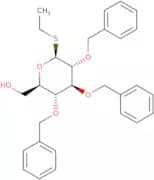
CAS :Ethyl 2,3,4-tri-O-benzyl-b-D-thioglucopyranoside is a sugar that has been modified with three benzyl groups at the 3-, 4-, and 5-positions. It is used as a building block for oligosaccharides and polysaccharides. This compound can be synthesized using a click reaction between an acetylated benzaldehyde derivative and a protected thiogalactose. Ethyl 2,3,4-tri-O-benzyl-b-D-thioglucopyranoside is also known by its CAS number 126461-54-9 and has a molecular weight of 360.Formule :C29H34O5SDegré de pureté :Min. 95%Masse moléculaire :494.64 g/mol6-Deoxy L-glucose
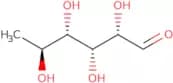
CAS :<p>6-Deoxy L-glucose is a sugar analogue that inhibits the transport of glucose in bacteria. It competes with glucose for binding to transporter proteins and prevents glucose from being transported into the cell. 6-Deoxy L-glucose has been shown to inhibit the growth of wild-type strains, such as E. coli K12, in a dose-dependent manner. The antibiotic also reduces ATP production by inhibiting enzymes critical for glycolysis and gluconeogenesis. 6-Deoxy L-glucose has an optimum pH of 7.5 and is activated by hydrochloric acid or hydroxyl groups at the gamma position.</p>Degré de pureté :Min. 95%3,4,5,6-Tetra-O-acetyl-D-myo-inositol
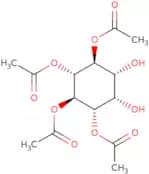
CAS :<p>3,4,5,6-Tetra-O-acetyl-D-myo-inositol is a carbohydrate that can be used as a monosaccharide or an oligosaccharide. It is produced by the modification of inositol with acetate and fluoride. The compound has been shown to have anti-inflammatory properties and can be used as a drug target for treating inflammation. 3,4,5,6-Tetra-O-acetyl-D-myo-inositol is also methylated and glycosylated.</p>Formule :C14H20O10Degré de pureté :Min. 95%Masse moléculaire :348.3 g/mol4-Aminophlorizin
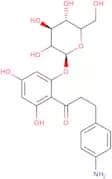
CAS :<p>4-Aminophlorizin is a chemical compound that inhibits the uptake of azide by red blood cells. It has been shown to be effective against intestinal parasites and trophozoites. 4-Aminophlorizin is a potent inhibitor of the membrane system, which may be due to its interaction with the semenza, or membrane protein.</p>Formule :C21H25NO9Degré de pureté :Min. 95%Masse moléculaire :435.42 g/molEzetimibe hydroxy-b-D-glucuronide
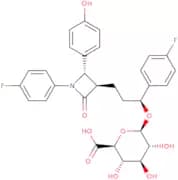
CAS :<p>Ezetimibe hydroxy-b-D-glucuronide is an oligosaccharide that can be synthesized from the modified sugar, L-glucuronic acid. It has a molecular weight of 536 and is soluble in water and methanol. This compound has been used in the synthesis of glycosides, saccharides, and polysaccharides. The chemical name for this compound is 1-(2-hydroxyethyl)-3-(((4'-carboxybenzyl)oxy)carbonyl)-2,6-diazaoctane glucuronide. Ezetimibe hydroxy-b-D-glucuronide has been shown to increase the absorption of cholesterol and decrease low density lipoprotein (LDL) levels in the blood by inhibiting intestinal cholesterol absorption.</p>Formule :C30H29F2NO9Degré de pureté :Min. 95%Masse moléculaire :585.55 g/molD-Gluconic acid sodium salt
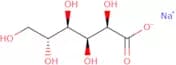
CAS :<p>D-Gluconic acid sodium salt - USP grade is a biochemical reagent that is used in the synthesis of nucleotides and various other biomolecules. It is also used as an antimicrobial agent, with broad-spectrum activity against bacteria, fungi, and viruses. In addition to its antimicrobial activity, D-gluconic acid has been shown to inhibit carcinoma cell lines in vitro. This inhibition may be due to the inhibition of enzymes involved in phosphorylation reactions such as adenylate kinase, glyceraldehyde 3-phosphate dehydrogenase (GAPDH) and hexokinase. X-ray diffraction data on wild-type strains of E. coli have shown that D-gluconic acid binds to the enzyme phosphogluconate dehydrogenase (PGD), which catalyzes a reaction between D-gluconic acid and NAD+ or NADP+. The matrix effect for this reaction was</p>Formule :C6H11NaO7Degré de pureté :Min. 95%Masse moléculaire :218.14 g/molNeosamine
<p>Neosamine is an antimicrobial agent that is activated by the addition of fatty acids. It has a low potency and is used to diagnose infections caused by bacteria. Neosamine has been shown to inhibit the growth of bacteria, fungi, and parasites on electron microscopy. Neosamine also inhibits protease activity and may be useful in detergent compositions for removing fats, oils, and greases from surfaces. This chemical is stable in acidic solutions and does not react with carbostyril or other diagnostic agents.</p>Formule :C6H14N2O4Degré de pureté :Min. 95%Masse moléculaire :178.19 g/molMethyl 2-deoxy-a-D-ribofuranoside diacetate
<p>Methyl 2-deoxy-a-D-ribofuranoside diacetate is a custom synthesis that is used for modification of natural and synthetic saccharides. This compound can be fluorinated, methylated, or modified with the click reaction. It can also be used to synthesize oligosaccharides and polysaccharides. Methyl 2-deoxy-a-D-ribofuranoside diacetate has been used as a monosaccharide and in glycosylation reactions. The CAS number is 5892-77-8 and it has the molecular formula C11H19NO9.</p>Degré de pureté :Min. 95%1,3-O-Benzylidene-L-arabitol
CAS :<p>1,3-O-Benzylidene-L-arabitol is an enantiomer of arabinitol. It has been shown to have cytotoxic effects on cultured human leukemia cells, but the mechanism of action is unclear. 1,3-O-Benzylidene-L-arabitol may inhibit glycosylation by inhibiting the formation of a key enzyme that catalyzes the transfer of glucose to serine in glycosphingolipids and glycosylation. 1,3-O-Benzylidene-L-arabitol also inhibits the synthesis of erythrosphingosine and psychosine by blocking galactosyl transferase.</p>Formule :C12H16O5Degré de pureté :Min. 95%Masse moléculaire :240.26 g/molSecoxyloganin
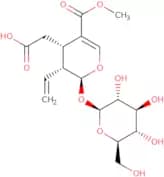
CAS :<p>Secoxyloganin is a 4-hydroxycinnamic acid that belongs to the group of caffeic acids. It is an iridoid, which is a type of monoterpene indole alkaloid that has been found in various plants. Secoxyloganin can be found in the roots, stems, and leaves of plants such as Securigera varia and Digitalis purpurea. Secoxyloganin has shown antimicrobial activity against Gram-positive bacteria such as Staphylococcus aureus and Gram-negative bacteria such as Pseudomonas aeruginosa. It also has antiviral properties, which may be due to its ability to inhibit RNA synthesis and protein synthesis.<br>Secoxyloganin has been shown to have physiological effects in vitro assays, including an increase in glucose uptake by cells after injection of glucose into the cell culture medium.</p>Formule :C17H24O11Degré de pureté :Min. 95%Masse moléculaire :404.37 g/mol