APIs pour la recherche et les impuretés
Sous-catégories appartenant à la catégorie "APIs pour la recherche et les impuretés"
- Acides Aminés et Dérivés(12.440 produits)
- Anthraquinones et Dérivés(407 produits)
- Dérivés du Benzimidazole et de l’Imidazole(10.464 produits)
- Dérivés des Benzodiazépines(335 produits)
- Glucides et Glycoconjugués(5.388 produits)
- Esters et Dérivés(42.306 produits)
- Acides Gras et Dérivés Lipidiques(32.486 produits)
- Flavonoïdes et Polyphénols(17.100 produits)
- Radicaux Libres et Agents Oxydants/Réducteurs(214 produits)
- Cétones et Dérivés(2.692 produits)
- Antibiotiques Naturels et Semi-Synthétiques(6.409 produits)
- Nitriles et Dérivés Cyano(3.070 produits)
- Nitrosamines et Dérivés(55 produits)
- Nucléosides et Nucléotides(3.492 produits)
- Phosphates et Phosphonates Organiques(1.205 produits)
- Sulfonates et Sulfates Organiques(10.451 produits)
- Composés Organométalliques(4.425 produits)
- Autres(6.340 produits)
- Peptides et Protéines(3.164 produits)
- Polymères et Dérivés(100 produits)
- Dérivés des Purines et Pyrimidines(8.975 produits)
- Dérivés de Quinazoline et de Quinoléine(66.222 produits)
- Quinones et Dérivés(24.379 produits)
- Sels et Dérivés d’API(92.942 produits)
- Stéroïdes et Dérivés(4.987 produits)
- Sulfamides et Dérivés(2.607 produits)
- Terpénoïdes et Dérivés(3.860 produits)
- Thiazolidinediones et Thiopyranes(2.755 produits)
- Composés β-Adrénergiques(231 produits)
66875 produits trouvés pour "APIs pour la recherche et les impuretés"
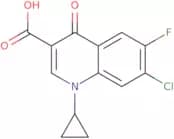
Ciprofloxacin impurity A
CAS :Ciprofloxacin impurity A is an analog of ciprofloxacin and is a pharmaceutical preparation that belongs to the class of fluoroquinolones. It has been shown to be active against P. aeruginosa and other gram-negative bacteria in wastewater treatment systems. Ciprofloxacin impurity A is activated by ethylene diamine and can be eluted with acidic solvents. It also inhibits tumor cell line growth through adsorption mechanism and is used as a drug for cancer chemoprevention in combination with malic acid.Formule :C13H9ClFNO3Degré de pureté :Min. 95%Couleur et forme :PowderMasse moléculaire :281.67 g/mol2-N-Butyl 3-(4-methoxy benzoyl)-benzofuran
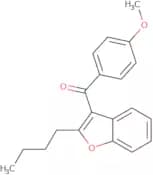
CAS :2-N-Butyl 3-(4-methoxy benzoyl)-benzofuran is a x-ray crystal structure of an antibacterial agent that belongs to the class of β-unsaturated ketones. It has been shown to have cardiovascular activity, and is used in the treatment of depression. The compound binds to the active methylene group on the bacterial cell wall, which prevents cross linking of peptidoglycan chains. This leads to a reduction in cell wall synthesis and increased permeability of cells, which may result in death. The 2-N-butyl 3-(4-methoxy benzoyl)-benzofuran molecule also contains two phenyl groups that are able to form hydrogen bonds with each other, as well as dihedral angles that can form hydrogen bonds with water molecules. These properties contribute to its antidepressant activity.Formule :C20H20O3Degré de pureté :Min. 95%Couleur et forme :Clear LiquidMasse moléculaire :308.37 g/molN-Methyl-3-(1-naphthalenyloxy)-3-(3-thienyl) propanamine tartrate
N-Methyl-3-(1-naphthalenyloxy)-3-(3-thienyl) propanamine tartrate is an impurity standard used for the quantitative analysis of norephedrine in pharmaceutical products. It is also a metabolite of methamphetamine, which has been shown to have anti-inflammatory activities.Formule :C18H19NOS·C4H6O6Degré de pureté :Min. 95%Masse moléculaire :447.5 g/molAll-trans-retinol-d5
CAS :Produit contrôléAll-trans-retinol-d5 is a supplement that is used to protect the brain from oxidative damage and to help maintain healthy skin. It is an antioxidant that prevents free radicals from damaging cells and helps maintain the structural integrity of cell membranes. All-trans-retinol-d5 can be found in high concentrations in animal tissues, such as liver, lung, kidney, heart, brain, and eye. It can also be found in human urine. The presence of all-trans-retinol-d5 in urine has been correlated with neuroprotective effects. Retinol levels have been shown to be higher in children who are less obese than those who are obese or overweight. All-trans retinol has been shown to inhibit cancer cell proliferation and induce apoptosis by inhibiting protein synthesis at the level of transcription.
Formule :C20H25D5ODegré de pureté :(%) Min. 80%Couleur et forme :Clear Viscous LiquidMasse moléculaire :291.48 g/mol3-[4-(2-Methoxyethyl)phenoxy]-1,2-propanediol
CAS :3-[4-(2-Methoxyethyl)phenoxy]-1,2-propanediol is a synthetic intermediate. It is metabolized from the drug product 3-[4-(2-Methoxyethyl)phenoxy]propionic acid and may be used as an impurity standard for this compound. This chemical is a high purity, pharmacopoeia grade material that is suitable for use in drug development and pharmaceutical research. 3-[4-(2-Methoxyethyl)phenoxy]-1,2-propanediol has a natural origin and can be produced synthetically or through biotransformation of other compounds.Formule :C12H18O4Degré de pureté :Min. 96 Area-%Couleur et forme :White Off-White PowderMasse moléculaire :226.27 g/molN-[4-Amido-3-(trifluoromethyl)phenyl-3-[(4-fluorophenyl)-(R,S)-sulphinyl]-(R,S)-2-hydroxy-2-methylpropanamide
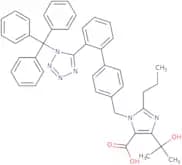
CAS :N-[4-Amino-3-(trifluoromethyl)phenyl-3-[(4-fluorophenyl)-(R,S)-sulphinyl]- (R,S)-2-hydroxy-2-methylpropanamide is a sulfoxide that was designed to inhibit cancer cell proliferation. It has been shown to have anticancer activity in different models. The synthesis of this compound begins with the chlorination of 4-aminophenol, which produces 4-(chloromethyl)benzenesulfonyl chloride. This is then reacted with (R,S)-α-(4-Fluorophenyl)acetic acid and the resulting product is purified by column chromatography to give N-[4-(chloromethyl)phenyl]-3-[(4-fluorophenyl)(R,S)-sulphinyl]propaneamide. The final step in the synthesis is achieved by reacting the amideFormule :C18H14F4N2O3SDegré de pureté :Min. 95%Couleur et forme :White To Off-White SolidMasse moléculaire :414.37 g/molTrityl olmesartan acid
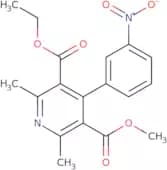
CAS :4-(1-Hydroxy-1-methylethyl)-2-propyl-1[4-[2-(trityltetrazol-5-yl)phenyl]phenyl]methylimidazol-5-caboxylic acid (4MPPC) is a water soluble, clear liquid that is used as a solvent. It can be prepared by the reaction of sodium carbonate with an organic or inorganic salt solution in acetonitrile. The solvents are then removed using filtration and the final product is obtained by evaporation of the solvent. 4MPPC has been used in the preparation of medoxomil, which is an antibiotic that inhibits bacterial growth by binding to DNA gyrase and topoisomerase IV.Formule :C43H40N6O3Degré de pureté :Min. 95%Couleur et forme :PowderMasse moléculaire :688.82 g/mol2,6-Dimethyl-4-(3-nitrophenyl)-3,5-pyridinedicarboxylic acid ethyl methyl ester
CAS :2,6-Dimethyl-4-(3-nitrophenyl)-3,5-pyridinedicarboxylic acid ethyl methyl ester (DMPD) is an enzyme inhibitor that belongs to the group of metabolic inhibitors. This agent is used for the preparation of samples for analysis by chromatography and mass spectrometry. DMPD inhibits the activity of enzymes involved in drug metabolism, including CYP2C8, CYP2C9, CYP2D6, and CYP3A4. The matrix effect can be minimized by using a more acidic sample preparation. The immunosuppressant properties of DMPD have been shown in mice by inhibiting T cell activation and proliferation in vitro.Formule :C18H18N2O6Degré de pureté :Min. 95%Couleur et forme :Pale yellow to yellow solid.Masse moléculaire :358.35 g/mol4-[(2,4-Dihydroxy-3,3-dimethylbutanoyl)amino]-butanoic acid
CAS :4-[(2,4-Dihydroxy-3,3-dimethylbutanoyl)amino]-butanoic acid is a white to off-white solid that is soluble in water. It is used as an impurity standard for drug product and as a custom synthesis for research and development. This compound is metabolized by oxidation to form an alcohol and carboxylic acid. The oxidation products are excreted in the urine. 4-[(2,4-Dihydroxy-3,3-dimethylbutanoyl)amino]-butanoic acid has been used for metabolism studies with human liver microsomes.Formule :C20H38CaN2O11Degré de pureté :Min. 95%Masse moléculaire :522.6 g/mol2-[4-(2-Methylpropanoyl)phenyl] propanoic acid
CAS :2-[4-(2-Methylpropanoyl)phenyl] propanoic acid is a pharmaceutical intermediate that is used for the production of carprofen. It has been found to be an analytical method for the determination of 4-hydroxybenzoic acid and 4-isobutylacetophenone. The compound is analyzed by chromatographic methods and electrophoresis methods. The optimization of the solvent composition, flow rate, and impurities during the synthesis process are also studied in this research. 2-[4-(2-Methylpropanoyl)phenyl] propanoic acid has been found to be a meaningful validation of analytical methods for medicines, with an impurity limit of 0.1%.Formule :C13H16O3Degré de pureté :Min. 98 Area-%Couleur et forme :PowderMasse moléculaire :220.26 g/molMolnupiravir Impurity 8
CAS :Produit contrôléMolnupiravir Impurity 8 is an impurity of molnupiravir, a drug product. It is a synthetic chemical compound that has not been found in nature. Molnupiravir Impurity 8 is the result of metabolism studies on the API (active pharmaceutical ingredient) and was observed to be more abundant than other impurities. Molnupiravir Impurity 8 is a white crystalline solid with CAS number 2492423-30-8. It is soluble in water, ethanol, acetone, and chloroform. The purity of this impurity is 99%.Formule :C13H19N3O7Degré de pureté :Min. 95%Masse moléculaire :329.31 g/mol4-(4-Amino-6,7-dimethoxy-2-quinazolinyl)-1-piperazinecarboxaldehyde
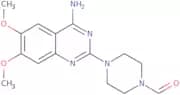
CAS :4-(4-Amino-6,7-dimethoxy-2-quinazolinyl)-1-piperazinecarboxaldehyde is a synthetic chemical compound that has not been approved by the FDA. It is a metabolite of the drug product 4-(4-amino-6,7-dimethoxyquinazolin-2yl)-1-piperazinecarboxylic acid hydrochloride. The CAS number for this chemical is 102714-74-9. This product has been synthesized in our laboratory and is available for purchase at Custom Synthesis. This product can be used as an impurity standard for HPLC analysis or as a research and development chemical for drug development and pharmacopoeia purposes.Formule :C15H19N5O3Degré de pureté :Min. 95%Masse moléculaire :317.34 g/molRemdesivir impurity 12
CAS :Remdesivir impurity 12 is a drug product that is used in research and development. It is a synthetic impurity standard for HPLC analytical methods. Remdesivir impurity 12 is an impurity of the drug, remdesivir, which has antiviral activity against HIV-1. Metabolism studies have been conducted to investigate how this impurity affects the pharmacokinetics of remdesivir. The use of synthetic material ensures high purity and quality for this product.Formule :C21H31N6O8PDegré de pureté :Min. 95%Masse moléculaire :526.48 g/molOlsalazine sodium impurity G
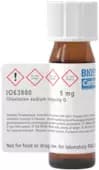
Olsalazine sodium impurity G is an API impurity. It is an important impurity in the production of Olsalazine Sodium, which is a drug for the treatment of inflammatory bowel disease and ulcerative colitis. This compound has been shown to have a high purity level and a pharmacopoeia grade. The CAS number for this compound is 1209-03-9. This compound can be synthesized using organic chemistry methods, or it can be extracted from natural resources such as plants or animal tissues.Formule :C21H14N2O9Degré de pureté :Min. 95 Area-%Masse moléculaire :438.34 g/mol4-Methoxy-N,N-dimethyl-phenethylamine
CAS :Produit contrôlé4-Methoxy-N,N-dimethylphenethylamine is a natural product that has been shown to inhibit the transfer of bacteria from the environment to food. It also has regulatory properties and can be used as a supplement in dietary drinks. 4-Methoxy-N,N-dimethylphenethylamine is an alkaloidal extract and has been shown to have antibacterial activity against Escherichia coli, Salmonella enterica, and Listeria monocytogenes. This compound was also found to have diffraction properties, which are related to its ability to bind DNA in bacterial cells.Formule :C11H17NODegré de pureté :Min. 95%Couleur et forme :Clear LiquidMasse moléculaire :179.26 g/mol2-Carboxybenzoyl amlodipine
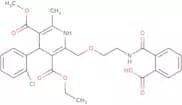
CAS :2-Carboxybenzoyl amlodipine is a metabolite of the antihypertensive drug amlodipine. It is a white crystalline solid that is soluble in water. 2-Carboxybenzoyl amlodipine can be used as an impurity standard for HPLC analyses, and as an analytical standard for the determination of amlodipine in human plasma.
Formule :C28H29ClN2O8Degré de pureté :Min. 95%Couleur et forme :White to off-white solid.Masse moléculaire :556.99 g/molBortezomib intermediate I
CAS :Bortezomib intermediate I is a metabolite of bortezomib, which is a research and development drug product. Bortezomib intermediate I is an impurity standard for bortezomib. Bortezomib intermediate I can be synthesized from the corresponding compound. It is an analytical standard used in pharmacopoeia and can be used as an API impurity or synthetic material in drug development. Bortezomib intermediate I has a high purity, natural origin, and a niche application. CAS No. 1248339-44-7Formule :C25H36BN5O4Degré de pureté :Min. 95%Couleur et forme :White PowderMasse moléculaire :481.4 g/mol2-Isopropyl-6-propylphenol
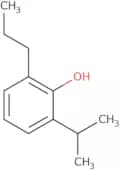
CAS :2-Isopropyl-6-propylphenol is a reactive alkylating agent that reacts with proteins and enzymes. It binds to the hydroxyl group of a protein target, which modifies the activity of the target molecule by introducing a new functional group. 2-Isopropyl-6-propylphenol has been shown to bind to the active site of several enzymes, including human serum albumin and cytochrome P450 reductase. The binding constants for these targets have been determined computationally using an algorithm based on quantum chemical calculations. These values are in good agreement with experimental data obtained from titration calorimetry experiments at different temperatures.
Formule :C12H18ODegré de pureté :Min. 95%Couleur et forme :Clear LiquidMasse moléculaire :178.27 g/mol5-Ethenyl-2-oxo-3-pyrrolidinecarboxylic acid
CAS :Please enquire for more information about 5-Ethenyl-2-oxo-3-pyrrolidinecarboxylic acid including the price, delivery time and more detailed product information at the technical inquiry form on this pageFormule :C7H9NO3Degré de pureté :Min. 95%Masse moléculaire :155.15 g/molCalcipotriol EP Impurity B
Calcipotriol EP Impurity B is a drug product that is an impurity in Calcipotriol EP. It is produced during the synthesis of calcipotriol and may be present in the natural product. It has been shown to have anti-inflammatory properties, and can be used as a research tool to study calcipotriol metabolism.Formule :C27H40O3Degré de pureté :Min. 95%Masse moléculaire :412.6 g/mol


![3-[4-(2-Methoxyethyl)phenoxy]-1,2-propanediol](/_next/image/?url=https%3A%2Fstatic.cymitquimica.com%2Fproducts%2F3D%2Fthumb-webp%2FIM63783.webp&w=3840&q=75)
![N-[4-Amido-3-(trifluoromethyl)phenyl-3-[(4-fluorophenyl)-(R,S)-sulphinyl]-(R,S)-2-hydroxy-2-methyl…](/_next/image/?url=https%3A%2Fstatic.cymitquimica.com%2Fproducts%2F3D%2Fthumb-webp%2FIA58276.webp&w=3840&q=75)
![4-[(2,4-Dihydroxy-3,3-dimethylbutanoyl)amino]-butanoic acid](/_next/image/?url=https%3A%2Fstatic.cymitquimica.com%2Fproducts%2F3D%2Fthumb-webp%2FTAA67990.webp&w=3840&q=75)
![2-[4-(2-Methylpropanoyl)phenyl] propanoic acid](/_next/image/?url=https%3A%2Fstatic.cymitquimica.com%2Fproducts%2F3D%2Fthumb-webp%2FIM15852.webp&w=3840&q=75)