Peptides
Sous-catégories appartenant à la catégorie "Peptides"
29726 produits trouvés pour "Peptides"
CTLA-4 isoform 5 / sCTLA (157-174) (Human)
Custom research peptide; min purity 95%. For different specs please use the Peptide Quote ToolMasse moléculaire :2,077.36 g/molHIV - 1 MN ENV - 23
Custom research peptide; min purity 95%. For different specs please use the Peptide Quote Tool
Masse moléculaire :1,916.2 g/molH-IDSLLENDR^-OH
Peptide H-IDSLLENDR^-OH is a Research Peptide with significant interest within the field academic and medical research. This peptide is available for purchase at Cymit Quimica in multiple sizes and with a specification of your choice.H-EVQGFESATFLGYFK^-OH
Peptide H-EVQGFESATFLGYFK^-OH is a Research Peptide with significant interest within the field academic and medical research. This peptide is available for purchase at Cymit Quimica in multiple sizes and with a specification of your choice.H-YTFAFGGNYDR^-OH
Peptide H-YTFAFGGNYDR^-OH is a Research Peptide with significant interest within the field academic and medical research. This peptide is available for purchase at Cymit Quimica in multiple sizes and with a specification of your choice.[5-FAM]-pVec
Cell-penetrating peptides (CPPs) have the ability to cross cell membrane bilayers without causing lethal membrane damage. CPPs themselves can exert biological activity and can be formed endogenously, or alternatively they can enhance transport of different cargoes across cell membranes. Vascular endothelial-cadherin-derived peptide (pVec) is an amphipathic CPP, these are characterised by both hydrophobic and hydrophilic regions. The charged region interacts with the cell membrane, while the hydrophobic region causes membrane perturbation, enabling translocation. pVec is derived from vascular endothelial cadherin, which is able to cross the blood brain barrier. Peptide is labelled with an N-terminal 5-carboxyfluorescein (5-FAM), a widely used green fluorescent tag.
Masse moléculaire :2,567.01 g/molH-A^DQDNPWR^AYLDL^L^FPTDTLLLDLL^WCG-OH
Peptide H-A^DQDNPWR^AYLDL^L^FPTDTLLLDLL^WCG-OH is a Research Peptide with significant interest within the field academic and medical research. This peptide is available for purchase at Cymit Quimica in multiple sizes and with a specification of your choice.Masse moléculaire :3,314 g/molH-LLIIGASTR^-OH
Peptide H-LLIIGASTR^-OH is a Research Peptide with significant interest within the field academic and medical research. This peptide is available for purchase at Cymit Quimica in multiple sizes and with a specification of your choice.
HXB2 gag NO-120/aa477 - 491
Custom research peptide; min purity 95%. For different specs please use the Peptide Quote ToolMasse moléculaire :1,761 g/molH-V^YIHPFHL-OH
Peptide H-V^YIHPFHL-OH is a Research Peptide with significant interest within the field academic and medical research. This peptide is available for purchase at Cymit Quimica in multiple sizes and with a specification of your choice.
AD01
AD01 is a derivative of the FK506 binding protein-like (FKBPL), and exerts potent anti-angiogenic activity in vitro and in vivo to control tumour growth. Recent studies have shown that AD-01 inhibits Rac-1 activity, and up-regulates RhoA and the actin binding proteins, profilin and vinculin. In this way, the anti-angiogenic proteins, FKBPL, and AD-01, offer a promising and alternative approach for targeting both CD44 positive tumours and vasculature networks. Recent clinical studies have shown that AD01 and other FKBPL-based peptides may offer an alternative for targeting treatment-resistant breast cancer stem cells.Masse moléculaire :2,574.3 g/molH-Glu(Leu-OH)-OH
CAS :H-Glu(Leu-OH)-OH is a postprandial plasma metabolite that is produced by the hydrolysis of proteins and peptides. The profile of H-Glu(Leu-OH)-OH in plasma can be used to characterize the metabolism of these compounds and has been found to be useful for the diagnosis of metabolic disorders. H-Glu(Leu-OH)-OH levels are increased in patients with metabolic syndrome, obesity, diabetes mellitus type 2, chronic kidney disease, and cancer. This metabolite can also be used as an indicator for bacterial enzyme activity in the gut. H-Glu(Leu-OH)-OH levels are correlated with glutamate and sodium hydroxide solution levels in plasma or urine samples. H-Glu(Leu-OH)-OH may play a role in the pathogenesis of cancer due to its ability to inhibit DNA synthesis and protein synthesis.Formule :C11H20N2O5Degré de pureté :Min. 95 Area-%Couleur et forme :PowderMasse moléculaire :260.29 g/molHLA-A*02:01 Polymerase (417-425)
HLA-A*02 is a class I major histocompatibility complex (MHC) allele which is part of the HLA-A group of human major histocompatibility complex (MHC) leukocyte antigens (HLA). HLA-A is a human MHC class I cell surface receptor and is involved in presenting short polypeptides to the immune system. These polypeptides are typically 7-11 amino acids in length and originate from proteins being expressed by the cell. Cytotoxic T cells in the blood "read" the peptide presented by the complex and should only bind to non-self peptides. If binding occurs, a series of events is initiated culminating in cell death via apoptosis. Hepatitis B virus (HBV) polymerase is a multifunctional enzyme that can use both RNA and DNA as a template for amplification and also has an RNase H function. First the polymerase acts on the HBV pre-genomic RNA (pgRNA) to reverse transcribe it to form the (-) DNA strand. Simultaneously the RNA template is degraded by the polymerases RNase H activity, except for a stretch of RNA at 5' end of the pgRNA which is used to prime the synthesis of the (+) DNA strand. This process results in a new partially double-stranded relaxed circular DNA molecule (rcDNA) within a new capsid.
Masse moléculaire :1,031.6 g/molAc-Lys-AMC acetate salt
CAS :Ac-Lys-AMC acetate salt is a fine chemical that is used as a building block in biological research. It is a versatile building block that can be used in the synthesis of complex compounds, and as a reaction component for the production of useful intermediates. Ac-Lys-AMC acetate salt is also used as a reagent in the detection of nucleic acids.Formule :C18H23N3O4•C2H4O2Degré de pureté :Min. 98 Area-%Couleur et forme :PowderMasse moléculaire :405.44 g/molH-Glu-Ser-OH
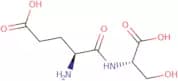
CAS :H-Glu-Ser-OH is a tryptic fragment of the protein hormone erythropoietin that is produced by the kidneys. It is one of the major hormones involved in regulating red blood cell production. Erythropoietin stimulates the proliferation of hematopoietic cells, which are responsible for making new blood cells, and also plays an important role in wound healing. The amino acid sequence of this peptide consists of two alpha helices and four beta sheets. Structural analysis has shown that H-Glu-Ser-OH can be cleaved by proteases to produce the amino acid sequence H-Glu-Arg-OH. This fragment has been shown to have a bitter taste receptor binding activity and may play a role in casein coagulation.Formule :C8H14N2O6Degré de pureté :Min. 98 Area-%Couleur et forme :PowderMasse moléculaire :234.21 g/molH-Gly-Pro-Hyp-OH
CAS :H-Gly-Pro-Hyp-OH is a collagen gel that is extracted from bovine skin. Collagen gel is a dietary supplement that can be applied to wounds and burns to promote healing. Collagen gel contains the amino acids glycine, proline, hydroxyproline, and hypochlorous acid. It also has an anti-inflammatory cytokine called IL-10. Hydrogen bonds form between the amino acids in collagen gel to give it its strength and stability. The LC-MS/MS method was used to identify the sequences of this peptide in order to confirm its identity. Collagen gel is neutral at pH 7 and has no effect on cellular function at this pH. The carboxy terminal of collagen gel is trifluoroacetic acid which can cause liver cells to die when ingested orally or intravenously due to its toxicity.
Formule :C12H19N3O5Degré de pureté :Min. 98 Area-%Couleur et forme :White PowderMasse moléculaire :285.3 g/molAra h 3 (278-284) peanut Allergen
Ara h 3 is one of the major allergens from peanut (Arachis hypogaea) out of approximately 13 potentially important allergens described. The Ara h 3 allergen is recognised by serum IgE from approximately 45% of peanut allergy patients.The peanut (Arachis hypogaea) is a member of the legume (Leguminosae) family, which includes beans and peas. Ara h 3 belongs to the glycinin family of legume storage proteins (S11 plant storage proteins) and is extensively proteolytically processed. This peptide represents a trypic peptide of Ara h 3.
Masse moléculaire :884.14 g/molAc-Ala-Ala-OH
CAS :Ac-Ala-Ala-OH is a compound that has been shown to bind to the receptor molecule, and is stable in the presence of proton. It also forms stable complexes with amide and teicoplanin. Ac-Ala-Ala-OH has a carbonyl group, which can be detected by magnetic resonance spectroscopy (MRS) at 1.8 ppm. The compound also has an nmr spectrum in which it can be seen that the trifluoroacetic acid does not affect the binding experiments. Ac-Ala-Ala-OH is used for binding experiments because it binds specifically to the receptor molecule and has a number of other properties that make it useful for research purposes.Formule :C8H14N2O4Degré de pureté :Min. 95%Couleur et forme :PowderMasse moléculaire :202.21 g/molH-Gly-Arg-AMC hydrochloride salt
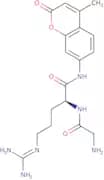
CAS :H-Gly-Arg-AMC hydrochloride salt is a substrate for the enzymes cathepsins B, H, and L. This compound has been used to measure protease activity in cell culture and as a diagnostic substrate for peptidases. The enzyme reaction can be monitored by measuring changes in the fluorescence of the product at 340 nm. The pH optimum for this enzyme is 7.4.
Formule :C18H24N6O4•HClDegré de pureté :Min. 98 Area-%Couleur et forme :PowderMasse moléculaire :424.88 g/mol

![S413-PV-[Cys(Npys)]](/_next/image/?url=https%3A%2Fstatic.cymitquimica.com%2Fproducts%2F3D%2Fthumb-webp%2FCRB1000425.webp&w=3840&q=75)
![[5-FAM]-pVec](/_next/image/?url=https%3A%2Fstatic.cymitquimica.com%2Fproducts%2F3D%2Fthumb-webp%2FCRB1100281.webp&w=3840&q=75)