


Peptides
Sous-catégories appartenant à la catégorie "Peptides"
29598 produits trouvés pour "Peptides"
CRF (Human, Rat, Mouse)-HS ELISA Kit (1ea)
CRF (Human, Rat, Mouse)-HS ELISA Kit is a sandwich ELISA that can be used to detect the human CRF-HS protein in human serum or plasma.Degré de pureté :Min. 95%Dipeptidyl-Peptidase IV, human, recombinant
Dipeptidyl-peptidase IV (DPP4) is a complex enzyme that is expressed in the pancreas and regulates glucose-dependent insulinotropic polypeptides. DPP4 cleaves the amino terminal dipeptide from these polypeptides, which prevents the activation of pancreatic β-cells. The recombinant human form of this enzyme has been shown to activate T cells and induce apoptosis in insect cells. Its activity against chemokines in vitro may be due to its ability to cleave glycosylated polypeptides. This enzyme also has anti-inflammatory effects by inhibiting the production of proinflammatory cytokines such as tumor necrosis factor α (TNFα), interleukin 1β (IL1β), and IL6.
Degré de pureté :Min. 95%Amyloid β-Protein (Human, 1-16)
CAS :Amyloid beta-protein (Aβ) is a peptide that is associated with Alzheimer's disease. It is a research tool for understanding the biology of Aβ. The Aβ peptide has been shown to activate a number of receptors and ion channels, including the nicotinic acetylcholine receptor, which may be due to its ability to bind to these proteins with high affinity. Amyloid beta-protein has also been shown to bind antibodies, which may be due to its ability to act as an antigen. Amyloid beta-protein inhibits the function of ion channels and can be used in pharmacological studies as a tool for understanding how this protein interacts with other proteins.Formule :C84H119N27O28Degré de pureté :Min. 95%Masse moléculaire :1,955 g/molBoc-Gly-Arg-Arg-AMC
CAS :Boc-Gly-Arg-Arg-AMC is a research tool that has a high purity and is used in cell biology, antibody production, ion channels, and protein interactions. It is an inhibitor of ion channels, which can be used for pharmacology to study the function of ion channels. Boc-Gly-Arg-Arg-AMC has also been shown to inhibit binding between the ligand and receptor.
Formule :C29H44N10O7Degré de pureté :Min. 95%Masse moléculaire :644.72 g/molBz-Gly-Lys [Hippuryl-Lysine]
CAS :Bz-Gly-Lys is a peptide that is a derivative of lysine residues. This peptide can compete with the natural substrate, L-lysine, for binding to the active site of creatine kinase and inhibit its enzymatic activity. Bz-Gly-Lys has been shown to be effective in inhibiting monoclonal antibody production in human serum. Furthermore, this peptide can also have inhibitory properties on cell culture and may be useful in the treatment of diabetic patients. The optimum pH for Bz-Gly-Lys is neutral, and hydrolysis by proteases is required for it to be active. It has been shown to inhibit polymerase chain reaction (PCR) procedures. In addition, this peptide has been shown to enhance the inhibitory properties of fatty acids on cell culture.Formule :C15H21N3O4Degré de pureté :Min. 95%Masse moléculaire :307.34 g/molLH-RH (Human)
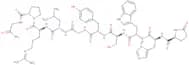
CAS :Luteinizing hormone-releasing hormone (LH-RH), also known as Gonadotropin-Releasing Hormone (GnRH), stimulates the pituitary gland’s production and secretion of luteinizing hormone and follicle-stimulating hormone. LHRH is a decapeptide and is itself secreted by the hypothalamus. It is crucial for human reproduction and is heavily involved in the regulation of ovulation, sexual development and the onset of puberty. When secreted, GNRH binds to the G-protein coupled receptor, gonadotropin-releasing hormone receptor (GNRHR) located on pituitary gonadotrophic cells in the anterior pituitary. Medically, the understanding of GnRH is paramount, due to its involvement in the pathogensis of central hypogonadism. Any obstructions to its function in the reproductive system can result in the development of human pathologically conditions. It is important to note that analogs of GnRH can be used in pharmacology, in the treatment of gynaecological diseases, through blocking the secretion of estrogen secretion from the ovary. Additional GNRH analogs can be used to treat ovarian cancer, hormone-dependent cancers, endometriosis and modality in infertility. Therefore this product is a useful research tool and is available in a 0.5mg vial.Formule :C55H75N17O13•(C2H4O2)2Degré de pureté :Min. 95%Masse moléculaire :1,302.4 g/molMAL dPEG®6-Acid
CAS :MAL dPEG®6-Acid is a PEG compound with two different functional groups (also known as heterobifunctional). Unlike homobifunctional PEG compounds (same functional group on both ends), this type of compounds are more versatile as have two different anchor points. MAL dPEG®6-Acid is used as a linker and spacer to add a PEG moiety, via pegylation (a bioconjugation technique) to proteins, peptides, oligonucleotides, small molecules and nanoparticles.
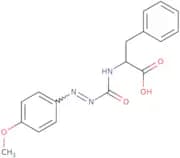
Formule :C22H36N2O11Degré de pureté :Min. 95%Masse moléculaire :504.53 g/mol4-Methoxyphenylazoformyl-Phe
CAS :4-Methoxyphenylazoformyl-Phe is a synthetic molecule that can be used as a research tool in the study of ion channels and ligands. The receptor binding affinity of 4-methoxyphenylazoformyl-Phe is unknown, but it has been shown to activate peptides in living cells. This compound is an inhibitor of ion channels and ligand for G protein coupled receptors. It can be used as a research tool in the study of ion channels and ligands. The receptor binding affinity of 4-methoxyphenylazoformyl-Phe is unknown, but it has been shown to activate peptides in living cells. This compound is an inhibitor of ion channels and ligand for G protein coupled receptors.Formule :C17H17N3O4Degré de pureté :Min. 95%Masse moléculaire :327.33 g/molBz-Tyr-pNA
CAS :Bz-Tyr-pNA is a peptide that has been shown to inhibit the activity of serine proteases. The peptide consists of Boc-Tyr-Nal-pNA, which is an artificial amino acid that has been synthesized for use as a substrate in assays and as a probe in the study of protein structure and function. Bz-Tyr-pNA inhibits the enzyme activity of a recombinant human neutrophil elastase, with an IC50 of about 12.5 μM. This peptide also inhibits the catalytic action of human neutrophil elastase by binding to its active site and blocking access to the substrate Tyr-pNA. It has been shown that Bz-Tyr-pNA can be used as an immunosuppressant to prevent graft rejection, although it is not yet approved for this use.Formule :C22H19N3O5Degré de pureté :Min. 95%Masse moléculaire :405.4 g/molLysyl-Bradykinin (Kallidin) (Human, Bovine)
CAS :Produit contrôléLysyl-bradykinin (kallidin) is a peptide that is a potent activator of non-selective cation channels. It has been shown to activate potassium channels and calcium channels, but not sodium channels. The activation by lysyl-bradykinin leads to an increase in the permeability of the membrane, which can lead to release of neurotransmitters from nerve endings. Lysyl-bradykinin also has been shown to be an inhibitor of protein interactions with the receptor in certain cell lines. The antibody used to measure this inhibition is L1420.Formule :C56H85N17O12Degré de pureté :Min. 95%Masse moléculaire :1,188.40 g/molMAL-dPEG®12-Acid
CAS :MAL-dPEG®12-Acid is a PEG compound with two different functional groups (also known as heterobifunctional). Unlike homobifunctional PEG compounds (same functional group on both ends), this type of compounds are more versatile as have two different anchor points. MAL-dPEG®12-Acid is used as a linker and spacer to add a PEG moiety, via pegylation (a bioconjugation technique) to proteins, peptides, oligonucleotides, small molecules and nanoparticles.Formule :C27H37F4N7O6SDegré de pureté :Min. 95%Masse moléculaire :663.69 g/molLeucine-Enkephalin
CAS :Leucine-Enkephalin is a research tool that binds to the opioid receptor. It is an activator of the receptor and can be used in cell biology, pharmacology, and as a ligand or antibody for receptor studies. Leucine-Enkephalin has been shown to inhibit ion channels in vitro and can be used to study protein interactions. This peptide also exhibits pharmacological effects in vivo, including analgesia, inhibition of gastrointestinal motility, and induction of emesis.Formule :C28H37N5O7Degré de pureté :Min. 95%Masse moléculaire :555.62 g/molOrexin-A (Human, 17-33)
CAS :Orexin-A (Human, 17-33) is a neuropeptide also known as hypocretin-1 and this product is available as a 0.1 mg vial. Orexin-A is primarily produced by a group of neurons located in the lateral hypothalamus of the brain, known as the orexinergic neurons.
Orexin-A is involved in regulating a variety of physiological functions, including the sleep-wake cycle, appetite, energy metabolism, and reward pathways. It acts as an agonist for two G protein-coupled receptors, known as orexin receptor 1 and orexin receptor 2.
Studies have shown that disruption of orexin signaling can lead to sleep disorders, obesity, and other metabolic disorders. Orexin-A has also been studied for its potential as a therapeutic target for the treatment of these disorders.Formule :C79H125N23O22Degré de pureté :Min. 95%Masse moléculaire :1,749 g/molAnti Retinoblastoma (RB) (901-928) Human Serum (50 ul)
CAS :Anti Retinoblastoma (RB) (901-928) Human Serum is a research tool that can be used for the study of cell biology, protein interactions, and pharmacology. Anti Retinoblastoma (RB) (901-928) Human Serum is a ligand that can bind to the receptor and activate its function. It has been found to inhibit ion channels, which are proteins that regulate the flow of ions in cells. It also has been shown to have an effect on cell growth and differentiation.Formule :C37H47N7O9Degré de pureté :Min. 95%Masse moléculaire :733.81 g/molm-dPEG®8-Amine
CAS :m-dPEG®8-Amine is a PEG compound with two different functional groups (also known as heterobifunctional). Unlike homobifunctional PEG compounds (same functional group on both ends), this type of compounds are more versatile as have two different anchor points. m-dPEG®8-Amine is used as a linker and spacer to add a PEG moiety, via pegylation (a bioconjugation technique) to proteins, peptides, oligonucleotides, small molecules and nanoparticles.Degré de pureté :Min. 95%Masse moléculaire :383.48 g/molH-Ala-Ala-Phe-AMC
CAS :H-Ala-Ala-Phe-AMC is a positively charged peptide that binds to the extracellular domain of the human α2δ1 calcium channel. It is a research tool for studying the interactions between ligands and receptors, as well as protein interactions. H-Ala-Ala-Phe-AMC is used to study the pharmacology of ion channels, such as their activation and inhibition by different ligands. H-Ala-Ala-Phe-AMC can be used in cell biology studies to study protein interactions and changes in protein conformation.Formule :C25H28N4O5Degré de pureté :Min. 95%Masse moléculaire :464.51 g/molArphamenine B
CAS :Arphamenine B is an enzyme inhibitor that inhibits metalloproteinases and serine proteases. It has been shown to be a potent osteoinductive agent in cell culture. Arphamenine B has also been found to have a depressant effect on the growth of cells in culture, with lysine residues as the probable site of action. Arphamenine B has also been shown to inhibit soybean trypsin, which is a serine protease enzyme.
Formule :C16H24N4O4H2SO4•H2ODegré de pureté :Min. 95%Masse moléculaire :403.45 g/molFmoc-Thr[Ac4Galß(1- >3)Ac2GalNAcα(1->O)] -OH-O-ß-2,3,4,6-Tetra-O-Acetyl-D-Galactopyranosyl-(1- >3)-O-α-4,6-Di-O-Acetyl-2-Acetamido-2 -Deoxy-D-Galactopyranosyl-(1- >O)-9-Fluorenylmethoxycarbonyl-L-Threonine
CAS :Fmoc-Thr[Ac4Galß(1- >3)Ac2GalNAcα(1->O)] -OH-O-ß-2,3,4,6-Tetra-O-Acetyl-D-Galactopyranosyl-(1- >3)-O-α-4,6-Di-O-Acetyl-2 -Acetamido -2 -Deoxy -D -Galactopyranosyl-(1->0)-9 Fluorenylmethoxycarbonyl L Thr Fmoc Thr is an amino acid that is used in peptide synthesis. It is a protected form of the amino acid threonine that can be cleaved by hydrogen fluoride to yield free Thr. Fmoc Thr has been shown to inhibit the production of inflammatory cytokines and chemokines in vitro.Formule :C45H54N2O21Degré de pureté :Min. 95%Masse moléculaire :958.91 g/molNeuropeptide W-30 (Rat)
CAS :Neuropeptide W-30 (Rat) is a peptide that belongs to the family of neuropeptides. It has been identified as an inhibitor of the ion channel TRPV1 and TRPA1, which are involved in pain perception. Neuropeptide W-30 (Rat) also inhibits the activation of phospholipase C, protein kinase C, and cAMP response element binding protein. Neuropeptide W-30 (Rat) is used as a research tool for studying protein interactions and for pharmacological studies.
Formule :C165H249N49O38SDegré de pureté :Min. 95%Masse moléculaire :3,559.1 g/molGlucagon-like Peptide 2 (Human)
CAS :Glucagon-like peptide 2 (GLP-2) is a protein hormone that belongs to the glucagon family of peptides. GLP-2 has been shown to activate ion channels and regulate the movement of ions across cell membranes, which is important for many physiological processes. GLP-2 also has an inhibitory effect on the release of insulin from beta cells in pancreatic islets. It has been shown to improve glucose tolerance in animal models of Type 2 diabetes by stimulating the production and secretion of insulin from beta cells in pancreatic islets. Additionally, GLP-2 can bind to a receptor on the surface of certain types of immune cells called T lymphocytes and stimulate them to produce cytokines that promote growth and development of other immune cells. Glucagon-like Peptide 2 (Human) is a research tool used in studies involving protein interactions, ligand binding, pharmacology, cell biology, or antibody production. This product is highly purified with a purityFormule :C165H254N44O55SDegré de pureté :Min. 95%Masse moléculaire :3,766.1 g/molAmino-dPEG®6-t-Butyl Ester
CAS :Amino-dPEG®6-t-Butyl Ester is a PEG compound with two different functional groups (also known as heterobifunctional). Unlike homobifunctional PEG compounds (same functional group on both ends), this type of compounds are more versatile as have two different anchor points. Amino-dPEG®6-t-Butyl Ester is used as a linker and spacer to add a PEG moiety, via pegylation (a bioconjugation technique) to proteins, peptides, oligonucleotides, small molecules and nanoparticles.
Formule :C19H39NO8Degré de pureté :Min. 95%Masse moléculaire :409.51 g/molBis-dPEG®29-Acid
CAS :Bis-dPEG®29-Acid is a PEG polymer categorised as homobifunctional PEG (X-PEG X). Used as a linker, bis-dPEG®29-Acid is used to attached PEG to proteins, peptides, oligonucleotides, nanoparticles and small molecules via pegylation, a bioconjugation technique.
Formule :C30H49N5O11S3Degré de pureté :Min. 95%Masse moléculaire :751.94 g/molPyr-AMC
CAS :Pyr-AMC is a novel research tool that can be used to activate or inhibit ion channels, receptors, and other proteins. Pyr-AMC is a ligand for the nicotinic acetylcholine receptor (nAChR) and can be used to study the pharmacology of nAChRs. Pyr-AMC is also a potent inhibitor of voltage-gated potassium channels, which are important for regulating nerve cell membrane potentials. Pyr-AMC has been shown to bind to many types of proteins that play an important role in cell biology. This includes antibodies, ion channels, receptors, and peptides. It has been shown that pyr-amc binds to life sciences products such as antibodies, peptides, and enzymes.Formule :C15H14N2O4Degré de pureté :Min. 95%Masse moléculaire :286.28 g/molZ-Glu-Tyr
CAS :Z-Glu-Tyr is a synthetic substrate of the enzyme cathepsin B. The amino acid sequence of Z-Glu-Tyr has been shown to be identical to the sequence of the natural substrate, L-glutaminyl-L-tyrosine. The activity of the enzyme cathepsin B can be inhibited by Z-Glu-Tyr due to its ability to form a covalent bond with cysteine residues in the active site. This inhibition prevents cleavage of peptide bonds and synthesis of polypeptides, which are necessary for cell growth and division. Z-Glu-Tyr is also an inhibitor of thiol proteases, such as papain and subtilisin, which are enzymes that hydrolyze peptide bonds in proteins.Formule :C22H24N2O8Degré de pureté :Min. 95%Masse moléculaire :444.43 g/molBis-dPEG®21-NHS Ester
CAS :Bis-dPEG®21-NHS Ester is a PEG polymer categorised as homobifunctional PEG (X-PEG X). Used as a linker, bis-dPEG®21-NHS Ester is used to attached PEG to proteins, peptides, oligonucleotides, nanoparticles and small molecules via pegylation, a bioconjugation technique.Formule :C54H96N2O29Degré de pureté :Min. 95%Masse moléculaire :1,237.34 g/molZ-Gly-Pro
CAS :Z-Gly-Pro is a synthetic peptide that has been shown to inhibit proteolytic enzymes. It binds to the active site of the enzyme and blocks its activity. The peptide has also been shown to have locomotor activity, as it stimulates stem cell factor and cell factor production in vitro. Z-Gly-Pro has also been shown to be an inhibitor binding molecule that can bind with other molecules such as inhibitors of proteases and tyrosine kinase receptors. This inhibition may help regulate physiological functions such as locomotion, proliferation, and differentiation of cells.Formule :C15H18N2O5Degré de pureté :Min. 95%Masse moléculaire :306.31 g/molThiol-dPEG®12-Acid
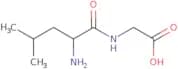
CAS :Thiol-dPEG®12-Acid is a PEG compound with two different functional groups (also known as heterobifunctional). Unlike homobifunctional PEG compounds (same functional group on both ends), this type of compounds are more versatile as have two different anchor points. Thiol-dPEG®12-Acid is used as a linker and spacer to add a PEG moiety, via pegylation (a bioconjugation technique) to proteins, peptides, oligonucleotides, small molecules and nanoparticles.Formule :C27H54O14SDegré de pureté :Min. 95%Masse moléculaire :634.77 g/molLeu-Gly • ½ H2O
CAS :Leu-Gly is a cyclic peptide that is composed of the amino acid sequence Leu-Gly. It has antimicrobial, anti-inflammatory, and immunomodulatory properties. This peptide exhibits calcium binding, which may be due to its structural analysis with trifluoroacetic acid in human serum. A model system using coli K-12 cells was used to study the biological properties of Leu-Gly. The locomotor activity of these cells was inhibited by Leu-Gly, which may be due to its ability to bind with cyclic adenosine monophosphate (cAMP) receptors on the cell surface. LEU Gly is a member of the class of antimicrobial peptides that are important for fighting infections. It has been shown to have strong activity against E. coli K12 and various strains of Staphylococcus aureus isolated from humans with autoimmune diseases.Formule :C8H16N2O3H2ODegré de pureté :Min. 95%Masse moléculaire :197.23 g/molNeuromedin B (Human, Porcine, Rat)
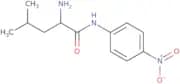
CAS :Neuromedin B is a neuropeptide that has been shown to activate the TRPC ion channels in mammalian cells. It also has been shown to bind to receptors and have a potent effect on cell biology, as well as being used as a research tool for studying protein interactions. Neuromedin B is found in humans, pigs, and rats, where it is expressed primarily in the brain and gastrointestinal tract. This peptide has been shown to be an inhibitor of some types of ion channels.Formule :C52H73N15O12SDegré de pureté :Min. 95%Masse moléculaire :1,132.3 g/molLeu-pNA
CAS :Leu-pNA is a protein synthesis inhibitor that binds to the active site of the enzyme peptidyl prolyl cis-trans isomerase (PPIase). This inhibitor prevents the enzyme from catalyzing the conversion of proline residues in peptides to their cis or trans isomers. Leu-pNA has been shown to inhibit proteolytic enzymes such as soybean trypsin and activated proteases, and also has an inhibitory effect on polymerase chain reaction (PCR) enzyme activities. The binding of Leu-pNA to PPIase can be reversed by heating at 60°C for 20 minutes.
Formule :C12H17N3O3Degré de pureté :Min. 95%Masse moléculaire :251.28 g/molAzido-dPEG®3-amine
CAS :Azido-dPEG®3-amine is a PEG compound with two different functional groups (also known as heterobifunctional). Unlike homobifunctional PEG compounds (same functional group on both ends), this type of compounds are more versatile as have two different anchor points. Azido-dPEG®3-amine is used as a linker and spacer to add a PEG moiety, via pegylation (a bioconjugation technique) to proteins, peptides, oligonucleotides, small molecules and nanoparticles.Formule :C8H18N4O3Degré de pureté :Min. 95%Masse moléculaire :218.25 g/molDNP-dPEG®4-NHS Ester
CAS :DNP-dPEG®4-NHS Ester is a PEG compound with two different functional groups (also known as heterobifunctional). Unlike homobifunctional PEG compounds (same functional group on both ends), this type of compounds are more versatile as have two different anchor points. DNP-dPEG®4-NHS Ester is used as a linker and spacer to add a PEG moiety, via pegylation (a bioconjugation technique) to proteins, peptides, oligonucleotides, small molecules and nanoparticles.Formule :C50H100O25Degré de pureté :Min. 95%Masse moléculaire :1,101.31 g/molParathyroid Hormone (Human, 1-31 Amide)
CAS :This product which is available as a 0.5mg vial is amino acids 1-31 of the 84 amino acid parathyroid hormone (PTH) and can be used as an adenylate cyclase and bone growth stimulating peptide.
PTH is a peptide hormone that is secreted from the parathyroid gland in the event of abnormal serum calcium levels and it ultimately regulates calcium and phosphate levels in the body. The PTH exerts its activity through binding to the G-protein coupled receptor type 1 PTH receptor, which activates adenylate cyclase or phospholipase C thus activating pathways involved in the mediation of bone resorption and bone formation. This product is suitable for life science applications.Formule :C162H270N50O46S2Degré de pureté :Min. 95%Masse moléculaire :3,718.3 g/molEndothelin-1 (Human)
CAS :Endothelin-1 is a peptide that acts as a vasoconstrictor and plays an important role in the regulation of blood pressure. Endothelin-1 is also an endogenous ligand for two G protein-coupled receptors, ETA and ETB. Interesting Endothelin-1 is the most abundant isoform and is expressed in endothelial cells of every blood vessel. It exerts its vasoconstrictor effects through binding to ETA receptors located on the smooth muscle. This product has disulfide bonds between Cys1-Cys15 and Cys3-Cys11, sourced from Porcine, Canine, Rat, Mouse and Bovine and is available as a 0.1mg vial.
Formule :C109H159N25O32S5Degré de pureté :Min. 95%Masse moléculaire :2,491.9 g/molGIP (Human)
CAS :GIP (Gastric Inhibitory Polypeptide) is a peptide hormone that belongs to the family of incretin hormones. GIP has been shown to have an insulinotropic effect, which is mediated by its activation of glucose-dependent insulin release from pancreatic β-cells. It also has effects on lipid metabolism and plays a role in the regulation of food intake. GIP is produced by K cells in the ileum and colon and released into the bloodstream following food intake. The binding of GIP to its receptors leads to inhibition of gastric acid secretion, stimulation of gallbladder contraction, increased blood flow to the stomach, relaxation of pyloric sphincter muscles, and inhibition of gastric motility. This product is highly pure (> 98%) with no detectable endotoxin or other microbial contamination.
Formule :C226H338N60O66SDegré de pureté :Min. 95%Masse moléculaire :4,983.5 g/molm-dPEG®37-acid
CAS :m-dPEG®37-acid is a PEG compound with two different functional groups (also known as heterobifunctional). Unlike homobifunctional PEG compounds (same functional group on both ends), this type of compounds are more versatile as have two different anchor points. m-dPEG®37-acid is used as a linker and spacer to add a PEG moiety, via pegylation (a bioconjugation technique) to proteins, peptides, oligonucleotides, small molecules and nanoparticles.
Formule :C76H152O39Degré de pureté :Min. 95%Masse moléculaire :1,690 g/mol[Sar1,Val5,Ala8]-Angiotensin II
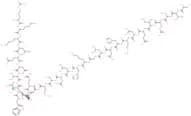
CAS :Sar1,Val5,Ala8]-Angiotensin II is a peptide with the amino acid sequence of [Sar1,Val5,Ala8]-Angiotensin II. The peptide is a research tool that can be used to study the effects of angiotensin on ion channels and receptor interactions. Sar1,Val5,Ala8]-Angiotensin II has also been shown to inhibit the binding of angiotensin I (AI) to its receptors. Sar1,Val5,Ala8]-Angiotensin II binds to the AT1 receptor and blocks its activation by AI. Sar1,Val5,Ala8]-Angiotensin II is a potent inhibitor of protein interactions and may have applications in pharmacology and cell biology.Formule :C42H65N13O10Degré de pureté :Min. 95%Masse moléculaire :912.05 g/molBIotin-ONp
CAS :Biotin-ONp is a monoclonal antibody that binds to uptake and efflux pump proteins. It is a conjugate of biotin and an oligonucleotide containing a carboxy terminal peptide. This antibody has been used as a model system for the study of peptide hormones and their reaction products. Biotin-ONp has also been used as an analytical chemistry reagent for the determination of growth factors in serum, and for the detection of antibodies in immunoassays using magnetic particles.Formule :C16H19N3O5SDegré de pureté :Min. 95%Masse moléculaire :365.41 g/mol[D-Arg1,D-Pro2,D-Trp7,9,Leu11]-Substance P
CAS :D-Arg1,D-Pro2,D-Trp7,9,Leu11]-Substance P is a synthetic peptide that can be used as a research tool to study the function of Substance P receptors. It is a ligand for the NK1 receptor and inhibits the activity of ion channels. D-Arg1,D-Pro2,D-Trp7,9,Leu11]-Substance P has been shown to inhibit the binding of substance P to cell membranes in vitro. This peptide also inhibits substance P binding to NK1 receptors in vivo.Formule :C75H108N20O13Degré de pureté :Min. 95%Masse moléculaire :1,497.8 g/molCalciseptine
CAS :A synthetic snake toxin sourced from the black mamba, Dendroaspis polylepis polylepis which can be applied as a L-type Ca2+ channel blocker. This product has disulfide bonds between Cys3-Cys22, Cys17-Cys39, Cys41-Cys52, and Cys53-Cys58 and is available as a 0.1mg vial.
Formule :C299H468N90O87S10Degré de pureté :Min. 95%Masse moléculaire :7,036.1 g/molm-dPEG®36-Azide (Azido-m-dPEG®36)
CAS :m-dPEG®36-Azide (Azido-m-dPEG®36) is a PEG compound with two different functional groups (also known as heterobifunctional). Unlike homobifunctional PEG compounds (same functional group on both ends), this type of compounds are more versatile as have two different anchor points. m-dPEG®36-Azide (Azido-m-dPEG®36) is used as a linker and spacer to add a PEG moiety, via pegylation (a bioconjugation technique) to proteins, peptides, oligonucleotides, small molecules and nanoparticles.
Degré de pureté :Min. 95%Masse moléculaire :1,642.95 g/molGly-Pro-pNA • Tos [GPNT]
CAS :Gly-Pro-pNA • Tos is a peptide that is derived from the sequence of the human beta2 adrenergic receptor. It can be used as a research tool for studying receptor-ligand interactions and for identifying ligands for other receptors. Gly-Pro-pNA • Tos may also be used as an inhibitor of ion channels.Formule :C13H16N4O4•C7H8O3SDegré de pureté :Min. 95%Masse moléculaire :464.49 g/molFmoc-OSu
CAS :Fmoc-OSu is a synthetic amino acid that is used in the synthesis of peptides and other biomolecules. It can be synthesized by solid-phase peptide synthesis using Fmoc chemistry, which involves an acid-labile protecting group. Fmoc-OSu has been shown to inhibit cancer cell growth, although its mechanism is not known. Fmoc-OSu has been shown to have anti-inflammatory effects by inhibiting the proinflammatory cytokine TNFα. Fmoc-OSu has also been shown to have glycan binding properties, which may be due to its ability to bind with sialic acid residues on glycoproteins or glycolipids.Formule :C19H15NO5Degré de pureté :Min. 98.0 Area-%Masse moléculaire :337.33 g/molAzido-dPEG®8-Alcohol
CAS :Azido-dPEG®8-Alcohol is a PEG polymer categorised as monofunctional (OH-PEG-X). Used as a linker, azido-dPEG®8-Alcohol is used to attached PEG to proteins, peptides, oligonucleotides, nanoparticles and small molecules via pegylation, a bioconjugation technique.Degré de pureté :Min. 95%Masse moléculaire :395.45 g/molCCK-Octapeptide (26-33) (Non-Sulfated Form)
CAS :CCK-Octapeptide (26-33) is a peptide that is a member of the cholecystokinin family of peptides. CCK-Octapeptide (26-33) is an activator of the CCK receptor and can be used for research purposes. This peptide has been shown to inhibit ion channels, which are proteins that regulate the flow of ions across cell membranes, and may be used as a pharmacological tool or research tool.
Formule :C49H62N10O13S2Degré de pureté :Min. 95%Masse moléculaire :1,063.2 g/molLys-Ala-AMC
CAS :Lys-Ala-AMC is an activator of ion channels and a ligand for receptors. It is used in research as a tool to study protein interactions, receptor pharmacology, and ion channel pharmacology. Lys-Ala-AMC binds to the α-subunit of voltage gated calcium channels and can activate these channels by increasing the rate of opening. This peptide also inhibits receptor binding by competing with the natural ligand. It has been shown to be an antagonist at the NMDA receptor and can inhibit the binding of glycine to this receptor.
Formule :C19H26N4O4Degré de pureté :Min. 95%Masse moléculaire :374.43 g/moldPEG®4 SATA (S-Acetyl-dPEG®4 NHS Ester)
CAS :dPEG®4 SATA (S-Acetyl-dPEG®4 NHS Ester) is a PEG compound with two different functional groups (also known as heterobifunctional). Unlike homobifunctional PEG compounds (same functional group on both ends), this type of compounds are more versatile as have two different anchor points. dPEG®4 SATA (S-Acetyl-dPEG®4 NHS Ester) is used as a linker and spacer to add a PEG moiety, via pegylation (a bioconjugation technique) to proteins, peptides, oligonucleotides, small molecules and nanoparticles.Formule :C17H27NO9SDegré de pureté :Min. 95%Masse moléculaire :421.46 g/molFmoc-N-Lys-(dPEG®4-Biotin)-OH-(Acid)
CAS :Fmoc-N-Lys-(dPEG®4-Biotin)-OH-(Acid) is an ion channel activator with a molecular weight of 921.5 Da. It has been shown to activate the voltage-gated potassium channels Kv1.2 and Kv1.3 in rat cortical neurons, and inhibit the activity of the voltage-gated sodium channels Nav1.6, Nav1.7, and Nav1.8 in rat dorsal root ganglia neurons. In addition, Fmoc-N-Lys-(dPEG®4-Biotin)-OH-(Acid) has been shown to activate the calcium release activated calcium channels (CRACs) in human erythrocytes and induce the release of arachidonic acid from human platelets. It is a high purity reagent for research purposes only, not for use in humans or animals for any reason other than scientific researchFormule :C89H163F4NO39S2Degré de pureté :Min. 95%Masse moléculaire :2,011.35 g/molm-dPEG®4-Azide (Azido-m-dPEG®4)
CAS :m-dPEG®4-Azide (Azido-m-dPEG®4) is a PEG compound with two different functional groups (also known as heterobifunctional). Unlike homobifunctional PEG compounds (same functional group on both ends), this type of compounds are more versatile as have two different anchor points. m-dPEG®4-Azide (Azido-m-dPEG®4) is used as a linker and spacer to add a PEG moiety, via pegylation (a bioconjugation technique) to proteins, peptides, oligonucleotides, small molecules and nanoparticles.
Formule :C72H145N3O36Degré de pureté :Min. 95%Masse moléculaire :1,628.92 g/mol





![Bz-Gly-Lys [Hippuryl-Lysine]](/_next/image/?url=https%3A%2Fstatic.cymitquimica.com%2Fproducts%2F3D%2Fthumb-webp%2FSGK-3047.webp&w=3840&q=75)



![Fmoc-Thr[Ac4Galß(1- >3)Ac2GalNAcα(1->O)] -OH-O-ß-2,3,4,6-Tetra-O-Acetyl-D-Galactopyranosyl-(1- >3)…](/_next/image/?url=https%3A%2Fstatic.cymitquimica.com%2Fproducts%2F3D%2Fthumb-webp%2FCAR-22104.webp&w=3840&q=75)







![[Sar1,Val5,Ala8]-Angiotensin II](/_next/image/?url=https%3A%2Fstatic.cymitquimica.com%2Fproducts%2F3D%2Fthumb-webp%2FPAN-4071-V.webp&w=3840&q=75)

![[D-Arg1,D-Pro2,D-Trp7,9,Leu11]-Substance P](/_next/image/?url=https%3A%2Fstatic.cymitquimica.com%2Fproducts%2F3D%2Fthumb-webp%2FPSP-4172-V.webp&w=3840&q=75)


![Gly-Pro-pNA • Tos [GPNT]](/_next/image/?url=https%3A%2Fstatic.cymitquimica.com%2Fproducts%2F3D%2Fthumb-webp%2FSGP-3074-V.webp&w=3840&q=75)


