Substrats d'enzymes
Sous-catégories appartenant à la catégorie "Substrats d'enzymes"
1527 produits trouvés pour "Substrats d'enzymes"
5-Bromo-4-chloro-3-indoxyl caprylate
CAS :Chromogenic substrate for esterase with C8 activity yielding a blue precipitate upon cleavage.
Formule :C16H19BrClNO2Degré de pureté :Min. 99 Area-%Masse moléculaire :372.70 g/molL-Pro-PAB-Resorufin
L-Pro-PAB-Resorufin is a highly sensitive chromogenic and fluorogenic indicator for L-proline aminopeptidase activity and related enzymes occurring in prokaryotic as well as eukaryotic organisms. After removal of the L-proline amide substructure by enzymatic hydrolysis and spontaneous elimination of the para-amino-benzyl (PAB) spacer, the initially orange colored compound yields an intense pink color. In addition, the released chromophor is an excellent fluorophor showing red fluorescence at an emission wavelength of 580 to 600 nm when excited at 560 to 570 nm.
Formule :C24H21N3O4Degré de pureté :Min. 70 Area-%Couleur et forme :PowderMasse moléculaire :415 g/mol4-Nitrophenyl β-D-xylobioside
CAS :4-Nitrophenyl beta-D-xylobioside is a chromogenic substrate for xylanase. Upon hydrolysis, para-nitrophenol is released yielding a yellowish colour. 4-Nitrophenyl beta-D-xylobioside is used in different applications such as the Xylan degradation studies, paper/pulp industry applicationsFormule :C16H21NO11Degré de pureté :Min. 95%Couleur et forme :White PowderMasse moléculaire :403.34 g/molD-Luciferin-6-O b-D-galactopyranoside
CAS :Chemiluminescent substrate for b-galactosidase
Formule :C17H18N2O8S2Degré de pureté :Min. 95 Area-%Couleur et forme :Beige PowderMasse moléculaire :442.47 g/molRUG ®, Resorufin-beta-D-glucuronic acid methyl ester, Biosynth Patent: EP 2718458 and US 9127303
CAS :Living cells of Escherichia coli can be reliably detected with media that contain a chromogenic or fluorogenic substrate for beta-glucuronidase (also termed β-D-glucuronidase), an enzyme that occurs almost exclusively in E. coli. RUG®, Resorufin-beta-D-glucuronic acid methyl ester is a highly sensitive chromogenic and fluorogenic indicator for E. coli. After removal of the methyl ester group by unspecific hydrolysis, orange colored product is cleaved by beta-glucuronidase in liquid media or on agar plates and yields an intense pink color. Red fluorescence is obtained upon excitation at 560-570 nm.Formally ER175455.
Formule :C19H17NO9Degré de pureté :Min. 90.0 Area-%Masse moléculaire :403.34 g/molRef: 3D-R-2155_P00
Produit arrêté1-Naphthyl b-D-glucuronide sodium salt
CAS :1-Naphthyl b-D-glucuronide sodium salt is a chromogenic substrate commonly used to assay the activity of beta-glucuronidase enzymes. It is hydrolyzed by beta-glucuronidase to yield a yellow-colored product, 1-naphthol, which can be quantified spectrophotometrically. This substrate is widely used in diagnostic tests for detection of beta-glucuronidase activity, particularly in clinical microbiology for the identification of E. coli and other enteric bacteria. With its sodium salt form, it boasts increased solubility in aqueous solutions, ensuring seamless integration into various experimental settings.
Formule :C16H15NaO7Degré de pureté :Min. 95%Couleur et forme :PowderMasse moléculaire :342.28 g/mol4-Methylumbelliferyl α-L-idopyranosiduronic acid 2-sulfate disodium salt
CAS :4-Methylumbelliferyl alpha-L-idopyranosiduronic acid 2-sulfate disodium salt is a chromogenic substrate that is used in the detection of glycosidases. It reacts with enzymes such as alpha-amylase, beta-galactosidase, and beta-glucosidase to produce a fluorescent product. This product can be detected using a fluorometer or spectrophotometer. The CAS number for 4-methylumbelliferyl alpha-L-idopyranosiduronic acid 2-sulfate disodium salt is 1045020-74-3.
Formule :C16H14Na2O12SDegré de pureté :Min. 99.0 Area-%Masse moléculaire :476.32 g/molLuciferin-α-D-glucoside, potassium salt
Luciferin-alpha-D-glucoside, potassium salt is a bioluminescence substrate for the detection of various enzymes. It is used to detect the presence of alkaline phosphatase, acid phosphatase, and diaphorase. Luciferin-alpha-D-glucoside, potassium salt is also used as a chromogenic substrate for the determination of glucose in blood and urine, as well as a fluorogenic substrate for the determination of uric acid in urine. This product has high purity and quality and is available in conjugates with antibodies or other ligands that are useful for immunoassays.
Formule :C17H17KN2O8S2Degré de pureté :Min. 85 Area-%Masse moléculaire :480.55 g/mol4-Nitrophenyl-β-D-glucopyranoside
CAS :4-Nitrophenyl-beta-D-glucopyranoside is a fluorescent probe that can be used in the study of the biochemical properties of enzymes. This compound binds to the enzyme's active site, which allows for transfer reactions to occur. 4-Nitrophenyl-beta-D-glucopyranoside is an artificial substrate that is biochemically inert and has a similar physical structure to natural substrates. It can be used as a model system to study enzymatic reactions and has been shown to have pharmacokinetic properties and a pH optimum. The detection sensitivity of this compound is high, making it ideal for use in biochemical studies.
Formule :C12H15NO8Degré de pureté :Min. 99.0 Area-%Masse moléculaire :301.25 g/molRef: 3D-N-4401
Produit arrêté4-Methylumbelliferyl b-D-glucuronide hydrate
CAS :4-Methylumbelliferyl beta;-D-glucuronide (MUG) is commonly used as a substrate for detecting beta;-glucuronidase. MUG is used for identifying E. coli contamination in food, drinkingwater, clinical samples and for rapid bacterial identification in blood cultures. It is recommended in international normatives (ISO, DIN) as a fluorogenic substrate for detection of E. coli. MUG is also a tool assaying the glucuronidase gene in plants.
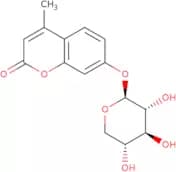
Formule :C16H18O10Degré de pureté :(%) Min. 99%Couleur et forme :White PowderMasse moléculaire :352.29 g/mol4-Methylumbelliferyl b-D-xylopyranoside
CAS :Please enquire for more information about 4-Methylumbelliferyl b-D-xylopyranoside including the price, delivery time and more detailed product information at the technical inquiry form on this page
Formule :C15H16O7Degré de pureté :Min. 98 Area-%Couleur et forme :PowderMasse moléculaire :308.28 g/molAldol® 518 ammonium myo-inositol-1-phosphate, Biosynth Patent: EP 2427431 and US 8940909
CAS :Aldol® 518 myo-inositol phosphate is a chromogenic and fluorogenic enzyme substrate used for detection of phosphatidylinositol specific phospholipase C (PI-PLC, EC 4.6.1.13) activity. The colorless enzyme substrate is cleaved by PI-PLC positive microorganisms grown in liquid or solid media, yielding intense red color. In combination with Aldol® 355 fluorescence enhancer, red fluorescence can also be obtained. Aldol® 518 myo-inositol phosphate thus enables the detection and identification of various bacteria, such as, pathogenic strains of Listeria, Clostridium, Bacillus, and Staphylococcus species. Aldol® 518 myo-inositol phosphate is suitable for use under aerobic and anaerobic conditions.
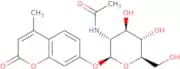
Formule :C29H33ClN3O10PDegré de pureté :Min. 95.0 Area-%Masse moléculaire :650.02 g/mol4-Methylumbelliferyl 2-acetamido-2-deoxy-b-D-glucopyranoside
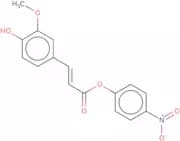
CAS :Fluorogenic substrate for chitinaseFormule :C18H21NO8Degré de pureté :Min. 99 Area-%Couleur et forme :White Off-White PowderMasse moléculaire :379.36 g/mol4-Nitrophenyl trans-ferulate
CAS :Substrate for feruloyl esterases
Formule :C16H13NO6Degré de pureté :Min. 98 Area-%Couleur et forme :PowderMasse moléculaire :315.28 g/molRef: 3D-EN05238
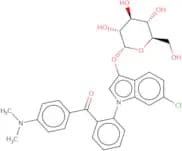
Produit arrêtéAldol® 518 α-D-galactopyranoside, Biosynth Patent: EP 2427431 and US 8940909
CAS :Aldol® 518 alpha-D-galactopyranoside is a chromogenic and fluorogenic enzyme substrate used for detection of alpha-galactosidase activity. The enzyme substrate is cleaved by alpha-galactosidase positive bacteria and yeasts in liquid or solid media, yielding red color and red fluorescence signal. Aldol® 518 alpha-D-galactopyranoside can also be used to detect alpha-galactosidase (encoded by the Mel1 gene) in yeast gene reporter assays or for identification of alpha-gal positive transformants on agar plates. Aldol® 518 alpha-D-galactopyranoside can be used under aerobic and anaerobic conditions.
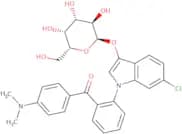
Formule :C29H29ClN2O7Degré de pureté :Min. 95%Couleur et forme :PowderMasse moléculaire :553.01 g/molAldol® 518 alpha-D-glucopyranoside, Biosynth Patent: EP 2427431 and US 8940909
CAS :Aldol® 518 alpha-D-glucopyranoside is a fluorogenic enzyme substrate used for detection of alpha-D-glucosidase activity. The colorless enzyme substrate is cleaved by alpha-D-glucosidase, generating red fluorescent signal and in some conditions, an orange colour in the visible spectrum can get formed, staining bacterial colonies in faint orange coloration. Aldol® 518 alpha-D-glucopyranoside can be used under aerobic and anaerobic conditions.
Formule :C29H29ClN2O7Degré de pureté :Min. 95%Couleur et forme :PowderMasse moléculaire :553 g/mol4-Methylumbelliferyl-β-D-xylopyranoside
CAS :4-Methylumbelliferyl-β-D-xylopyranoside is a fluorescent probe that has been used to visualize the enzyme activities of glycosidases, such as endoglycosidase H and α-amylase. It is also used as a tool in structural analysis of oligosaccharides. 4-Methylumbelliferyl-β-D-xylopyranoside has been shown to inhibit collagenase activity in mice, which may be due to its ability to inhibit protein synthesis and cell division.
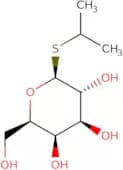
Formule :C15H16O7Degré de pureté :Min. 99.0 Area-%Masse moléculaire :308.29 g/molIPTG
CAS :Isopropyl-beta-D-thiogalactopyranoside (IPTG) is a non-metabolizable allolactose analogue, widely used in molecular biology for overexpression of recombinant proteins from inducible systems under the control of lac promoter. IPTG binds to the LacI repressor and causes its release from the lac operator, allowing gene expression of lac operon to take place. IPTG is present in vectors of pGEX, pGEM-T, pET, pRSET, pMAL class and others.
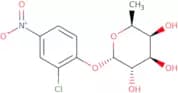
Formule :C9H18O5SDegré de pureté :Min. 99 Area-%Couleur et forme :White PowderMasse moléculaire :238.3 g/mol2-Chloro-4-nitrophenyl-alpha-L-fucopyranoside
CAS :Alternative chromogenic substrate for alpha-D-galactosidase
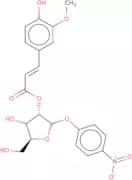
Formule :C12H14ClNO7Degré de pureté :Min. 98 Area-%Couleur et forme :White PowderMasse moléculaire :319.69 g/mol4-Nitrophenyl 2-O-trans-feruloyl-a-L-arabinofuranoside
CAS :4-Nitrophenyl 2-O-trans-feruloyl-alpha-L-arabinofuranoside is a chromogenic substrate for alpha-L-arabinofuranosidase. Upon hydrolysis, para-nitrophenol is released yielding a yellowish colour. 4-Nitrophenyl 2-O-trans-feruloyl-alpha-L-arabinofuranoside is used in different applications such as the Plant biomass analysis, bacterial arabinan degradation assays
Formule :C21H21NO10Degré de pureté :Min. 95%Couleur et forme :PowderMasse moléculaire :447.39 g/mol